As an Amazon Associate, we earn from qualifying purchases. Some links on this site are affiliate links at no extra cost to you. Our recommendations are based on thorough research and editorial judgment.

Understanding RGB Vs Tunable White LEDS

RGB and tunable white LED strip lights are distinctly different. RGB LEDs create over 16 million colors but cannot produce true white light. In contrast, tunable white LEDs allow users to adjust color temperatures from 2700K to 6500K, making them ideal for enhancing productivity and health. RGB strips are perfect for mood lighting, while tunable whites excel in offices and healthcare settings. Understanding these differences informs better lighting choices that meet specific needs and preferences. Further insights follow.
Key Takeaways
- RGB LED strips create over 16 million colors but cannot produce true white light, relying on a blend of red, green, and blue.
- Tunable white LEDs allow adjustable color temperatures from warm 2700K to cool 6500K, simulating natural daylight patterns to enhance well-being.
- RGB LEDs are ideal for decorative and dynamic lighting in entertainment environments, while tunable white systems focus on productivity and task lighting.
- RGB setups often require complex control systems, whereas tunable white typically features simple interfaces and smart controls.
- Tunable white LEDs produce impressive lumens ranging from 8,000 to 18,000 while maintaining energy efficiency, unlike standard RGB strips.
Overview of RGB LED Strip Lights
You may be interested
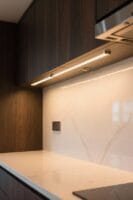


RGB LED strip lights represent a versatile lighting solution that employs red, green, and blue diodes to create an extensive spectrum of colors. Capable of exceeding 16 million combinations through additive mixing, these strips are ideal for enhancing ambiance in entertainment environments, such as gaming setups and home theaters. The dynamic lighting effects like strobing, fading, and pulsing engage users and elevate the overall experience. However, it is essential to note that RGB LED strip lights cannot produce true white light, as their white appearance results from a blend of primary colors. Installation can be complex, requiring compatible controllers and programmable settings. Embrace the customizable nature of RGB lights for mood and decorative applications in themed spaces. Modern RGB strips like the KSIPZE 100ft lights integrate seamlessly with music sync technology to create dynamic displays that react to sound in real-time.
Overview of Tunable White LED Strip Lights
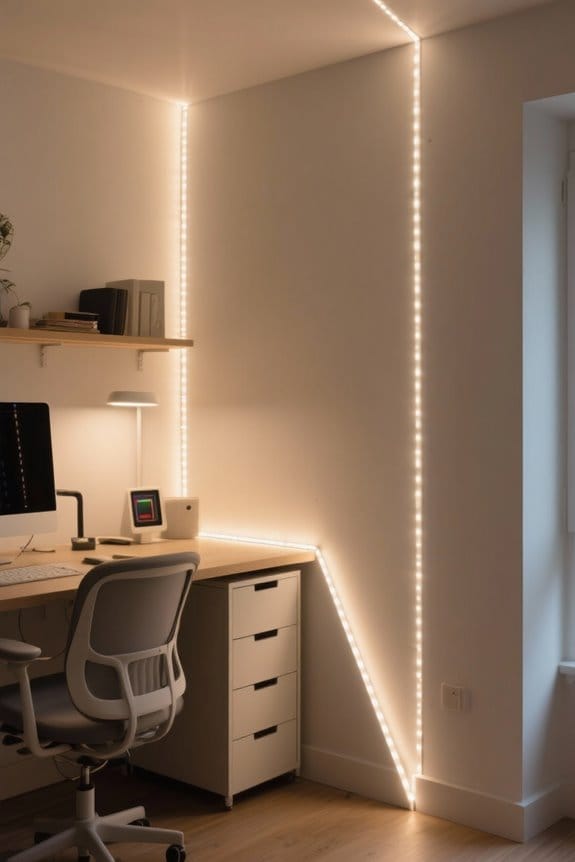
Tunable white LED strip lights offer significant versatility, allowing users to adjust the color temperature from a warm 2700K to a cool 6500K. This adaptability enables users to create tailored lighting environments suited for various activities and moods. The dimmable capabilities of these lights enhance the personalized lighting experience, providing flexibility in both brightness and color temperature. Installation may require compatible smart controls, often utilizing protocols such as 0-10V or DMX for precise adjustments. Tunable white LEDs are essential for human-centric lighting designs, improving well-being by simulating natural daylight patterns. Their versatility makes them ideal for diverse applications in residential, office, and healthcare settings, enhancing comfort and productivity as needed. Modern tunable white systems can reach impressive 1600 lumens output for effective illumination in larger spaces.
Key Differences Between RGB and Tunable White LEDs
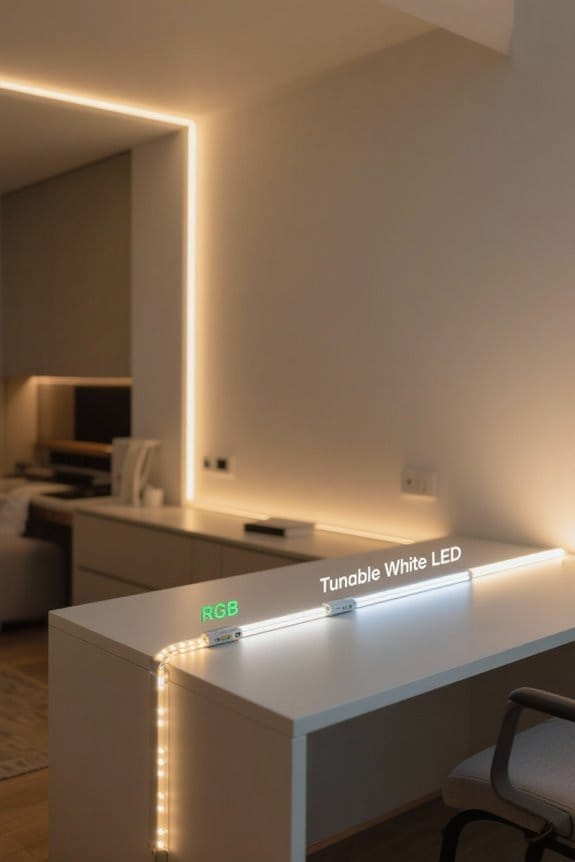
In comparing the key differences between RGB and tunable white LEDs, it is important to understand their core functionalities and applications. RGB LEDs blend red, green, and blue to create over 16 million colors, but lack the ability to produce true white light. In contrast, tunable white LEDs offer adjustable color temperatures, ranging from 2700K for warm white to 6500K for cool white, enhancing various settings with ideal white light. While RGB LED strips are ideal for decorative ambiance, tunable white systems prioritize productivity and well-being, adapting to circadian rhythms. Additionally, RGB setups often require complex control systems for managing color effects, whereas tunable white LEDs typically feature simpler interfaces for easy adjustment of lighting options. Modern tunable white LED systems can achieve 8,000 to 18,000 lumens of brightness output while maintaining impressive energy efficiency.
Recommended Products

Versatile Lighting Options: Our dimmable LED shop light features 6 CCT tunable settings (3000K-6500K) and 5 wattage options (20W/25W/30W/35W/40W), providing customizable illumination. This 4ft LED strip light enhances visibility in warehouses, ensuring flexibility for various tasks.

Color changing COB LED flexible strip lights with continuous light display, no dots or breaks

Choose our custom cut 120V LED Cool White strip lights if you don’t need an entire spool of strip lighting. Our experienced staff will cut your lighting to the length you need (in 1.64 foot intervals) and install the power cord and end cap so they are ready to plug in the moment you receive them.
Applications of RGB vs. Tunable White LEDs
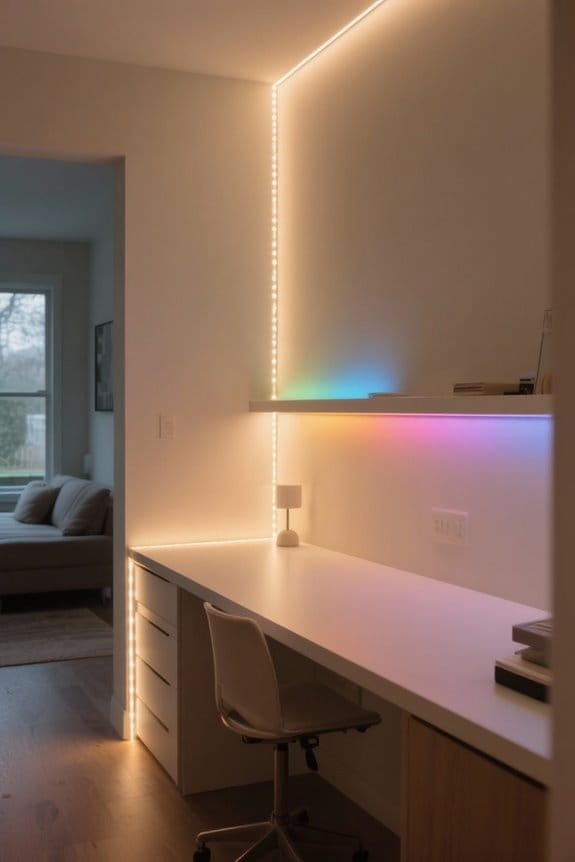
Various environments benefit from the unique applications of RGB and tunable white LEDs. RGB LEDs excel in dynamic settings, producing over 16 million color combinations ideal for decorative installations and mood lighting. They create vibrant displays often seen in theaters and entertainment venues. In contrast, tunable white LEDs adapt color temperature to meet varying lighting conditions, essential for office and residential spaces. These LEDs simulate daylight, enhancing circadian alignment and supporting well-being in healthcare facilities. Their ability to provide accurate color reproduction makes them perfect for task lighting scenarios. Recognize the distinct applications of RGB and tunable white LEDs to enhance the functionality and aesthetic of any space, ensuring the right lighting meets practical and emotional needs. The best tunable white LEDs offer color temperature options ranging from warm 3000K to daylight 5000K settings for optimal versatility.
Recommended Products

COLOR TUNABLE - Built with a 5 CCT color tunable switch on each LED light panel that will allow you to see in real time which kelvin temperature fits your space. Make a simple adjustment to go from 3000K soft white, 3500K natural white, 4000K cool white, 5000K bright white, or 6500K daylight. Don't hassle trying a single color 2x2 LED flat panel light to find the ideal ceiling light when you can have multiple options in a single fixture.

✅ High Performance&Wide Application: 2x4 led ceiling panels are evenly distributed and soft. No flicker, no noise. Experience outstanding illumination with high-performance features, powered by energy-efficient LED chips. Perfect for schools, universities, offices, churches, restaurants, basements, gyms, hospitals, garages, meeting room, etc

SURFACE-MOUNT & CORNER PROTECTION; This AIKVSXER 1x4 LED flat panel light adopts surface-mount installation, no need for drywall cutting like flush mount recessed lights. Reinforced corners avoid damage during transport, ultra-thin design supports 120-277V wide voltage.
Advantages of RGB LED Strip Lights
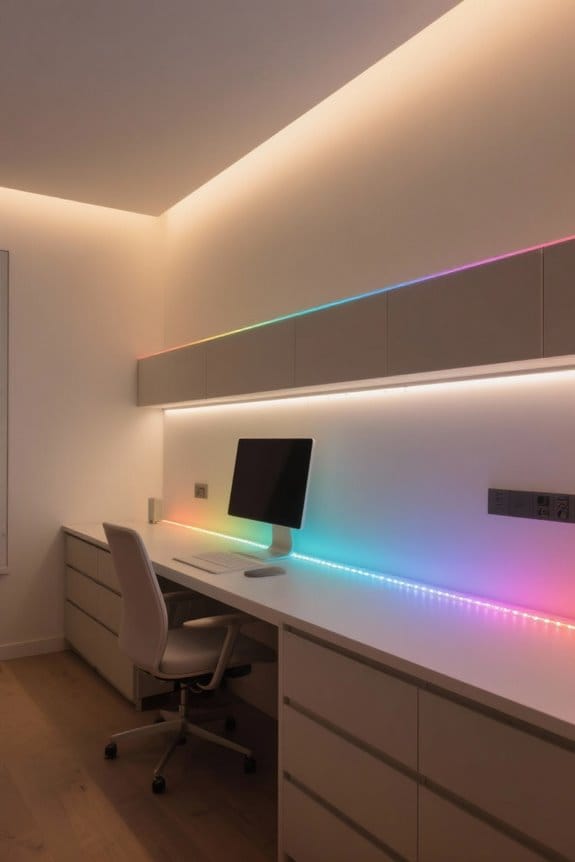
RGB LED strip lights stand out due to their remarkable versatility and extensive color options. These lights can display millions of hues through combinations of red, green, and blue diodes. This enables customizable lighting effects such as dynamic strobing, fading, and pulsing, which can transform spaces like gaming rooms and home theaters. Additionally, they are compatible with smart controls, allowing users to manage lighting via apps or voice commands for added convenience. The advantages of RGB LED strip lights extend to accent lighting, making them ideal for themed decorations during parties. Moreover, these strips can function as ambient or task lighting, showcasing their suitability for a wide array of residential and commercial applications. The possibilities are near endless. With an impressive service life of 50,000 hours, these LED strips provide long-lasting illumination while maintaining energy efficiency.
Recommended Products

Get your SMD-5050 RGB multi-color LED strip lighting cut just for your project. Just select the length of your strip lights (in intervals of 1.64 feet or every 19.5 inches) and we will put it together for you including a mini inline controller

Color-Changing Effects – Select among color effects like wave, sequential, slow glow, slow fade and twinkle. With our color-changing strip light, you can make any color.

Product 1: WHAT’S IN THE BOX - Includes one White and Color Ambiance 65" TV smart led light strip with mounting brackets designed for use on 65 inch TVs; Perfect for immersive gaming and TV watching experiences
Advantages of Tunable White LED Strip Lights
Tunable white LED strip lights offer significant advantages by allowing users to adjust color temperatures from a warm 2700K to a cool 6500K. This flexibility supports human-centric lighting, enhancing well-being and productivity by aligning with the human circadian rhythm. Users can benefit from dimmable options, providing enhanced control over brightness and color temperature for creating the desired ambiance. These lights are versatile, suitable for residential, office, and healthcare environments, improving mood and functionality across various settings. In addition, compared to traditional single-color LEDs, tunable white models reduce energy consumption while maintaining excellent illumination quality. Emphasize the importance of choosing tunable white LED strip lights to adapt effectively to different tasks and times of day. With 700 lumens brightness, these lights provide optimal task lighting for detailed work while maintaining energy efficiency.
Recommended Products

Warm Tips Before Purchase: ①Please select a length that closely matches your requirements, as the strip lights cannot be cut. ②This SW1 waterproof strip light is only compatible with the Lepro app (not compatible with the "Lepro Lampux" or "Smart Life" app). ③No remote, as the remote only offers a few fixed modes. We have released more exciting features and DIY designs on our app, which is continuously updated.

SUPERIOR-COLOR RENDERING: 3000K Warm White CCT provides excellent color rendering (94+ CRI), creating a natural light that displays colors accurately

Continuous COB white tape light featuring a high CRI (90) and tunable color temperature control
Choosing the Right LED Type for Your Space
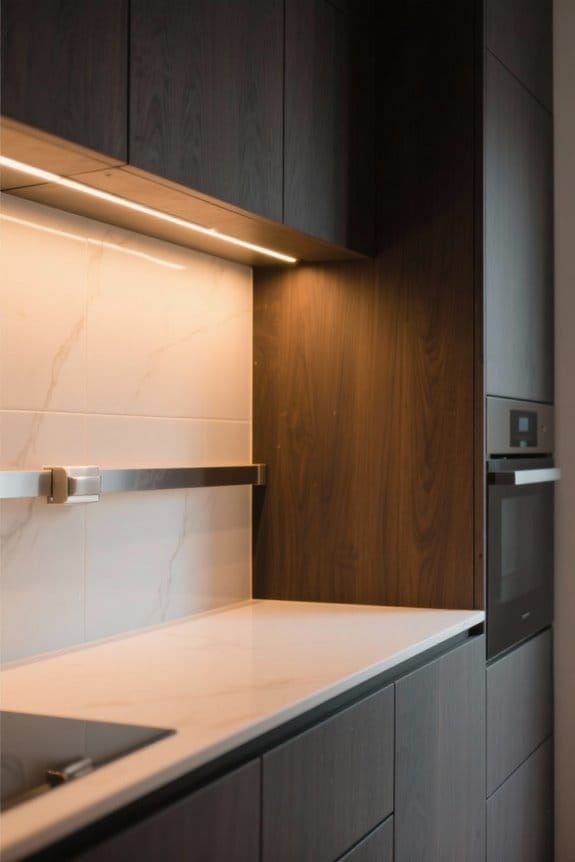
Selecting the right LED type for a space requires careful consideration of its intended use and lighting needs. RGB LEDs offer vibrant lighting with access to over 16 million colors, making them ideal for decorative and entertainment settings. However, they lack true white light. In contrast, tunable white LEDs provide adjustable illumination, allowing users to select color temperatures ranging from 2700K to 6500K. This flexibility supports task-oriented lighting for home offices or kitchens, enhancing productivity. Furthermore, tunable white solutions are more energy-efficient, as they reduce unnecessary color mixing. As a result, assess your space’s primary functions; choose RGB for dynamic atmospheres, and opt for tunable white to create adaptable lighting setups tailored to daily activities. Many modern LED strip lights can provide up to 1400 lumens of brightness, equivalent to a traditional 100W bulb while consuming significantly less power.
Recommended Products

RGB+WW Multicolor + Tunable White tape light creates a beautiful range of vibrant colors and adjustable warm and cool shades of white

Stable Lighting -> premium 120 LEDs/M of SMD 2835 are adopted for this 120V strip lighting collection, which shines bright and uniform with 8120 lumen without black dots.

Armacost Lighting RibbonFlex Pro 24V White COB LED Strip Light Tape 4000K, 315 Lumens/Ft, 20M 172360
Continuous LED light tape features a high CRI (Color Rendering Index) for natural, vibrant light output
Frequently Asked Questions
What Is the Difference Between RGB White and White LED Lights?
RGB white lights rely on color mixing, allowing vibrant hues but struggle with color accuracy and visual comfort. In contrast, white LEDs offer consistent light intensity, lower power consumption, and longer bulb lifespans, suiting diverse application uses.
What’s Better, RGBIC or RGBICW?
An artist blending hues faces choices; similarly, RGBIC excels in vibrant displays, while RGBICW offers superior light quality and versatility. User preferences and installation complexity hinge on desired brightness levels and application suitability, despite cost considerations.
What Is Tunable White LED?
Tunable white LEDs allow color temperature adjustment, supporting circadian rhythm and enhancing mood lighting effects. Their energy efficiency benefits, coupled with versatile applications in design, automation integration, and cost considerations, align with user preferences in modern lighting.
Can an RGB LED Make White Light?
An RGB LED can produce white light through complex color mixing; however, its light perception often remains tainted by hues, undermining white balance. This limits its design flexibility and efficiency for ambient lighting applications compared to dedicated white LEDs.