As an Amazon Associate, we earn from qualifying purchases. Some links on this site are affiliate links at no extra cost to you. Our recommendations are based on thorough research and editorial judgment.

LED Vs Fluorescent Under-Cabinet Lighting: What’s the Difference

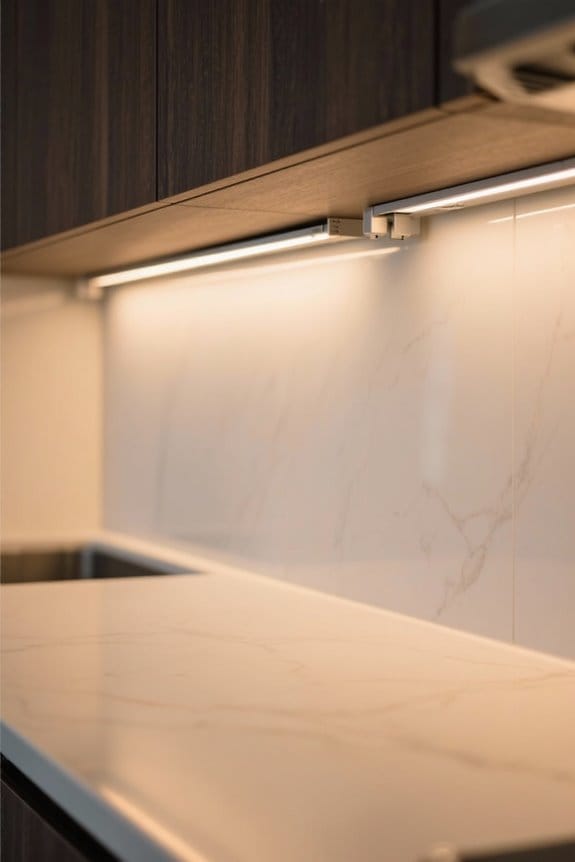
Under-cabinet lighting enhances visibility and safety in workspaces, with LED and fluorescent options each providing unique benefits. LED lights consume up to 80% less energy and have a lifespan of 25,000 to 50,000 hours, while fluorescent lights last only 10,000 to 15,000 hours. Consider LED for longevity and lower energy bills, and fluorescent for lower upfront costs. Evaluate your installation requirements and environmental impact for the best choice. Discover further distinctions and practical applications below.
Key Takeaways
- LED under-cabinet lighting offers a longer lifespan of 25,000 to 50,000 hours compared to fluorescent’s 10,000 to 15,000 hours.
- LED lights are more energy-efficient, using up to 80% less electricity, resulting in lower long-term utility costs.
- Fluorescent lights have a lower initial cost, making them budget-friendly for consumers seeking affordable lighting options.
- LED fixtures generate minimal heat, enhancing safety, while fluorescent lights emit more heat, which can be problematic in confined spaces.
- While LED options provide varied color temperatures, fluorescent lights typically have limited dimming capabilities and may flicker.
Why Under Cabinet Lighting Matters
You may be interested
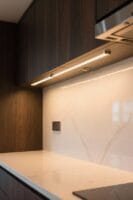


Under cabinet lighting serves as an essential component in both kitchens and workspaces. This lighting eliminates shadows on work surfaces, enhancing safety and visibility. It provides the necessary brightness for task lighting, allowing for efficient cooking or crafting. Users can choose from customizable lighting options, adjusting from soft to bright light based on their needs. Additionally, energy-efficient choices like LED lights or fluorescent lighting play critical roles in reducing consumption. Under cabinet lighting delivers focused illumination, minimizing eye strain and boosting productivity. It also spotlights design elements such as countertops, enhancing overall aesthetics. In modern kitchens, this feature combines functionality and style, making it indispensable in contemporary home designs. Effective lighting, as a result, greatly enriches the user experience, ensuring both safety and beauty. Modern LED lighting solutions can reduce energy consumption by up to 85% compared to traditional lighting options.
Advantages of LED Under Cabinet Lighting
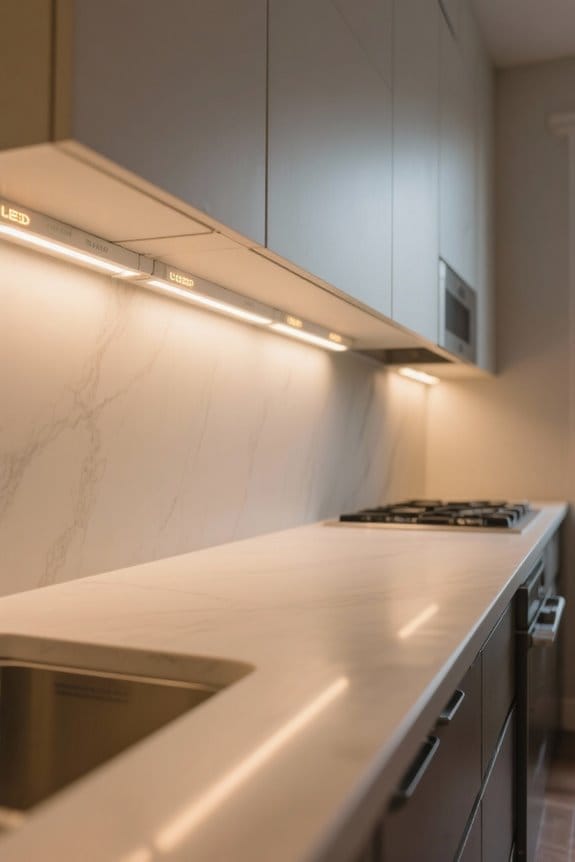
LED under cabinet lighting presents numerous advantages for homeowners seeking efficiency and functionality. This energy-efficient option utilizes up to 80% less electricity than traditional incandescent bulbs, guaranteeing substantial energy savings over time. With a long lifespan of 25,000 to 50,000 hours, LED fixtures minimize the need for frequent replacements compared to fluorescent lights, which last just 10,000 to 15,000 hours. Importantly, they generate minimal heat, enhancing safety in kitchen environments and alleviating stress on cooling systems. Homeowners can also choose from various color temperatures, offering ideal illumination without compromising ambiance. Finally, their durable design guarantees resilience against damage and environmental friendliness, as LEDs do not contain hazardous materials like mercury. Consider these benefits for an upgrade. Many models feature motion sensor capabilities that detect movement within 10-16 feet, providing convenient hands-free operation while further reducing energy consumption.
Recommended Products

Voice Control with Alexa: Use voice commands or the Alexa app to control power, dimming, night mode and adjustable white light for the under cabinet lighting bars (no third party app required).

These LED lights come on with any motion. Even in Daylight. Lock Connection is based in Lancaster PA. If you want LED lights that come on only at night, please order our LED-310D lights

【Smart Motion Sensor - Lights Your Path Automatically】: Equipped with an advanced motion and light sensor, ModoLight automatically turns on when you approach within 3 meters. Enjoy hands-free, reliable illumination for hallways, stairs, closets, and nighttime navigation.
Disadvantages of LED Under Cabinet Lighting
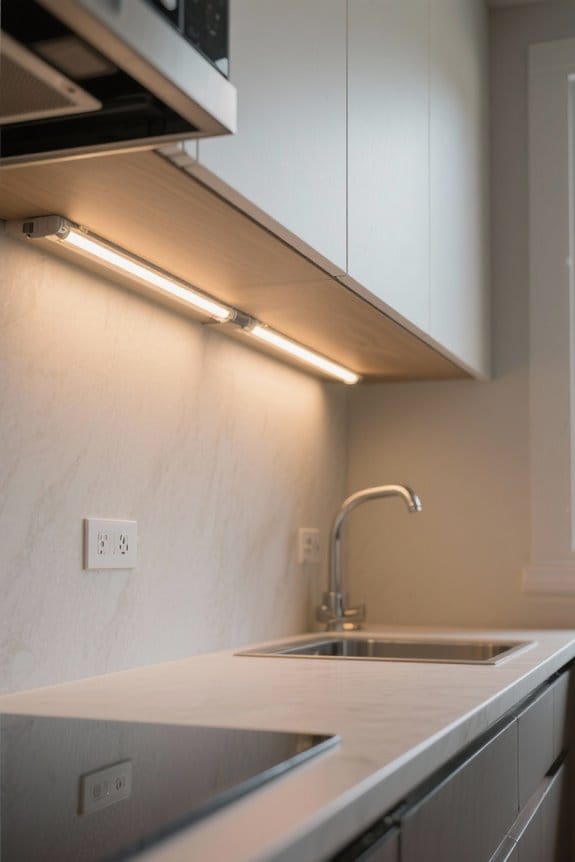
Despite the numerous benefits that LED under cabinet lighting offers, certain disadvantages warrant careful consideration before making a purchase. The initial cost for these LED fixtures is typically higher than that of fluorescent options, which can deter budget-conscious consumers. While LEDs have a lifespan averaging 25,000 to 50,000 hours, their higher upfront price may not justify long-term investments for short usage periods. Additionally, these lights often require specific drivers or power supplies for operation, complicating the installation process and increasing overall costs. Inadequate ventilation can also lead to performance problems, affecting lifespan in enclosed areas. Moreover, while many LED fixtures provide dimming capabilities, compatibility issues with existing dimmer switches might result in flickering or other performance problems. Some models require motion sensor activation within specific ranges of 10-12 feet, which may not suit all kitchen layouts or user preferences.
Recommended Products

COMPLETE INDEPENDENCE PACKAGE: Includes premium rear lockable storage pod, cup holder, quality phone holder, and USB-C phone charger so your essentials stay secure, powered, and within reach wherever you go.
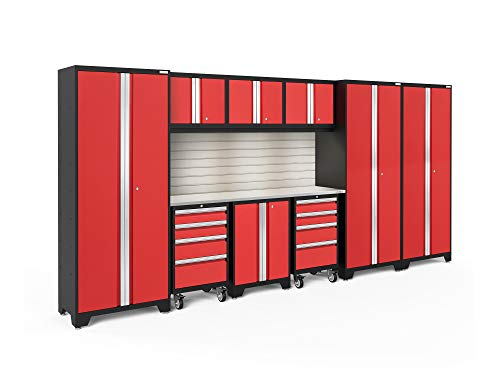
Set Includes: 3x Multi-Use Lockers, 2x Rolling Tool Drawer Cabinets, 1x Two-door Base Cabinet, 3x Wall Cabinets, 1x 72 in. Stainless Steel Worktop, 1x 72 in. Backsplash Kit, 1x LED lights with power adapter and 2x LED Lights with Connector Cable

Set Includes: 2x Multi-Use Lockers, 1x Rolling Tool drawer Cabinet, 1x Two-door Base Cabinet, 3x Wall Cabinets, 1x 72 in. Stainless Steel Worktop, 1x 72 in. Backsplash Kit, 1x LED lights with power adapter and 2x LED Lights with Connector Cable
Advantages of Fluorescent Under Cabinet Lighting
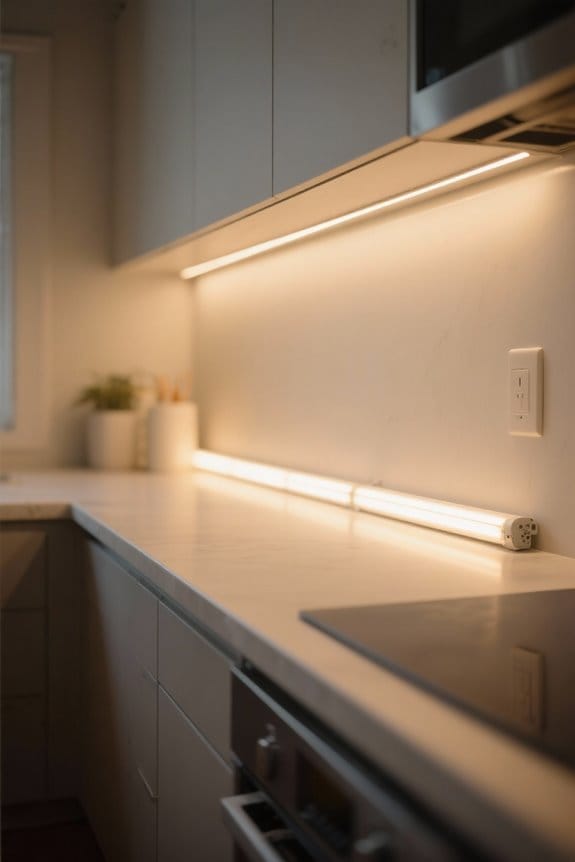
When evaluating under cabinet lighting options, fluorescent fixtures stand out as a particularly advantageous choice for budget-conscious homeowners. These fixtures are generally affordable upfront, making them accessible for various projects. Utilizing modern T5 bulbs, they provide bright, even illumination that enhances task lighting, especially in kitchens. Fluorescent under cabinet lighting emits low heat, creating a cooler environment beneath cabinets, which is beneficial during warm weather. With a lifespan ranging from 10,000 to 15,000 hours, these lights offer a moderate duration before replacement is necessary. In addition, many connectable models allow for seamless integration, ensuring consistent lighting coverage across extensive areas, which is essential for well-lit workspaces. As a result, fluorescent lighting is an effective choice for value and functionality. However, they fall short of the 25,000 hour lifespan typically achieved by modern LED cabinet lighting alternatives.
Disadvantages of Fluorescent Under Cabinet Lighting
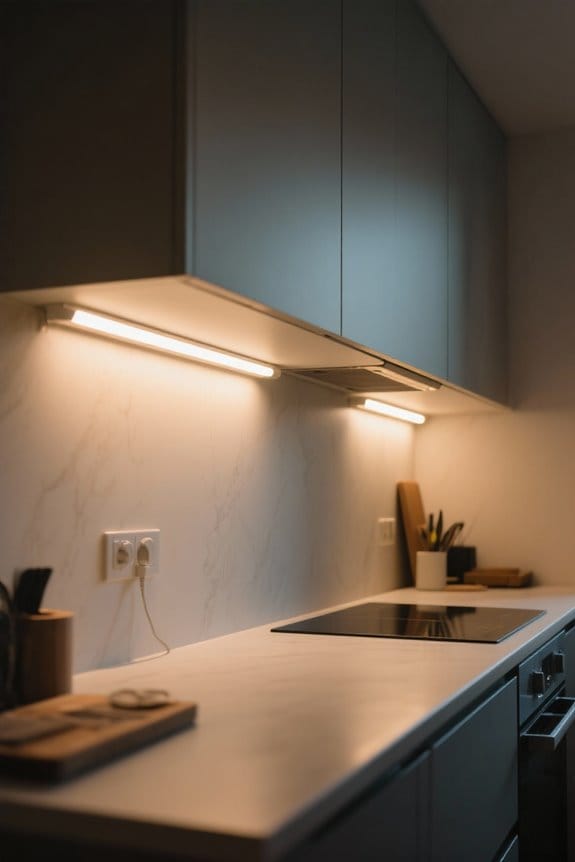
While fluorescent under cabinet lighting offers some benefits, several notable disadvantages may deter homeowners from selecting this option. First, these fixtures, typically lasting only 10,000 to 15,000 hours, require frequent replacements. Additionally, they contain mercury, which poses significant health and environmental risks during disposal. Moreover, fluorescent lights have limited dimming capabilities, often requiring specific ballasts to function properly. Homeowners may also experience annoying flickering issues and noise over time, distracting in essential work environments. Importantly, these lights emit more heat than LED options, which can create challenges in confined spaces with limited ventilation. Understanding these factors is vital for ensuring effective lighting installation and maintaining a safe, efficient workspace. Switching to LED cabinet lights can achieve up to 70% energy savings while providing superior longevity of up to 50,000 hours.
When to Choose LED Under Cabinet Lighting
What factors should homeowners consider when deciding to install LED under cabinet lighting? First, they should evaluate energy efficiency; LED solutions consume up to 80% less electricity than incandescent lights. With a remarkable lifespan ranging from 25,000 to 50,000 hours, LEDs offer significant durability, making them ideal for high-use areas. Homeowners may also appreciate customizable color temperatures, which allow for selection between warm yellow and crisp white lighting, enhancing the kitchen’s ambiance. Further, consider advanced features like dimming capabilities and connectable fixtures for seamless, even illumination. Finally, choosing LED under cabinet lighting supports environmentally conscious choices, as they are recyclable and free from harmful materials found in fluorescent options. Prioritize these factors for best lighting solutions. For optimal task lighting in kitchen workspaces, look for LED strips that provide at least 300 lumens per foot to ensure adequate brightness for food preparation and cooking activities.
When to Choose Fluorescent Under Cabinet Lighting
Choosing fluorescent under cabinet lighting can be an effective solution for budget-conscious homeowners seeking affordability without sacrificing functionality. With an affordable cost, fluorescent fixtures deliver bright illumination ideal for task lighting in kitchen cabinets and workspaces requiring consistent visibility. These fixtures typically offer a lifespan ranging from 10,000 to 15,000 hours, necessitating more frequent replacements than their LED counterparts. Although generally energy-efficient, they do emit more heat, making careful placement vital to avoid heat buildup. Homeowners can find fluorescent lights easily at most hardware stores, ensuring convenient replacements. When budget constraints are a priority, and frequent maintenance is acceptable, fluorescent under cabinet lighting remains a practical option for effective illumination in essential areas of the home. While fluorescent options require more frequent replacement compared to modern LED cabinet lights which last approximately 50,000 hours, they still provide reliable task lighting for basic needs.
Frequently Asked Questions
What Type of Lighting Is Best for Under Cabinets?
For under-cabinet lighting, LED solutions excel due to superior task lighting, energy efficiency, longer bulb lifespan, and appealing aesthetics. Their dimmable options and lower heat output also enhance brightness levels compared to fluorescent alternatives, despite higher initial costs.
What Is the Negative Side of LED?
Like a double-edged sword, LEDs present downsides: initial cost factors, heat emission issues affecting lifespan, potential flickering effects with dimming compatibility limitations, and color rendering variability, raising concerns about eye strain and environmental impacts.
Is It Worth Replacing Fluorescent With LED?
Replacing fluorescent lighting with LED is worth it due to energy efficiency, cost savings, long lifespan, and lower heat emission. LEDs offer better brightness levels, color temperature, aesthetic appeal, and versatile dimming options, enhancing overall compatibility.
What Is the Disadvantage of LED Light?
The disadvantages of LED lights include higher initial investment, potential flicker issues, and reduced dimming capabilities. Additionally, they may produce harsh brightness levels, cause color rendering concerns, and present heat generation challenges in poorly ventilated spaces.