As an Amazon Associate, we earn from qualifying purchases. Some links on this site are affiliate links at no extra cost to you. Our recommendations are based on thorough research and editorial judgment.

What Are Lumens and Why They Matter for Task Lighting

Lumens quantify the total visible light emitted by a source, directly impacting brightness. For effective task lighting, consider 500 to 750 lumens for visibility. In office settings, approximately 40-50 lumens per square foot is ideal. Higher lumens enhance productivity and comfort, while improper levels can cause eye strain. LEDs are particularly advantageous due to higher lumens per watt, providing energy efficiency and longevity. Understanding lumens is essential to create effective, well-lit workspaces that support various tasks. More insights follow.
Key Takeaways
- Lumens measure the total visible light emitted by a lighting source, indicating its brightness.
- Task lighting generally requires 500 to 750 lumens for optimal visibility and productivity.
- Proper assessment of lumen levels is crucial to avoid under- or over-lighting in workspaces.
- LED lighting offers higher lumens at lower wattages, promoting energy efficiency and long lifespan.
- Accurate lumen levels enhance comfort, productivity, and compliance with safety standards in various tasks.
Understanding Lumens and Their Significance
You may be interested


When considering the effectiveness of lighting, one must grasp the significance of lumens, the unit that quantifies the total visible light emitted by a source. Lumens measure light output, with higher lumens directly correlating to increased brightness. For effective task lighting, a lumen range of 300 to 750 is often necessary to guarantee adequate visibility. This amount of light helps reduce eye strain during activities such as reading or using computers. Selecting appropriate lumens optimizes visual comfort and promotes energy efficiency. Furthermore, improper lumen levels can lead to under- or over-lighting, which may hinder productivity and safety. As a result, understanding lumens is essential for developing tailored lighting solutions that enhance the workspace and meet specific needs efficiently. High-performance LED fixtures like the Nora LED undercabinet light deliver up to 5000 lumens of brightness for specialized task lighting applications.
The Relationship Between Lumens and Brightness
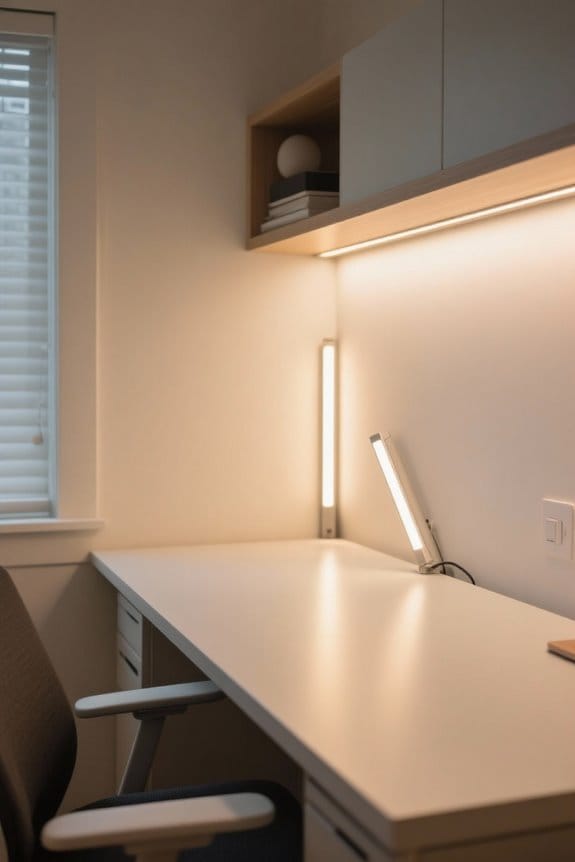
Lumens, a vital measure of light output, play an essential role in understanding brightness. The total visible light emitted by a light source is quantified in lumens, directly linking to its brightness. Effective task lighting typically requires approximately 500 to 750 lumens to guarantee adequate lighting levels for improved visibility. A 1000-lumen LED lighting fixture, for instance, can outperform a 500-lumen option while using the same wattage, enhancing illumination for focused activities. Balancing lumens not only boosts brightness but also promotes energy efficiency, allowing lower wattage solutions without sacrificing light output. Properly selected lumens reduce eye strain, facilitating a comfortable working environment. Therefore, a careful assessment of lumens is essential for ideal task lighting. Modern LED cabinet lights can deliver up to 3000 lumens while consuming only 20 watts of power, making them highly efficient for task-specific illumination.
Recommended Products

2-mode operation: delivers 750 lumens on High mode or 440 lumens on Low mode

★【Innovative Design】Advanced LED technology and four-plus-one deformable design. Now you get a lamp that can have a perfect light distribution curve according to your application, forget the experience of using one bulb or lighting fixture for general lighting along with another bulb to get more light in the work area. Each 90 degree adjustable wing, is a better choice compared with general LED corn light, LED bulbs and low bay light.

120 LED High Brightness: Equipped with 120 high-brightness LED beads, the PACOVY floor lamp delivers a powerful 18W / 1800-lumen output, providing brightness equivalent to a traditional 120W bulb while saving up to 85% energy. This led floor lamp effectively illuminates the entire workspace, making activities such as working, reading, crafting, sewing, beauty treatments, nail art, tattooing, and puzzles easier and more enjoyable
Importance of Lumens in Task Lighting
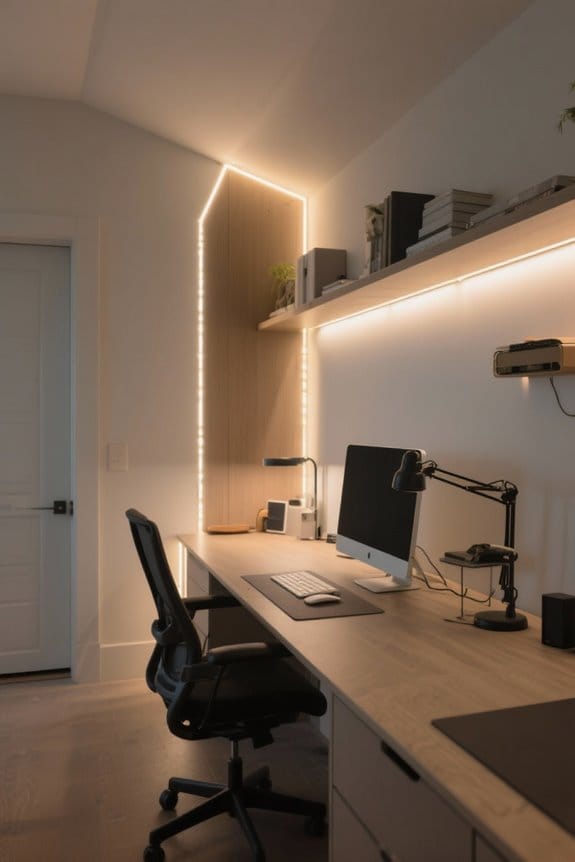
Effective task lighting is vital for enhancing productivity and maintaining visual comfort during intricate activities. To achieve adequate visibility, task lighting typically requires higher lumens, usually ranging from 50 to 750 lumens. Proper brightness levels are essential to prevent eye strain, especially in areas like desks or workstations, where 50-75 lumens per square foot is recommended. Increasing lumens not only boosts functionality but also guarantees compliance with safety standards, thereby promoting a safer working environment. LED lighting options provide a superior solution, offering higher lumens at lower wattages, enhancing energy efficiency without sacrificing brightness. By understanding the importance of lumens in task lighting, individuals can create effectively lit spaces that foster productivity and visual comfort. Modern surface mount LED fixtures can deliver up to 4000 lumens while consuming minimal power, making them ideal for task-oriented spaces.
How to Determine the Right Lumen Levels for Tasks
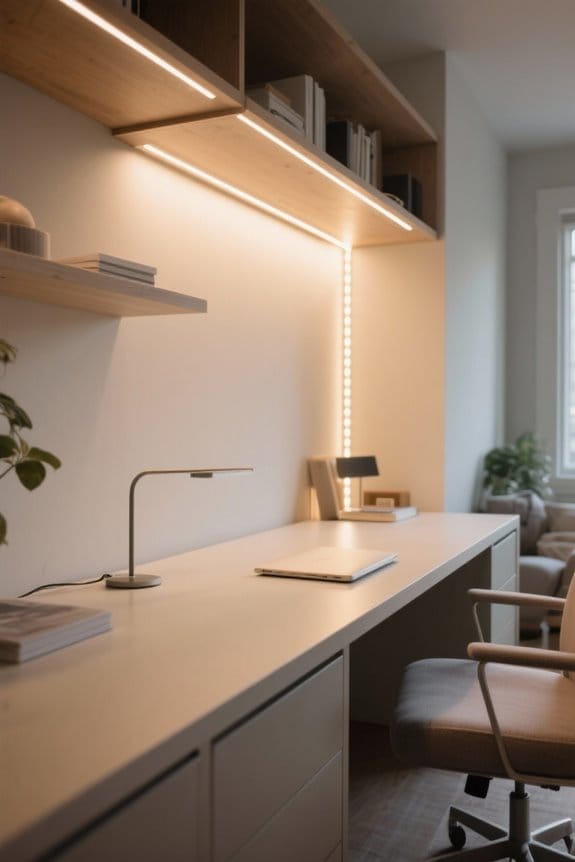
How can one accurately determine the right lumen levels for various tasks? First, assess the task requirements; general office work typically demands about 40-50 lumens per square foot, while detailed tasks like computer work can require 500-750 lumens. Measure the total square footage of the workspace by multiplying its length by width. Adjust this calculation for natural light; daylight may reduce needed artificial lighting by 10-20%. Different spaces have varied lumen needs: conference rooms typically require 30-50 lumens per square foot, and reception areas need 20-40 lumens. For kitchen task lighting, consider that modern CRI 90 LED lighting can provide up to 1,720 lumens while maintaining true color representation for food preparation. Choosing the right lumen output guarantees adequate brightness and ambiance, facilitating energy savings and effective light distribution, which ultimately impacts productivity and comfort in the workspace.
Recommended Products

Art Deco Grand Tiered Design for Statement Spaces: Features a striking multi-layered silhouette crafted from premium smoked clear textured glass panels and a luxurious gold metal frame—true to Art Deco style, it becomes a bold, eye-catching centerpiece that infuses large dining rooms, great rooms, foyers, or staircases with vintage-glam elegance and dramatic visual appeal

This stunning 47-inch chandelier showcases a layered silhouette with clear textured glass panels and a sleek gold finish, adding a luxurious Art Deco touch that elevates any dining room, living room, or entryway

Smart App & Wireless Control:The LED Flat Panel Light offer flexible lighting control via the app and 2.4G wall switch. Easily adjust brightness, color temperature, and night light modes at any time. The built-in memory function automatically saves your preferred settings for added convenience
Common Tasks and Their Lumen Requirements
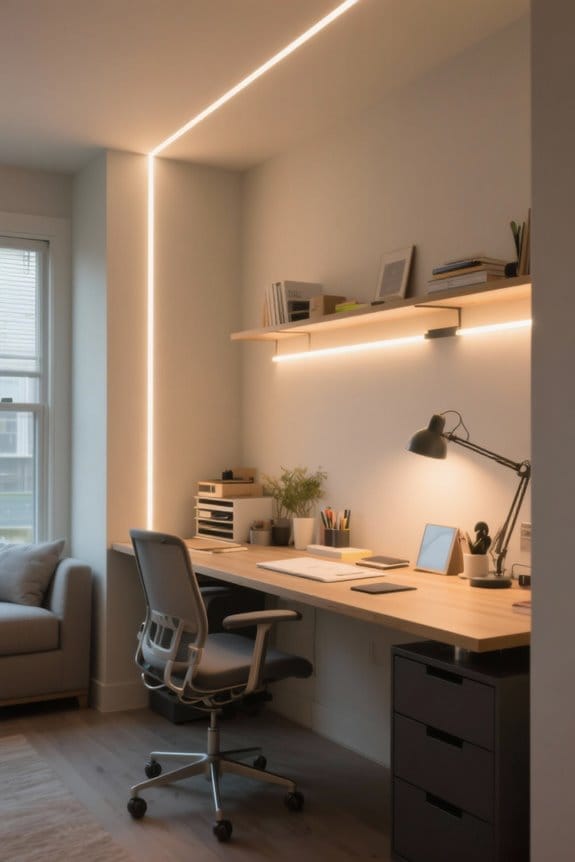
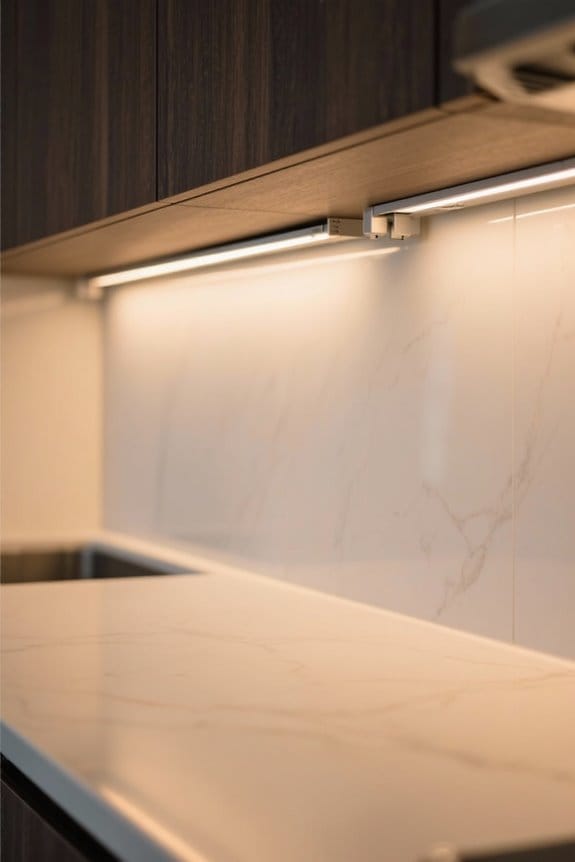
Understanding the specific lumen requirements for various tasks is essential for optimizing both performance and comfort. For reading or writing, illumination levels should range from 300 to 500 lumens. Computer work requires increased brightness of 500 to 750 lumens to alleviate eye strain. Detailed tasks, such as sewing or intricate craftwork, benefit from 750 to 1,200 lumens, ensuring precision with sharp, focused light. In cooking, maintaining 300 to 500 lumens is vital for safety and visibility around sharp tools. Additionally, large task areas like workshops or garages necessitate at least 100 to 150 lumens per square foot. Proper lighting helps enhance the user experience by providing the Right Light tailored to each task’s brightness needs. Installing anodized aluminum channels under cabinets helps protect LED strips while efficiently distributing task lighting for optimal illumination.
Recommended Products

Efficient BL Brushless motor is electronically controlled to optimize battery energy use for up to 50% longer run time per charge
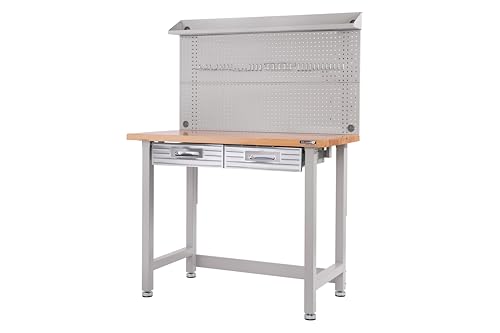
SOLID-WOOD TOP - Work with confidence on a 1. 5" thick solid wood surface. Designed for heavy-duty to accommodate power tools, mounts and clamps safely.

Virtually indestructible LED emitter regulated to maximize output and runtime
The Advantages of LED Lighting in Task Applications
Incorporating LED lighting into task applications revolutionizes both efficiency and effectiveness in illuminating spaces. LED light sources deliver considerably higher lumens per watt, achieving up to 75% energy savings while maintaining ideal brightness. For tasks like reading or computer work, utilizing LED lights that emit between 500 to 750 lumens enhances visibility and reduces eye strain. The long lifespan of LEDs, approximately 25,000 to 50,000 hours, minimizes maintenance costs and decreases the frequency of bulb replacements. Additionally, the ability to adjust brightness allows users to tailor lighting to specific needs. With lower heat output, LED task lighting contributes to a cooler workspace, promoting comfort and productivity during prolonged activities, ensuring an effective work environment. Modern LED under-cabinet lights like the Barrina T5 model can produce up to 2200 lumens, making them exceptionally effective for detailed task work in larger spaces.
Recommended Products
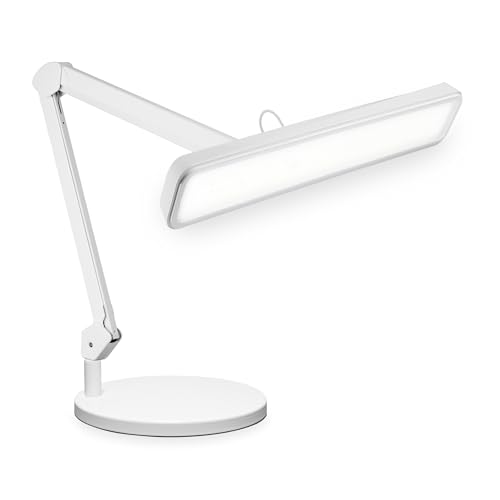
BRIGHT 2,500 LUMEN BRIGHTNESS: 30W LED light with 162 SMD LEDs floods large desks with even, shadow-free illumination. Ideal for nail salon tables, sewing rooms, craft studios, and home offices. Trusted by professionals.

Customizable Ambiance for Every Space: Achieve the perfect lighting atmosphere for your living room, kitchen, bathroom, bedroom, garage, or warehouse. Our 3" canless LED recessed lights offer 5 adjustable color temperatures (2700K-5000K) controlled via a junction box switch. Select warm tones for relaxation or cool daylight for task-oriented areas—all with one versatile fixture.

REAL 6 WATT LED BULBS - Using 6-pcs of led filament in each led bulb and large size led chips in filaments, 6 watt actual power with 750 lumens luminous flux, high brightness and low power consumption, E12 candelabra base, AC 110-120V input voltage, with overload protection, short circuit protection and over temperature protection
Ensuring Optimal Lighting for Safety and Productivity
Guaranteeing ideal lighting in workspaces is vital for maximizing safety and productivity. The right lumen levels are critical; for computer work, task lighting should provide between 500 and 750 lumens to guarantee adequate visibility while reducing eye strain. Brighter light can enhance concentration and performance, as enhanced lighting can boost employee productivity by up to 20%. Regarding safety, proper lighting installation can reduce accident risk by 30%. Different areas require specific light levels; for instance, conference rooms often need 30-50 lumens per square foot. Utilizing high CRI LED downlights generates a total amount of visible light efficiently while consuming less energy, making them a superior choice for prime illumination. Energy-efficient LEDs provide exceptional longevity with lifespans ranging from 20,000 to 50,000 hours, significantly reducing maintenance needs and replacement costs.
Frequently Asked Questions
How Many Lumens Do I Need for Task Lighting?
In a well-lit workspace, shadows dance away, revealing ideal illumination. For task lighting, 450-750 lumens enhance functionality, reducing eye strain. Thoughtful lighting design balances lumen levels and color temperature, ensuring both efficiency and brightness thrive in harmony.
Is 500 or 800 Lumens Brighter?
In lumens comparison, 800 lumens markedly exceeds 500 lumens in brightness perception, enhancing task lighting efficiency. This watt equivalence guarantees safe illumination, optimizing energy consumption while accommodating varying color temperatures and lumen sources for demanding tasks.
Why Do Lumens Matter?
Lumens matter as they illuminate spaces like stars in a dark sky, guiding visual comfort. They offer brightness measurement for light sources, enhancing workspace ambiance and energy efficiency while influencing task lighting and the quality of color temperature.
Is 2000 Lumens Twice as Bright as 1000?
No, 2000 lumens is not twice as bright as 1000 due to brightness perception variances. Lumens explained in lighting applications highlight that factors like ambient lighting, color temperature, and workspace productivity influence overall visual comfort and efficiency.