As an Amazon Associate, we earn from qualifying purchases. Some links on this site are affiliate links at no extra cost to you. Our recommendations are based on thorough research and editorial judgment.


Understanding Power Requirements for LED Strips

Understanding power requirements for LED strips is vital for peak operation. First, determine the voltage rating, typically 12V or 24V. Next, calculate power draw; for example, a 10W/m strip at 5 meters totals 50W. Always select a power supply that exceeds total wattage by 20% to prevent issues like dimming. Verify connector types and guarantee compatibility with your power supply. Proper setup guarantees efficiency. Continue to explore this topic for more detailed insights on installation and performance enhancement.
Key Takeaways
- Verify the LED strip voltage rating (12V or 24V) to match with the power supply to ensure proper function.
- Calculate total wattage by multiplying watts per meter by strip length; choose a power supply exceeding this by 20-30%.
- Ensure the connector type for the LED strip matches the power supply, using adapters if necessary for bare wires.
- Check that the power supply voltage aligns with local standards (e.g., 120V in North America) for safe operation.
- Address power supply issues such as insufficient wattage or mismatched voltage to prevent flickering or damage to the LED strips.
Determining the LED Strip Voltage
You may be interested



When determining the voltage of an LED strip, how can one ascertain compatibility with their power supply? Begin by verifying the product specifications for the correct voltage rating, typically either 12V DC or 24V DC. Examine the LED strip for markings that indicate its voltage. Verifying that the power supply voltage matches the LED strip’s voltage is critical; a mismatch can cause malfunction or permanent damage. Additionally, confirm the AC input voltage requirements, which usually align with local standards like 120V in North America. This careful verification process reduces safety hazards and abnormal operations. Always confirm voltage before installation to guarantee ideal performance and reliability of the LED strip and its accompanying power supply. Most modern LED strips achieve 100-150 lumens per watt efficiency rating while maintaining low power consumption.
Calculating Power Draw of LED Strips
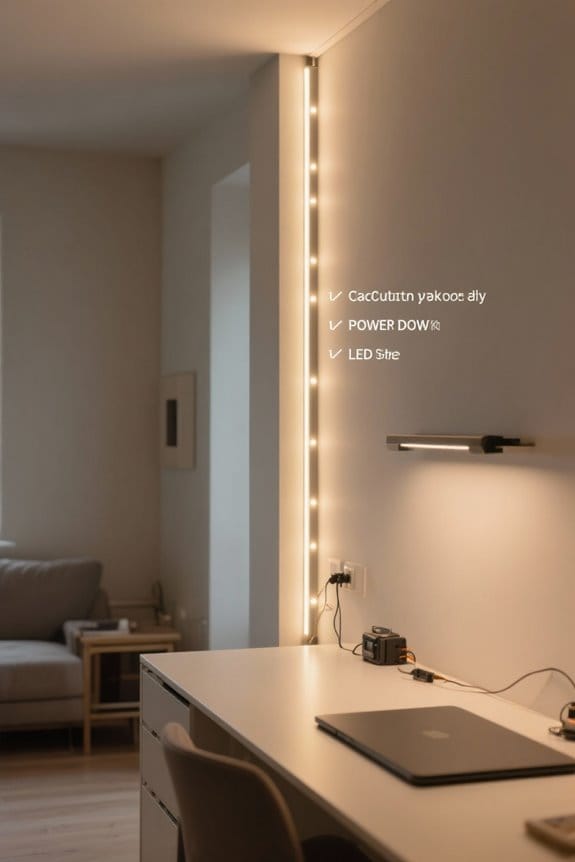
Calculating the power draw of LED strips is essential for ensuring ideal performance and compatibility with power supplies. To determine the total wattage, one must multiply the wattage per meter by the total length of the LED strip. For instance, a 10W/m strip at 5 meters utilizes 50W. Typical LED strips consume between 4.8 to 14.4 watts per meter, depending on design and brightness. It is vital to choose a power supply that exceeds the total wattage calculated by 20-30%. For example, for a total of 30W, opt for at least a 40W power supply. Remember, higher density LED strips require greater energy consumption, necessitating more robust power supplies to accommodate their demands effectively. Modern LED conversion kits can achieve up to 90% energy savings compared to traditional lighting solutions while maintaining optimal brightness levels.
Recommended Products

Gemini LED tape light output is 3W per foot with easy-to-setup seamless and scalable run lengths up to 24 feet.

ACHIEVE "LIQUID LIGHT" UNIFORMITY (No Dark Spots): Designed for the high-end stone fabrication. Our high-density matrix allows the led sheet to sit directly behind translucent Onyx, Quartz, or stained glass, creating a seamless, museum-quality 6000K cool white glow without the "dot effect" of traditional strips.

ACHIEVE "LIQUID LIGHT" UNIFORMITY (No Dark Spots): Designed for the high-end stone fabrication. Our high-density matrix allows the led sheet to sit directly behind translucent Onyx, Quartz, or stained glass, creating a seamless, museum-quality 3000K warm white glow without the "dot effect" of traditional strips.
Assessing Connection Methods for Power Supply
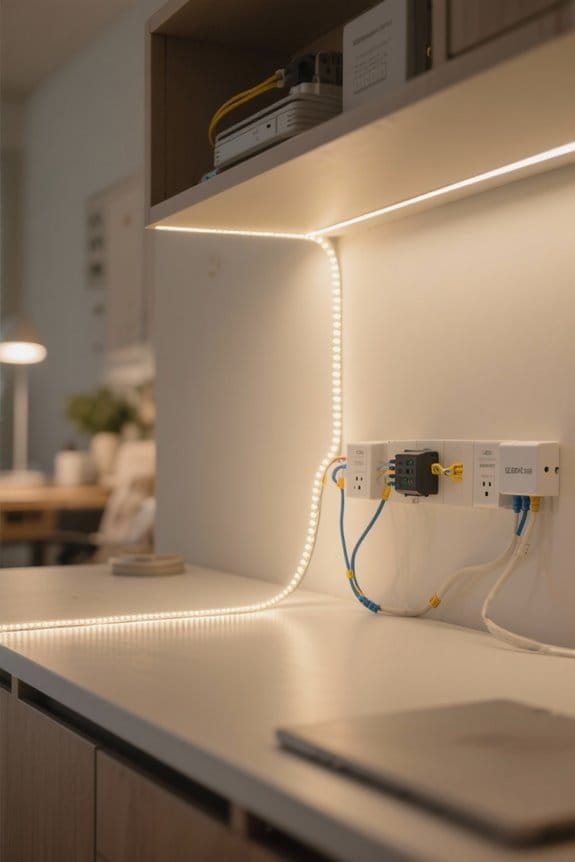
Before selecting a power supply for LED strips, it is vital to assess the connection methods available to guarantee compatibility and safe operation. Identify the type of connector your LED strip light power requires, typically a 5.5 mm x 2.1 mm connector. If the strip has bare wires, an adapter will be necessary for proper connection. Confirm that positive and negative terminals are correctly matched to prevent damage. Compatible power supplies allow for direct connections, meaning you can plug the power supply into an AC outlet and then into the LED strip. Understanding these connection methods is critical; mismatched connections can lead to malfunction or permanent damage. Verify the power supply wattage to ascertain sufficient power supply capacity. For optimal performance and longevity, consider installing UL-certified power supplies that include built-in safety features to prevent overheating issues.
Importance of Power Supply Ratings
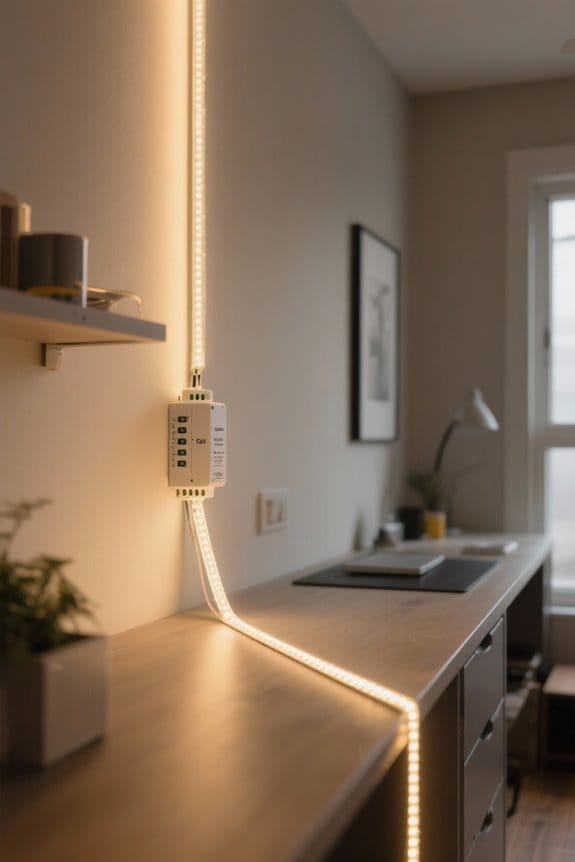
Understanding power supply ratings is vital for the ideal performance of LED strips. Power supply ratings must exceed the total power draw of the LED strips by at least 20-30% to guarantee optimal operation. An insufficient power supply can lead to issues like dimming or flickering. It’s essential to select a power supply that matches the LED strip voltage, commonly either 12V or 24V, to prevent voltage mismatch. The specified wattage indicates the maximum power the supply can deliver; exceeding this can result in overheating and potential failure. Investing in a power supply with a higher wattage rating allows for future expansions and improves efficiency, as it operates within a lower range of its capacity, minimizing the risks associated with exceeding wattage. Modern LED accent lights can last over 25,000 hours when powered correctly, making proper power supply selection crucial for longevity.
Recommended Products

INDUSTRY-LEADING BRIGHTNESS: Designed and engineered by the world leader in marine LED lighting solutions guaranteeing the brightest light output possible in the marine industry, providing you the highest level of safety on the water. Light up the night or any black hole in the ocean with our best in class high intensity light output.


Receiver includes an LED indicator that assists in sensor alignment during installation and sensor operating status
Choosing the Right Power Supply for Your LED Strips
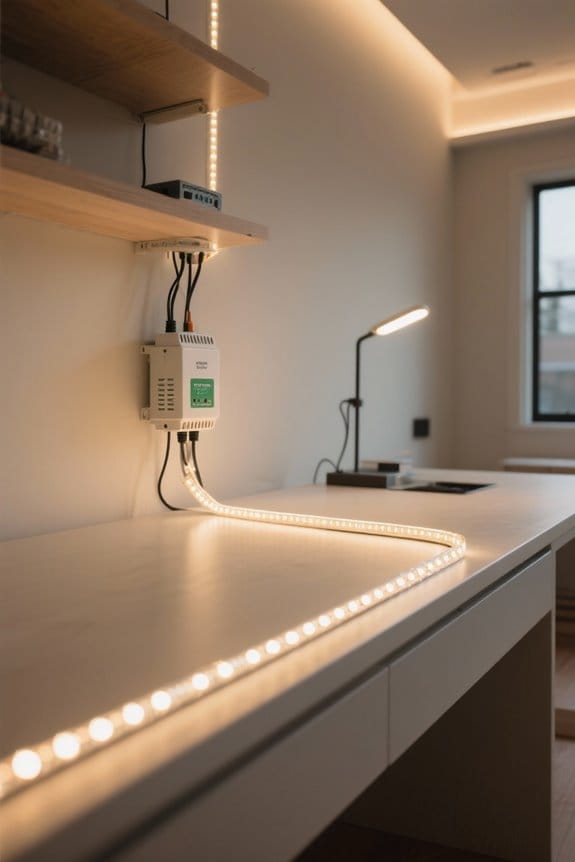
How does one guarantee the power supply for LED strips meets all necessary criteria? Begin by ensuring the voltage aligns with the LED strip lights, typically requiring either 12V or 24V DC. Next, determine the total watts needed by multiplying the wattage per meter by the strip’s length. It is wise to select a power supply with a wattage rating at least 20-30% higher than this calculated value to accommodate any variations in power draw. Additionally, verify that the power supply’s connector type is compatible, or use an adapter if dealing with bare wires. For future expansion, consider a higher wattage rating as well. If dimming capabilities are desired, opt for a dimmable power supply to fit your lighting solutions. For optimal efficiency and long-term cost savings, choose LED strips that deliver at least 100 lumens per watt to maximize energy performance.
Common Power Supply Issues and Solutions
What common challenges arise when selecting a power supply for LED strips? One major issue is inadequate wattage; a power supply should exceed the total wattage of LED strips by at least 20% to prevent dimming or flickering. Mismatched voltage presents another risk; make certain the power supply matches the LED strip’s voltage specification (typically 12V DC or 24V DC). Additionally, voltage drop can occur over longer distances, resulting in uneven brightness; using a higher voltage strip may alleviate this concern. Incompatibility of connectors may hinder installation; verify connector compatibility or employ adapters. Finally, confirming that the power supply’s input voltage aligns with local standards, commonly 120V AC in North America, guarantees the safe operation of the lighting system. Using an aluminum channel system can help dissipate heat and extend LED strip life while providing proper power distribution.
Recommended Products

[Ultra-Long 1936FT Bulk Value] One continuous spool of 1936ft (590M) 22 gauge 4-conductor RGB wire. Perfect for large-scale commercial lighting projects, professional architectural installations, and long-distance wiring without the need for frequent splicing or connectors.

125 kHz mullion mount proximity card reader

CONVERTS 120V AC to 12V DC - Low Voltage power supply for dimmable Inpired LED lighting
Resources for Further Learning on LED Strips
Expanding knowledge about LED strips requires accessing a variety of instructional resources. Thorough guides can inform users about proper installation techniques and applications for both indoor and outdoor LED strip lighting. It’s essential to understand how to determine which power supply is suitable for the right LED, particularly in regard to power supply rated for specific wattage of power drawn by the strips. Resources that provide calculators can help users assess their power supply needs to prevent overheating. Additionally, exploring the energy efficiency benefits of LED lighting over traditional sources will highlight long-term cost savings. Manufacturers often offer comparisons between different LED strip types, aiding in informed decisions regarding power consumption and setups. When selecting switches for LED strip control, understanding voltage and amperage ratings is crucial for maintaining safe and efficient operation.
Frequently Asked Questions
How to Determine Power Supply Required Amperage for LED Strip?
To determine required LED strip amperage, perform an amperage calculation using power ratings and voltage drop considerations. Factor in LED driver selection, circuit breaker sizing, heat dissipation management, and potential power consumption for multiple strips.
What Power Supply Do I Need for a LED Strip?
To illuminate a space with an LED strip, guarantee the power supply matches the strip voltage and exceeds total power consumption. Consider wiring, brightness levels, color temperature, connector types, and necessary dimming options for ideal installation.
Is a 12V or 24V LED Strip Better?
A 24V LED strip offers greater efficiency, reduced heat generation, and increased brightness, making it ideal for longer runs. In contrast, a 12V strip provides installation convenience and cost-effectiveness but has limited flexibility and higher voltage drop.
How Many Watts Do I Need for a LED Strip?
To determine the necessary wattage for an LED strip, perform a LED strip wattage calculation considering strip length, voltage rating, brightness, and usage scenarios; select a power adapter that accommodates additional load and heat management.