As an Amazon Associate, we earn from qualifying purchases. Some links on this site are affiliate links at no extra cost to you. Our recommendations are based on thorough research and editorial judgment.

How to Calculate Wattage for Your LED Project

To calculate wattage for your LED project, measure the strip length in feet and identify the watts per foot rating. Multiply these figures. For example, a 10-foot strip at 5.5 watts per foot requires 55 watts. Always select a power supply with at least a 20% higher capacity, bringing your minimum requirement to 66 watts in this case. Confirm the power supply’s voltage matches the LED specifications. Continue to learn more about power supply selection and installation best practices.
Key Takeaways
- Multiply the wattage per foot of your LED strip by its total length to determine total power demand.
- Check the LED strip’s specifications to find the exact watts per foot rating for accuracy.
- Add a 20% safety margin to your calculated wattage for selecting a reliable power supply.
- Ensure your power supply matches the required input voltage of the LED strip, such as 12V or 24V.
- Consider potential voltage drop for longer runs by using thicker gauge wire or a higher voltage supply.
Understanding LED Power Requirements
You may be interested



Understanding LED power requirements is essential for ensuring effective and efficient lighting solutions. To accurately determine the power needed for a project, one must calculate the total wattage by multiplying the watts per foot of the LED strip by its length. For instance, if an LED strip uses 5.5 watts per foot over a 10-foot span, the total power demand equals 55 watts. It is advisable to choose an LED power supply with at least a 20% higher capacity than this calculated wattage to enhance performance and prevent overheating. Additionally, always check the specific watts per foot rating listed on product specifications, as these requirements can vary considerably among different LED products, impacting overall design and functionality. Modern LED cabinet lights can achieve up to 70% energy savings compared to traditional fluorescent options, making proper wattage calculations even more crucial for maximizing efficiency.
Key Components of LED Lighting
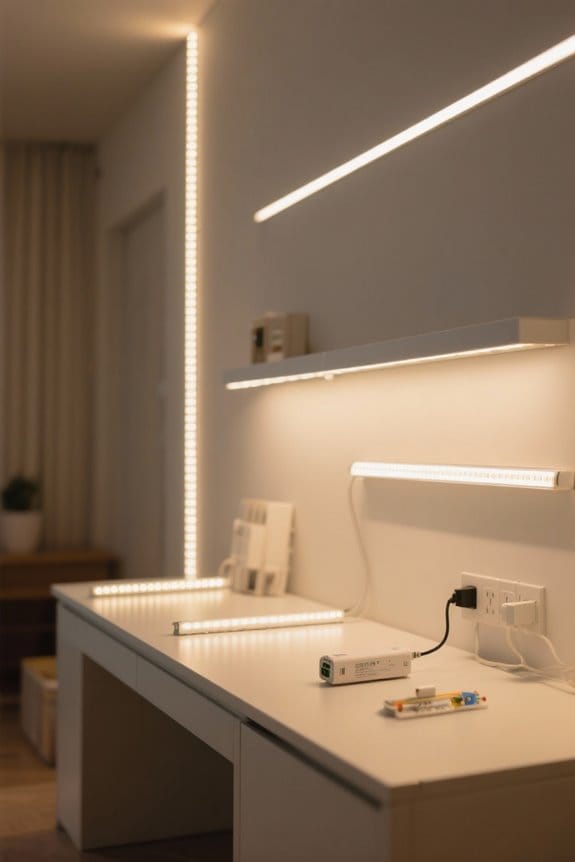
Key components of LED lighting encompass various elements that contribute to its performance, efficiency, and application versatility. A critical aspect is LED Strip Light Power, which varies based on design specifics. Typically, LED strips operate on low voltage, often 12V or 24V DC, providing excellent energy efficiency. To determine the necessary capacity for Power Supplies, calculating total wattage is crucial. For example, an Ultra High 95 CRI LED Strip consuming 5.5 watts per foot requires careful assessment. If using a 10-foot strip, multiply 5.5 watts by the strip length, yielding 55 watts. To optimize performance, including a safety margin of 20% suggests a minimum power supply of 66 watts. Such meticulous calculations guarantee reliability and functionality in LED projects. Modern LED strips featuring music sync capabilities can require additional power considerations to support their enhanced functionality.
Measuring the Length of LED Strip
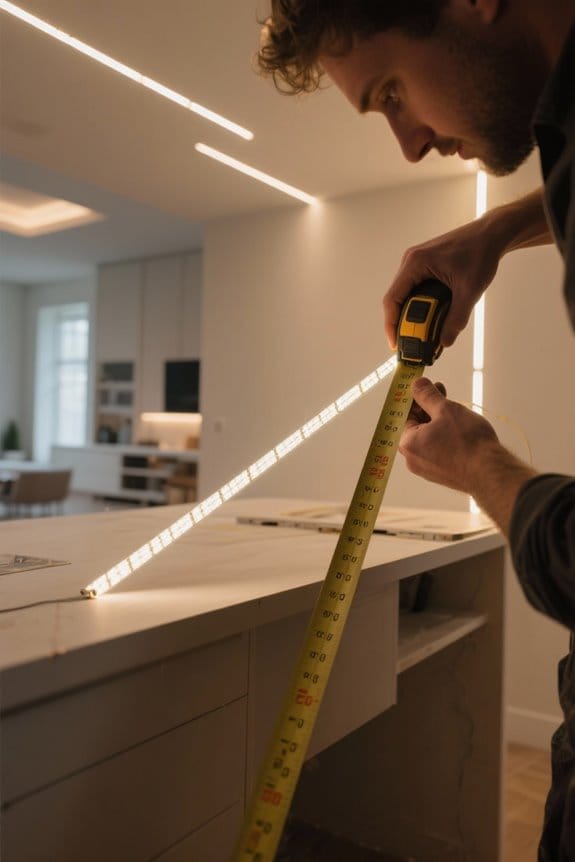
Accurate measurement of LED strip lengths is essential for effective installation and ideal lighting performance. Begin by using a tape measure to determine the distance that needs to be covered with strip lighting. Be mindful of any bends or turns, as these may require additional footage. Calculate the total linear footage required, guaranteeing to plan for potential overlaps or gaps for a seamless look. Many LED strips have a maximum continuous run length of 16.4 to 42 feet, depending on the model. Always consult manufacturer specifications for maximum run lengths and wattage rating to avoid dimming or functionality issues. Proper measurement guarantees you select the correct length of LED strip, maximizing performance and efficiency in your project. The energy efficiency ratings of modern LED strips range from 100-150 lumens per watt, making precise length calculations crucial for optimal power consumption.
Recommended Products

WIRE TYPE: Southwire 14-2 NM-B non-metallic sheathed cable is designed for residential wiring applications.

This 18-light chandelier consists of five layers of wooden lamp posts and countless matte white wooden strips that curve upwards from flexible iron arms. Slender metal branches are intricately arranged and finished in a soft ivory color.

3-Color LED Lighting in Cloud White, Deep Blue, and Amber/ 304-grade Stainless Steel/ Active Cooling Technology / Dual-Pane, Low-e Argon-Filled Glass Door
Determining Watts per Foot for Your LED Strip
When initiating an LED lighting project, determining the wattage per foot of the chosen LED strip is essential for efficient power management. Each LED strip has a defined wattage per foot; for instance, a 12V Ultra High 95 CRI LED Strip consumes 5.5 watts per foot. This information is critical for understanding strip power needs. To calculate the total power for a project, simply multiply the wattage per foot by the total length of your LED strip in feet. For example, using 10 feet of a strip that draws 5.5 watts per foot results in a total power requirement of 55 watts. Always consult the specific product page for accurate wattage per foot to guarantee proper power calculations. Modern LED lighting options can provide up to 90% energy savings compared to traditional halogen fixtures while maintaining high brightness levels.
Calculating Total Power Draw
To effectively calculate the total power draw for an LED lighting project, one must multiply the wattage per foot of the LED strip by the total length in feet. For example, if the strip lights consume 5.5 watts per foot and measure 10 feet, the total power draw equals 55 watts (5.5 watts/foot × 10 feet). It is essential to add a safety margin of 20% to this calculation. Consequently, for a total draw of 55 watts, the ideal power supply capacity should be 66 watts (55 watts × 1.2). Additionally, verify the power supply voltage matches the LED strip’s required voltage, typically 12V or 24V, to prevent potential damage or malfunctions. Modern energy-efficient LED lights can reduce power consumption by up to 85% compared to traditional lighting solutions while maintaining optimal brightness levels.
Recommended Products
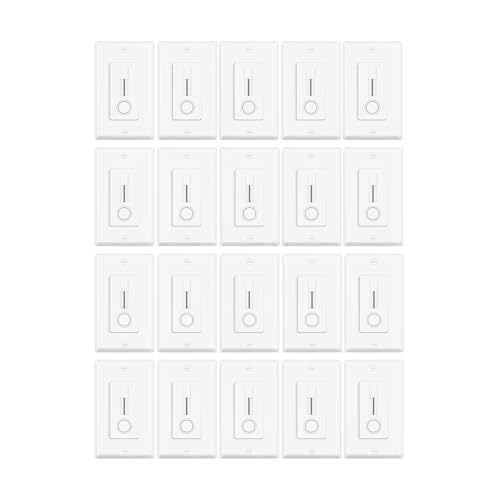
2 in 1 LED Driver and Dimmer Switch: First LED Driver + In-Wall Dimmer Switch in one unit, Simplifies LED installation by eliminating compatibility issues between driver and dimmer; Fits in a standard recessed electrical box

[Ultra-Long 1936FT Bulk Value] One continuous spool of 1936ft (590M) 22 gauge 4-conductor RGB wire. Perfect for large-scale commercial lighting projects, professional architectural installations, and long-distance wiring without the need for frequent splicing or connectors.

125 kHz mullion mount proximity card reader
Selecting the Right Power Supply
Selecting the right power supply for LED projects is essential for guaranteeing proper functionality and longevity of the lighting system. First, calculate the total power draw by multiplying the watts per foot by the total length of your LED strip. For instance, with a strip consuming 5 watts per foot over 10 feet, the power draw equals 50 watts. Verify the power supply matches your LED strip’s required input voltage, such as 12V, 24V, or 48V DC. Choose a power supply rated at least 20% above your total draw for safety; therefore, select one rated at a minimum of 60 watts. Consult the LED driver selection chart for compatibility to confirm peak performance. 24V LED strips operate 30% more efficiently than 12V options, making them ideal for larger lighting installations.
Recommended Products
✅【2 in 1 LED Driver and Dimmer Switch】:By integrating the LED driver and dimmer into a single unit,streamline installation and ensure perfect compatibility. 120v to 24v transformer dimmer switch.This innovative 24v dimmable led driver design connects directly to LED strips for worry-free dimming and fits conveniently within a standard electrical box

Flexible silicone cased tape light for enhanced Damp location listing. Peel and stick3 construction adhesive on back. Indicator marks every 6 inch for field cutting at the end of a run

Invisiled Pro 1Ft indicator marks every 2 inch for field cutting at the end of a run
Importance of Safety Margins
Ensuring electrical safety is paramount in LED projects, particularly in relation to power supply selection. A safety margin of at least 20% beyond the calculated wattage is essential. For instance, if the total wattage requirement is 100 watts, a power supply rated at 120 watts (100 watts x 1.2) is recommended. This approach accommodates unexpected power demands and helps prevent overheating. Neglecting to incorporate safety margins may result in flickering lights or premature component failure. Many LED products provide wattage ratings, making accurate calculations critical. By planning with safety margins, project longevity is enhanced, ensuring consistent lighting performance. Always prioritize these margins for reliability and efficient power usage in your LED installations. Modern LED lighting solutions can reduce power consumption by up to 80% compared to traditional incandescent lamps, making proper wattage calculations even more crucial for optimization.
Voltage Considerations in LED Projects
How essential is it to match the voltage of LED strips with the power supply? It is vital for optimal performance and longevity of the LED lights. LED strip lights typically operate at specific voltages, commonly 12V or 24V. Using an incorrect voltage can cause dimming, flickering, or even permanent damage. When setting up your LED project, always refer to the manufacturer’s specifications to confirm the input voltage requirements. For accurate wattage calculations, employ the formula: Watts = Volts x Amps, ensuring precise amp readings. Additionally, consider voltage drop in longer runs exceeding 32 feet; using thicker wires can mitigate this issue. Properly matching the strip light power supply guarantees your LED lights function as intended, maximizing their brightness and efficiency. Many smart LED strips can last up to 50,000 hours when operated at the correct voltage specifications.
Common Mistakes When Planning LED Power
Many enthusiasts encounter significant challenges when planning LED power requirements, often resulting from common mistakes. A prevalent error is failing to calculate total wattage by multiplying the wattage per foot by the total length of the strip used. This oversight can lead to insufficient power supply. Additionally, neglecting voltage drop in longer runs can diminish brightness and cause malfunction. Choosing a power supply without a safety margin of 20% further risks overload. Correctly verify input voltage requirements; mistakenly connecting a 12V strip to a 24V supply can damage components. Finally, avoid assuming all strips have identical electrical requirements. Products like the Architectural Series may vary significantly, with values such as 4.4 watts per foot versus 5.5 watts per foot. Quality LED strips like COB technology deliver 320 LEDs per meter for consistently bright illumination without dark spots.
Benefits of Using LEDs
When evaluating lighting options, the advantages of using LEDs become abundantly clear. One of the primary benefits is their impressive energy efficiency; LEDs consume considerably less power than incandescent bulbs, which reduces electricity bills. They also boast a remarkable lifespan, often exceeding 50,000 hours—over 20 times longer than traditional lighting. This longevity minimizes replacement costs and maintenance efforts. Furthermore, LEDs offer versatility in colors, shapes, and sizes, making them suitable for various applications. Additionally, they contribute to environmental sustainability by containing no harmful materials and being made from recyclable components. Finally, with lower heat generation, LEDs improve safety and decrease air conditioning costs in enclosed spaces, marking them as an ideal choice for modern lighting solutions. Modern LED fixtures like the GE Cync Reveal offer millions of color options and smart home compatibility for ultimate lighting customization.
Troubleshooting Power Supply Issues
Following the advantages of LEDs, attention must shift to potential power supply issues that can arise during installation. Verify your power supply has a wattage capacity at least 20% higher than the total calculated power draw of your LED strips. This prevents dimming or flickering effects. Confirm that the voltage output of the power supply matches the required voltage for your LED strips—either 12V or 24V. Additionally, check for overheating signs, which may indicate inadequate capacity or faulty components. When using multiple LED strips, consider both their total length and wattage per foot to determine if the power supply can support the load adequately. Finally, address voltage drop over long runs with thicker gauge wire or increased supply voltage.
Recommended Products
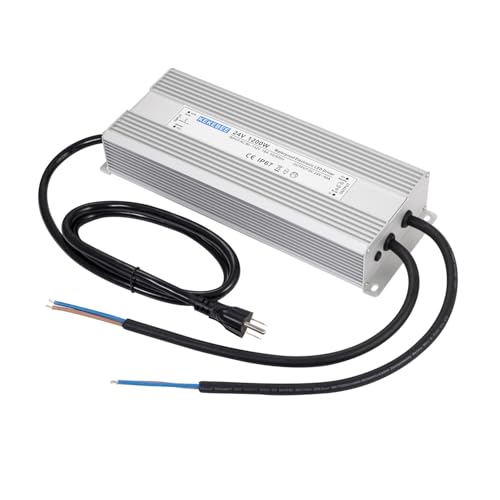
Product specifications: Input AC 90-132V, 50-60Hz, Output DC: 24V1200W, the output voltage of this product is DC 24V, the voltage cannot be adjusted, and there is no dimming function, please pay attention when purchasing. Power supply size: length 12.60IN width 4.72IN height 2.2IN, this product comes with LED indicator light, in addition, our team has carried out a new upgraded design, completely solved the noise problem during use, 24V stable output ensures the perfect operation of your product

CONVERTS 120V AC to 12V DC - Low Voltage power supply for dimmable Inpired LED lighting
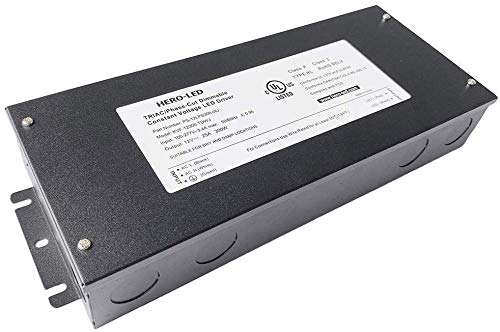
Includes 1 pc dimmable constant voltage led driver ac 100-277v to dc 12v
Final Steps Before Installation
Before beginning the installation of LED strips, ascertain all calculations regarding wattage and compatibility are meticulously finalized. First, confirm the total length of your LED strip light. Multiply the wattage per foot of your LED strip by this length to determine the overall wattage requirement. For reliable power supply performance, add a safety margin of 20%. Select a power supply that meets or exceeds the total calculated wattage, ensuring ideal operation. Additionally, double-check the compatibility of the power supply’s voltage, which is commonly 12V or 24V, with the LED strip specifications. This can prevent potential damage or malfunction during use. With these final steps completed, proceed confidently toward installation.
Frequently Asked Questions
How to Calculate LED Wattage?
In antiquity, scholars revered equations for their clarity. To calculate LED wattage, one must assess LED efficiency and power consumption, multiplying the wattage per foot by total length and including a safety margin for accuracy.
How to Calculate Watts for a LED Strip?
To calculate watts for an LED strip, multiply the wattage per foot by the strip length, considering voltage requirements. This guarantees adequate power supply capacity for ideal performance and safety during operation.
Is 100W LED Brighter Than 60W LED?
In the domain of lumens, the 100W LED stands like a blazing sun against the gentle glow of a 60W LED. This brightness comparison highlights that higher energy consumption yields greater illumination, illuminating larger spaces effectively.
How Many Watts Do I Need for LED Lights?
Determining wattage for LED lights depends on the specific light types and their energy efficiency. It is essential to calculate the required wattage based on the length of the strip and power consumption per foot.