As an Amazon Associate, we earn from qualifying purchases. Some links on this site are affiliate links at no extra cost to you. Our recommendations are based on thorough research and editorial judgment.

Creating a Hidden Outlet for Under-Cabinet Lights

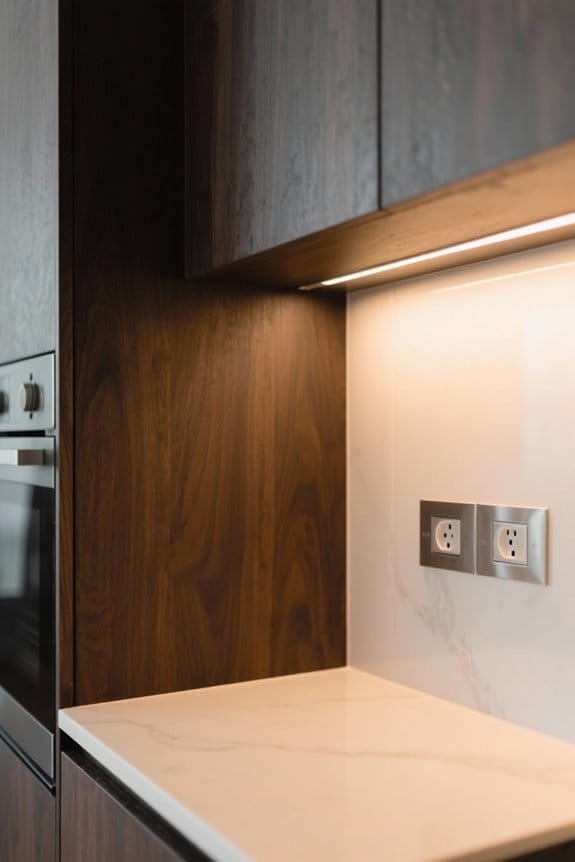
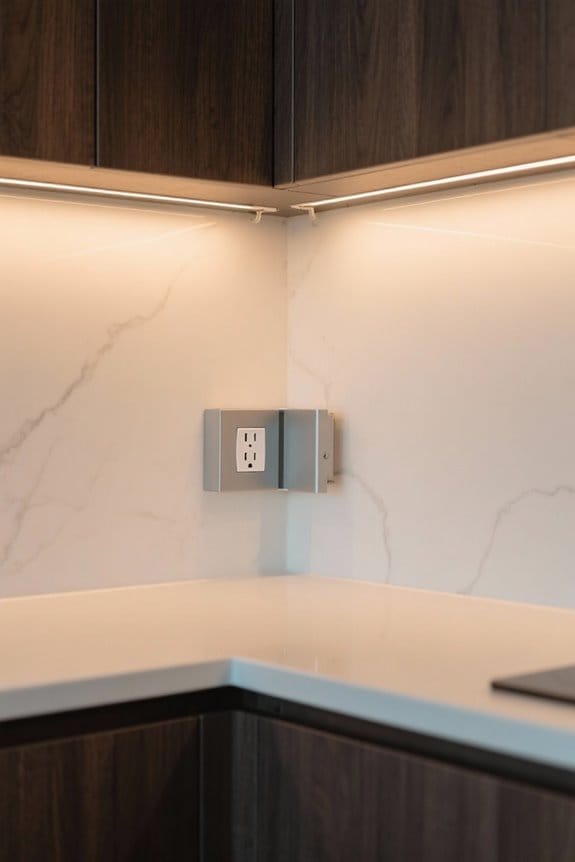
Creating hidden outlets for under-cabinet lights enhances functionality and aesthetics. Start by selecting locations in cabinetry that allow easy access to power. Use Plugmold or recessed boxes for a streamlined look. Confirm compliance with electrical codes, such as placing outlets at countertop height and adhering to spacing requirements. Utilize LED strips with warm color temperatures around 2700K for ideal lighting. Document your wiring paths for future modifications. Learn about material choices and maintenance strategies to further improve your setup.
Key Takeaways
- Choose suitable locations for hidden outlets in cabinetry to ensure easy access without clutter.
- Use recessed electrical boxes or Plugmold systems to achieve a streamlined and clean aesthetic.
- Route low-voltage wires discreetly to maintain the integrity of your cabinetry and allow for future modifications.
- Ensure compliance with local electrical codes, including GFCI protection in moisture-prone areas.
- Utilize cord hiders to conceal wiring, enhancing the overall visual appeal of your kitchen.
Importance of Hidden Outlets for Under-Cabinet Lighting
You may be interested
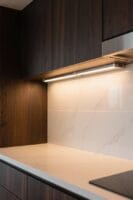
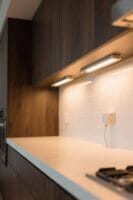
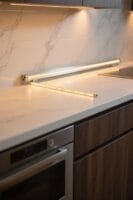
When considering kitchen design, it is fundamental to recognize the importance of hidden outlets for under-cabinet lighting. These outlets play a vital role in maintaining a clean aesthetic by reducing visible cords and plug points. By utilizing hidden outlets, homeowners enjoy the convenience of easy access to power without cluttering their space with extension cords. Proper installation guarantees compliance with electrical codes, thereby enhancing safety while maximizing available cabinet space. Additionally, strategic positioning of hidden outlets improves lighting quality, offering targeted illumination where it’s needed most, especially on countertops. This flexibility accommodates various LED lighting types, guaranteeing adaptability in light configurations. Hidden outlets are fundamental for effective and elegant under-cabinet lighting solutions in modern kitchens. Modern LED cabinet lights provide significant energy efficiency while requiring minimal maintenance due to their extended lifespan and reduced heat output.
Recommended Products
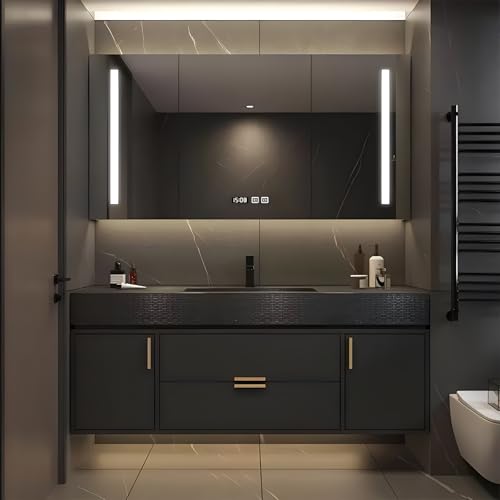
AMPLE STORAGE SPACE: Single bathroom dressing cabinet, equipped with two storage Spaces, mirror cabinet and sink cabinet, mirror cabinet hidden behind the mirror, with multiple layers, convenient for you to store skin care products, cosmetics. Lockers under the sink provide additional storage space to hold more items, helping you organize and use your bathroom space efficiently.
Trendy Printed Design:Features a stylish printed pattern that adds a contemporary and fashionable touch to any room, perfect for modern homes and apartments.

[Commercial Refrigerator] The TYLZA glass door display refrigerator features a stylish pure white design with white LED lighting, which is perfect for placement in storefronts, living rooms or office lounge areas to ensure that iced beverages are always available
Selecting the Right Materials for Installation
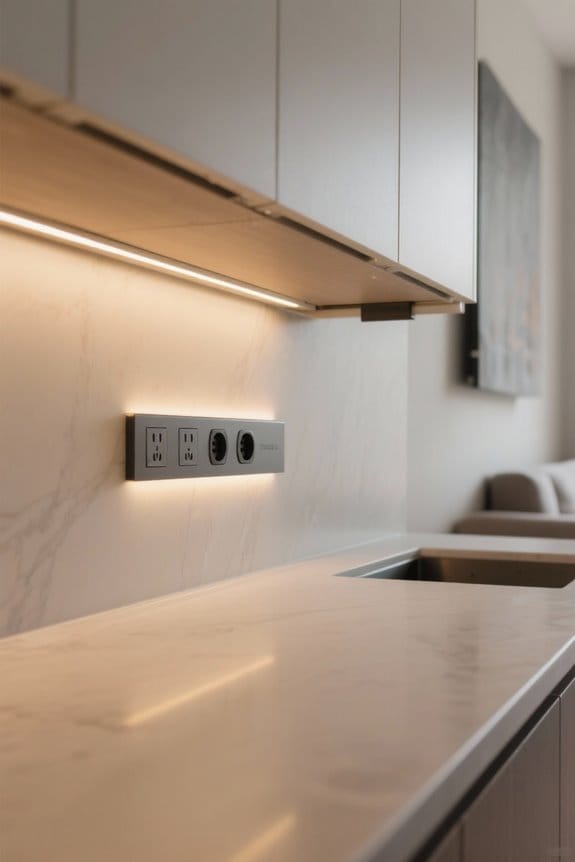
Selecting the right materials for hidden outlet installation is essential for achieving both functionality and aesthetics in under-cabinet lighting. Using Plugmold is recommended; it offers a streamlined appearance while discreetly providing multiple outlets. When choosing LED lighting, look for strips with color temperatures around 2700K for warmth, enhancing the kitchen’s ambiance while ensuring energy efficiency. Compliance with local code regulations, especially in California, is significant for recessed electrical outlets. Employ cord hiders to conceal wiring, maintaining a clean look. Additionally, select high-quality power adapters compatible with LED strips, ensuring they can handle the required wattage to prevent overheating. Prioritize these materials to create a safe, elegant lighting scheme that elevates your kitchen’s design. The dimmable LED options can reduce energy consumption by up to 85% while providing flexible lighting control for various tasks and moods.
Recommended Products


10-OUTLET POWER STRIP – Provides ten conveniently positioned outlets for connecting compatible electrical devices and equipment.

Angled Trapezoid Under-Cabinet Power Access: Trapezoid aluminum housing with angled receptacles keeps outlets clearly visible and easy to reach when mounted under cabinets, furniture edges. Rated 125VAC 60Hz, 20A, 2500W. Designed for concealed yet accessible power in kitchens, workshops, and workspaces
Step-by-Step Guide to Installing Hidden Outlets
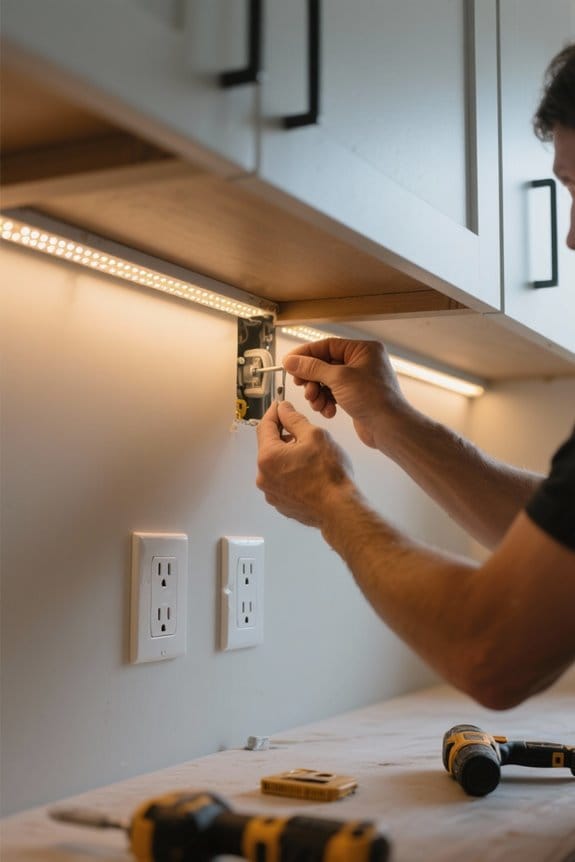
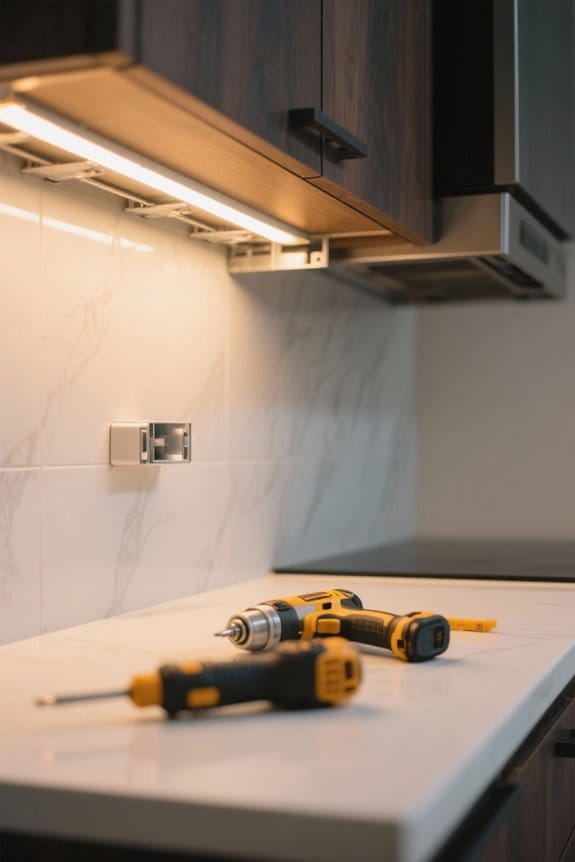
Installing hidden outlets for under-cabinet lights requires meticulous planning and execution to achieve a functional and visually appealing outcome. Begin by selecting suitable locations for hidden outlets within the cabinetry, preferably near the back or on side panels, guaranteeing easy access for wiring. Next, utilize recessed electrical boxes or Plugmold systems to maintain a clean aesthetic while concealing outlets. When wiring, run low-voltage wires to a hidden location, allowing for future modifications or LED installations. Confirm the wires are neatly routed through cabinetry structures. Finally, document the exact placement of all hidden outlets and wiring paths for future reference. This process aids in maintenance and facilitates potential upgrades while guaranteeing clear access for troubleshooting. Consider installing adjustable color temperatures for enhanced ambiance control and versatility in lighting options.
Compliance With Electrical Codes
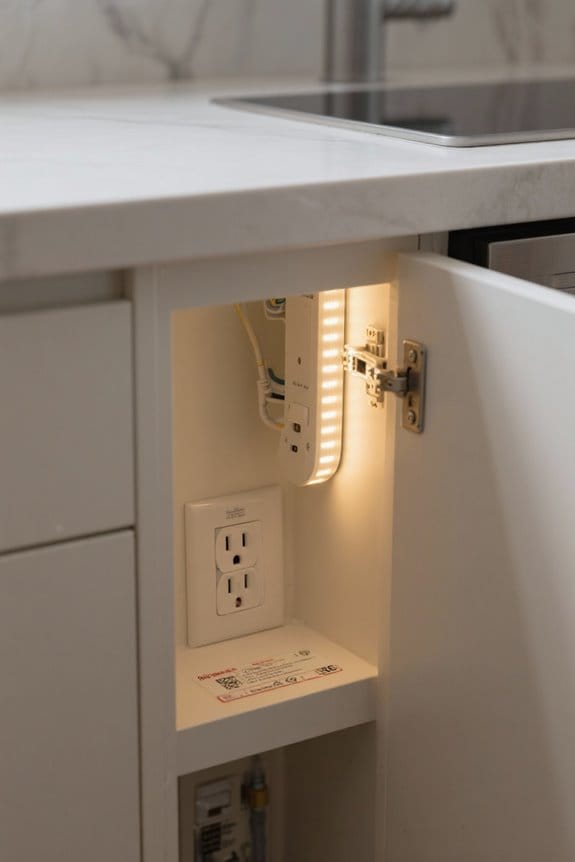
Guaranteeing compliance with electrical codes is paramount in the installation of hidden outlets for under-cabinet lighting. According to the National Electrical Code (NEC), kitchen receptacle outlets must be strategically placed at countertop height, guaranteeing they are not fed from small appliance circuits. Hidden outlets installed inside cabinets need to meet spacing requirements, typically placed every 4 feet along walls. Florida building codes dictate that alterations must maintain GFCI protection in moisture-prone areas. It is critical to differentiate between designated circuits for appliances and receptacle outlets to avoid violations. Additionally, planners must incorporate proper wire management and protection, adhering to NEC regulations for secured wiring. This careful design guarantees both safety and functionality for under-cabinet lighting systems. When selecting under-cabinet lighting solutions, consider fixtures offering adjustable color temperatures to enhance the visual appeal of your kitchen workspace.
Benefits and Aesthetic Value of Concealed Wiring
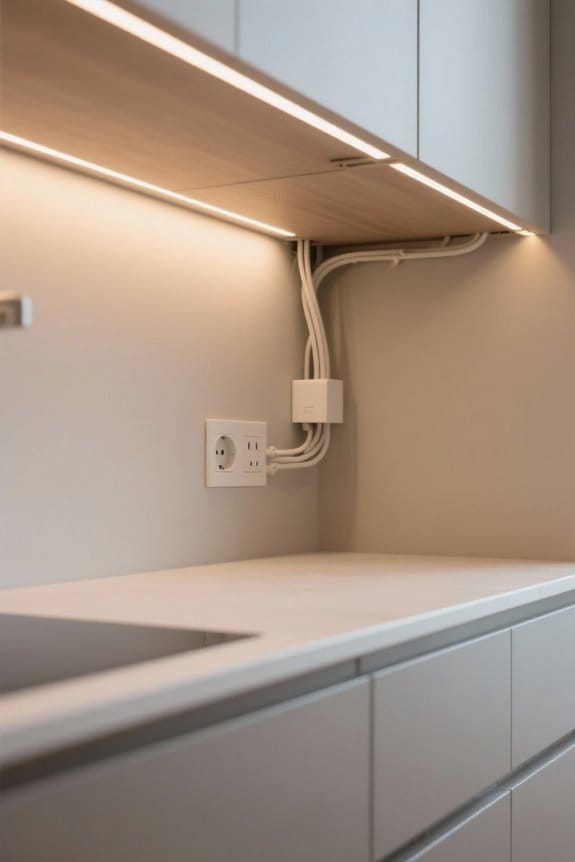
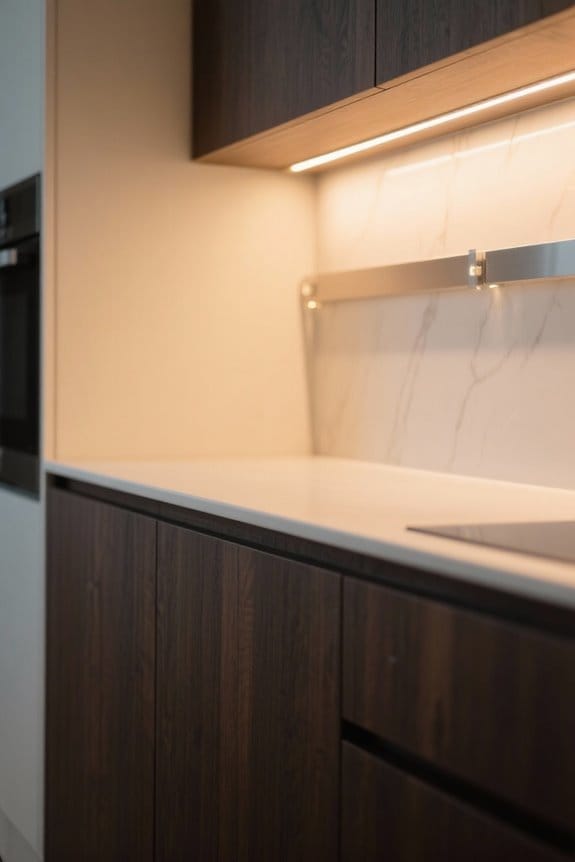
The incorporation of concealed wiring for under-cabinet lights considerably elevates both functionality and aesthetic appeal in kitchen designs. Hidden electrical systems, including recessed outlets and Plugmold, facilitate the installation of multiple outlets seamlessly along the backsplash without disrupting cabinetry. This streamlined design reduces visible clutter, creating a clean look that enhances overall kitchen aesthetics. Additionally, concealed wiring improves functionality by providing easy access to power for essential appliances and lighting, eliminating the need for extension cords. Safety is paramount; hidden systems minimize the risk of accidental disconnections in high-traffic areas. Homeowners benefit from the adaptability of concealed wiring, as it allows for future lighting adjustments while preserving the kitchen’s design integrity. Embrace these advantages for a refined kitchen installation. Modern LED under cabinet lights can provide up to 90% energy savings compared to traditional halogen fixtures while maintaining superior brightness and longevity.
Tips for Future Modifications and Maintenance
While planning for future modifications and maintenance, it is essential to contemplate the layout of hidden outlets and wiring paths. Ascertain there is accessible space for potential changes and additional wiring to accommodate new lighting fixtures. Use labeled wire tags to document the locations of all outlets, making future adjustments easier. When working with LED strip lights, consider utilizing low voltage wiring. This simplifies adding or relocating outlets without concerning heavy load capacities. To enhance functionality, implement magnetic reed switches for door-activated lighting. Regularly inspect hidden outlets for dust and debris buildup to maintain performance. Ascertain outlets remain accessible for prompt troubleshooting and repairs to preserve the effectiveness of the installation and ascertain longevity. Consider installing motion sensor technology for hands-free operation and improved convenience when accessing under-cabinet areas.
Frequently Asked Questions
How to Hide a Plug for Under Cabinet Lighting?
To achieve effective outlet concealment for under-cabinet lighting, one can install recessed outlets or utilize Plugmold systems. Additionally, employing cord hiders can seamlessly integrate electrical components into the cabinetry, maintaining a clean appearance while minimizing visibility.
How to Hide Outlets Under Cabinets?
How can one effectively hide outlets under cabinets? Strategic outlet placement, using concealed Plugmold strips and routing wiring through cabinetry, guarantees an organized appearance while maintaining functional access, all while adhering to local building codes for safety.
How to Hide the Wire for LED Lights?
To hide the wire for LED lights, effective wire management techniques include using cord hiders, discreetly drilling holes in cabinets, installing internal outlets, and securing wires with clips, ensuring a clean and organized appearance.
Can You Put an Outlet in a Cabinet?
Amidst the shadows of cabinets, hidden potential lies; indeed, an outlet can nestle within. However, meticulous cabinet wiring must adhere to safety standards, as local codes guarantee both elegance and functionality blend seamlessly in every installation.