As an Amazon Associate, we earn from qualifying purchases. Some links on this site are affiliate links at no extra cost to you. Our recommendations are based on thorough research and editorial judgment.

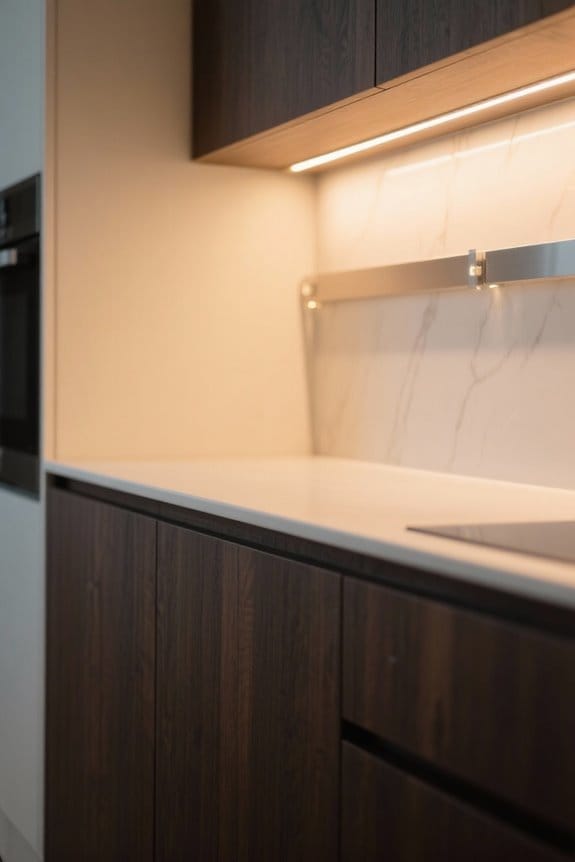
Creating Clean Corners With LED Strip Lights

To create clean corners with LED strip lights, proper planning is essential. Measure carefully and select the right corner connectors, guaranteeing compatibility with your strip’s width (8mm to 10mm). Utilize corner connectors to avoid sharp bends, maintaining a minimum bending radius to prevent damage. Consider techniques such as the Cut-and-Jump Method or the Ribbon Bend Technique for seamless changes. Regularly inspect connections for integrity to confirm uniform brightness. Discover further techniques to enhance your installation’s effectiveness.
Key Takeaways
- Use corner connectors to achieve clean transitions and avoid bends that can cause light leakage in your LED strip installation.
- Select connectors matching the LED strip width and voltage to ensure compatibility and optimal performance during installation.
- Measure and cut LED strips accurately at designated points to maintain electrical contact and prevent misalignment.
- Employ advanced methods like the Cut-and-Jump or Ribbon Bend Technique for seamless corner transitions while preserving brightness.
- Regularly inspect connections and apply adhesive for stability, ensuring secure mounting and consistent illumination.
Importance of Planning Your LED Installation
You may be interested

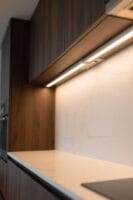
When planning an LED installation, meticulous attention to detail is crucial to confirm superior results. Accurate measurements using a measuring tape can prevent costly errors, which contribute to 15% of rework in installations. Planning involves understanding the types of corners encountered—inside, outside, acute, or obtuse—and selecting appropriate LED strip lights and corner connectors accordingly. As corners can complicate the installation process, avoid sharp bends when installing LED strip lights; incorrect techniques can lead to light leakage and uneven brightness. Properly planned bends guarantee uniform lighting throughout the area. Additionally, confirming proper alignment with suitable connectors prevents installation issues, thereby enhancing overall appearance. Effective planning is fundamental for achieving the best performance from LED installations. The installation of LED-friendly dimmer switches can significantly improve the functionality and longevity of your LED strip lighting system.
Corner Installation Methods
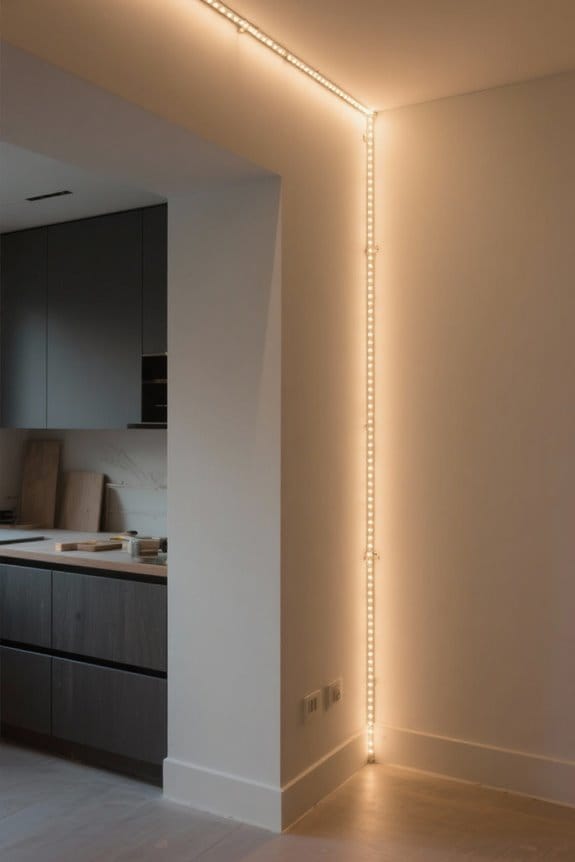
Understanding effective corner installation methods is crucial for achieving a polished and uniform appearance in LED strip lighting projects. Two primary techniques exist: utilizing corner connectors or employing flexible LED strips. Corner connectors come in various forms, such as L-shaped and T-shaped, guaranteeing compatibility with strip width and voltage. When deploying flexible strips, adhere strictly to the minimum bending radius to prevent damage. Accurate measuring and cutting of LED strips prior to installation are essential for maintaining electrical contact and avoiding light leakage. Confirm cuts are made at designated points, ideally perpendicularly, for the best fit. Address common pitfalls like misalignment promptly to achieve uniform illumination across corners, enhancing both functionality and aesthetics in your lighting design. For optimal adhesion during installation, ensure surfaces are clean and smooth as recommended by leading manufacturers like PAUTIX and Feit Electric.
Recommended Products

You are looking at a complete square aluminum truss goal shape system. This system includes everything you need to construct the system. The goal post has a height of 11.3' (2 meter truss attached to a 1 meter truss) and a width of 19.4'.

Shiatsulogic Full Function Vibration Massage Chair: Tapping, Kneading, Rolling, Pressing, Knocking combination

IntelliMix technology that allows sound system installers to eliminate common problems such as insufficient gain before feedback and muddy speech quality
Using Corner Connectors and Flexibility
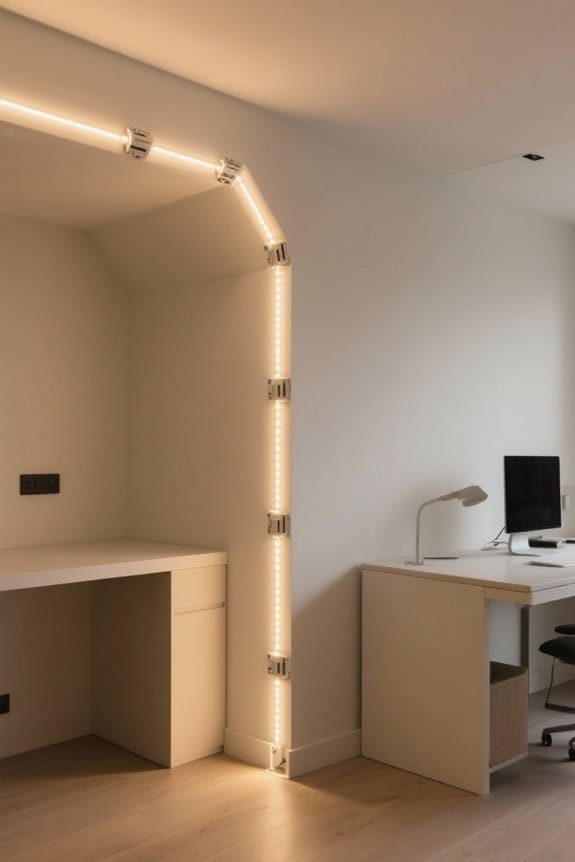
Selecting corner connectors for LED strip lights enhances the installation process by ensuring clean changes at sharp angles. These connectors eliminate the need to bend or fold strips, creating more reliable connections. It is essential to choose corner connectors that align with the LED strip’s width, typically available in ranges of 8mm to 10mm, and voltage, often 12V or 24V. To maintain continuity, cut the LED strips precisely at designated points. After connecting, always test the installation to confirm uniform brightness and secure connections. To prevent disconnections, use adhesive or screws to firmly attach corner connectors to the surface. This attention to detail not only increases stability but also improves the overall aesthetic of your lighting design. The high CRI rating of modern LED strips ensures vibrant color reproduction when properly connected at corners.
Recommended Products

REQUIRES 12V DC POWER SUPPLY — Designed for 12V DC systems only. Not compatible with 24V power supplies. Power supply, dimmer, controller are not included. Ideal for under cabinet lighting, shelving, bedroom lighting, cove lighting, and residential low-voltage lighting applications.

DC24V Professional Grade: MIWISE 24V COB LED strip light provides excellent lighting effects! Each 32.8-foot roll of strip lights has 3,200 LEDs providing illumination simultaneously, making the LED strip lights appear to be continuous light. Unlike traditional SMD LED strip lights, MIWISE COB LED strip lights have almost no dark spots and a 180-degree beam angle can provide a wider range of illumination. Professional-grade design elevates your installation project!

Voltage: Operates at 12v dc with 6.2w per meter offering efficient energy use for low voltage lighting applications in residential or commercial environments
Troubleshooting Common Cornering Issues
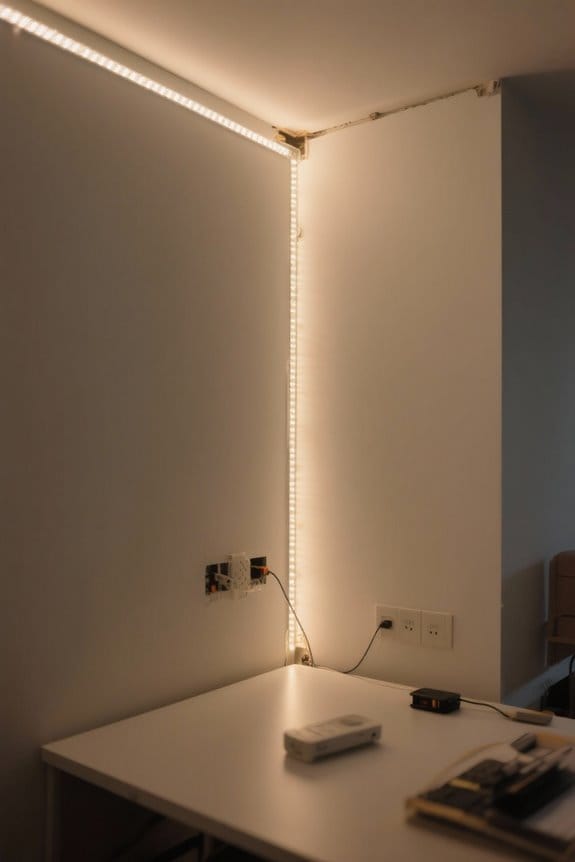
Troubleshooting common cornering issues in LED strip lighting is vital for achieving ideal performance and aesthetic appeal. Address uneven brightness by inspecting LED strips using careful examination of connections and the strip’s integrity. Make sure the light is steady; if flickering is observed, this may indicate loose connections or an inadequate power supply. Verify that the power supply meets the total wattage required by the LED strips to maintain consistent performance. Misalignment often causes light leakage in corner lighting; position the strip correctly to make certain connections are secure. Regular maintenance of power supplies is important, especially in installations where heat can accumulate. These proactive steps will enhance the longevity and effectiveness of your lighting solutions. Having true oxygen-free copper wiring in your installation can significantly improve conductivity and overall lighting performance.
Recommended Products

【Aluminum LED Lighting Channel Covers】:The aluminum channel system keeps the LEDs cooler, lasts longer, and lasts longer than traditional gypsum wiring
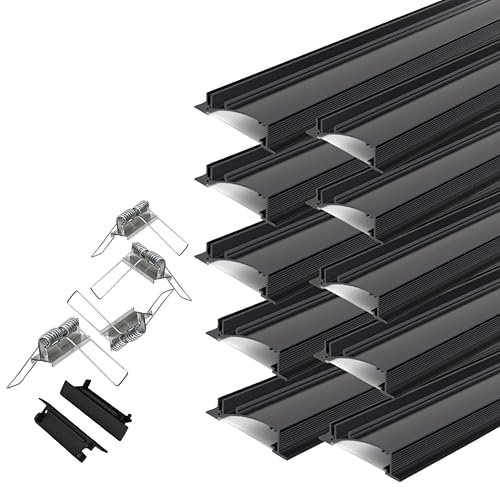
RECESSED LED PROFILE FOR MODERN INTERIORS Designed to integrate into drywall or plasterboard for sleek indirect cove lighting in residential and commercial spaces.

【Fitment】Off Road Wrangler JK Off Road Front and Rear Bumpers Fits for 2007 2008 2009 2010 2011 2012 2013 2014 2015 2016 2017 2018 Wrangler JK & Wrangler Unlimited; Don't fit for 2018 Wrangler JL
The Cut-and-Jump Method
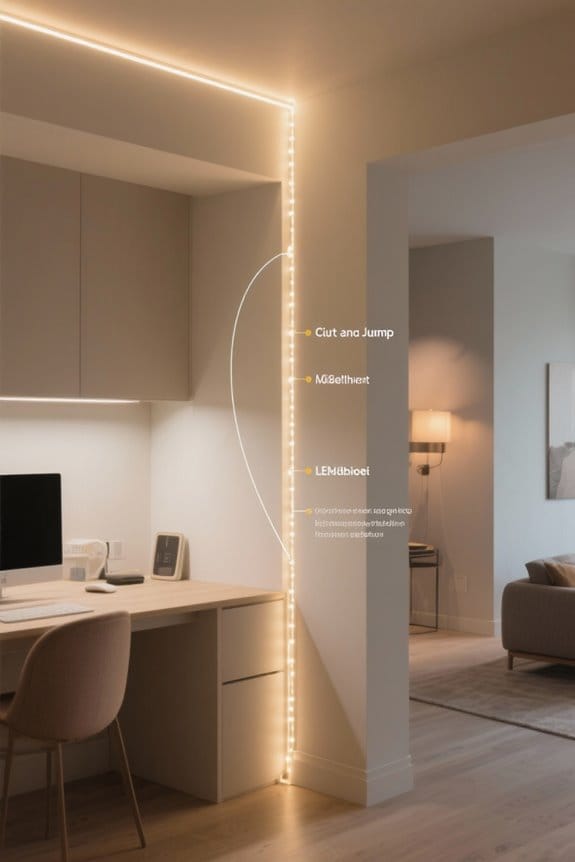
When creating seamless changes in LED strip lighting, the Cut-and-Jump Method stands out as an effective technique. This method involves cutting the LED strip lights at designated lines for best functionality after bending. By using a jumper connector, one can easily create bends at corners, allowing flexibility and ensuring minimal impact on lighting output. Jumper connectors can be soldered for permanence or used in a no-solder format, facilitating easier connections. With this approach, lighting projects benefit aesthetically, as sections of LED strips can bend in any direction, resulting in polished corners that enhance visual appeal. For optimal results, consider using LED puck lights with 100 lumens brightness to complement your corner installations. Embrace the Cut-and-Jump Method to achieve seamless changes and meticulous installations with LED strip lights. Your corners will never look better.
The Ribbon Bend Technique
Transform the way corners are finished in LED strip lighting by employing the Ribbon Bend Technique. This method involves looping LED strip lights around the corner bend, allowing for a seamless shift. The adhesive backing of the strip greatly eases installation while preserving the overall install integrity. Remarkably, this technique minimizes surface attachment at the corner, which helps maintain light output. Users can expect minimal impact on brightness compared to other bending methods, ensuring aesthetically pleasing shifts in both functional and decorative applications. Additionally, the Ribbon Bend Technique is straightforward to implement, eliminating the need for soldering or connectors and saving valuable installation time. Use this technique for clean and efficient LED strip installations. For optimal performance, most LED strips deliver 100-150 lumens per watt of energy efficiency while maintaining their flexibility.
The Corner Fold Method
The Corner Fold Method offers a practical solution for achieving seamless shifts around corners with LED strip lights. This technique involves making a 90-degree fold by creasing the LED strip at a 45-degree angle. A careful fold minimizes sharp creases, preserving the strip’s integrity and ensuring consistent light output. Secure the corner fold with super glue to maintain its shape and avoid the need for additional accessories during the installation process. Watch for light leakage at corners, as this can detract from the overall aesthetic. By utilizing the adhesive backing effectively, the Corner Fold method enables a clean, polished look while enhancing lighting design, making it an ideal choice for DIY enthusiasts and professional installers alike. Similar to energy efficient LEDs, this method helps maintain optimal light distribution while minimizing energy waste around corners.
The Accordion Curve Technique
Achieving smooth, elegant curves in LED strip light installations can greatly enhance the aesthetics of any space. The Accordion Curve technique utilizes spaced-out accordion folds to create gradual and flexible turns. This method is particularly effective for rounded edges and non-90-degree angles, allowing LED strip lights to mimic natural curves without rigid angles. With the Accordion Curve technique, no additional accessories are needed, simplifying the lighting installation process. It also minimizes impact on light output, ensuring a professional appearance with polished edges. Regularly applying this technique promotes smooth flows, especially in areas like shelving and cabinetry. For prime results, consider maintaining folds approximately every two inches for effective flexibility while preserving brightness and continuous light flow. Most LED strips up to 12mm in width can be safely bent using this technique while maintaining compatibility with standard aluminum channels.
Tips for Effective Mounting
When mounting LED strip lights, precision and planning are essential for achieving excellent results. First, consider using corner connectors for a more professional finish, enhancing both appearance and light distribution. During installation, verify all connections are tight; loose connections can lead to overheating and compromised long life. For bends, use superglue instead of folding techniques, as this maintains the strip’s shape more effectively. Always cut LED strips along designated markings to prevent malfunctions. Additionally, avoid bending waterproof LED strips, as this can damage their protective coating. Utilizing high-quality adhesive tape will provide better lighting and secure mounting. Following these best practices will guarantee peak performance and longevity of your LED lighting installation. For optimal adhesion, ensure surfaces are clean and dry before mounting to maximize the effectiveness of the strip’s adhesive backing.
Frequently Asked Questions
How to Get LED Strip Lights to Go Around Corners?
To navigate corners with LED strip lights, utilize flexible lighting techniques and adhesive options. Ensuring proper strip placement enhances illumination effects, while effective heat management preserves performance, creating appealing corner aesthetics that seamlessly integrate with power supply arrangements.
What Not to Do With LED Strip Lights?
Avoid improper placement of LED strip lights, excess bending, or inadequate power supplies. Strain on adhesives, wrong color choices, overheating issues, poor wiring, and unstable surfaces can lead to reduced performance and potential safety hazards.
Can You Cut LED Lights for Corners?
Like a sculptor shaping a masterpiece, one can indeed cut LED lights for corners. Effective cutting techniques and wiring methods facilitate flexible options, while proper adhesive tips and power considerations guarantee ideal light placement in corner designs.
Do You Need Corner Connectors for LED Lights?
Yes, corner connectors enhance installation by providing necessary corner solutions. They guarantee proper alignment, maintain light quality, and meet power requirements, while accommodating flexible strip configurations. Various connector types assist in achieving ideal brightness levels.