As an Amazon Associate, we earn from qualifying purchases. Some links on this site are affiliate links at no extra cost to you. Our recommendations are based on thorough research and editorial judgment.

Electrical Box Placement for Hardwired LEDs

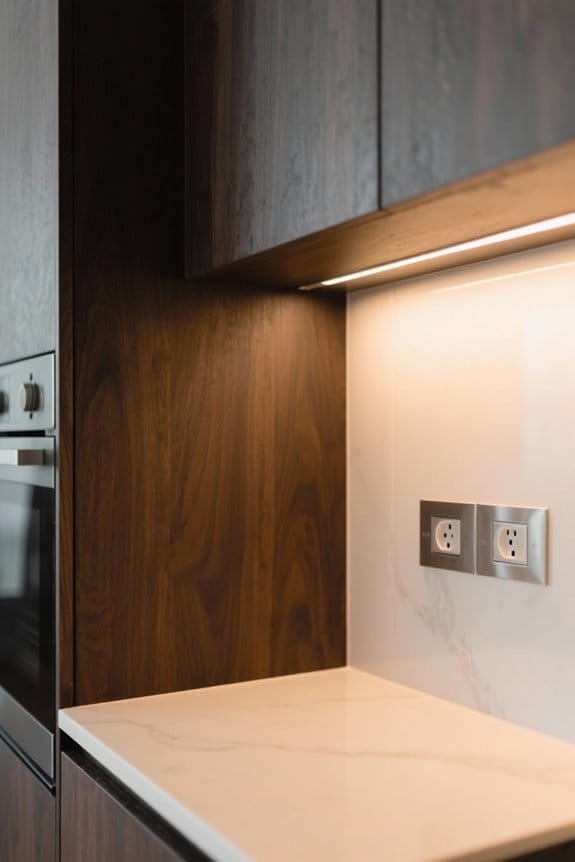
Proper electrical box placement is essential for installing hardwired LEDs. Mount the box 12 to 24 inches above the floor for easy access and securely attach it to wall studs. Follow local codes, ensuring all high-voltage connections are within the box. For ideal fixture height, install under-cabinet lights 1-2 inches from the cabinet’s back and sconces 60 to 66 inches from the floor. Compliance with these guidelines enhances safety and functionality in your lighting system. More detailed insights await.
Key Takeaways
- Install electrical boxes for hardwired LEDs at a height of 12 to 24 inches from the floor for easy maintenance access.
- Ensure junction boxes are securely attached to wall studs to provide stable support for the LED fixtures.
- Use adjustable or old work junction boxes for easy mounting in renovated spaces without additional framing.
- Position high-voltage connections strictly within junction boxes to comply with safety codes and prevent electrical hazards.
- Regularly check electrical box connections and ensure all wiring is well-sealed to promote longevity and efficient performance.
Importance of Electrical Box Placement
You may be interested
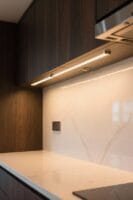


When considering the installation of hardwired LED lighting, the importance of electrical box placement cannot be overstated. Properly locating the electrical box and junction box is essential not only for safety compliance with electrical codes but also for aesthetic integration. Install junction boxes at all high voltage connection points to prevent exposed wiring, minimizing electrical hazards. Choose the right type of electrical box, such as old work junction boxes, for discreet placement while ensuring secure housing for wiring. Remember, electrical boxes should permit easy maintenance access, ideally placed at a height of 12 to 24 inches from the floor. Additionally, opt for adequately sized boxes to accommodate wiring without risk of overheating, maintaining essential safety standards throughout the installation process. For optimal safety and performance, ensure your LED lighting system is UL listed certified to comply with established safety regulations and reliability standards.
Recommended Height for Installation
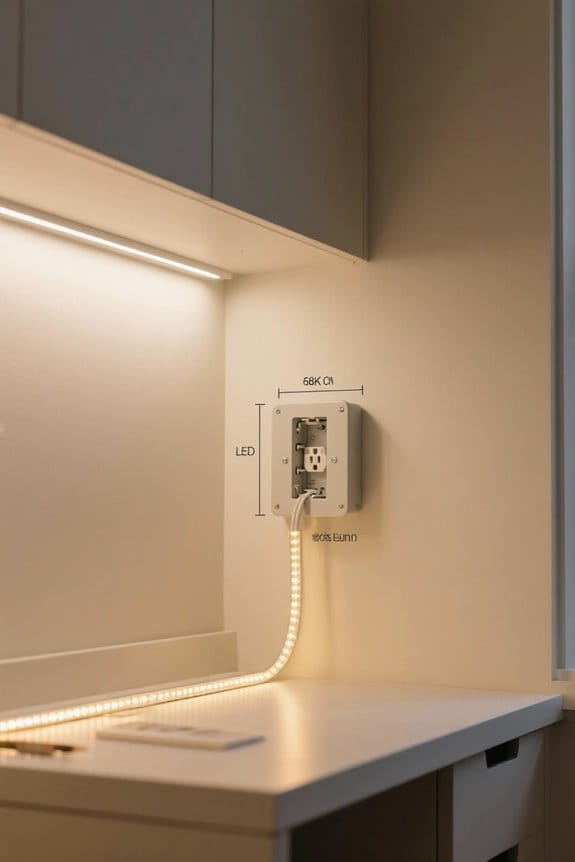
Ideal placement of electrical boxes is essential for achieving the best performance of hardwired LED fixtures. For wall-mounted sconces, the electrical box should be positioned 60 to 66 inches from the floor for ideal illumination. In contrast, under cabinet lighting requires the box to be installed 1-2 inches from the back of the cabinet, ensuring effective light distribution. For recessed LED lights, place electrical boxes 4 to 6 inches from the ceiling, accommodating standard ceiling heights. Always adhere to local building codes, as they may specify height requirements based on the application. Accurate installation of electrical boxes at these recommended heights will enhance the functionality and aesthetic appeal of the LED light fixtures, ultimately resulting in improved user satisfaction. Modern hardwired options like UltraPro push-in connectors make installation significantly easier for DIY enthusiasts.
Recommended Products

All-Weather Durability: Pro-Tect tested and proven to withstand up to 15,900 pounds or up to 30 inches of snow load, and winds up to 100 mph

Our U-200P is a bench top frame joining machine and the most popular model with the custom and home business frame shops. It is compact, well-constructed, and built for many years of trouble free operation. The design of the U-200P allows the operator to set the front and back stops for V-Nail insertion based on the width of the moulding. The frame is then moved across the nail head and V-Nails are driven or stacked anywhere along the frame joint area.

MicroSport Trailer: Durable kayak and bike trailer with marine grade galvanized steel construction for rust resistance and long-lasting performance
Securing the Electrical Box
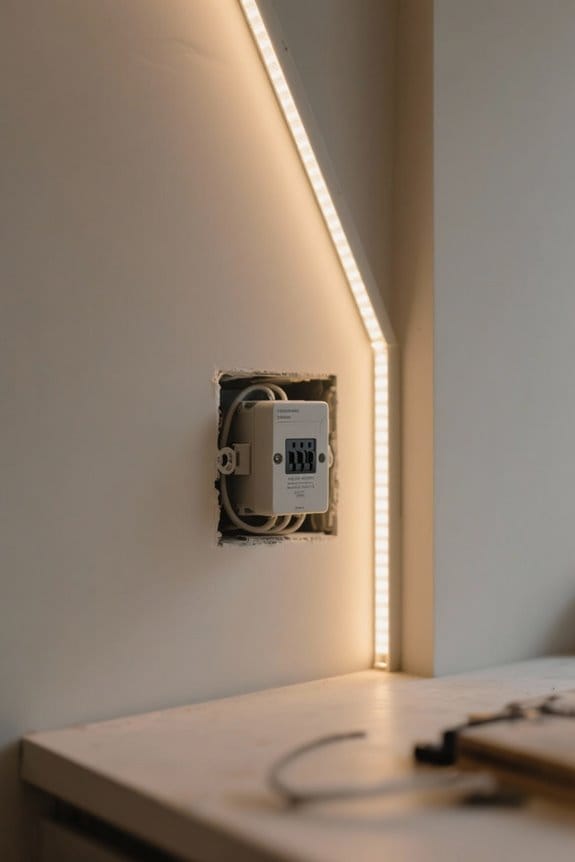
Securing the electrical box is essential to guarantee the stability and safety of hardwired LED installations. When mounting, confirm the box is firmly attached to wall studs or framing to minimize movement. Opt for adjustable or old work junction boxes, which facilitate installation and accommodate larger power supplies. Secure the NM (non-metallic) cable within the electrical box using cable clamps, preventing strain on connections. Verify that all boxes meet local codes, housing high-voltage connections properly to eliminate exposure. After installation, cover and seal each junction box to protect wires from environmental hazards. This attention to detail not only enhances safety but also contributes to the longevity of the hardwired LED system. Aim for precision in all aspects of your installation. The electrical box should support LED systems delivering up to 2,500 lumens for optimal under-cabinet lighting performance.
Recommended Products

CAST IRON CONSTRUCTION – durable cast-iron construction provides heavy-duty performance and withstands daily use in mobile tank applications

Cast-Iron Construction – heavy-duty, cast-iron construction provides unmatched durability, withstanding the harshest conditions out in the field or at the job site

✔️ BACKPACK THAT MAKES A STATEMENT – did you know you have only 7 seconds to make a first impression? And every detail matters - this eye-catching leather backpack will help you to turn heads and catch the COMPLIMENTS, make you feel more confident and good-looking.
Compliance With Electrical Codes
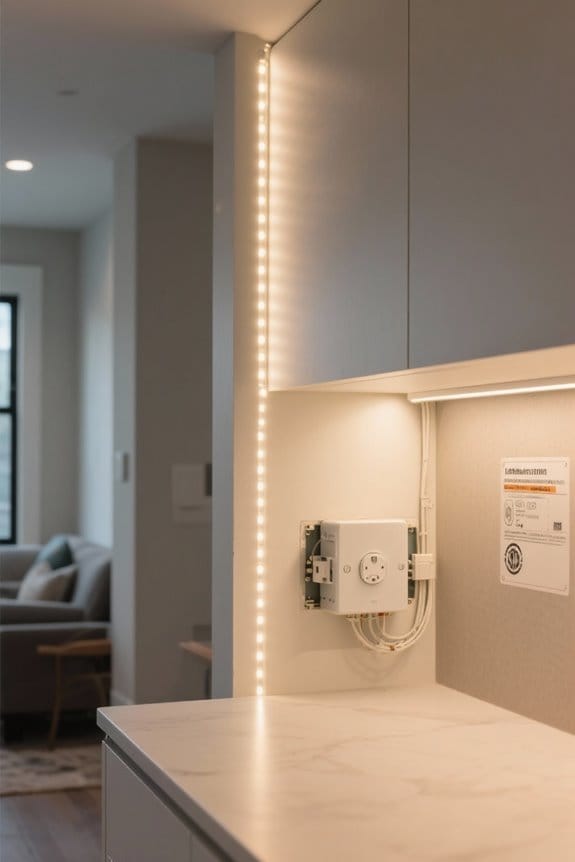
Compliance with electrical codes is critical for the safe installation of hardwired LEDs, and understanding these regulations can prevent future hazards. All high-voltage connections must be housed within junction boxes, as mandated by local electrical codes, ensuring they are protected and accessible. Proper securitization of exposed wiring, including pigtail connections, is necessary to mitigate risks. Junction boxes must be securely covered and sealed to reduce fire hazards, preventing the mixing of temporary and permanent wiring. Additionally, wires must be properly rated and secured; NM cables should be affixed using staples or clamps. For precise adherence, consult local electrical inspectors, as code interpretations may vary based on specific installation environments and applications. The installation of high CRI lighting requires careful consideration of electrical box placement to ensure optimal color accuracy and safety in task-oriented spaces.
Considerations for Multiple Fixtures
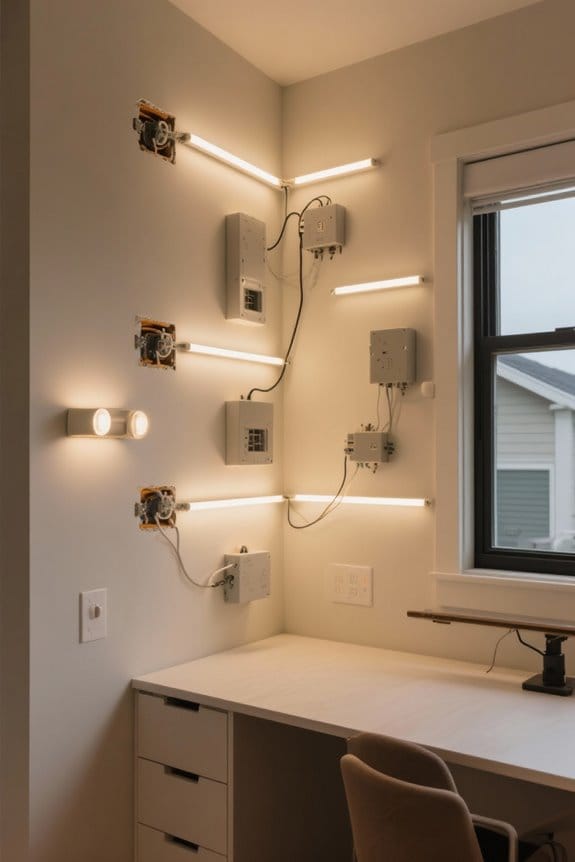
When planning the installation of multiple hardwired LED fixtures, careful consideration of electrical box placement becomes paramount. Professionals should guarantee the combined load does not exceed 1,440 watts for a 15-amp circuit or 1,920 watts for a 20-amp circuit. Utilizing an old work junction box is advantageous as it can be easily mounted in existing walls. To maintain safety and organization, connect each fixture sequentially with NM cable, securing it to the framing. Proper wire termination within junction boxes is critical; this practice meets local electrical codes and minimizes hazards. Additionally, consider incorporating a single gang receptacle at the junction box for convenience. This feature allows for easier disconnection and flexibility for future fixture modifications or maintenance. Regular inspection of terminal block connections helps prevent wear and potential electrical issues over time.
Recommended Products

Durable Construction: Crafted from high-quality PPO plastic, this deep switch outlet box offers outstanding strength and long-lasting performance, making it ideal for residential and light commercial electrical applications.

Durable Construction: Crafted from high-quality PPO plastic, this deep switch outlet box offers outstanding strength and long-lasting performance, making it ideal for residential and light commercial electrical applications.

【 Easy to use 】 By using the box's built-in fixing ears and screwing them onto the wall, old work box is very suitable for adding new sockets to existing walls. It has a rotatable buckle and can prevent them from falling off
Aesthetic Alignment With LED Design
Aesthetic considerations in electrical box placement are essential for achieving a harmonious integration of hardwired LED fixtures into any space. Strategically align gang boxes with the design and layout of the light fixtures for seamless integration. Utilize junction boxes that are flush with the wall to minimize visible wiring, creating a polished appearance. Select electrical boxes that accommodate LED drivers while curtailing clutter. Consistently position boxes at heights that correspond with the LED fixtures, ensuring visual symmetry and balance. Conceal boxes behind fixtures or opt for recessed gang boxes for a sophisticated finish. These techniques not only enhance the aesthetic appeal but also align with modern design trends, ensuring your installation reflects professionalism and elegance. When planning electrical box locations, consider installing IP65 rated boxes for outdoor LED applications to ensure weather resistance and long-term durability.
Tools and Materials Required
Successful installation of hardwired LEDs necessitates a well-equipped toolkit and appropriate materials. Essential tools include a jab saw or oscillating saw for cutting wall holes, an adjustable hole saw cutter for precise electrical box installation, and fish tape for routing wires through walls. Utilize 14 gauge electrical wire for circuits requiring up to 15 amps, and 12 gauge for 20 amp circuits, ensuring adequate wiring capacity for your installations. Employ wire strippers and both Phillips and Flathead screwdrivers for secure connections. Consider a plastic old work junction box with tabs for neat LED strip housing. Finally, fastening all NM (non-metallic) cable securely with staples or clamps is vital for safety and compliance with electrical codes. Modern LED lighting kits can reduce energy consumption by up to 85% compared to traditional lighting options.
Recommended Products

AL/CU CONNECTIONS: Supports aluminum-to-copper and copper-to-copper applications from #18 to #10 AWG wire — do not use on aluminum-to-aluminum connections

Slim design fits most spaces: The Philips 6" Slim Canless downlight is less than 1/2" thick and can easily install in the tightest of spaces.

Connect any combination of solid, stranded, and flexible copper wires faster and more reliably
Step-by-Step Installation Process
Initiating the step-by-step installation process for hardwired LEDs demands careful attention to detail and precision. First, mark the wall locations for the hardwired fixtures, ensuring alignment with the electrical box dimensions. Next, utilize an adjustable hole saw to cut holes in the drywall, matching the electrical box specifications. Secure the electrical boxes with screws, taking care not to over-tighten, which can cause distortion. Following that, run 14-2 NM cable from the electrical junction to each LED fixture, adhering to local electrical codes for secure fastening. Once wiring is complete, connect the black wires to the brass screw terminals on the fixtures, confirming all connections are tight. Conduct a functionality test before finalizing the installation for safety and reliability. The installation of LED retrofit kits typically requires minimal tools and can be completed within minutes for enhanced efficiency.
Common Mistakes to Avoid
When installing hardwired LEDs, it is vital to avoid common mistakes that can compromise safety and functionality. First, verify that all high voltage connections are housed within a junction box to prevent hazards from exposed wires. Mixing temporary and permanent wiring within the same electrical box must be avoided, as it can lead to unsafe conditions. Additionally, using electrical boxes without adequate sealing is detrimental, particularly in outdoor installations where moisture may pose a risk. For pigtail power supplies, always use rated conduits to protect against exposure. Finally, checking local electrical codes regarding the placement of electrical boxes and connections, especially near existing outlets, is essential for compliance and safe practices. Prioritize these considerations to confirm proper installation. Quality LED fixtures should deliver 2000 lumens minimum for optimal under-cabinet task lighting performance.
Testing and Finalizing Connections
Precision in testing and finalizing connections is essential to guarantee the proper functionality of hardwired LED installations. Once the connections are complete, immediately use a voltage tester to verify electrical supply reaches the fixtures effectively. Confirm that all connections comply with local electrical codes, without any exposed wires outside junction boxes. Next, test switches and outlets by toggling them on and off, verifying the response from LED fixtures. Secure all wire nuts tightly, and utilize appropriate cable clamps to prevent movement and disconnections. After confirming functionality, carefully cover all electrical boxes with their respective faceplates. This final step protects the connections from moisture and dust, affirming long-lasting performance and safety in the electrical installation. Watch for signs like flickering LED lights which could indicate potential transformer issues or connection problems that require immediate attention.
Maintenance Tips for Long-Lasting Performance
Maintaining hardwired LED installations is essential for guaranteeing their longevity and effective operation. Regularly check and tighten all connections within the electrical box. Loose wiring can cause overheating and compromise performance. Ascertain proper ventilation in the electrical box to dissipate heat, as excessive temperatures can considerably reduce lifespan. When installing LEDs, use high-quality wire nuts or connectors to secure connections, preventing flickering and malfunctions. Schedule periodic inspections of the electrical wiring and box to identify corrosion or damage, which poses safety risks. Finally, keep the exterior of the electrical box clean to promote airflow and ideal operation. These proactive maintenance steps will help guarantee hardwired LEDs function efficiently for years to come.
Frequently Asked Questions
Can LED Lights Be Hard Wired?
In a symphony of light, hardwired LED installations offer seamless beauty and efficiency. The benefits of hardwiring, including reduced clutter and enhanced safety, harmonize perfectly, making them an ideal choice for illumination enthusiasts.
Do LED Drivers Need to Be in a Junction Box?
Yes, LED drivers must be housed in a junction box to comply with LED driver regulations and enhance electrical safety. This practice reduces exposure to live wires, minimizing risks and ensuring reliable operation of lighting systems.
Where to Put a LED Power Supply?
“Out of sight, out of mind,” one might say regarding power supply location. Following wiring guidelines, he suggested discreet areas like basements for installing LED power supplies, ensuring both safety and aesthetic appeal in living spaces.
What Are the Chances of LED Lights Catching Fire?
The chances of LED lights catching fire are minimal due to efficient heat dissipation. However, improper installation or overloading circuits can lead to LED overheating, emphasizing the importance of adherence to fire safety guidelines and manufacturer instructions.