As an Amazon Associate, we earn from qualifying purchases. Some links on this site are affiliate links at no extra cost to you. Our recommendations are based on thorough research and editorial judgment.

Understanding Building Code Requirements for Task Lighting

Understanding building code requirements for task lighting is vital for compliance and safety. Familiarize yourself with standards such as ASHRAE/IES 90.1, which specifies ideal illumination levels, typically around 30 foot-candles for general work areas. Local codes, like California’s Title 24, may impose stricter requirements. Employers must guarantee lighting meets OSHA mandates to avoid penalties. Incorporate energy-efficient solutions, like LED technology, to enhance productivity and reduce costs. Investigate further to uncover essential details about energy efficiency and advanced lighting controls.
Key Takeaways
- Compliance with ANSI and OSHA standards is crucial for safe and productive workspaces, ensuring adequate illumination levels.
- Local building codes, such as California’s Title 24, may impose stricter lighting requirements than national standards like ASHRAE/IES 90.1.
- Energy-efficient lighting, particularly LEDs, significantly reduces energy consumption while meeting task lighting regulations.
- Advanced lighting controls, such as occupancy sensors, improve compliance while enhancing user experience and reducing energy costs.
- Understanding specific regional codes is essential for architects and builders to ensure their task lighting designs meet local compliance requirements.
Importance of Compliance With Task Lighting Standards
You may be interested
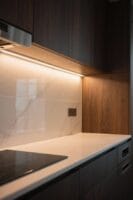

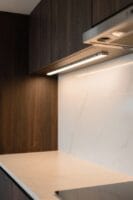
Compliance with task lighting standards is vital for creating environments that promote productivity and safety. According to the Illuminating Engineering Society (IES), optimal illumination levels notably enhance performance and reduce eye strain. The American National Standards Institute (ANSI) specifies foot candle levels tailored for various tasks, illustrating the need for thoughtful lighting design. Furthermore, OSHA emphasizes minimum lighting requirements to guarantee workplace safety and prevent accidents. Understanding regional variations in lighting codes is important, as local requirements can complicate compliance. Additionally, adhering to standards like ASHRAE 90.1 promotes energy efficiency, yielding operational cost savings. Modern LED cabinet lighting can achieve up to 70% energy savings compared to traditional fluorescent options while meeting required illumination standards. By prioritizing adherence to these standards, organizations can assure a safer and more productive work environment that supports employee well-being.
Key Lighting Codes and Standards Overview
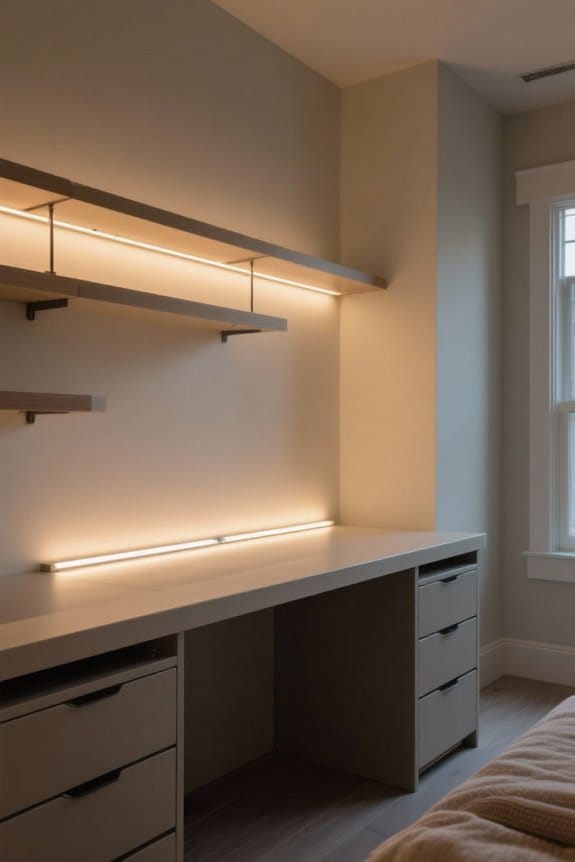
Understanding key lighting codes and standards guarantees compliance and fosters well-designed environments. The ASHRAE/IES 90.1 serves as an essential energy reference standard for non-residential buildings, updated every three years. Familiarize yourself with the International Energy Conservation Code, which offers thorough lighting guidance for residential and commercial structures. Compliance with these energy codes greatly affects overall energy efficiency. The Illuminating Engineering Society provides recommended foot candle levels, ensuring adequate illumination across various tasks. Endeavor to adhere strictly to these lighting standards, as non-compliance can lead to financial penalties and mandated renovations. Consider the potential implications for your project if local jurisdictions impose stricter variants of these codes—address any deficiencies proactively to create spaces that promote productivity and safety. Selecting Energy Star LED lights can help meet these building codes while reducing energy consumption by at least 75% compared to traditional bulbs.
Regional Variations in Building Lighting Codes
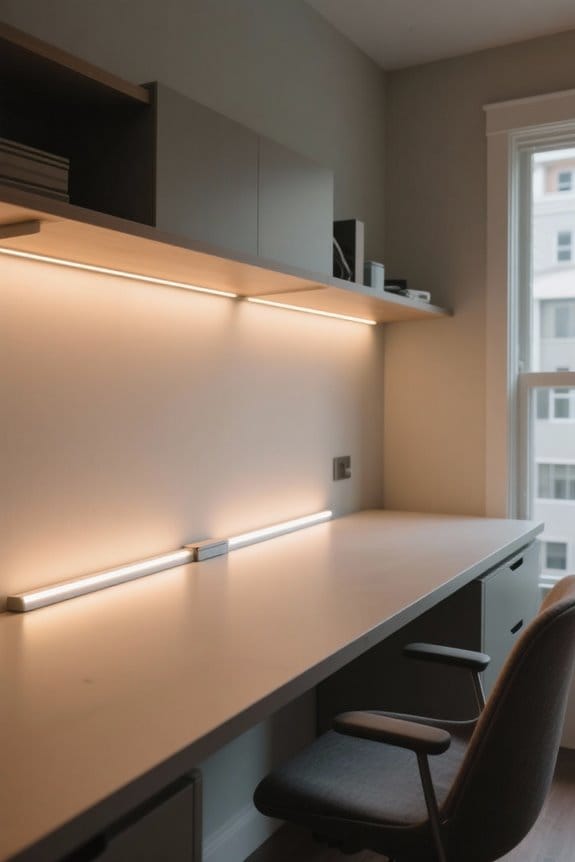
How can builders guarantee their lighting designs comply with local regulations? Understanding regional variations in building lighting codes is vital. Different areas enforce specific lighting requirements; for instance, California’s Title 24 imposes stricter rules compared to uniform codes like ASHRAE/IES 90.1 adopted in other states. Compliance requirements can vary considerably between commercial and residential settings, often dictating footcandle levels and energy efficiency standards. In Ohio, adaptations within ASHRAE 90.1 create unique task lighting regulations. Additionally, municipal codes may further complicate compliance, imposing stricter requirements than state laws. Architects and builders must thoroughly research these local codes to ascertain their task lighting designs align with the specific legal frameworks of their project locations, thereby avoiding potential legal pitfalls. Modern LED task lighting solutions can help meet these requirements while providing energy efficiency and extended lifespans of up to 50,000 hours.
Recommended Products

Counter Depth Design Creates A Sleek Built-in Look

Certification, Extended Warranty: ETL certified for safety and sanitation, States/cities may require all commercial kitchens use NSF or ETL certified products; Enjoy a 3-year all-parts, 6-year compressor, and 1-year labor warranty

Selectable 5CCT from 2700K to 5000K – Easily set light tone to match surrounding colors, cabinet styles, or task-specific zones using built-in CCT switch during install
Understanding ASHRAE and IECC Requirements
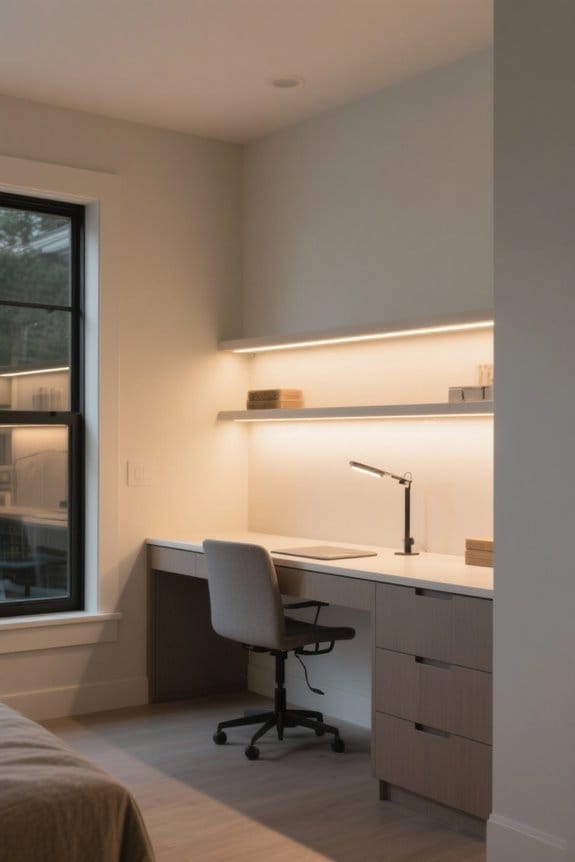
Among essential components of modern building design, adherence to ASHRAE (American Society of Heating, Refrigerating and Air-Conditioning Engineers) and IECC (International Energy Conservation Code) requirements plays a significant role in ensuring energy efficiency. Specifically, ASHRAE 90.1 establishes minimum lighting power density (LPD) requirements for various commercial buildings. This integration highlights important energy savings in task lighting designs. Compliance with these standards mandates the utilization of advanced lighting controls, such as occupancy sensors, to maximize energy efficiency. In addition, ASHRAE and IECC specify different illumination levels based on space type, ensuring that productivity and safety are prioritized. Meeting these criteria not only enhances energy savings but also aligns with federal, state, and local energy regulations, reinforcing the significance of responsible building practices. Modern LED lighting solutions can reduce energy consumption by up to 85% compared to traditional lighting options while meeting strict building code requirements.
Recommended Products

Over 60% energy savings when compared to a fluorescent troffers/L92 at 100, 000 hours with 5 yr.

Desktop Base with Extended Arms.

High Brightness Lighting: The integrated lamp panel is used at the lamp panel to make it work more stable and not easy to be damaged. The 360 one-watt high power bright light beads are pasted inside, making its brightness up to 36000LM
The Role of OSHA in Workplace Lighting
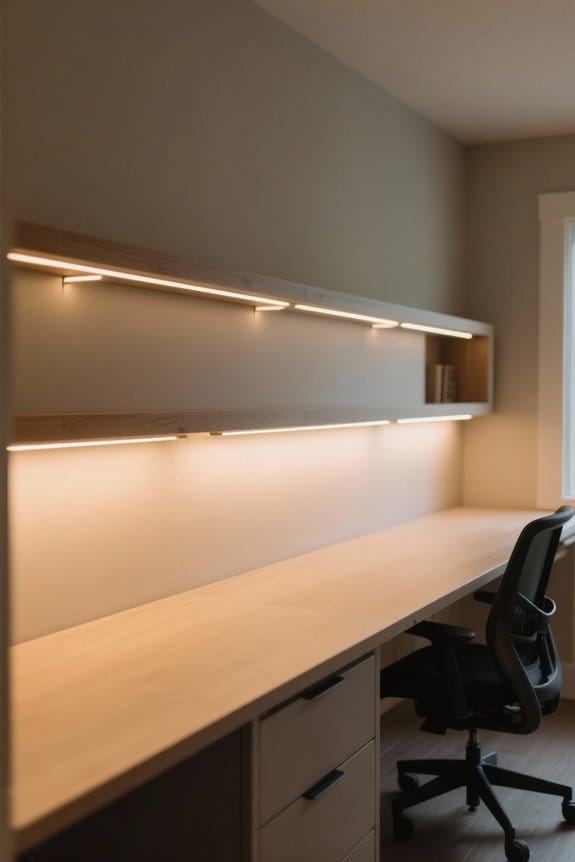
Effective workplace lighting serves as a critical component in maintaining safety and productivity standards. OSHA mandates specific lighting levels, requiring 10-foot candles in motion areas and 30-foot candles in general workspaces. Employers must assess lighting conditions and guarantee compliance with these code requirements. Failure to meet these standards not only jeopardizes employee safety but can also lead to OSHA inspections and potential citations. Utilizing occupancy sensors can enhance energy savings while maintaining necessary illumination levels. Proper lighting fosters improved safety, reducing workplace accidents and contributing to overall employee well-being. Continuous education on OSHA lighting requirements is essential for both employers and employees to uphold safety standards effectively. Are your lighting solutions compliant and sufficient for your workspace needs? Modern LED lighting solutions can provide up to 2,500 lumens while maintaining excellent energy efficiency for workplace environments.
Americans With Disabilities Act (ADA) Considerations
The Americans With Disabilities Act (ADA) imposes specific lighting requirements that are essential for ensuring safety and accessibility in commercial spaces. ADA standards mandate adequate lighting levels, particularly in areas where individuals with visual impairments may navigate. General areas should maintain illumination between 10 to 20 footcandles, while task lighting may require brighter levels, based on specific activities. Properly positioned light fixtures help minimize shadows, improving visibility in critical areas like stairways and entrances. Additionally, effective ambient lighting should be complemented by adjustable task lighting to cater to individual needs. Signage and markings must also possess adequate lighting and a minimum contrast ratio against backgrounds, ensuring clear visibility for all users, including those with visual impairments. Installing energy-efficient LED fixtures can reduce power consumption by up to 85% while maintaining ADA-compliant lighting levels.
Types of Task Lighting and Their Requirements
When evaluating task lighting options, it is essential to take into account the specific illumination requirements correlated to various activities. Standard recommendations dictate a range of 50-100 lumens per square foot. For example, reading tasks require at least 75 lumens, while intricate activities, such as sewing, demand 100 lumens. Additionally, work environments like offices must reduce glare and shadows—often achieved through adjustable fixtures or diffusers. Local building codes may enforce energy efficient lighting, particularly LED technology, to decrease energy consumption. Compliance with OSHA standards suggests a minimum of 30 foot-candles in general work areas. Specialized environments, such as laboratories, may impose stricter codes and higher luminosity requirements to enhance safety and precision. Modern LED task lighting solutions can provide up to 1200 lumens while maintaining energy efficiency through dimming capabilities and motion sensors.
Recommended Products

【Ultra-Efficient LED Technology】130 lm/W high-efficiency LEDs paired with advanced drivers deliver 9360 lumens output.50,000+ hour lifespan achieves 56% energy savings vs fluorescent lighting. Slim 1.97-inch profile fits standard 2x4 grids.

Cubes rotate independently for creative display options. Stack all three cubes in the same direction for a stunning 3D cubed effect, or adjust independently for your own creative design.

High-Efficiency Illumination: Engineered with long-life LEDs and a high-efficacy driver to deliver up to 7,500 lumens at 150 lm/W. This energy-saving design reduces power consumption by up to 56% compared to traditional fluorescent fixtures while offering a service life of over 50,000 hours.
Advanced Lighting Controls for Efficiency
Integrating advanced lighting controls into a building’s design not only promotes energy efficiency but also enhances overall user experience. By employing lighting control systems, such as occupancy sensors and daylight harvesting techniques, buildings can reduce lighting energy consumption by up to 60%. This significant reduction supports compliance with energy codes like ASHRAE 90.1, which advocate for effective lighting management strategies. Smart systems automatically adjust brightness levels based on occupancy and natural light, improving comfort and minimizing waste. Centralized control improves management efficiency, facilitating compliance audits through easy monitoring. Additionally, utilizing these advanced lighting controls supports the achievement of sustainability certifications, such as LEED and WELL, highlighting a commitment to energy-efficient practices in building design. Modern smart control capabilities enable customizable illumination with multiple brightness levels and color temperatures to accommodate diverse workspace requirements.
Health Implications of Inadequate Illumination
Inadequate lighting in work environments directly contributes to various health issues, impacting both employee well-being and productivity. Research indicates that around 80% of workers experience visual discomfort due to inadequate illumination. Insufficient task lighting can lead to decreased morale, as 40% of employees report lower productivity in poorly lit spaces. Moreover, the National Safety Council links inadequate illumination to approximately 20% of workplace injuries, emphasizing the importance of compliance with requirements for light set by energy standards for buildings. Additionally, individuals with conditions like chronic fatigue may suffer exacerbated symptoms in suboptimal lighting. To enhance workplace health, proper task lighting is essential; studies show it can improve focus and efficiency by up to 25%. Prioritize effective lighting design. Modern daylight white lighting at 6000K color temperature provides enhanced visibility for detailed tasks while reducing eye strain in workspace environments.
Integrating Energy-Efficient Solutions in Lighting Design
Effective lighting design is essential for modern work environments, greatly influencing both energy efficiency and employee productivity. Integrating energy-efficient solutions like LED technology can reduce energy consumption for task lighting by up to 75%, cutting operational costs considerably while providing adequate illumination levels. According to the Illuminating Engineering Society, typical office environments need approximately 40 lumens per square foot. Advanced lighting controls, including occupancy sensors and daylight harvesting systems, enhance energy efficiency and guarantee compliance with ASHRAE 90.1 energy codes. Designers can utilize the COMcheck tool to verify compliance, confirming installations meet current regulations. Adopting these energy-efficient task lighting practices aligns with evolving 2026 regulations, mandating minimum lighting levels and advanced controls in commercial buildings to decrease overall energy consumption. Modern LED under cabinet lights can last over 20,000 hours while using 90% less energy than traditional halogen alternatives.
Frequently Asked Questions
What Are OSHA Requirements for Lighting?
OSHA standards mandate specific illumination levels to guarantee workplace safety, requiring ambient lighting of at least 5 footcandles generally and 10 for visual performance. Additionally, glare reduction and proper electrical installations are critical for compliance and safety.
What Are the Requirements for Workshop Lighting?
Workshop lighting requirements include adequate workshop illumination, adherence to safety standards, and energy efficiency. Proper fixture placement, regular maintenance schedules, and consideration of workspace ergonomics are essential for optimizing visibility and worker comfort during tasks.
What Level Should Task Lighting Be?
Task lighting levels ideally soar between 50 and 100 footcandles, ensuring superior illumination. Proper lighting distribution, thoughtful fixture placement, and appropriate color temperature enhance workplace ergonomics, fostering productivity and minimizing eye strain in demanding environments.
What Is the Code for Lighting?
The code for lighting encompasses installation guidelines and safety standards, ensuring compliance verification. It emphasizes code consistency and energy efficiency, guiding lighting design to achieve ideal illumination while adhering to local and national regulations.