As an Amazon Associate, we earn from qualifying purchases. Some links on this site are affiliate links at no extra cost to you. Our recommendations are based on thorough research and editorial judgment.

How to Install LEDs Near Gas Appliances Safely

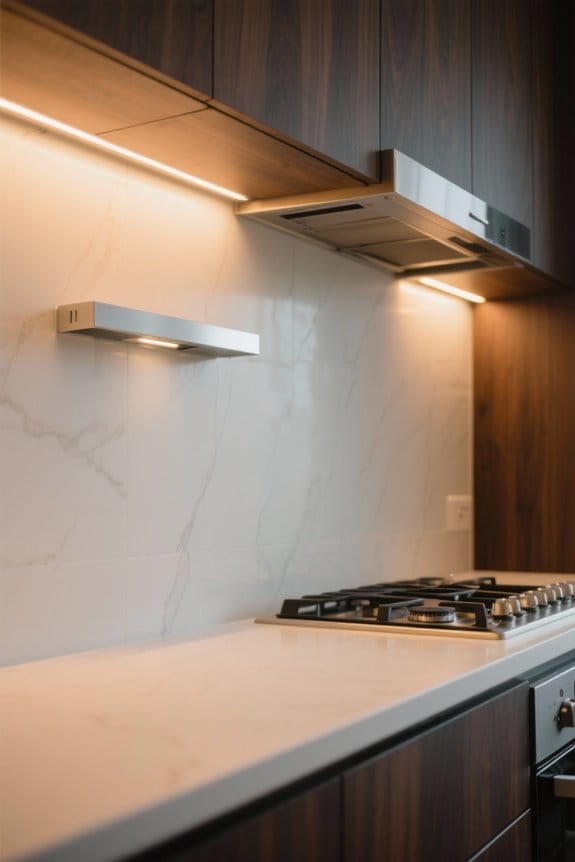
To safely install LEDs near gas appliances, maintain a minimum distance of 800-900mm from gas sources and guarantee at least 6cm clearance between downlights and gas pipes. Use intrinsically safe (IS) rated LED fixtures and confirm they are moisture-resistant. Follow AS3000 guidelines for wiring and secure all connections to prevent short circuits. Regular inspections for heat damage or moisture buildup are crucial. For innovative uses of LED lighting in kitchens, further insights await.
Key Takeaways
- Maintain at least 800-900mm clearance from gas appliances to minimize ignition risks during LED installation.
- Choose intrinsically safe (IS) rated LED fixtures to ensure compliance with safety standards around gas sources.
- Keep a minimum distance of 6cm between downlights and gas pipes to prevent potential heat hazards.
- Follow AS3000 guidelines for safe electrical installations and secure connections to avoid short circuits.
- Regularly inspect and clean LED installations to ensure safety and functionality in the presence of gas appliances.
Understanding Safety Guidelines for LEDs Near Gas Appliances
You may be interested
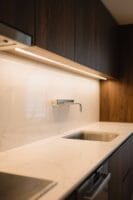
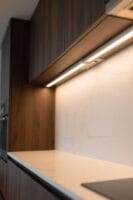
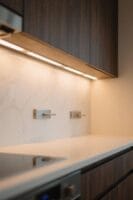
When installing LED lights near gas appliances, one must adhere to established safety guidelines to minimize potential hazards. Maintain a minimum distance of 800-900mm from gas sources to prevent ignition risks. Additionally, employ intrinsically safe (IS) light fittings designed for hazardous locations. While low voltage LED lights are generally safe, proper installation techniques, such as soldered connections and secure mounting, are essential. Compliance with AS3000 electrical standards is important, as these may define acceptable proximity to gas components. Regular inspections of installed LEDs are critical for identifying any heat damage or moisture issues that could arise, ensuring ongoing functionality and safety. Remember, following these guidelines is not just recommended; it is imperative for a secure environment. For enhanced safety, consider installing motion sensor lights that automatically deactivate when no movement is detected, reducing prolonged heat exposure near gas appliances.
Selecting the Right LED Products for Hazardous Zones
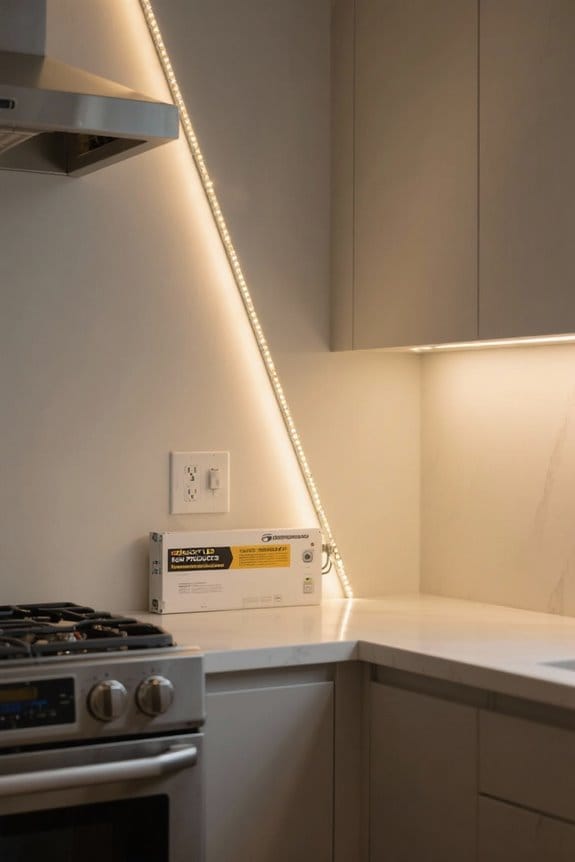
Selecting LED products designed for installation near gas appliances requires careful consideration of safety and functionality. Prioritize fixtures with an intrinsically safe (IS) rating to comply with safety regulations in hazardous zones. Look for LED lighting solutions that are IP68 rated, as they offer high resistance to water and dust. However, remember that being IP68 does not guarantee explosion-proof capabilities. For added safety, choose low voltage LED lights, ensuring their maximum temperature rating is below 55°C to mitigate fire risks. It’s also advisable to select moisture-resistant and heat-rated LED products designed for kitchen use. Finally, mount fixtures at least 800-900mm away from gas sources to maintain a safe distance as recommended by industry professionals and safety guidelines. Modern LED technology options can reduce heat output by up to 70% compared to traditional lighting, making them inherently safer for use near gas appliances.
Recommended Products

cULus, ATEX, IECEx, and InMetro certified Intrinsically Safe
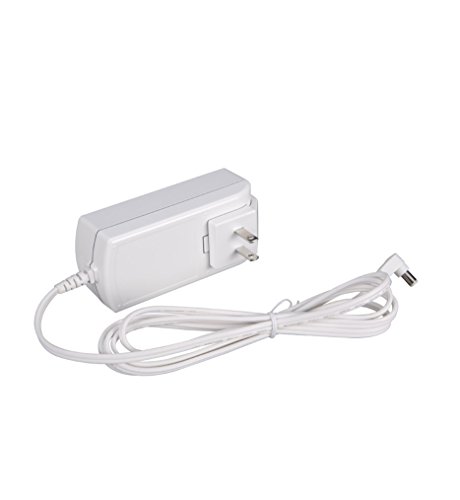
Soft start, short and overload circuit protection features. The soft start delayed start feature extends lamp life by delaying the abrupt inrush current to the lamp

Soft start, short and overload circuit protection features. For use with WAC Lighting low Voltage under cabinet and recessed Lighting systems
Importance of Clearance Distances From Gas Lines
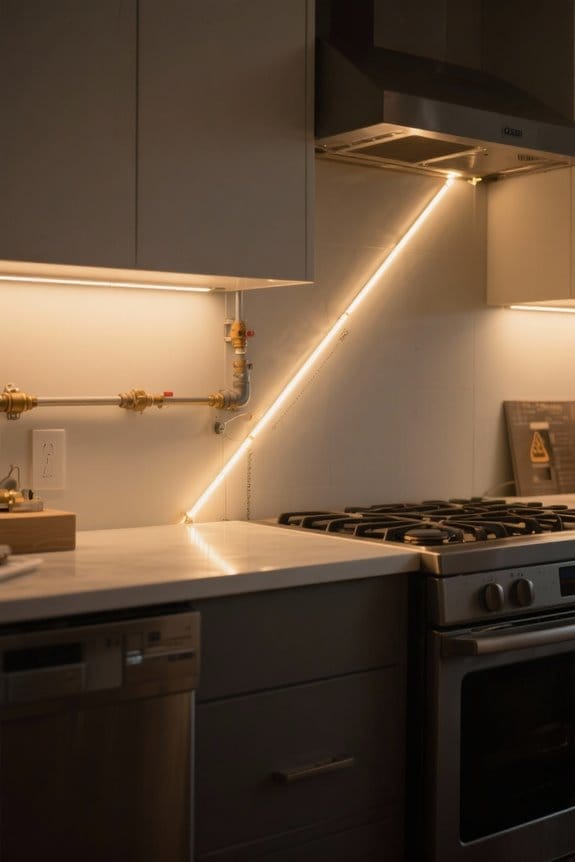
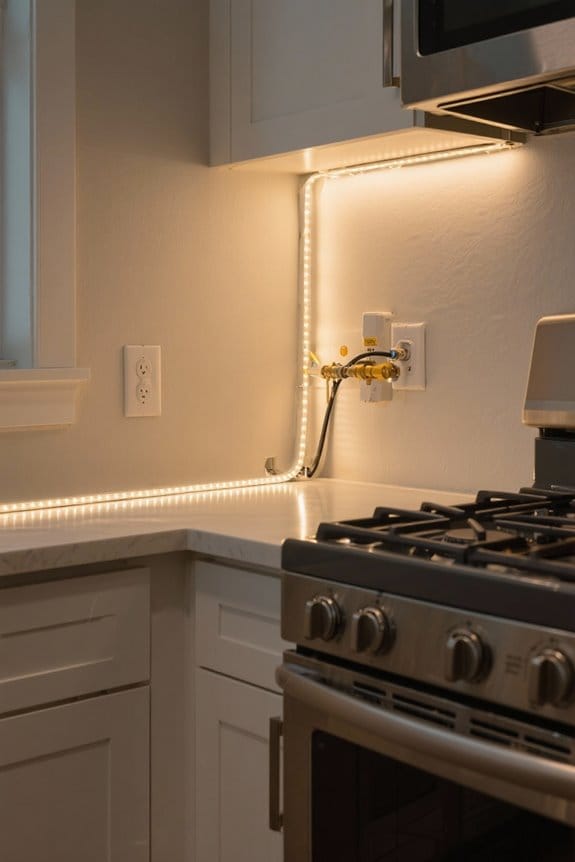
Maintaining appropriate clearance distances from gas lines is essential for ensuring a safe installation of LED lighting near gas appliances. It is advisable to keep a minimum distance of 800-900mm from gas sources, optimizing safety. Specifically, a clearance of at least 6cm should exist between downlights and gas pipes to avert heat-related hazards. In addition, cables must maintain a minimum clearance of 25mm from conductive parts, like gas pipes, to mitigate electrical risks. Compliance with local regulations, such as AS3000, is vital for best practices. Experts recommend positioning lighting fixtures a safe distance of 1 to 1.5 meters from all gas components, fostering a secure installation environment. Adhering to these guidelines protects against potential dangers associated with gas appliances. Energy efficient LEDs provide a safer lighting option near gas appliances due to their lower heat output and reduced electricity consumption compared to traditional lighting.
Installation Best Practices for LED Lighting
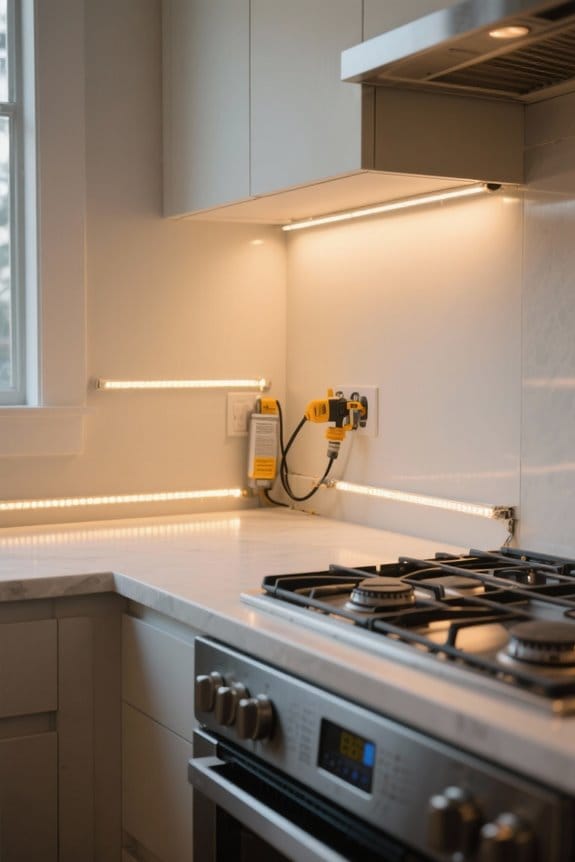
Installing LED lighting safely near gas appliances requires meticulous attention to detail and adherence to best practices. Maintain a minimum clearance of 800-900 mm from gas appliances to minimize ignition risks. Opt for low voltage LED models that feature an IP68 rating, guaranteeing resistance to moisture and dust, though they are not explosion-proof. Securely mount LED fixtures with screws for enhanced stability in humid or hot environments. Follow AS3000 guidelines to guarantee compliance with electrical installations, including specific distance requirements from gas components. Additionally, consider using intrinsically safe (IS) rated LED fixtures near flammable substances, offering an extra layer of safety in hazardous areas. These steps will help guarantee a safe and effective installation when you install LED strip lighting. Minimal heat output from LED lights compared to traditional bulbs makes them a safer choice near gas appliances.
Recommended Products

Featuring RGBW LEDs. RGB 8 Option Back Lighting : Red, Green, Blue, Teal, Purple, Amber, White Or Rotating

Trusted Hyper Bright: Employ top-notch Osram P8/5W led chips, total 210 watts per light, with lighting performance 21260LM/PC, 7260Lux@10Meters, 1Lux@852Meters (2795FT). Features a trusted ultra-bright, high-intensity, stable light output. Improves driving safety with a clearer, wider, and further visual area. Lifespan extends over 50,000 hours

PREMIUM INTEGRATED LED LIGHTING: Features a built-in 4000K Natural White LED strip that provides the perfect, spa-like ambiance. It's bright, energy-efficient, and offers a clean, modern look without the harshness of direct lighting.
Wiring Considerations and Safety Compliance
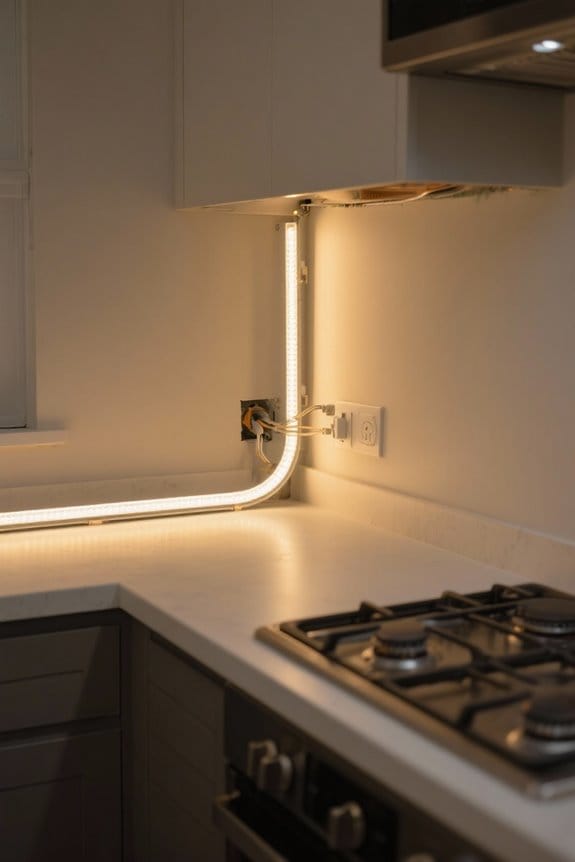
Wiring considerations are fundamental when working near gas appliances, as improper electrical installations can pose serious safety risks. Maintain a minimum distance of 800-900mm from gas sources when installing LED lights to reduce ignition hazards. Adhere to the manufacturer’s clearance requirements, guaranteeing at least 25mm clearance for cables from conducting parts such as gas pipes. Opt for low voltage LED lights to further minimize fire risks. Always verify that installations comply with AS3000 guidelines, as safety compliance standards can differ when in proximity to gas components. Utilize secure connections made with appropriate connectors rather than solder joints, preventing potential short circuits that could ignite nearby gas fumes. Prioritize safety when configuring your power supply to protect both appliances and individuals. Consider installing dimmable LED lights that allow you to adjust brightness levels from 10% to 100% for optimal safety and visibility near gas appliances.
Choosing Quality Materials for Durability
When selecting materials for LED installations near gas appliances, prioritizing durability is essential to guarantee safety and longevity. Choose quality materials that maintain resilience against heat and moisture. Opt for LED lights that are specifically rated for high moisture environments and fully encapsulated in silicone to withstand steam from cooking. Screws should secure LED strips instead of adhesive for enhanced stability in demanding kitchen settings. Verify that temperature ratings for LED lights remain below 55°C, as this helps prevent overheating and prolongs their lifespan. Finally, consider using intrinsically safe (IS) lighting fixtures to maintain compliance with safety regulations in hazardous locations. High-quality choices not only promote durability but also enhance the overall safety of the installation. For optimal efficiency and environmental impact, select LED lights that provide 80 lumens per watt or higher to maximize energy savings while maintaining proper illumination levels.
Recommended Products

💡【Edge-Lit Innovation Full Mirror Premium Glow】Unlike central-strip designs that reduce usable mirror area, our outer-edge sandblasted frosted LED strip maximizes mirror space for clear, unobstructed grooming. More decorative than lamp-shaded styles, it maintains elegant aesthetics when lit or off. To address the common dimness issue in sandblasted strips, we widened it to 1 inch—delivering both premium aesthetics and bright, cozy bathroom lighting in one.

【Stepless Dimming & Color Temperature Control】Enjoy perfect lighting every time. This lighted medicine cabinet offers stepless brightness adjustment from 10% to 100% and stepless color temperature adjustment from 3000K to 6000K. Whether you need a warm glow for relaxation, natural light for daily routines, or crisp cool light for precision tasks, the LED medicine cabinet adapts seamlessly to your lifestyle, creating the ideal atmosphere in your bathroom.

UL/cUL LISTED - VOLT products are UL Listed for safety; most competitors' landscape lighting products on Amazon are not.
Evaluating Heat Resistance and Moisture Protection
Evaluating heat resistance and moisture protection is essential for safe LED installations near gas appliances. Select LED fixtures designed to withstand temperatures up to 55°C to avoid fire hazards. Look for moisture protection features vital in kitchen environments; wet-rated LED lights are best as they are fully encapsulated in silicone, offering resistance to steam and cooking splashes. Confirm that electrical cables are routed at least 800-900mm away from gas sources to prevent heat damage and enhance safety. Regular inspections of the LED lights and mounting conditions should be scheduled to detect any heat damage or moisture issues early. Additionally, installing lights with suitable IP ratings, such as IP68, adds an extra layer of moisture and dust protection, solidifying overall safety. Consider installing LED fixtures made with durable aluminum alloy construction to ensure maximum heat dissipation and long-term reliability in high-temperature environments.
Preventative Measures to Enhance Safety
To guarantee safety during LED installations near gas appliances, it is critical to implement preventative measures that minimize risks associated with heat and moisture. Maintain a minimum safe distance of 800-900mm from gas appliances to substantially reduce ignition risks. Opt for high-quality, moisture-resistant LED fixtures that can endure cooking heat and steam encountered in kitchen environments. Additionally, it is essential to utilize intrinsically safe (IS) rated LED products to fully comply with safety regulations. Regularly inspect LED installations for signs of heat damage or moisture issues. Promptly address any deficiencies to guarantee peak performance and safety. Finally, route electrical cables carefully within the main frame to minimize exposure to potential hazards from gas leaks, further enhancing overall safety. For optimal visibility and safety, select LED fixtures with high CRI ratings to ensure accurate color representation of gas flames and potential leaks.
Addressing Common Concerns & Myths
Concerns and myths surrounding LED installations near gas appliances can create confusion about safety protocols. Many believe LED strips are inherently safe, but they must be positioned at least 800-900mm away from gas components to minimize ignition risks. While LEDs operate cooler than traditional bulbs, using heat-resistant fixtures is crucial to guarantee safety compliance. Furthermore, avoiding direct installation above gas appliances helps prevent heat and moisture-related issues. Opting for intrinsically safe (IS) fixtures can further enhance safety when working near flammable substances. Regular inspections of installed lighting are critical to detect heat damage or proximity issues over time. Addressing these common concerns is essential to meet proper lighting needs while guaranteeing safety around gas appliances. The 50,000 hour lifespan of modern LED fixtures ensures long-term reliability when properly installed near gas appliances.
Routine Maintenance to Prolong LED Life
Maintaining LED lighting systems involves a systematic approach to guarantee durability and peak performance. Routine maintenance is essential for extending the lifespan of LED strip lights. Regularly inspect LED strips for signs of heat damage or moisture, observing their conditions carefully. Clean these lights routinely with a soft cloth, or a damp cloth containing a mild cleaning solution to prevent grime buildup. Always make sure that LED strips are cool and powered off during cleaning to minimize the risk of electrical shock. Conduct periodic functionality tests to verify that all LED sections are operational, supporting uniform lighting quality. Finally, keep installation areas free from direct heat sources, checking regularly to maintain suitable distances from potential hazards. Consider installing motion activation technology that can detect movement within 10 feet to optimize energy efficiency and extend LED life.
Creative Applications of LED Lighting in Kitchens
LED lighting offers significant opportunities for enhancing kitchen spaces, moving beyond traditional uses. Installing LED strip lights under cabinets not only provides task lighting but also illuminates countertops, adding a warm ambiance. For a modern touch, consider incorporating toe-kick LED lighting that subtly brightens floor spaces, guiding users at night. Use LED strips to showcase glassware in cabinets; this technique transforms storage into an appealing focal point. Additionally, enhancing pantry shelves with LED lighting improves visibility for easier access to items while creating an attractive glow. Finally, utilize dynamic color-changing LEDs to set various moods, allowing adjustments based on occasions or personal preferences while cooking or entertaining. Embrace these innovative applications to elevate kitchen design.
Alternative Lighting Options for Safety in Cooking Areas
To enhance safety in cooking areas, especially near gas appliances, appropriate alternative lighting options should be prioritized. Utilizing heat-resistant and waterproof LED strip lights is essential to combat hazards from steam and splashes. Furthermore, glow-in-the-dark plastic strips are a cost-effective choice that provides necessary illumination without power, promoting visibility in dim areas. During potential power outages, battery-operated hazard lights serve as a portable lighting solution, ensuring safety away from gas sources. Position low-voltage LED lights at least 800-900mm from gas appliances to minimize ignition risks while facilitating essential cooking lighting. Additionally, integrating reflective materials strategically improves visibility without introducing additional electrical fixtures, fostering safe navigation in kitchen spaces highly sensitive to safety regulations.
Recommended Products

Create an Inviting Ambiance: Integrated LED strips emit a warm 3000K glow, transforming your pergola into a cozy and inviting space for evening entertainment and relaxation.
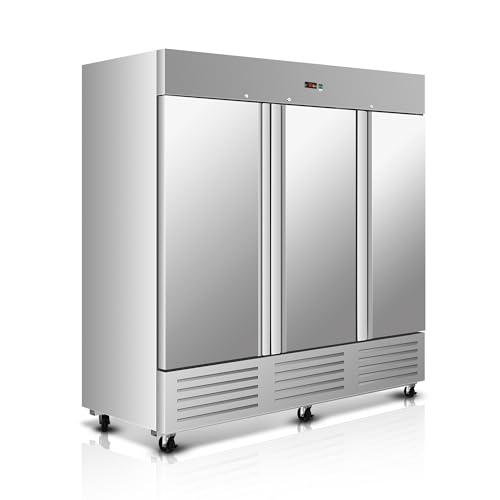
Advanced Energy-Saving Technology: This commercial freezer is engineered for maximum efficiency, featuring a high-precision digital thermostat and a powerful Cubigel compressor, significantly reduces energy consumption while ensuring precise temperature control. The optimized cooling system operates quietly while extending the appliance’s lifespan, making it ideal choice for reducing operating costs

Built for Outdoor Durability: Designed with a premium asphalt shingle roof, ridge cover shingles, top cover and an integrated waterproof layer, this outdoor infrared sauna offers reliable, year-round protection against rain, humidity
Frequently Asked Questions
What Are the Chances of LED Lights Catching Fire?
Chances of LED lights catching fire are remarkably rare. With robust fire safety features, minimal electrical hazards, and thoughtful installation tips, they remain cool and safe, greatly reducing fire risks in residential settings compared to traditional lighting.
What Safety Precautions for LED Strips?
LED installation tips emphasize the importance of using safety gear, ensuring proper wiring precautions, and selecting appropriate materials. Regular inspections for wear and adhering to distance guidelines greatly enhance safety in environments with flammable substances.
Can LED Strip Lights Withstand Heat?
LED strip lights typically feature heat resistance below 55°C, impacting their performance near heat sources. For ideal energy efficiency, installation tips include using high-quality, moisture-resistant models and positioning away from direct heat to prevent damage.
Do LED Strip Lights Get Hot Enough to Start a Fire?
LED strip lights typically do not generate enough heat to ignite a fire, symbolizing safety’s embrace. Adhering to LED installation guidelines enhances LED heat dissipation, ensuring ideal performance and bolstering overall LED fire safety in environments.