As an Amazon Associate, we earn from qualifying purchases. Some links on this site are affiliate links at no extra cost to you. Our recommendations are based on thorough research and editorial judgment.


How Smart LED Technology Works in Modern Homes

Smart LED technology enhances modern homes through energy-efficient lighting solutions. These systems utilize wireless connectivity protocols such as Wi-Fi, Bluetooth, and Zigbee to offer convenient control. Users can adjust brightness and color temperatures, creating customized environments. Smart bulbs have lifespans exceeding 50,000 hours and can consume up to 75% less energy than traditional incandescent bulbs. Additionally, they integrate with home automation systems for improved functionality. Explore further to understand the various features and potential challenges of smart LED technology.
Key Takeaways
- Smart LED technology utilizes wireless protocols like Wi-Fi, Bluetooth, and Zigbee for convenient control of home lighting systems.
- Users can adjust brightness and color temperatures for different activities, enhancing the ambiance of modern homes.
- Energy-efficient smart LEDs consume up to 75% less energy than traditional bulbs, leading to significant cost savings on electricity.
- Integration with home automation platforms, such as Google Home and Amazon Alexa, allows for voice control and automation scheduling.
- Smart lighting systems may utilize occupancy sensors to optimize energy use by automatically adjusting settings based on room presence.
The Basics of Smart LED Technology
You may be interested



Smart LED technology represents a significant advancement in home lighting solutions, utilizing wireless connectivity protocols such as Wi-Fi, Bluetooth, and Zigbee. These smart LED systems provide enhanced energy efficiency, consuming up to 75% less energy than traditional incandescent bulbs, and boasting lifespans exceeding 50,000 hours. Users gain unprecedented control over their lighting environments, as they can adjust brightness and color temperatures to suit diverse activities or moods. Integration with home automation platforms, like Google Home and Amazon Alexa, enables voice control of lighting settings. In addition, advanced features such as motion sensors and geofencing guarantee that lighting adapts automatically based on occupancy, resulting in maximized energy savings and elevated convenience for homeowners in their daily lives. Modern smart LED fixtures offer color temperature ranges from 2700K to 6000K, allowing users to create the perfect ambiance for any space or occasion.
How Smart Lighting Systems Operate
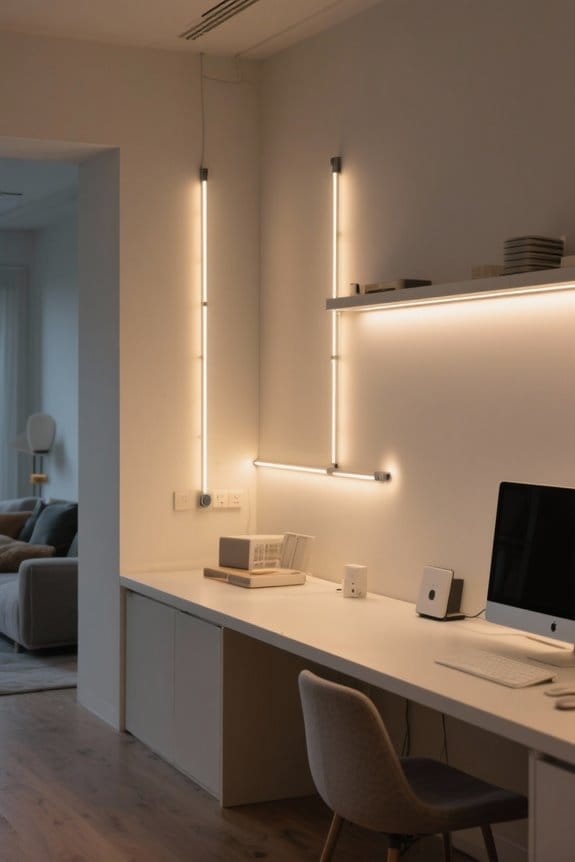
In modern homes, lighting systems operate seamlessly through advanced wireless technologies that interconnect devices and enhance user convenience. Smart lighting systems utilize wireless connectivity technologies like Wi-Fi, Bluetooth, and Zigbee for remote control and automation. These systems typically feature smart bulbs or switches, programmed to adjust brightness and color temperature according to user preferences. A central hub may be employed to manage multiple smart home devices, ensuring thorough control and integration. Occupancy sensors play an essential role, automatically adjusting settings based on detected presence, optimizing energy efficiency. Voice assistants, such as Alexa and Google Home, facilitate voice-activated control, further improving accessibility and user experience when managing lighting throughout the home, crafting an intuitive living environment. Many modern systems incorporate motion detection features that can sense movement within 10 feet, enabling automatic illumination in key areas of the home.
Connectivity Options: Wi-Fi, Bluetooth, and Zigbee
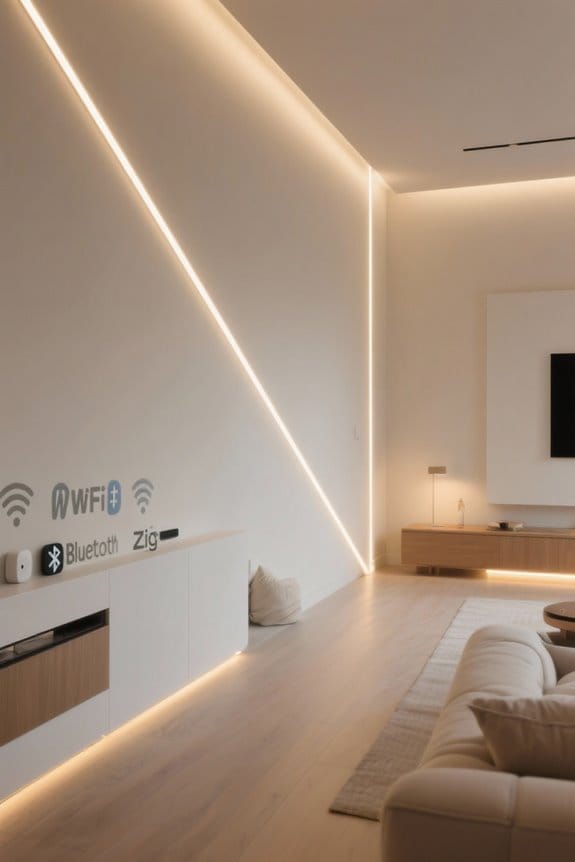
Various connectivity options play an important role in determining the effectiveness of smart LED lighting systems within modern homes. Wi-Fi facilitates easy integration with existing networks, enabling seamless control of smart LED technology through smartphone applications. This option is ideal for those seeking thorough functionality without additional hardware. Conversely, Bluetooth provides localized control, suitable for smaller, simpler systems, where direct communication from nearby devices suffices. Zigbee, a wireless protocol designed for low-power applications, excels in larger installations, allowing multiple devices to communicate effectively over a mesh network. Each connectivity option markedly impacts the interoperability of smart home technologies, shaping how smart lighting systems interact with other devices. Therefore, selecting the right protocol is vital for peak performance. Popular brands like Govee utilize RGBIC technology to display multiple colors simultaneously while maintaining seamless connectivity across their smart lighting systems.
Recommended Products

Commercial-Grade Airflow: Six 72" aluminum blades with a 27° pitch deliver a massive 12,705 CFM, cooling patios, outdoor kitchens, and covered decks with powerful circulation
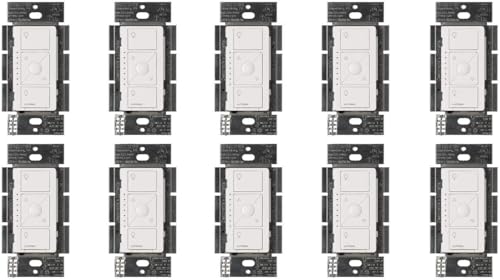
EASY INSTALL: Easily replaces your existing switch in as little as 15 minutes; NEUTRAL WIRE REQUIRED

*Hight intensity *Cool, bright white light
Smart Bulbs and Their Features
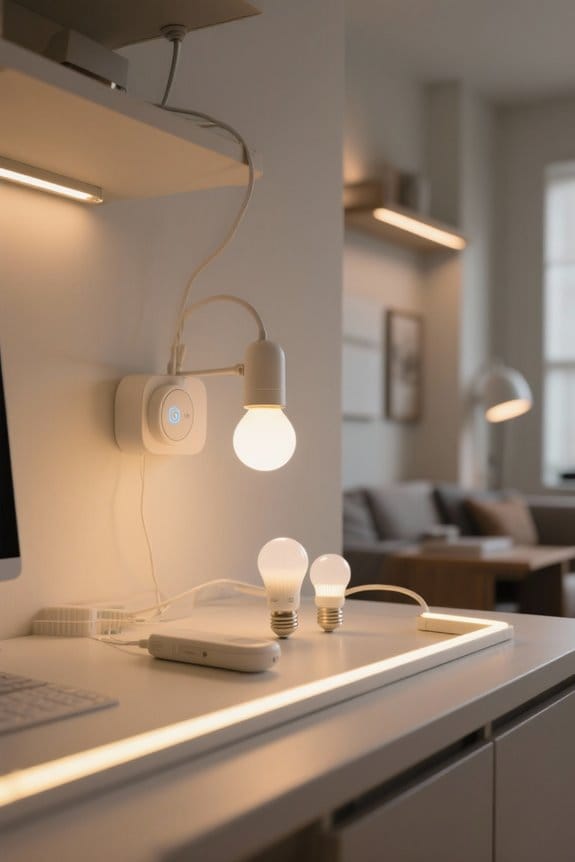
Lighting innovations have transformed how homes are illuminated, with smart bulbs standing out as a significant advancement. Smart bulbs utilize wireless connectivity standards like Wi-Fi, Bluetooth, or Zigbee, enabling remote control via smartphones or voice-activated assistants. These bulbs offer adjustable brightness levels and a range of color temperatures, accommodating various mood settings. Users can set programmable schedules and timers, automating lighting to align with daily routines while achieving energy savings. With voice control integration, hands-free operation is possible, enhancing accessibility for individuals with mobility challenges. In addition, smart bulbs seamlessly integrate with other smart home devices, creating cohesive lighting scenes that contribute to home automation and improve overall security. Embrace smart lighting for a modern, efficient home environment. Many modern smart lighting solutions include music sync features that can synchronize illumination with ambient music to create engaging atmospheres during parties and gatherings.
Recommended Products
Englarged Capacity, From 3.84kWh: Anker SOLIX F3800 has 3.84kWh to power your family's needs for one day. If that's not enough, add up to 6 battery packs to expand capacity to 26.9kWh. For extreme situations, add another Anker SOLIX F3800 and 12 battery packs for enough power for two weeks.
🔥 TWO WAYS TO INSTALL: The Gorgeous Highmark 100 Inch Linear Electric Fireplace mounts directly on a wall or can be recessed into a wall or frame for a seamless look.

Huge Capacity Up to 26.9kWh: Anker SOLIX F3800 has 3.84kWh to power your family's needs for one day. If that's not enough, add up to six battery packs to expand capacity to 26.9kWh. That's enough power for a week.
Smart Switches and Hubs Explained
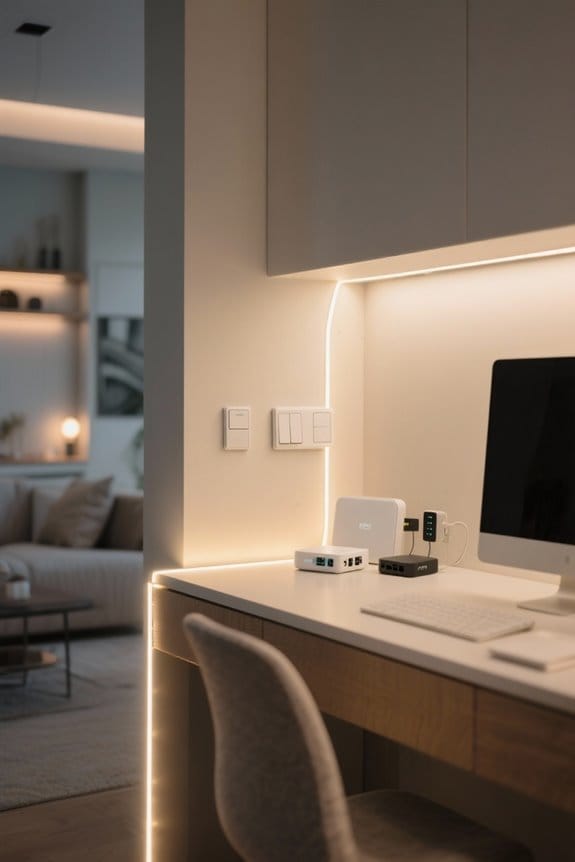
As homeowners seek to enhance their living spaces with advanced technology, smart switches have emerged as vital components of modern lighting solutions. These devices replace traditional light switches and allow remote control of both smart and conventional bulbs via smartphone apps or voice commands. Smart hubs play an important role as the central communication point for connected devices, enabling users to manage lighting, security, and climate systems seamlessly through a single interface. Utilizing wireless protocols like Zigbee, Z-Wave, or Wi-Fi, these hubs improve functionality and reliability. Installation requires minimal electrical knowledge, while smart hubs need a wireless internet connection and a compatible app for setup. Together, smart switches and hubs guarantee effective integration into detailed smart home ecosystems, facilitating automation systems efficiently. Modern LED strip lights offer up to 50,000 hours of energy-efficient illumination while providing customizable brightness and color temperature options.
Recommended Products

Tripp Lite SU5000RT4UHV 5000VA / 5kVA / 4500 watt on-line, double-conversion UPS system in a single 4U rack/tower compatible housing

LG USA AUTHORIZED - Includes 26 Months Extended Protection in ADDITION to the Included FULL Manufacturer Protection

【Dual-Unit Parallel for 7200W Whole-House Power】This variant includes 2 units of 3600W/3600Wh LFP power stations, supporting parallel connection to achieve 240V/7200W high power output. Easily drives heavy household appliances (AC, dryers, water pumps) and realizes full whole-house backup, covering 99% of home power needs—perfect for large families or homes with high-power demands.
Voice Control and Automation Capabilities
Voice control and automation capabilities in smart LED technology elevate convenience and efficiency in modern homes. Smart lighting offers hands-free operation through voice control, utilizing voice-activated assistants like Amazon Alexa and Google Home. With over 90% accuracy, voice recognition greatly enhances user accessibility. Additionally, automation capabilities enable customizable schedules, allowing lights to adjust automatically based on time or specific activities, such as dimming for movie nights. Geofencing technology further enhances convenience by adjusting lighting when users arrive or leave home. Integration with home automation platforms enables smart LED systems to synchronize with other devices, creating complex functionalities. This advanced technology not only simplifies daily routines but also contributes to a cohesive smart home experience, reflecting modern living standards. Many modern LED systems like the GE Cync fixtures can link up to 10 lights for synchronized operation throughout the home.
Recommended Products

QD-MINI LED: TCL's QD-Mini LED combines the merits of QLED and OLED technologies, transforming the traditional backlight into lighting that is close to pixel-level precision.

🌈🌈【Autel Ultra S2: The Best Investment in 2026】Full-level up of the Autel Ultra/Ultra EV/MS909/Elite II Pro, 2026 flagship scanner Ultra S2 covers 15,000 models worldwide and features the Motor TruSpeed Repair Service. highlights include 👍Topology Mapping 3.0, 👍J2534 Programming & Coding, 👍Data-Driven Diagnostics with Enhanced PID Analysis, 👍Hands-F.ree Virtual Assistant (Siri), 👍EV Testing, 👍48+ Services, and 👍10+ High-End Functions for large auto workshops.

4K HDR PROCESSOR X1: See premium 4K pictures, rich with real-world detail and texture. Upscale everything you watch to near-4K with 4K X-Reality PRO.
Customization Through Smartphone Apps
Customization through smartphone apps represents a significant advancement in smart LED technology, allowing users to tailor their home lighting to individual needs and preferences. Users can adjust brightness levels from 1% to 100% and select color temperatures ranging between 2700K to 6500K. Apps also enable programmable schedules, facilitating automatic lighting changes based on daily routines. By creating specific lighting scenes—such as those for reading or movie-watching—users achieve ideal ambiance effortlessly. Particularly, advanced algorithms help identify user behaviors, predicting preferences to enhance comfort. Integration with voice assistants allows for hands-free control, effortlessly changing settings with simple commands. This blend of technology and convenience solidifies the role of smartphone apps in modern homes, enhancing customization in lighting solutions. Some advanced systems like music sync features create dynamic lighting effects that respond in real-time to audio, perfect for setting the mood during parties or relaxation.
Recommended Products

Higher Sales per Vending Machine: These AI-powered coolers from HAHA Vending let you offer a wider variety of fresh food, snacks, and drinks. With a self-serve system, you can grab what you want.

🔥𝐞𝐀𝐡𝐨𝐫𝐚 𝐑𝐨𝐦𝐞𝐨 𝐏𝐫𝐨 𝟑 -- 𝟲𝟬𝟎𝟎𝐖 𝐃𝐮𝐚𝐥 𝐌𝐨𝐭𝐨𝐫 | 𝟓𝟮𝐌𝐩𝐡|𝟯𝟬𝟬𝗡.𝗠 | 𝟔𝟎𝐕 𝟖𝟎𝐀𝐡 𝐁𝐚𝐭𝐭𝐞𝐫𝐲 | 𝟯𝟬𝟬 𝐌𝐢𝐥𝐞𝐬 𝐋𝐨𝐧𝐠 𝐑𝐚𝐧𝐠𝐞🔥

【🔥2026 LATEST JULIET PRO II DUAL MOTOR VERSION🔥】2026 Upgraded Juliet Pro II Dual Motors ebike,Peak 5400W Dual High Speed Brushless Motors, 60V/70Ah Ultra Large 200+Miles Battery,Strength Four-link rear suspension, 7A Fast Charge, 20W Lumens Super-Bright Headlight, Multi-Function Colorful LCD Display with password setting and APP Control, Upgradeable Rear Rack Basket & Rear Bag.Unleash superior power and precision for an unmatched riding experience.
Energy Efficiency and Cost Benefits
Energy efficiency represents a pivotal advantage of smart LED technology in modern homes. These innovative lights utilize up to 75% less energy than traditional incandescent bulbs, leading to considerable cost savings on electricity bills. With lifespans exceeding 50,000 hours, smart LEDs markedly reduce replacement costs and decrease maintenance efforts. Implement automated on/off scheduling to further conserve energy, adapting usage to real-time requirements. This feature, along with dimming capabilities, optimizes energy usage effectively. Additionally, many smart LED systems qualify for energy rebates, enhancing financial incentives for homeowners. Ultimately, embracing smart LED technology not only fosters a green environment but also guarantees long-term savings, with overall energy reductions ranging from 50% to 75% in residential settings. Modern LED fixtures can achieve an impressive 666.7 lumens output while consuming just 10 watts of power.
Integration With Home Automation Systems
As smart LED technology evolves, its integration with home automation systems becomes increasingly essential for homeowners seeking enhanced control and efficiency. Utilizing wireless protocols like Zigbee and Wi-Fi, this technology enables centralized control of lighting alongside devices such as Google Home. Automate lighting schedules and customize settings to create specific lighting scenes, allowing for significant energy savings. Motion sensors further optimize usage by deactivating lights in unoccupied areas, contributing to improved energy efficiency. Additionally, integration with security systems enhances home security by simulating occupancy. Homeowners can easily program their lights to adjust brightness or switch on and off according to a predetermined schedule, therefore boosting overall convenience and safety in the modern home environment. With typical LED lifespan of 50,000 hours, these smart lighting solutions provide long-term reliability and value for homeowners.
Challenges in Smart LED Implementation
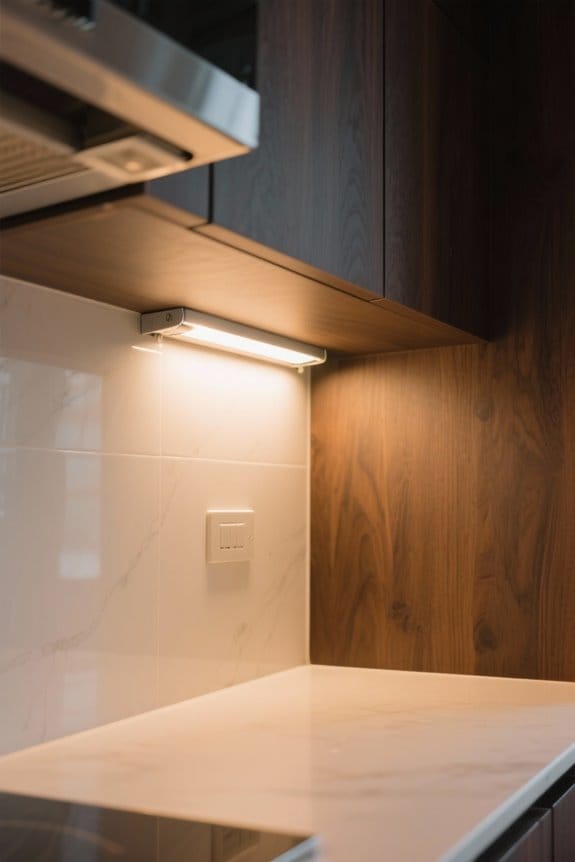
Implementing smart LED technology in homes presents several challenges that must be addressed for ideal performance. Compatibility issues with older home wiring and legacy dimmer switches often lead to flickering and operational inconsistencies. Initial costs for smart LED lighting systems typically range from $25 to $60 per bulb, with additional hub controllers costing $50 to $150. Moreover, metal structures within homes can obstruct wireless signals, complicating the integration of smart lighting. Regular firmware updates and robust security measures are vital; neglecting this could expose systems to vulnerabilities. Additionally, diverse wireless protocols may create communication barriers between devices from different manufacturers, hindering functionality. Homeowners must carefully navigate these challenges for effective smart LED implementation. While adhesive tape installation offers simpler mounting options compared to hardwiring, proper surface preparation remains essential for long-term stability.
Security Considerations for Smart Lighting
When considering smart lighting systems, it is vital to acknowledge their potential role in enhancing home security. Smart lighting can integrate with motion sensors and security cameras, creating automated systems that alert homeowners to unusual activities. By using automated lighting schedules, lights can simulate occupancy, deterring potential intruders and reducing break-in risks by up to 25%. However, security vulnerabilities exist, especially with outdated firmware and weak wireless connections. Regular software updates and strong password practices are essential for device security. Additionally, many smart lighting systems now feature multi-factor authentication, providing further protection against unauthorized access. Leveraging these features guarantees that smart lighting not only illuminates spaces but also markedly contributes to overall home security.
Future Innovations in Smart LED Technology
Smart LED technology is poised for remarkable advancements, driven largely by artificial intelligence and machine learning. Future innovations will enable adaptive lighting systems that adjust automatically to user behaviors, enhancing personalization. Expect augmented reality to allow homeowners to visualize potential lighting configurations before making decisions, improving satisfaction. Gesture control will simplify lighting adjustments through intuitive hand movements, fostering user engagement. Additionally, innovations in human-centric lighting will better mimic natural light, supporting circadian rhythms, and reducing eye strain, which can enhance overall well-being. Furthermore, advancements in interoperability through the Matter Protocol will allow seamless smart home integration, enabling various devices to communicate efficiently. These enhancements collectively aim to optimize energy efficiency, reshaping the future of smart LED technology.
Frequently Asked Questions
What Is Smart Home Technology for Modern Houses?
Smart home technology encompasses home automation systems, smart thermostat benefits, and energy efficiency solutions, providing remote access features, enhanced comfort systems, security monitoring options, voice control integration, trending smart appliances, and lighting control apps for sustainable living.
How Does Smart LED Work?
Smart LED technology flourishes like a painter’s palette, offering vibrant hues and shades. Through app integration and voice activation, users achieve energy efficiency and color customization with remote access, while automation features streamline the installation process and enhance user control.
What Are the Disadvantages of Smart LED Lighting?
Disadvantages of smart LED lighting include high cost, installation complexity, reliance on the internet, compatibility issues with existing systems, privacy concerns from outdated software, maintenance requirements, limited lifespan, and potential challenges in user experience.
How Does Smart Home Technology Work?
Smart home technology operates through smart devices that utilize various connectivity options and wireless protocols. It enhances home automation via user interfaces, app integration, voice control, and emphasizes energy efficiency while ensuring robust security measures during installation processes.