As an Amazon Associate, we earn from qualifying purchases. Some links on this site are affiliate links at no extra cost to you. Our recommendations are based on thorough research and editorial judgment.

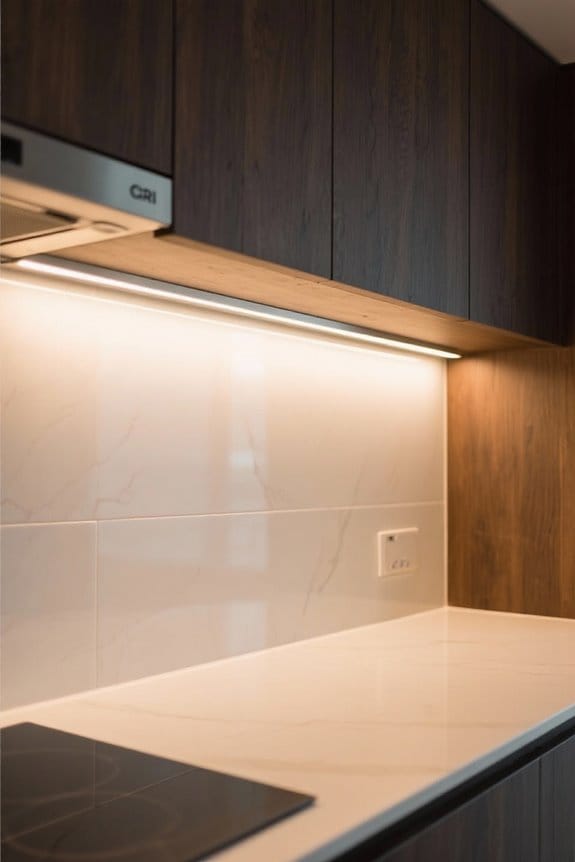
How CRI Affects Your Kitchen’s True Colors

CRI, or Color Rendering Index, greatly influences how colors are perceived in the kitchen. A CRI above 90 provides accurate food color rendering, vital for food presentation and ingredient assessment. Low CRI values, below 80, distort color, affecting freshness judgments. For ideal kitchen ambiance, aim for 300 to 500 lumens per square meter, utilizing multiple light sources and selecting bulbs with a color temperature between 3000K and 4000K. Understanding these factors is essential for effective kitchen design, and more details await.
Key Takeaways
- CRI values above 90 ensure accurate color rendering, enhancing the true colors of food in kitchens.
- Low CRI lighting under 80 can distort food colors, complicating the assessment of freshness and ripeness.
- High CRI lighting improves food presentation, making colors and textures more vibrant and appealing.
- Strategically placed lighting with high CRI reduces shadows, enhancing visual clarity in work areas.
- Using LEDs with a CRI of 90+ helps achieve optimal kitchen aesthetics and functionality, ensuring a pleasant dining atmosphere.
Understanding Color Perception in the Kitchen
You may be interested
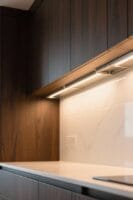
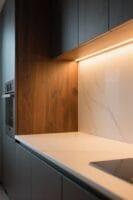
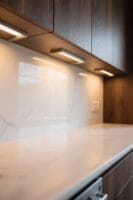
Understanding color perception in the kitchen is vital for creating an inviting and functional space. The type of lighting used directly influences color accuracy. High CRI (Color Rendering Index) lighting is essential, as it provides superior color rendering, ensuring that hues of food and surfaces appear true to their real-life counterparts. Aim for CRI values above 90 for ideal results. Poor lighting with low CRI values can create color distortions, leading to misjudgments in food ripeness and freshness. Shadows from inadequate lighting can obscure subtle color details and create a stark perception of the kitchen’s ambiance. Implement strategic light placement to enhance the overall aesthetic while improving functionality and safety during meal preparation. Choose your lighting wisely to elevate the kitchen experience. Modern LED lighting solutions offer up to 50,000 hours of consistent, energy-efficient illumination for maintaining true colors throughout your kitchen’s lifetime.
The Significance of Kitchen Lighting
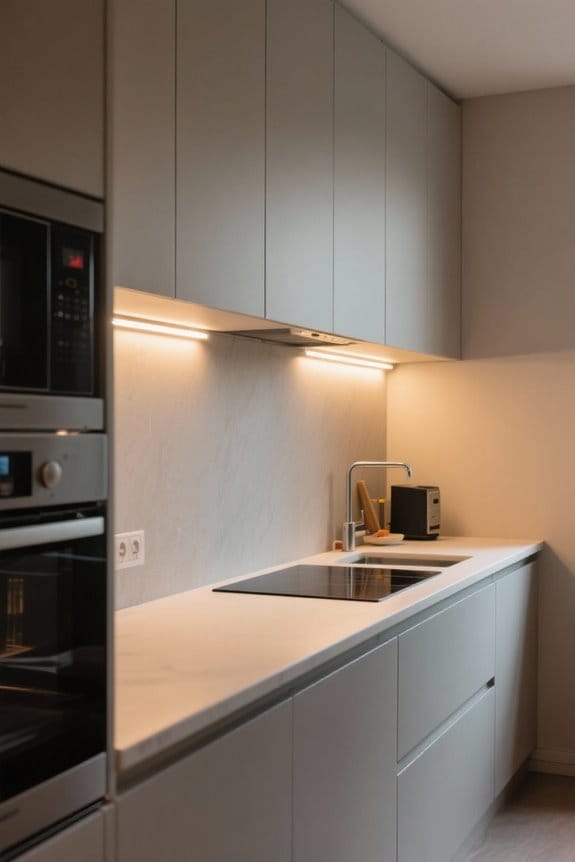
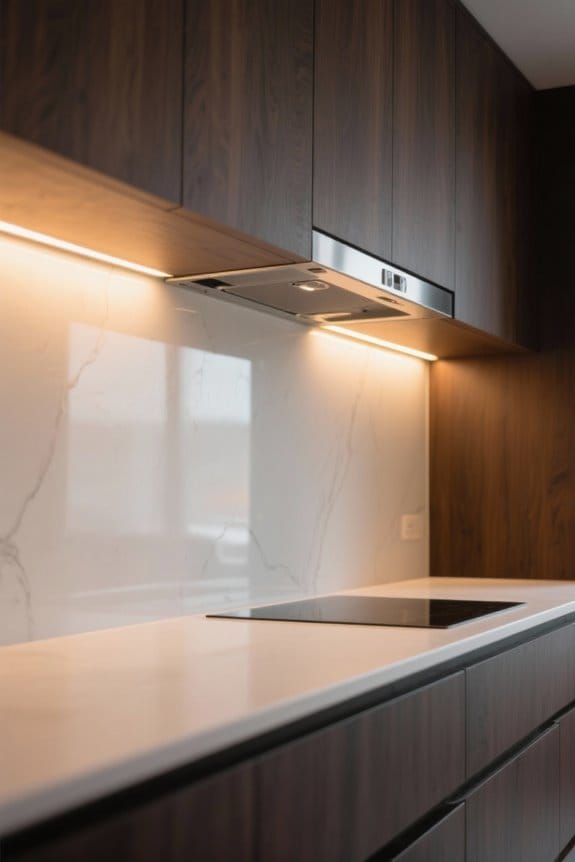
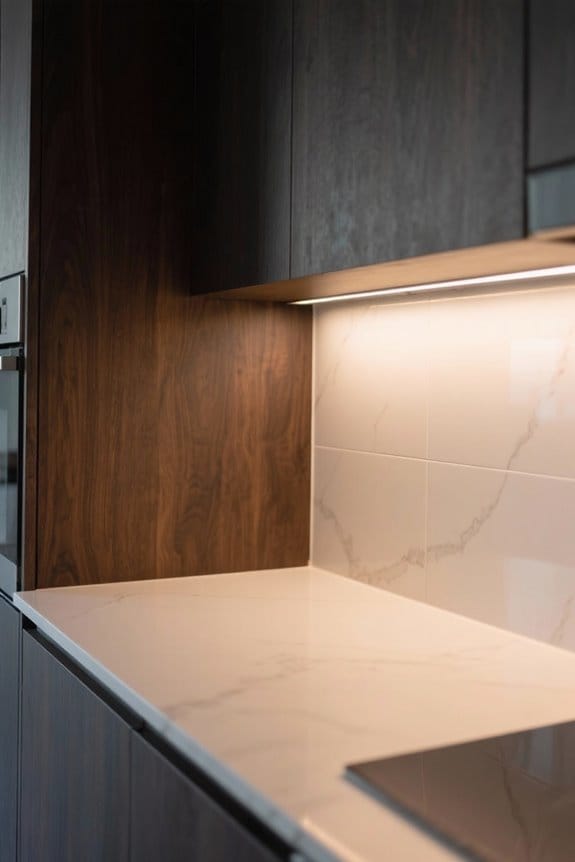
Effective kitchen lighting is instrumental in enhancing both safety and efficiency during food preparation. High CRI lighting, particularly LED options, is essential for achieving accurate color rendering. A CRI rating above 90 is recommended for kitchens to guarantee food colors are perceived accurately, aiding in proper decision-making regarding ripeness and readiness. Shadows from poor lighting can distort perceptions, making strategic light placement critical for a functional workspace. Under-cabinet lighting serves as an effective solution, minimizing shadows and improving visibility on countertops. Investing in high CRI bulbs enhances energy efficiency while complementing the kitchen’s style. Attention to these details not only boosts aesthetics but also maximizes the practicality of your culinary environment. Prioritize effective kitchen lighting for truly vibrant results. Modern surface mount LED lights can reduce electricity costs by up to 90% while providing consistent, high-quality illumination throughout your kitchen space.
CRI: What It Is and How It Works
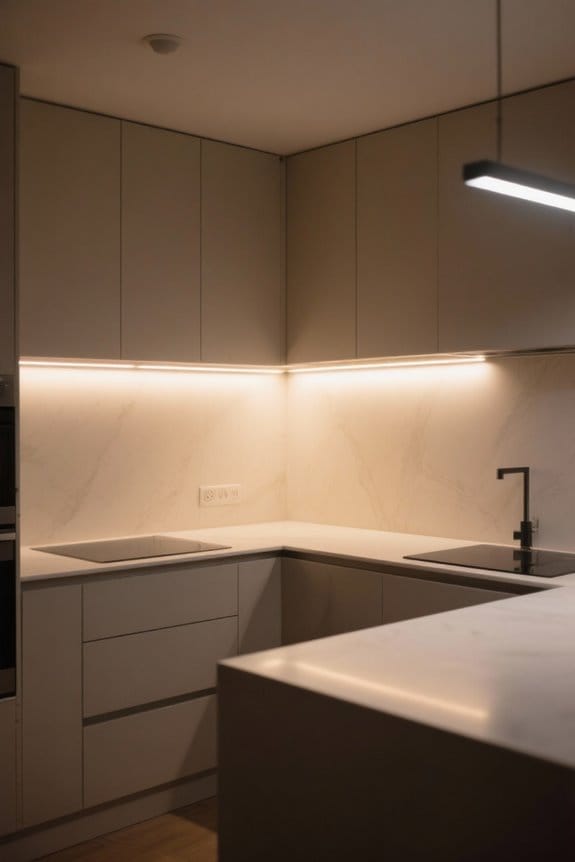
Color Rendering Index, or CRI, is a critical measurement in lighting that gauges how accurately a light source produces true colors compared to natural sunlight. The scale ranges from 0 to 100, where a higher CRI indicates greater accuracy in color representation. Ideally, a CRI above 90 is essential to guarantee vibrant and realistic colors, which is particularly important in kitchen environments. Low CRI values, below 80, can distort food colors, misrepresenting ripeness and readiness. The measurement involves analyzing how closely a light source replicates eight reference colors through specialized equipment. Understanding CRI can notably impact your lighting choices, enhancing visual clarity and aesthetics necessary for effective food preparation. Make informed decisions based on CRI to elevate your kitchen lighting. For optimal visibility in demanding kitchen tasks, consider LED bulbs that deliver 1,000 to 2,000 lumens for general lighting applications.
Importance of High CRI Lighting in Kitchens
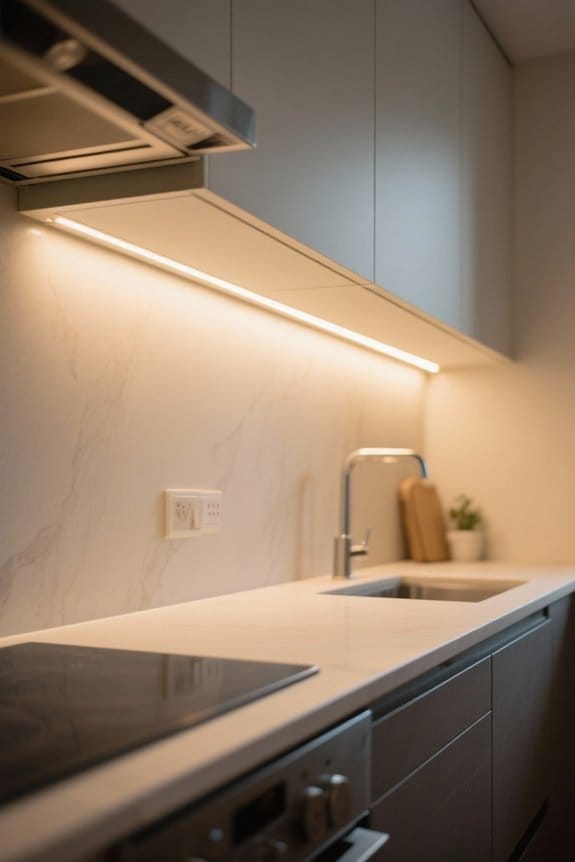
When considering lighting for a kitchen, high CRI ratings should be a top priority. High CRI lighting, especially those with values above 90, guarantees that food colors appear vibrant and true. This accurate representation of color reflects freshness and ripeness, critical for discerning when ingredients are at their best. A CRI of 90 or higher also reveals subtle color variations in kitchen elements, enhancing the overall appearance and aesthetic coherence of the space. To achieve even illumination, opt for multiple light sources that minimize shadowing. Additionally, select LED bulbs with high CRI ratings for functionality; they aid in evaluating food readiness, guaranteeing safety during preparation, while directly influencing the kitchen’s inviting ambiance. Modern options like the MIWISE COB LED deliver warm white light at 3000K, perfect for creating a cozy yet functional kitchen environment.
Recommended CRI Ranges for Kitchen Lighting
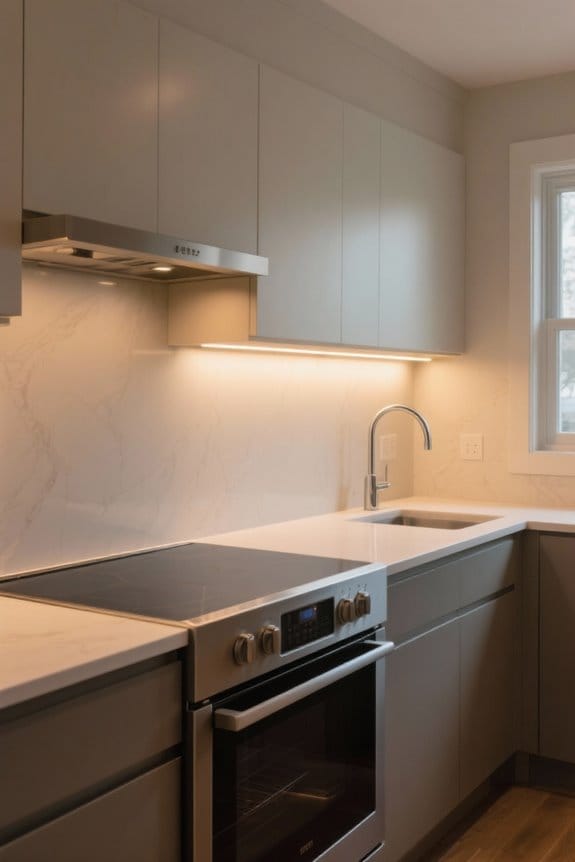
Selecting the right CRI range for kitchen lighting is essential for achieving a perfect cooking environment. A CRI rating of 90 or higher is highly recommended, as it guarantees that colors appear vibrant and true to life. High CRI lighting, specifically within the 90-100 range, provides phenomenal color rendering suitable for displaying the ripeness of fruits and the freshness of vegetables. Lighting with a Color Rendering Index below 80 can dull colors, leading to potential misjudgments in food readiness. For best results, choose LED bulbs designed for kitchen applications, which typically achieve a CRI above 90. Implementing these recommended CRI ranges not only enhances culinary experiences but also improves the overall aesthetic of cabinetry and countertops within the kitchen. Modern tunable white LED strips offer excellent CRI ratings while providing adjustable color temperatures between 2700K and 6500K for optimal kitchen lighting conditions.
Effects of Low CRI on Food Presentation
Low CRI lighting can remarkably impact the presentation of food, creating challenges in both preparation and enjoyment. Kitchen lighting with a CRI below 80 greatly distorts color rendering, making vibrant fruits and vegetables appear dull and unappetizing. This misrepresentation can lead to errors in judging food readiness, as the true colors of cooked items may not be accurately reflected. Subtle distinctions in ripeness are muted under low CRI conditions, compromising the visual appeal of dishes served. Additionally, a low CRI can create an uninviting atmosphere, deterring dining enjoyment. For ideal food presentation, utilize high-quality lighting with a CRI of 90 or above, ensuring freshness and allure are effectively showcased on your plate.
Impact of Shadows on Color Perception
Shadows cast by kitchen lighting can dramatically influence how colors of food are perceived, impacting decisions regarding freshness and readiness. Poorly placed lighting creates shadows that can distort the true colors of ingredients, leading to misjudgments. For ideal illumination, utilize at least two light sources, such as overhead and under-cabinet lights, to eliminate harsh shadows. This layered lighting approach helps maintain a vibrant and accurate color perception. Maintaining an even illumination can highlight subtle color differences in food, essential for culinary safety. Consider using bulbs with a high Color Rendering Index (CRI) to enhance the quality of colors. Analyze placement carefully; the right lighting strategy can greatly improve both functionality and aesthetics in the kitchen environment. Modern motion sensor lights with adjustable color temperatures from 3000K to 6500K allow for optimal visibility during different times of day.
Solutions to Combat Shadows in Kitchen Lighting
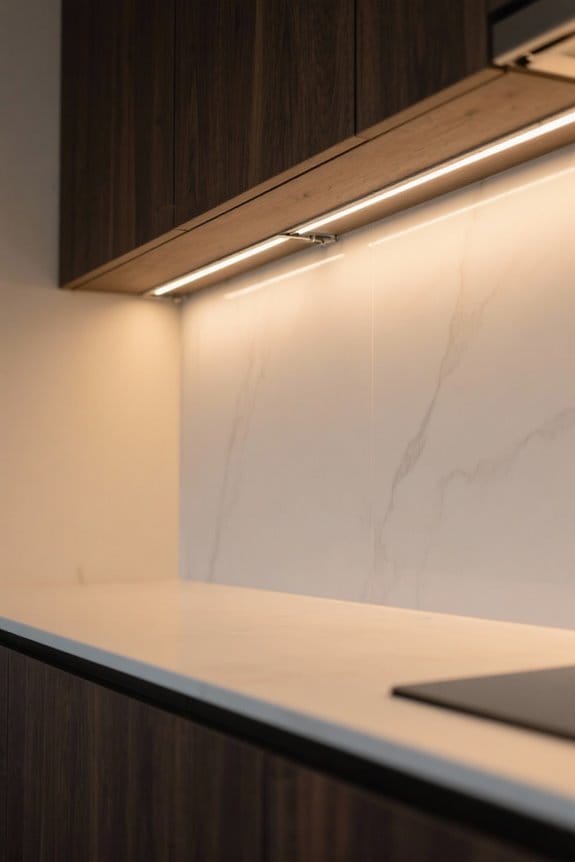
To enhance visibility and mitigate the impact of shadows in kitchen lighting, strategic planning and placement of light sources are key. Begin by installing under-cabinet lighting, which minimizes harsh shadows on countertops and guarantees optimal color accuracy during food preparation. Consider using multiple light sources—combine overhead fixtures with task lighting to achieve even illumination and detail visibility. Aim for approximately 300 to 500 lumens per square meter to create a well-lit environment. Assess the location of light fixtures; ideally, light should come from above and at an angle to diminish shadows. By implementing a thoughtful lighting strategy, homeowners can appreciate the true colors of surfaces and materials, greatly improving the kitchen’s functionality and aesthetic appeal. For optimal task lighting performance, select fixtures that produce 4000K to 5000K color temperatures, which provide the best clarity for detailed kitchen work.
Choosing the Right Bulbs for High CRI
What factors should one consider when choosing bulbs for ideal Color Rendering Index (CRI) in the kitchen? First, select light bulbs with a CRI of 90 or higher. This guarantees that colors, such as the vibrant shades of fruits and vegetables, appear accurately. LED lighting is highly recommended for kitchen environments, as these bulbs often exceed the desired CRI ratings. Next, consider the color temperature; aim for a range of 3000K to 4000K to achieve a warm, inviting atmosphere that enhances color perception. Additionally, match your lighting design to the kitchen’s style and decor to improve its overall aesthetic. High CRI bulbs not only elevate visual appeal but also provide excellent illumination for culinary tasks. Choosing Energy Star certified LED bulbs can reduce energy consumption by at least 75% compared to traditional lighting while maintaining superior color rendering capabilities.
Recommended Products

1,ENERGY SAVING - This 2' x 4' recessed drop ceiling light use high-quality LED beads with high luminous efficiency 130LM/W, this 70w led light panel can provide ultra bright 9100lm lighting for you, it can replace the traditional 280W fluorescent lamps, which will help you saving 80% of your electricity bill and carbon emissions.

ETESIAN CHANDELIER FAN D'LIER DIMENSIONS: 26.01" High x 35.25" Wide; Rod-Hung Adjustable Height: Up to 40.01"; Ceiling Canopy: 7.25" x 2.13"; Weight: 38.5 lbs.

50W 5500lm Hight Brightness - 1x4 LED Flat Panel Light Surface Mount: AIKVSXER Super Bright 1x4 Surface Mount LED Ceiling Light is designed with high-efficiency LED chips to replace traditional fluorescent light, high-efficiency (efficacy over 110LM/W) light source, reducing carbon emissions and your electric bill by 85%.
The Role of LED Lighting in Kitchen Design
In modern kitchen design, LED lighting plays an essential role in both functionality and aesthetics. High CRI ratings, often exceeding 90, guarantee that food colors look vibrant and textures are accurately represented. This precise color rendering is fundamental in kitchen environments where appearance matters. Additionally, LED lighting is energy-efficient, reducing utility costs while providing longer-lasting illumination. Various color temperatures allow homeowners to create bright workspaces or warm, inviting atmospheres as needed. Specifically, under-cabinet LED strip lights deliver focused task lighting, enhancing visibility and reducing shadows. To optimize your kitchen’s design, refer to photometric reports that detail CRI values, guiding the selection of fixtures that contribute to an accurately colored cooking and dining experience. With multiple color temperatures available (3000K, 4200K, 6500K), homeowners can adjust their kitchen lighting to match different times of day and activities.
Recommended Products
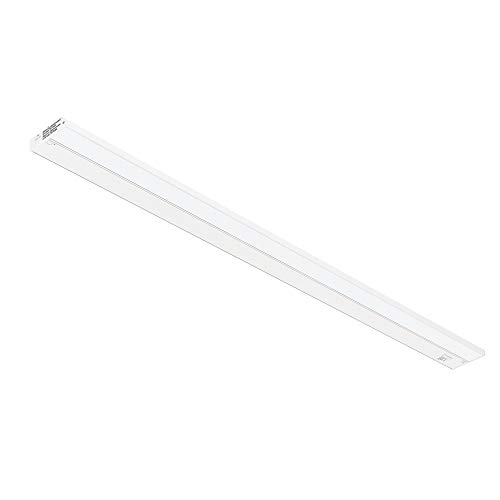
Easy Color Temperature Selection: Choose from 3 ideal settings for your kitchen—Warm White (2700K), Soft White (3000K), or Bright White (4000K) with a simple slide switch for your under cabinet lighting.
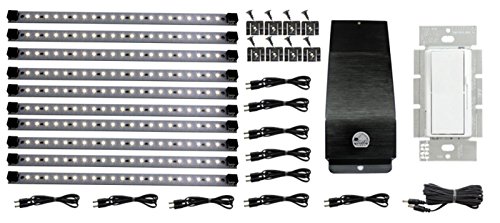
12V Hardwire LED kit - 4000K Pure White Color

PROFESSIONAL - Kitchen Lighting LED Professional package , LED Strip lighting that lasts 100,000 + operating hours , Under driven LED lights that use less energy and last longer , See all of our LED lighting kits , switches , dimmers , other white light options , and even strip lights to light all of your lighting needs
Testing for and Evaluating CRI
Evaluating the Color Rendering Index (CRI) is essential for achieving an ideal kitchen environment. CRI measures how accurately a light source displays colors, assigning scores from 0 to 100 based on eight standard colors. Testing for CRI involves specialized machinery, such as a spectrophotometer, which compares emitted light to reference light under natural daylight conditions. A CRI score above 90 is preferred for kitchen lighting, enhancing color vibrancy, while scores below 80 can result in poor color rendering and unappealing food presentation. In addition, the emerging TM-30-15 method includes 99 reference colors, providing a more thorough assessment than traditional CRI methods. Choose bulbs with high CRI and suitable color temperature for ideal kitchen aesthetics and functionality. Many modern LED puck lights offer versatile lighting solutions with customizable color temperatures that can enhance both task and ambient lighting in kitchen spaces.
Transforming Your Kitchen With Effective Lighting Choices
Effective kitchen lighting transforms the cooking experience by enhancing visibility and the aesthetic appeal of food preparation areas. Choose LED bulbs with a high Color Rendering Index (CRI) of 90 or above; this guarantees that food’s color looks vibrant and true to its nature. Implement multiple light sources, including under-cabinet lighting, to minimize shadows, which can distort perception. High CRI lighting is essential for distinguishing the freshness of ingredients, particularly fruits and vegetables. Properly placed fixtures elevate both aesthetics and functionality, highlighting the colors and textures of countertops and cabinetry. By combining high CRI light sources with appropriate color temperatures, a warm ambiance becomes inviting, enhancing the kitchen for both cooking and entertaining experiences.
Frequently Asked Questions
Is There a Big Difference Between CRI 80 and 90?
In a painter’s studio, color accuracy transforms a canvas. In CRI comparison, CRI 80 offers muted tones, while CRI 90 enhances lighting quality and color rendering, elevating kitchen aesthetics and ensuring vibrant, appetizing presentations.
What Is a Good CRI for LED Lights?
A good CRI for LED lights is 90 or higher, ensuring excellent lighting quality and accurate color rendering. This level enhances kitchen ambiance, making colors more vibrant and improving perception of food’s freshness and LED brightness.
Is 3000K or 4000K Better for a House?
Choosing between 3000K and 4000K depends on homeowner preferences. While 3000K creates a cozy ambiance, 4000K enhances kitchen aesthetics and supports practical tasks, providing clarity and energy for cooking and workspace efficiency.
What Is CRI and Why Is It Important?
Color rendering, or the accuracy with which light reveals colors, is vital for interior design. High light quality enhances visual comfort, guiding bulb selection for spaces where accurate color representation is essential, such as kitchens and artistry settings.