As an Amazon Associate, we earn from qualifying purchases. Some links on this site are affiliate links at no extra cost to you. Our recommendations are based on thorough research and editorial judgment.


How to Fix LED Strips That Won’t Stick

To fix LED strips that won’t stick, begin by cleaning the surface with alcohol-based cleaners. Verify it is completely dry and choose flat, matte surfaces to enhance adhesion. If failures persist, consider using high-quality double-sided tape designed for LED applications. Test adhesion strength after applying by pressing firmly for 24 hours. Regularly monitor environmental conditions, as heat and humidity can weaken bonds. Further investigation into advanced mounting methods can also improve installation reliability.
Key Takeaways
- Thoroughly clean surfaces with alcohol-based cleaners and ensure they are dry before applying LED strips.
- Use high-quality LED strips and adhesives to enhance performance and durability.
- Opt for flat, matte surfaces for better adhesive contact and bond strength.
- Protect strips from extreme heat and humidity to maintain adhesive properties over time.
- Consider using mounting clips or high-strength tapes for additional stability and to reduce adhesive failure risks.
Common Reasons for Adhesive Failure
You may be interested
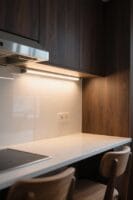
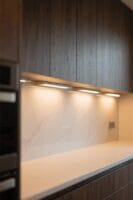
When applying LED strips, understanding common reasons for adhesive failure is vital to confirm a secure installation. First, improper surface preparation can lead to inadequate adhesion; always clean surfaces of dust and oils before installation. Additionally, verify the Right Surface is used; uneven or excessively smooth surfaces may prevent proper contact. Environmental factors such as heat and humidity can weaken adhesive strength over time, making it important to take into account the installation location. Low-quality adhesive LED strips may also result in premature failure. Finally, remember that prolonged exposure to wear and tear naturally degrades adhesive effectiveness, leading to LED strips loosening or falling off. To achieve successful adhesion, maintain attention to these significant elements during installation. Using mounting clips and screws can provide additional security for LED strips in areas where adhesive alone may not be sufficient.
Solutions for Adhesive Failure
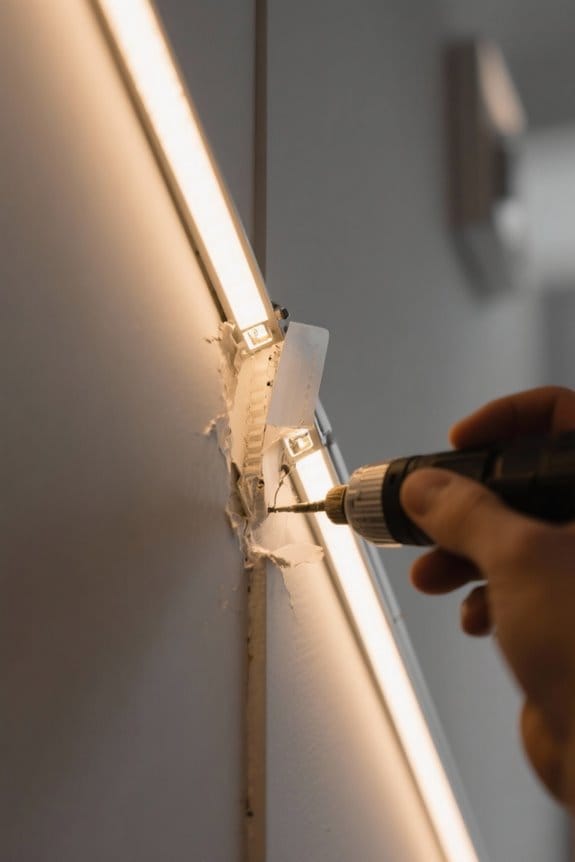
To effectively address adhesive failure in LED strips, it is crucial to follow specific methods that guarantee a strong bond. Start by thoroughly cleaning the mounting surface with alcohol-based cleaners to eliminate dirt, oil, or grease. This step promotes ideal adhesion. Choose a flat, matte surface; it enhances the adhesive bond compared to rough surfaces. Protect the strips from extreme heat and humidity, as these conditions weaken adhesion over time. For older or worn-out adhesives, consider using high-quality double-sided tape or specialized adhesives to reinforce the bond and prevent detachment. Always verify the mounting surface is pristine, as neglecting this can lead to continued adhesive failure. Adhering to these solutions will greatly improve the longevity of LED strip installations. Quality adhesive strips with metal adhesive plates provide additional support for up to 1.5 pounds of weight capacity.
Recommended Products

Temperature Resistant: the permanent bonding adhesive has a high-temperature resistance. Being resistant to UV light, moisture, solvents, and harsh chemicals, the adhesive tape can bond and seal even in extreme environments

Upgrade Motion Sensor Light: In dark or poorly lit environments, setting the indoor motion sensor light to Motion Sensor Mode can improve convenience. The cabinet lights detects human movement in real time at 120° and within 10 feet, it will automatically turn on, stay on if it has been in motion, and turn off if there has been no movement for about 20 seconds. Ideal for installation in dimly lit areas where collisions may occur to enhance ambient lighting

【Addressable Smart WS2814 IC】32.8FT RGB+Warm White 3000K. External WS2814 IC, 14IC/m, Works with a compatible controller (sold separately) to create chasing, fading, and gradient effects; white channel is also addressable for greater design flexibility.
Alternative Mounting Methods
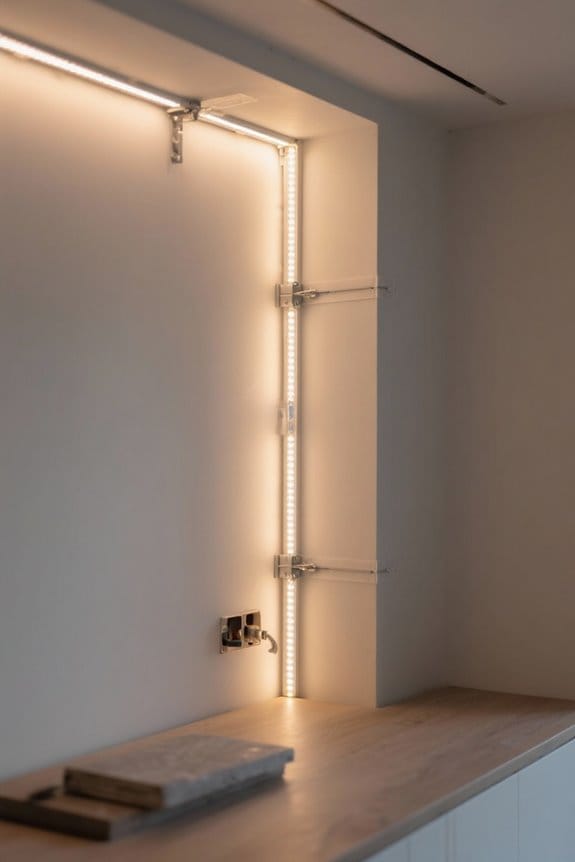
Exploring alternative mounting methods for LED strips can greatly enhance both installation durability and aesthetic appeal. Utilizing mounting clips offers a secure attachment, considerably reducing the risk of adhesive failure. For installations requiring extra holding strength, high-strength adhesive tapes designed for LED applications provide a reliable option, ensuring durability. Consider embedding LED strips in aluminum channels; this not only mounts the strips effectively but also functions as a heat sink, extending their lifespan. Alternatively, LED coving delivers a neat appearance, while facilitating easy access for maintenance. For intricate designs or sharp angles, connectors maintain installation integrity and minimize stress on adhesive materials. Each method presents unique benefits, promoting durability while enhancing the overall look of your lighting setup. Most pre-drilled aluminum channels include mounting clips and hardware for simplified installation across various surfaces.
Recommended Products
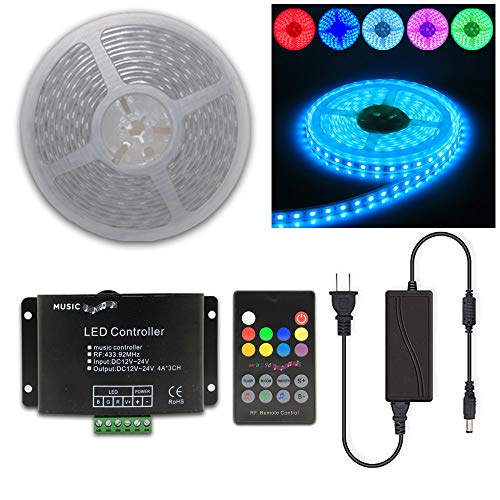
【All in One Kit】- The whole 170Ft kit comes with 2x 85Ft single run waterproof strip light + 1x RF remote & controller + 1x power suppply (standard US plug) + mounting clips & screws + double sided adhesive tape + 90 degree L shaped connectors
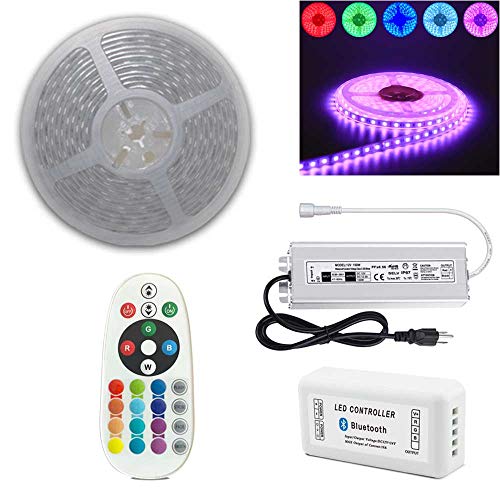
【All in One Kit】- The 185Ft kit comes with two (90Ft+95Ft) single run waterproof strip light + waterproof bluetooth controller + waterproof power suppply (standard US plug) + mounting clips & screws + double sided adhesive tape + 90 degree L shaped connectors
[ All in One Kit ] - The 155Ft kit comes with two (75Ft+80Ft) single run waterproof strip light + waterproof bluetooth controller + waterproof power suppply (standard US plug) + mounting clips & screws + double sided adhesive tape + 90 degree L shaped connectors
Proper Surface Preparation
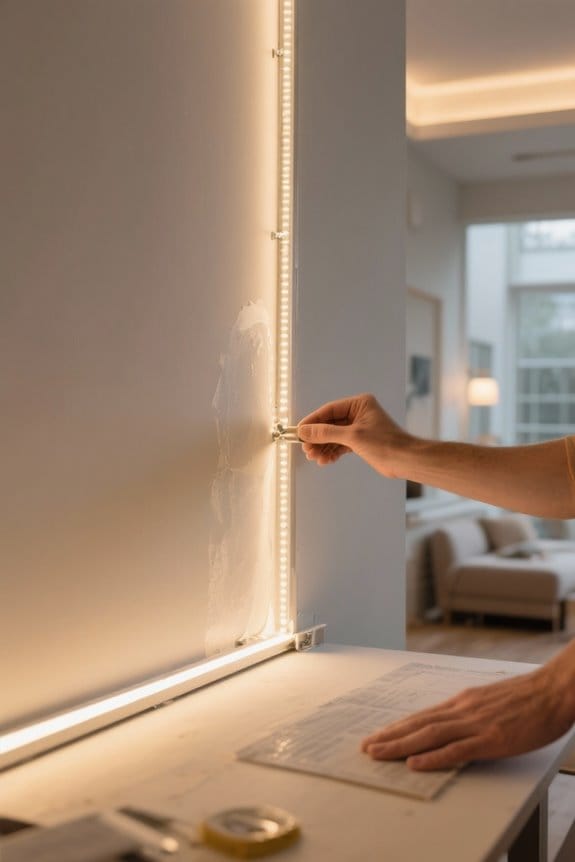
Achieving ideal adhesion for LED strips begins with proper surface preparation, which directly impacts their long-term performance. Start by cleaning the application surface thoroughly with alcohol-based cleaners to eliminate oil, dust, and grime. A flat and matte surface is preferable, as it fosters better contact and guarantees the adhesive backing adheres effectively. It is vital to avoid applying LED strips to wet or damp surfaces, since moisture weakens adhesive bonds and hinders sticking properly. Ascertain the cleaned surface is completely dry before attachment, as any residual moisture compromises adhesion. For best results, test the adhesive quality on a small area of the surface to confirm compatibility with the materials before proceeding with full application. Strong self-adhesive backing typically lasts up to 50,000 hours when installed correctly on properly prepared surfaces.
Recommended Products

Durable Cushion - dense 1/3-inch thick felt adds soundproofing and insulation; non-abrasive to protect rugs and floors from scratches; adds extra comfort underneath rugs without extra bulking.

Professional Finish: Our double-sided adhesive tape is specifically designed for edge banding, laminates, jigs, templates, and general bonding application. Achieve clean and seamless work while providing a secure and reliable application

USB-C Rechargeable Design: Environmentally friendly and cost-effective—no need to purchase AAA batteries. Our rechargeable motion lights feature a built-in 1200mAh battery and take only 2 hours to fully charge. Once charged, they provide 7–20 days of illumination in All-Day Motion Mode or Night Motion Mode (depending on usage frequency), or up to 7.5 hours of continuous lighting in Always On Mode.
Testing Adhesive Quality
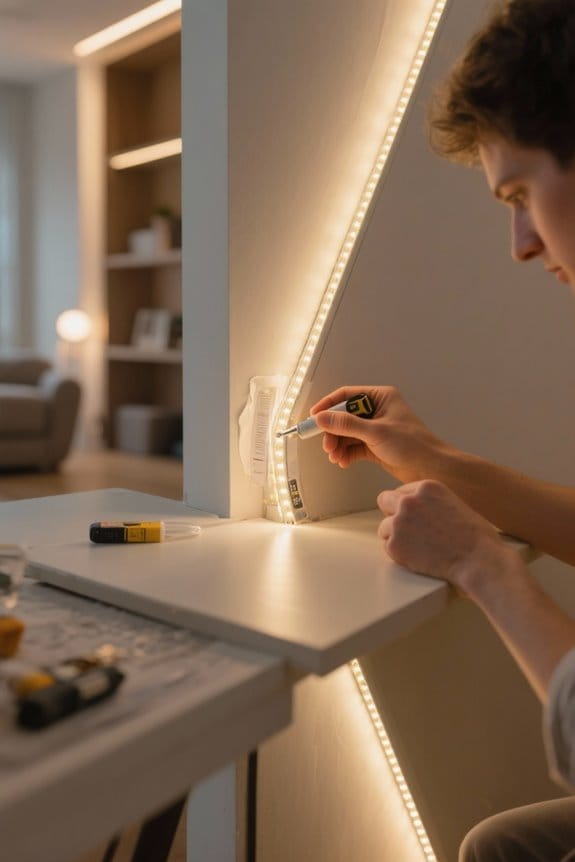
Testing adhesive quality is essential for ensuring the longevity and effectiveness of LED strip installations. Begin by applying a small section of the LED strip to the designated surface and press firmly for a few seconds. Assess the bond after 24 hours; if it holds well, the adhesive is adequate. A weight test can also help; hang an object of known weight on the strip. If it peels away, low-quality adhesive may be the issue. Additionally, press your finger against the strip; a slippery feel indicates poor stickiness. Conduct a peel test by gently pulling a corner; easy removal without resistance suggests insufficient adhesive strength. Finally, consider environmental factors, as heat or humidity can affect adhesive performance over time. For optimal results, choose LED strips with high-strength acrylic adhesive that can withstand temperatures up to 93°C (200°F).
Additional Adhesives for Stronger Hold
To enhance the adhesion of LED strips, utilizing additional adhesives can be highly beneficial. High-strength double-sided tape specifically designed for mounting LED strips offers superior holding power and durability. Before applying tape, verify the surface is clean and dry; contaminants greatly reduce adhesive effectiveness. Consider using adhesive promoters to improve bonding on various surfaces, which helps secure the LED strips better. For permanent installations, specialized adhesives like silicone-based products or epoxy may be appropriate, although they require careful application and extended drying time. Alternatively, mounting clips or brackets can provide a secure hold while allowing for easy removal or repositioning. Choose the method that best fits your installation needs for greatest results. Using alcohol pads for cleaning the mounting surface thoroughly before installation significantly improves the adhesive strength and longevity of the bond.
Importance of Surface Type
The surface type plays a critical role in the adhesion of LED strips, with certain surfaces yielding remarkably better results than others. Flat, matte surfaces, such as painted drywall, provide ideal adhesion due to their smooth characteristics. Conversely, rough or overly textured surfaces can hinder the contact with the adhesive, resulting in poor sticking power. To guarantee effective adhesion, make sure the surface is clean and free from contaminants, as any residue may compromise performance. For maximum effectiveness, avoid high-temperature or humid environments that can degrade adhesive properties over time. Always assess the suitability of the surface type before application to achieve the best results with your LED strips. Proper preparation counts considerably towards long-lasting installation. Consider using magnetic strips as an alternative mounting solution if traditional adhesive methods prove ineffective on your chosen surface.
Maintaining Adhesive Performance
Maintaining adhesive performance for LED strips requires diligent attention to environmental conditions and surface integrity. First, verify a clean surface; free it from dust, oil, or grime by utilizing alcohol-based cleaners, which enhance adhesion. Select flat, matte surfaces for mounting, as these provide better contact than rough or overly smooth options. To protect adhesive integrity, safeguard the strips from extreme heat and humidity, which can degrade adhesive properties over time. Additionally, consider using high-quality LED strips with advanced adhesive technologies for enhanced sticking power. If original adhesive wears down, replace it promptly with strong double-sided tape or specialized adhesives for better hold. Consistent maintenance of these factors will prolong the life and effectiveness of your LED strips. For optimal temperature safety, ensure your LED strip installation environment stays within -103 to 257°F operating range to prevent adhesive deterioration.
Recommended Products

【Application】Flat style front and rear fender flares kit fits for 2007-2018 Jeep Wrangler JK JKU 2/4 door models. Aggressive angular flat fender flares make your vehicle out of the crowd while providing optimal functionality
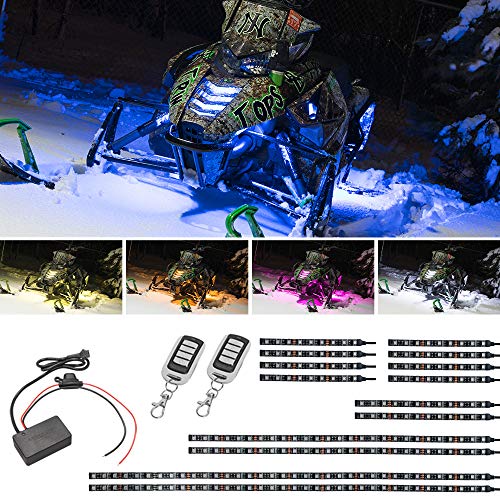
LEDGlow 14pc Advanced Million Color SMD LED Snowmobile Kit Adds Custom & Stylish Aftermarket Multi-Color Accent Lighting to Your Snowmobile, While Also Increasing Visibility

【Application】– Viper flat style front fender flares compatible with 2007–2018 Jeep Wrangler JK and JKU 2/4-door models, including Unlimited, Sport, Sahara, Freedom, Rubicon, and X all models. Features aggressive flat-style angular design that makes your vehicle stand out
Frequently Asked Questions
How to Reuse LED Strips if It Is Not Sticking Anymore?
To reuse LED strips that won’t stick anymore, one might explore LED reposition options, strip adhesion solutions, and reusable mounting techniques. By employing methods like double-sided tape or clips, effective reapplication becomes possible and practical.
Why Do My LED Strips Keep Falling Off?
LED strips fall off primarily due to poor adhesive quality, inadequate wall surface preparation, and humidity effects. Dust, moisture, and inappropriate surfaces reduce adhesive effectiveness, compromising the bond and leading to detachment over time.
Why Aren’t My LEDS Sticking to My Wall?
LED strips often fail to adhere due to inadequate wall preparation and unsuitable adhesive types. Proper strip maintenance, including surface cleaning and choosing the right adhesive, greatly enhances sticking performance and longevity against potential detachment.
How to Get Strip Lights to Stick to the Back of a TV?
Effective LED strip placement requires thorough surface preparation, such as cleaning the TV back with isopropyl alcohol. If adhesion issues persist, explore adhesive alternatives like high-strength double-sided tape for improved sticking ability.