As an Amazon Associate, we earn from qualifying purchases. Some links on this site are affiliate links at no extra cost to you. Our recommendations are based on thorough research and editorial judgment.


Understanding Electrical Codes for Kitchen Lighting

Understanding electrical codes for kitchen lighting is essential for safety and compliance. Kitchens require at least one dedicated 15-amp, 120-volt lighting circuit, with many opting for a 20-amp circuit for future expansions. GFCI protection is mandatory near sinks to prevent electric shock hazards. All circuits must include AFCI protection to avoid electrical fires. Fixtures in moist areas must comply with damp location ratings. Proper design guarantees functionality and safety. Explore more details for ideal kitchen lighting solutions.
Key Takeaways
- Kitchens must have at least one dedicated 15-amp, 120-volt lighting circuit to comply with electrical codes.
- GFCI protection is mandatory for kitchen lighting circuits to prevent electric shock hazards, especially near sinks.
- All lighting circuits in kitchens must include AFCI protection to minimize the risk of electrical fires.
- Local building codes may impose additional requirements, including higher amperage circuits for larger kitchen installations.
- Proper planning for circuit layouts is crucial to avoid overloads and ensure effective illumination throughout the kitchen.
Overview of Kitchen Electrical Codes
You may be interested
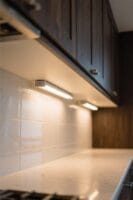

Understanding the intricacies of kitchen electrical codes is essential for ensuring safety and functionality. Kitchens must have at least one dedicated lighting circuit, typically a 15-amp, 120-volt circuit for standard fixtures. However, for future expansions, utilizing a 20-amp circuit is advisable. All lighting circuits in kitchens must include AFCI (Arc Fault Circuit Interrupter) protection, designed to prevent electrical fires. Additionally, local electrical codes may impose further requirements based on specific lighting setups, particularly in larger installations. Fixtures must comply with moisture and damp location ratings, especially near sinks. This compliance is vital for reducing hazards and ensuring that lighting systems operate effectively alongside kitchen appliances. Adhering to these electrical codes enhances safety and reliability. When installing under-cabinet lighting, maintaining adequate brightness levels of at least 300 lumens per foot ensures proper task illumination in work areas.
Importance of GFCI Protection

In the context of kitchen electrical safety, GFCI (Ground Fault Circuit Interrupter) protection holds a prominent role. This protection is essential in kitchen lighting circuits to prevent electric shock hazards, particularly near sinks where moisture is prevalent. The National Electrical Code mandates that all kitchen lighting circuits include GFCI protection, reducing the risk of electrical accidents. Circuit installations must guarantee compliance with these safety measures, as all fixtures are required to meet specific standards. GFCI devices detect ground faults and quickly cut off power, enhancing safety for users operating electrical appliances. Kitchens must have at least one GFCI-protected lighting circuit, underscoring the necessity of implementing rigorous safety measures in every kitchen environment. When installing under cabinet LED fixtures, homeowners can achieve up to 85% reduction in energy consumption while maintaining essential safety standards.
Types of Kitchen Lighting Circuits

A well-planned kitchen lighting circuit plays an essential role in enhancing both functionality and safety within a culinary workspace. Each kitchen should include at least one dedicated circuit, typically a 15-amp, 120-volt circuit, to adhere to electrical codes. For ideal performance and future upgrades, consider using a 20-amp circuit for general lighting. All lighting circuits must also incorporate AFCI protection to minimize electrical hazards effectively. In addition, it’s vital to install GFCI protection for circuits near sinks, reducing risks in moisture-prone areas. When planning circuits for small kitchens, remember to position switches conveniently at entrances, ensuring easy accessibility. Proper attention to these details guarantees a safe and efficient lighting environment tailored to the kitchen’s demands. Modern kitchens can benefit from LED strip controllers that offer customizable brightness settings and enhanced energy efficiency.
Recommended Products

【Powerful Solar Hybrid Inverter】 5500W pure sine wave inverter converts 48V DC to 110/120/220/230/240V AC, featuring a built-in 120A MPPT charge controller that combines inverter, solar charger, and battery charger functions for efficient energy management

Selectable 5CCT from 2700K to 5000K: Tune color temperature on the spot to fit kitchen finishes, utility needs, or color-sensitive workspace applications

✔ Add warmth and comfort to your floors with QuietWarmth Radiant Heat Mat for floating flooring! Pair with your luxury vinyl (4mm+ thick), laminate, floating engineered wood, floating tile, and more.
Recommended Amperage for Kitchen Lighting

Choosing the correct amperage for kitchen lighting is essential, as it guarantees both safety and functionality. The National Electrical Code (NEC) recommends at least one 15-amp, 120-volt circuit dedicated to kitchen lighting fixtures. Utilizing a 20-amp circuit for general lighting is ideal, as it allows for future upgrades in lighting capacity. Additionally, all kitchen lighting circuits must include Arc Fault Circuit Interrupter (AFCI) protection, a requirement of contemporary electrical codes. For enhanced safety near sinks or wet areas, GFCI protection is highly advised. However, remember that basic lighting circuits cannot be on GFCI circuits, necessitating dedicated circuits to guarantee consistent performance and safety standards. Prioritize these guidelines to guarantee code compliance and effective kitchen lighting. Modern LED under cabinet lights can significantly reduce electrical load with their energy-efficient design and operational lifespan of up to 50,000 hours.
Recommended Products

Autograph Edition Series - Enjoy a timeless look in your kitchen with a stainless steel finish paired with Champagne Bronze accent handle, giving your kitchen an elegant, unmatched style

Integrated Insert Design - This ZLINE wall mount range hood insert is designed to install seamlessly into custom-built cabinetry set-ups, providing professional-grade power without the visible exterior shell

DIMENSIONS: Overall dimension: 72" Width x 18 29/32" Height x 5 25/32" Depth. Insert dimension: 70 55/64" Width x 18 5/16" Height x 5 19/32" Depth.
Placement and Spacing of Outlets
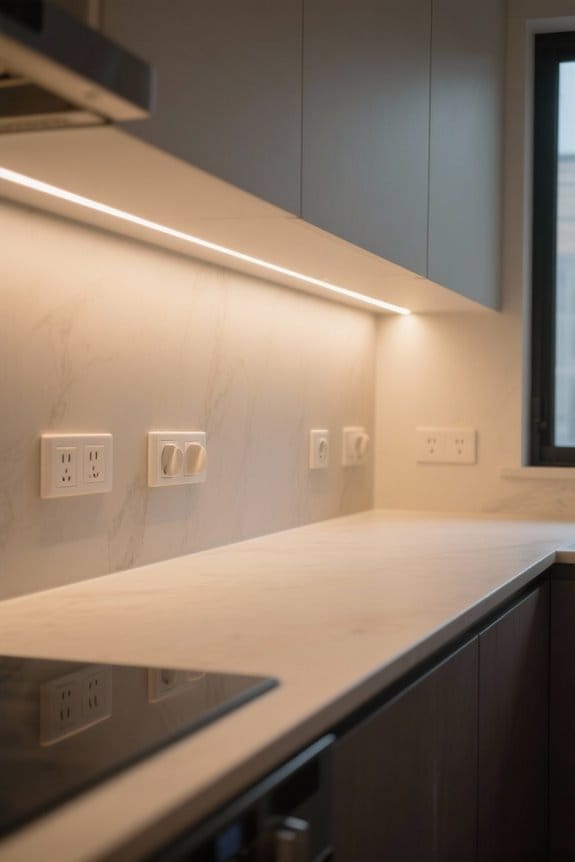
While planning the placement and spacing of outlets in a kitchen, adherence to specific guidelines is essential for both functionality and safety. Outlets must be installed no farther than 48 inches apart to guarantee accessibility for small appliances, preventing the need for long power cords. Position outlets no higher than 20 inches above the countertop surface to enhance ease of access. For countertops 12 inches wide or more, at least one receptacle is required. The spacing requirements state that receptacles should be within 24 inches of any point along the countertop edge. All kitchen outlets must feature GFCI protection, especially those located near sinks, to provide enhanced safety against electrical shocks. Consider installing under cabinet lighting with hardwired models to ensure proper electrical connections while maintaining a clean, cord-free appearance in your kitchen workspace.
Recommended Products
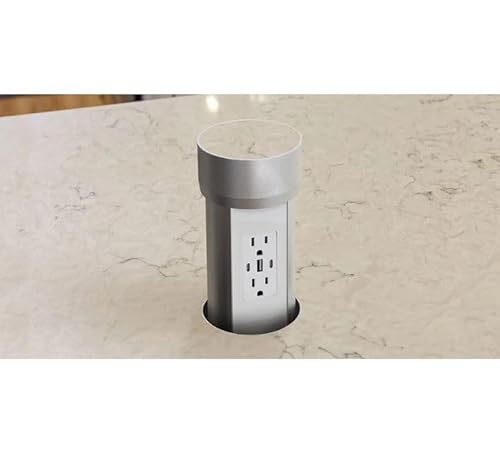
"Hidden" Installation - Uses Your Countertop as the lid

Angled Trapezoid Under-Cabinet Power Access: Trapezoid aluminum housing with angled receptacles keeps outlets clearly visible and easy to reach when mounted under cabinets, furniture edges. Rated 125VAC 60Hz, 20A, 2500W. Designed for concealed yet accessible power in kitchens, workshops, and workspaces

Angled Trapezoid Under-Cabinet Power Access: Trapezoid aluminum housing with angled receptacles keeps outlets clearly visible and easy to reach when mounted under cabinets, furniture edges. Rated 125VAC 60Hz, 20A, 2500W. Designed for concealed yet accessible power in kitchens, workshops, and workspaces
Requirements for Tamper-Resistant Outlets
What essential safety feature must every kitchen outlet incorporate to protect against electrical hazards? In accordance with the National Electrical Code, all 15-amp and 20-amp outlets in kitchen areas must be tamper-resistant (TR). These tamper-resistant outlets feature internal shutters that only open when both prongs of a plug are simultaneously inserted, effectively preventing foreign objects from entering. This requirement enhances safety, especially for children who may be drawn to outlets. It is vital to identify these outlets easily, as they bear the “TR” marking on the front yoke. Ensuring compliance with these requirements not only meets safety standards but also appreciably reduces the risk of electrical shocks in kitchen environments, particularly near food preparation areas. For enhanced visibility and safety in kitchen workspaces, many homeowners complement their TR outlets with LED strip lights that provide consistent, bright illumination along countertops and cabinet areas.
Recommended Products

DUAL USB CHARGING: Features both USB Type-A and USB Type-C ports for convenient in-wall device charging alongside standard AC outlet

DUAL USB CHARGING: Features both USB Type-A and USB Type-C ports for convenient in-wall device charging alongside standard AC outlet

DUAL USB CHARGING: Features both USB Type-A and USB Type-C ports for convenient in-wall device charging alongside standard AC outlet
Specifics on Dedicated Appliance Circuits
Dedicated appliance circuits play an essential role in maintaining that kitchen equipment operates safely and efficiently. High-power kitchen appliances, such as microwaves and dishwashers, require dedicated circuits to manage their significant power demands without overloading the electrical system. According to National Electrical Code (NEC) guidelines, a 20-amp, 120-volt circuit is necessary for microwaves and a separate 15-amp, 120-volt circuit for dishwashers, often with GFCI protection for safety. Refrigerators also require a dedicated 20-amp, 120-volt circuit. Additionally, electric ranges necessitate a dedicated 240-volt circuit, typically with a 50-amp rating, to effectively handle their energy consumption. Compliance with electrical code requirements is vital to guarantee safety and operational efficiency for all kitchen appliances. Under-cabinet lighting should be carefully considered when planning electrical circuits, as high lumen output fixtures can contribute significantly to the overall power load of kitchen lighting systems.
Recommended Products

Dual function circuit breakers make for a faster installation compared to installing an AFCI breaker and GFI receptacle

POWERFUL HEATING ELEMENT utilizes a 1500-watt full-size heating element that reaches impressive surface temperatures of up to 749°F. This high-heat capability ensures you can achieve professional-grade searing on steaks, burgers, and chicken , providing the performance of a gas grill with the convenience of a standard 120V electric outlet.

Brand SIEMENS Current Rating 20 Amps Voltage 240 Volts Product Dimensions 3"D x 1"W x 3.5"H Circuit Breaker Type AFCI Simply installs like any other breaker, now without the pigtail 10,000 AIC HACR and SWD rated UL Listed
Compliance With Local Building Codes
When planning kitchen lighting, careful attention to local building codes is crucial to guarantee safety and compliance. Building codes must adhere to the National Electrical Code (NEC) standards, yet local regulations may impose specific requirements. For kitchen lighting, at least one dedicated 15-amp, 120-volt circuit must be provided, assuring a reliable power source. It’s essential to note that a lighting circuit cannot be shared with other appliances, as this may pose risks. Additionally, local codes may dictate higher amperage circuits for larger lighting setups. To enhance safety and functionality, compliance with local building codes is critical, as non-compliance might result in fines or complications during inspections. Always consult with local regulations to confirm all standards are met. Waterproof connectors are essential when installing under-cabinet lighting in areas exposed to moisture or humidity.
Future-Proofing Your Kitchen Wiring
Planning kitchen wiring with an eye toward the future is an important aspect of any renovation. Homeowners should install a 20-amp circuit for general lighting that accommodates potential upgrades. Incorporating a dedicated lighting circuit, separate from GFCI protection circuits, guarantees consistent illumination and flexibility. As electrical codes evolve, integrating AFCI protection enhances safety against electrical fires, making kitchens safer for future appliance use. It’s essential to plan for additional outlets, particularly over countertops and islands, maintaining a maximum distance of 48 inches between them for easy access. Consider flexible options like dimmer switches or smart lighting systems, allowing homeowners to adapt to emerging trends. These strategies facilitate effective future-proofing of kitchen wiring and promote long-term functionality. Modern LED cabinet lighting provides energy-efficient illumination with lifespans significantly longer than traditional bulbs, making them an excellent investment for long-term kitchen planning.
Working With Licensed Electricians
Effective collaboration with licensed electricians is essential for any kitchen lighting project. These professionals are well-versed in the National Electrical Code (NEC), guaranteeing compliance with safety standards. Focus on creating effective lighting circuits by discussing the proper layout, featuring general, task, and accent lighting. Licensed electricians can specify amperage requirements, recommending 15-amp circuits for standard fixtures and 20-amp circuits for larger setups. Additionally, they provide guidance on necessary GFCI protection for circuits near sinks, aligning with NEC mandates. By hiring licensed electricians, homeowners minimize risks of code violations and electrical hazards. This approach guarantees professional installations that enhance both safety and functionality in modern kitchens, elevating overall culinary experiences. Prioritize expert involvement for best results. Installing anodized aluminum channels for under-cabinet LED lighting ensures proper heat dissipation and moisture resistance in kitchen environments.
Frequently Asked Questions
What Are the NEC Requirements for Kitchen Lighting?
Approximately 50% of kitchen fires are attributed to electrical issues. NEC requirements for kitchen lighting include dedicated circuits, code compliance for fixture types, provisions for safe installations, and enhancements for energy efficiency in flood lighting configurations.
What Is the Electrical Code for a Kitchen?
The electrical code for a kitchen includes requirements for kitchen wiring, code compliance with safety standards, proper placement of outlet and switches, suitable circuit breakers, and energy-efficient lighting fixtures to enhance functionality and safety.
What Is the 2 6 12 Rule for Outlets?
The 2 6 12 rule mandates outlet placement in kitchen design, ensuring safety standards through strategic installation based on electrical load and circuit types, facilitating code enforcement for residential wiring and enhancing user convenience.
What Is the 2.4 Rule for Kitchen Outlets?
The 2.4 rule mandates outlet placement no more than 24 inches apart, ensuring compliance with safety standards. It addresses circuit requirements, appliance considerations, and recent code updates to enhance residential safety and functionality in kitchens.