As an Amazon Associate, we earn from qualifying purchases. Some links on this site are affiliate links at no extra cost to you. Our recommendations are based on thorough research and editorial judgment.


How to Integrate LEDS With Home Automation Systems

To integrate LEDs with home automation systems, begin by ensuring smart bulbs are compatible with platforms like Alexa or Google Home. Install the bulbs and configure them using their respective apps. Utilize communication protocols such as Zigbee for better connectivity and automate lighting through programmable routines. Testing is essential to verify functionality and performance. Familiarize yourself with features like voice control for ease of use. Exploring more advanced integration options will enhance your smart home experience further.
Key Takeaways
- Choose smart LED bulbs with compatibility certifications like “Works with Alexa” for seamless integration with home automation systems.
- Utilize communication protocols such as Zigbee or Z-Wave for better connectivity among smart LED devices.
- A central home automation hub is essential for controlling multiple smart LED lights from a single interface.
- Follow installation instructions provided by the specific app for the smart LED fixtures to ensure proper setup.
- Conduct connectivity tests after installation to verify that all devices function correctly within the home automation network.
Understanding the Basics of Smart LED Lighting
You may be interested


Understanding the basics of smart LED lighting is essential for anyone considering integration into their home automation systems. Smart LEDs utilize energy-efficient technology, greatly reducing electricity consumption compared to traditional bulbs. Home automation systems enhance user control by enabling management through smartphones, voice assistants, or pre-set schedules. Customization options, such as adjusting brightness and color, allow users to create specific lighting scenes suited for various activities or moods. Integration with platforms like Amazon Alexa, Google Home, and Apple HomeKit facilitates seamless coordination among devices. Additionally, many smart LED products are designed for easy installation and retrofitting, often requiring minimal setup—around 15 minutes—to connect with existing systems. Embracing smart lighting ultimately improves daily life efficiency through automation. Modern motion sensor features provide additional convenience while maximizing energy savings by automatically activating lights only when needed.
Benefits of Smart LED Lighting
The benefits of smart LED lighting extend far beyond energy efficiency, offering significant advantages in convenience and security. Typically using 75% less energy than incandescent bulbs, these lighting systems lead to substantial cost savings on electricity bills. Smart lights can be controlled remotely via smartphones or voice assistants, allowing users to adjust their environment effortlessly. With programmable schedules and automation, lights can turn on or off based on specific times, enhancing energy conservation and home security. Additionally, users can customize lighting scenes for various activities, creating ideal atmospheres for relaxation or work. Integration with a home automation hub elevates security, as lights can respond to alerts, flashing or changing colors during security events, ultimately increasing safety. Modern LED fixtures offer adjustable color temperatures ranging from warm 2700K to cool 6000K, enabling users to match lighting to their specific needs and preferences.
Essential Components for Integration
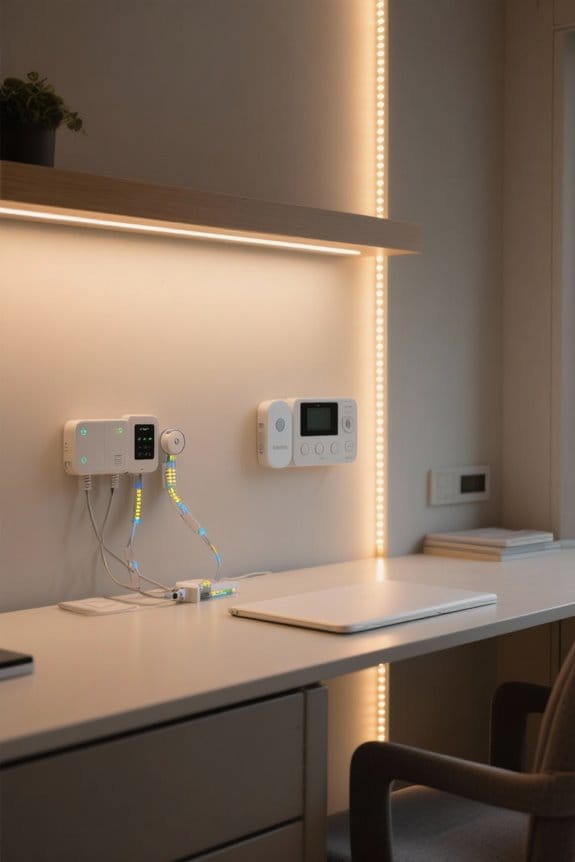
Integrating smart LED lighting into home automation systems requires strategic selection of essential components to guarantee ideal performance. Begin by ensuring that smart bulbs have certifications, such as “Works with Alexa” or “Certified for Google Assistant.” This verification confirms compatibility with existing systems. Utilize common communication protocols like Zigbee and Z-Wave, which facilitate seamless connectivity between devices. A central home automation hub, like Samsung SmartThings or Apple HomeKit, is vital for managing multiple LED devices from one interface. Each smart LED bulb should support automatic discovery to simplify integration. Finally, prioritize products that enable customizable scenes and routines, allowing for varied lighting conditions tailored to user preferences. This flexibility enhances the overall experience of smart LED lighting. The inclusion of motion activation features with detection ranges of 10-12 feet optimizes energy efficiency while maintaining responsive illumination.
Selecting Compatible Smart LED Bulbs
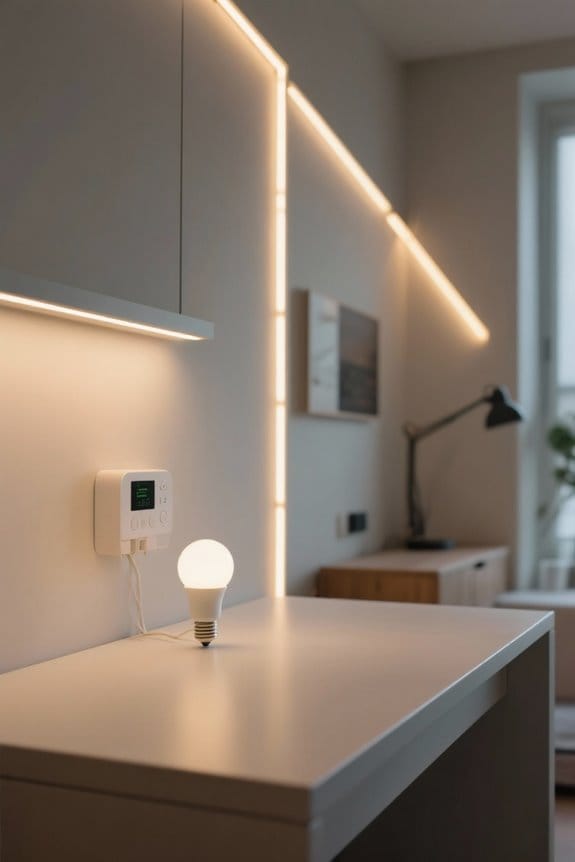
Which smart LED bulbs are best suited for a home automation setup? Focus on bulbs that are compatible with your home automation platform, like Amazon Alexa or Google Home. Look for certifications such as “Works with Alexa” to guarantee integration success. Choose smart LED bulbs that support communication protocols, including Zigbee or Wi-Fi, for seamless connectivity. Additionally, prioritize customization features like dimming options and programmable scenes. Remember to confirm the energy efficiency ratings; smart LED bulbs typically use 75% less energy than traditional ones. Many smart LEDs offer color temperature options ranging from 2700K to 6500K for versatile lighting moods. User reviews can reveal valuable insights about setup processes and usability. Ultimately, selecting the right bulbs enhances convenience and efficiency, making your home smarter and more sustainable.
Recommended Products

Product 1: WHAT’S IN THE BOX - Includes one black Hue Signe Gradient floor lamp with White and Color Ambiance smart, color-changing bulbs; Perfect for accent lighting in the living room or bedroom

WHAT'S IN THE BOX - Includes six White and Color Ambiance color-changing 5/6 slim downlight; Perfect for extending smart LED lighting to narrow hallways or rooms with low ceilings.

Smart Recessed Lighting: Our smart recessed lights are compatible with Alexa, Google Assistant, and Siri voice control. You can easily adjust the color temperature from 2700K to 6500K and the brightness from 10% to 100% with just a simple voice command.
Establishing a Zigbee Network
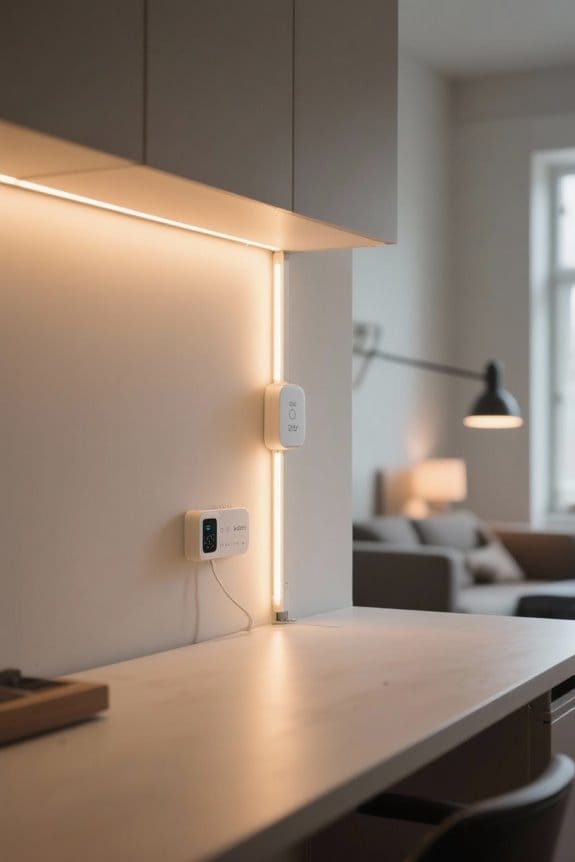
Building a Zigbee network is fundamental for enhancing the performance of a home automation system. This network requires a compatible USB dongle, such as Conbee 2 or Sonoff, capable of coordinating numerous devices. Operating on the 2.4 GHz frequency, users must select ideal channels to reduce interference with Wi-Fi networks. A well-planned Zigbee network can support up to 65,000 devices, ensuring extensive automation without performance loss. Consider establishing dual networks, separating Philips Hue from other devices for improved reliability. Additionally, utilizing open-source solutions like Zigbee2MQTT enhances integration with various vendors, allowing flexibility and maintaining local control without cloud dependency. This approach greatly enriches the overall smart home experience through effortless device management and connectivity. Modern LED lighting solutions offer seamless integration with voice-activated assistants and smart home systems for enhanced automation capabilities.
Setting Up Home Automation Systems
Establishing a home automation system begins with the selection of an appropriate platform to serve as the central hub for all smart devices, specifically for LED lighting integration. Popular options include Amazon Alexa, Google Home, and Apple HomeKit. Ensuring compatibility is essential; look for certified products with labels like “Works with Alexa” or “Compatible with Google Assistant.” After choosing a platform, install necessary smart LED bulbs or fixtures. Configure these home devices using the corresponding app, enabling easy setup and scheduling. Create automation rules with an “if this then that” logic, such as adjusting lights based on time or motion. Regularly update firmware and software for enhanced security and functionality, keeping your smart lighting system effective and reliable. Many modern LED strips feature music sync capabilities that can be integrated with your home automation system to create dynamic lighting effects that respond to sound.
Recommended Products

OUR MOST ADVANCED 4K AI PROCESSOR: Powered by 128 neural networks to deliver AI-enhanced picture and optimized sound, resulting in an exceptional 4K experience for streaming, gaming, live sports and more.*

SAMSUNG USA AUTHORIZED - Includes 1 Year Extended Protection Plan in ADDITION to the Included FULL Manufacturer Protection

Quantum Matrix w/ Mini LEDs: The mini LEDs all work to make your picture more intense | Neo Quantum HDR+: Take in a realistic picture with 4K color and contrast. Appreciate rich, accurate shades and tones in each scene
Connecting Smart Lights to Your Automation Hub
When integrating smart lights into a home automation hub, users should begin by ensuring that the chosen LED devices are compatible with the central system in use. Options like Amazon Alexa, Google Home, and Samsung SmartThings provide a solid foundation for smart LED options. Installation typically requires replacing existing bulbs with these options and connecting them via a dedicated app, especially if auto-discovery fails. Each LED functions as a distinct light entity within the hub, allowing for precise control over individual light bulbs and effects. Users can enhance their experience by creating automation rules in the home automation app, scheduling lighting changes or triggering specific actions based on events, ultimately achieving a smarter, more efficient home environment. For optimal performance and longevity, consider using anodized aluminum channels to protect LED strips while providing enhanced light diffusion and heat dissipation.
Exploring Voice Control Options
Voice control options greatly enhance the functionality of smart LED lighting, offering users a convenient way to manage their lighting systems hands-free. Integrating with voice assistants like Amazon Alexa, Google Assistant, and Apple HomeKit allows users to control light effortlessly. Simple commands, such as “Turn on the living room lights” or “Dim the bedroom lights to 50%,” make adjusting brightness or colors quick and intuitive. Users can also create specific voice commands to automate scenes, adding layers of customization. Many smart LED bulbs easily connect to voice assistants with straightforward setup processes, often requiring just the enabling of a skill. Advanced features, like color changes in response to specific triggers, further enrich the interactive experience of smart lighting. With energy efficient performance, these voice-controlled LED systems can operate for up to 50,000 hours while minimizing electricity consumption.
Customizing Lighting Scenes and Routines
Customization of lighting scenes and routines plays a pivotal role in optimizing the home environment, providing both aesthetic appeal and functional benefits. When customizing lighting scenes, users can choose specific colors and brightness levels to suit activities like reading or hosting a dinner party. Home automation systems enable automatic lighting adjustments based on time or occupancy, enhancing convenience and energy efficiency. Voice assistants, such as Amazon Alexa or Google Home, allow users to activate pre-programmed scenes with simple commands. Additionally, many smart lighting systems integrate motion sensors, ensuring lights respond to movement for added security. Scheduling features in dedicated apps can gradually brighten lights, simulating sunrise to promote a natural waking experience. Each adjustment personalizes the space effectively. Modern Bluetooth-enabled fixtures offer RGB color options with up to 15 different choices for creating dynamic lighting effects that complement any room’s ambiance.
Advanced Integration Features
To enhance the home automation experience, advanced integration features are essential, as they enable users to tailor their lighting systems to fit various scenarios seamlessly. Through a smartphone app, users can program customizable lighting scenes that match specific moods or activities. For instance, users can set the lighting to mimic a sunset during dinner or brighten when a movie starts. Additionally, integrating smart LED systems with home security enhances safety by automatically activating lights upon detecting motion. Event-triggered automations can adjust lighting conditions based on occurrences, like appliance use or time of day. Moreover, voice-controlled operation via platforms such as Amazon Alexa or Google Assistant allows for convenient, hands-free control, streamlining the overall user experience. Modern motion detection sensors can identify movement within 120-degree detection angles to ensure comprehensive coverage throughout the living space.
Installation Considerations
When planning the installation of smart LED lighting, careful attention must be given to compatibility with existing home automation systems. Evaluate potential installation issues by reviewing your current setup. Identify smart LED options that will integrate seamlessly with platforms like Amazon Alexa or Google Home. Choose compatible products from trusted brands such as Philips Hue or LIFX that match your requirements. For more complex configurations, consider professional installation by an electrician. This guarantees safety, adherence to local building codes, and proper device integration. After installation, conduct thorough testing to confirm connectivity between the smart LEDs and the control system. This crucial check will enhance the overall user experience, providing assurance that the system functions as intended.
Future Trends in Smart Lighting Technology
As advancements in smart lighting technology emerge, it becomes essential to understand their potential impact on home automation. Future innovations are expected to feature enhanced voice control, allowing users to communicate with lighting systems using natural language. Adaptive lighting capabilities will adjust automatically based on room occupancy and daylight levels, ensuring improved energy efficiency and user comfort. Security synchronization is anticipated to be a key trend, where smart lights activate in alignment with alarm systems, bolstering home safety. As the costs of smart lighting decrease, broader adoption in residential and commercial settings will likely occur, integrating seamlessly with existing automation systems. This evolution will ultimately provide users with personalized experiences and heightened convenience. Consider these trends for optimized home environments.
Frequently Asked Questions
How to Connect Addressable LED to Home Assistant?
Connecting addressable LEDs to Home Assistant resembles weaving a tapestry, where each thread symbolizes configurations for compatibility. This interplay crafts custom lighting effects, revealing vibrant LED control options, bringing life to any space with deliberate intention.
How Can I Automate My Lights at Home?
Automating home lights involves installing smart lighting that offers remote control, enabling energy efficiency through programmable schedules. Users can customize settings for varied lighting needs, creating a convenient living environment tailored to daily activities and routines.
How to Integrate WLED With Home Assistant?
To integrate WLED with Home Assistant, one could utilize WLED configuration tips, explore Home Assistant features, and enjoy LED strip effects through automation scripting ideas, enabling customized lighting experiences, such as mood lighting tailored for gatherings.
How to Connect LED Lights to Home App?
To connect LED lights to a home app, guarantee compatibility with Smart LED protocols, utilize LED control options, and configure LED automation features, including LED color settings, for peak performance and functionality within the system.