As an Amazon Associate, we earn from qualifying purchases. Some links on this site are affiliate links at no extra cost to you. Our recommendations are based on thorough research and editorial judgment.


Proper Ventilation for LED Installations

Proper ventilation is essential for LED installations to guarantee peak performance and longevity. Maintain a temperature range of 50°F to 104°F (10°C to 40°C) for efficiency. Incorporate aluminum heat sinks and verify at least six inches of space between multiple bulbs for airflow. Utilize fixtures with built-in ventilation features and regularly clean vents to prevent dust accumulation. Consider smart sensors for temperature monitoring. For more in-depth insights on enhancing LED performance, further exploration will provide valuable information.
Key Takeaways
- Use aluminum heat sinks to effectively manage heat dissipation and prolong LED lifespan.
- Maintain at least six inches of space between multiple bulbs for optimal airflow.
- Avoid enclosing LEDs in non-ventilated fixtures to prevent heat accumulation.
- Schedule regular cleaning to remove dust from heat sinks and vents, promoting airflow.
- Incorporate built-in ventilation features in fixtures to enhance cooling efficiency in larger installations.
Importance of Ventilation for LED Bulbs
You may be interested
Proper ventilation is critical for ensuring the ideal performance and longevity of LED bulbs. Excessive heat generated by LED bulbs can drastically reduce their performance and lifespan. To avoid overheating issues, adequate ventilation must be established. Implementing a well-designed heat sink, sized according to the power requirements of the bulbs, enables effective heat dissipation. Incorporating vents or openings in the bulb housing facilitates airflow, enhancing heat release while preventing dust or moisture from compromising performance. Regular maintenance, such as cleaning heat sinks and vents, is imperative. This task prevents dust accumulation, which could obstruct airflow and contribute to overheating. Consequently, prioritizing proper installation and diligent maintenance is essential for maximizing the efficiency and durability of LED bulbs. With proper ventilation and maintenance, quality LED bulbs can achieve a remarkable 50,000 hour lifespan under optimal operating conditions.
Design Considerations for Ventilation
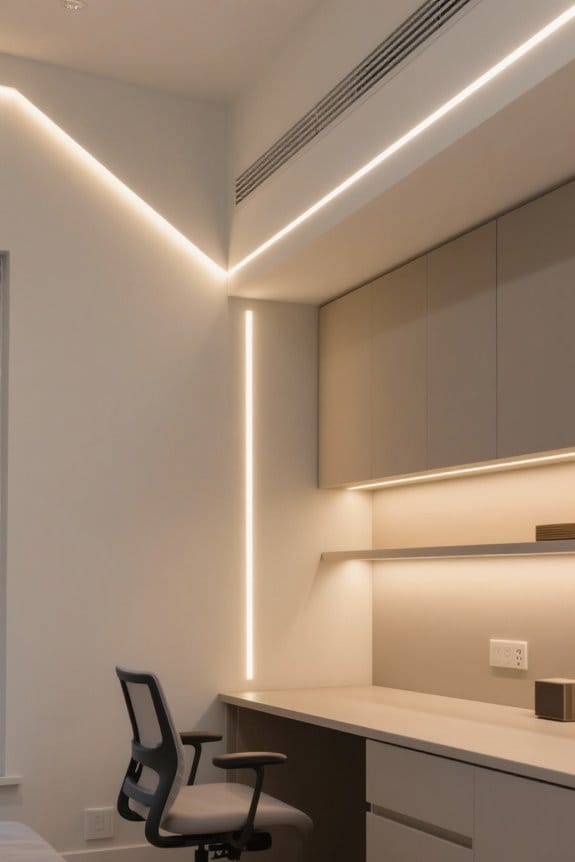
Effective design considerations for ventilation play an essential role in the performance of LED installations. Employ well-designed heat sinks, preferably made from efficient materials like aluminum, to enhance heat dissipation. Size these heat sinks according to the power requirements of the LEDs, ensuring optimal longevity. Incorporate vents or openings within the bulb housing, facilitating essential airflow pathways for effective cooling. The balance in vent size must promote adequate airflow while keeping dust and moisture at bay. Additionally, maintain ample space around LED bulbs to support air circulation and sustain consistent light output. By focusing on these design elements, the overall efficiency and performance of LED lighting fixtures can be considerably improved, leading to longer-lasting installations. Proper ventilation design helps maintain the 50,000 hour lifespan typical of quality LED lighting systems.
Installation and Placement for Ventilation
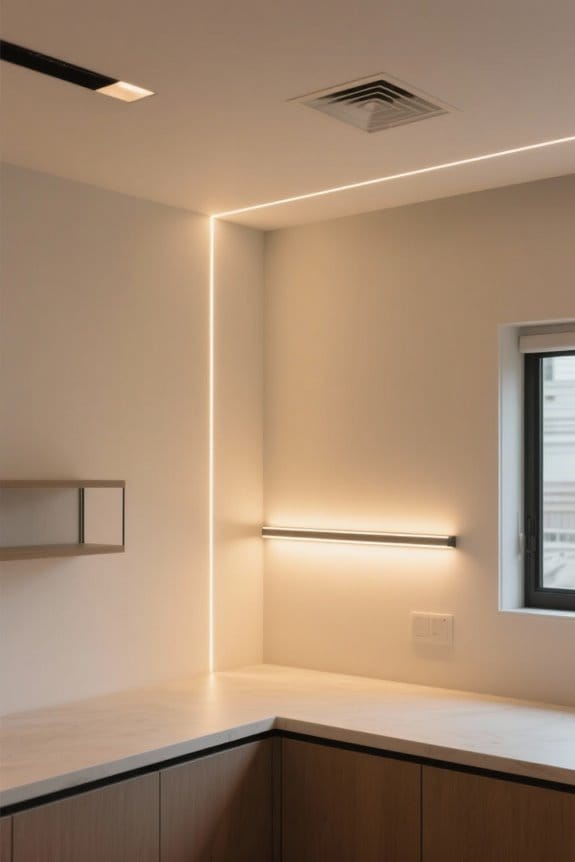
Adequate installation and placement of LED bulbs are essential for enhancing ventilation and guaranteeing long-term efficiency. To achieve this, verify proper ventilation by allowing sufficient space around each bulb, creating airflow necessary to dissipate heat during operation. Use fixtures with built-in ventilation features or incorporate heat sinks for improved airflow. Avoid enclosing LED bulbs in non-ventilated fixtures, as this leads to heat accumulation, adversely affecting brightness and lifespan. Maintain a distance of at least six inches between multiple LED bulbs to manage their combined heat output effectively. Additionally, position LEDs away from direct sunlight and other heat-generating objects to maintain ideal operating temperatures, ensuring safe installation and consistent performance in your lighting setup. Quality LED installations like the ESHine LED Kit deliver 750 lumens while maintaining proper ventilation for optimal performance.
Recommended Products

✅ Adjustable Wattage & CCT:This 480v LED parking lot light features 3 power modes (360W/320W/240W) and 3 color temps (5000K/4000K/3000K). Select the desired color temperature and brightness to meet your various lighting needs before installation, please!

🌟 Super Bright & 0 Electricity Costs: This 9000W solar LED flood light delivers up to 300,000 lumens of ultra‑bright illumination, perfect for stadium lighting, parking lot lighting, and warehouse lighting.Powered entirely by solar energy, it eliminates the need for electricity. 4200fts wide range lighting rance.

【Maximize Your Yields with Scientific Precision】 Engineered with a full spectrum including , the RDJ Bouns Growline ensures explosive resin production and denser flower development. Delivering a high PPF efficacy of 2.8 μmol/J, this light is designed to penetrate deep into the canopy, turning every lower bud site into a top-tier harvest. Stop guessing and start growing like a pro.
Maintenance for Ventilation
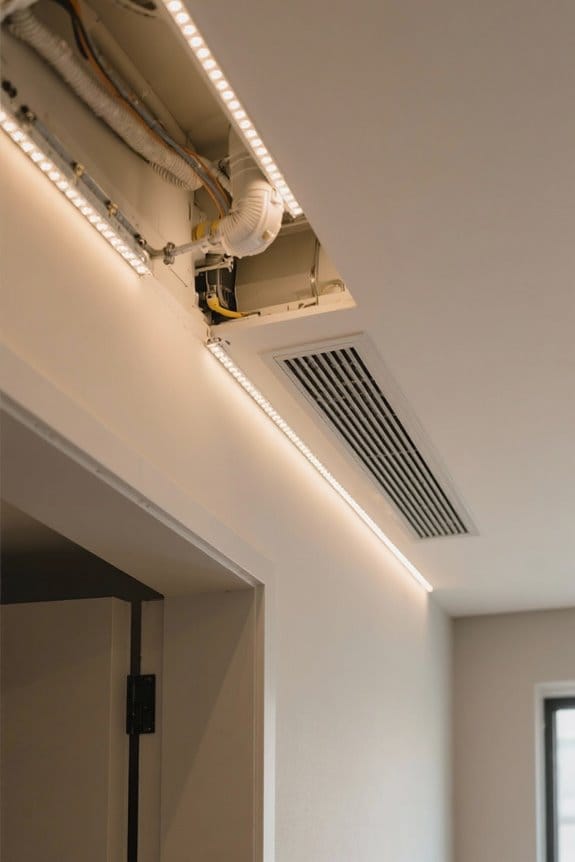
In order to maintain ideal ventilation for LED installations, it is essential to establish a routine cleaning and inspection regimen. Regularly clean heat sinks and vents using soft brushes or compressed air to prevent dust accumulation. Blocked vents can hinder effective heat dissipation and lead to overheating. Implement a cleaning schedule for larger installations, ideally every three months, to maintain proper ventilation. Additionally, inspect LED bulbs periodically for signs of discoloration or excessive heat, which may indicate ventilation issues. It is vital to resolve any blocked vents or damaged heat sinks swiftly, as neglect can greatly reduce the performance and lifespan of LED components. Use infrared thermometers to monitor temperatures, ensuring they remain within recommended ranges. Most modern LED cabinet lighting kits feature 50,000 hour lifespans, making proper ventilation maintenance crucial for achieving their full operational potential.
Monitoring and Testing for Ventilation
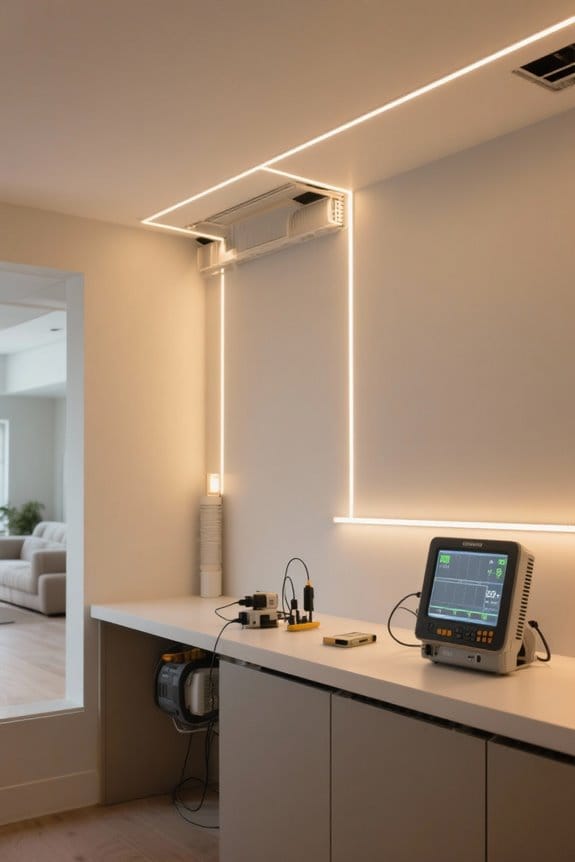
To guarantee ideal performance and longevity of LED installations, dedicated monitoring and testing of ventilation systems is crucial. Use infrared thermometers to monitor temperature readings, making certain they stay within the manufacturer’s recommended limits to prevent overheating. Conduct airflow testing with an anemometer to measure air velocity around the LED lighting system, confirming proper circulation is achieved. Regular inspections are essential; check for blockages in vents and maintain clean heat sinks for peak thermal management. Implement a real-time monitoring system to continuously assess critical temperatures, allowing for early detection of potential ventilation issues. Finally, document airflow efficiency and temperature readings over time, enabling informed adjustments to maintain the sustained performance of high-quality LED components. Maintaining proper ventilation is especially important for high-output fixtures like the 1500 lumen models that generate more heat during extended operation.
Common Ventilation Issues
Numerous common ventilation issues can severely impact LED installations, leading to diminished performance and increased failure rates. Overheating is a primary concern; when temperatures exceed 85°C (185°F), LED fixtures experience reduced brightness and a shorter lifespan. Inadequate airflow can result in thermal throttling, where performance declines to protect internal components from heat damage. Additionally, moisture accumulation in poorly ventilated environments heightens the risk of electrical failures and corrosion, especially in outdoor applications. To maintain ideal temperature control, implementing regular inspections is essential. Ensuring vents remain free from dust and debris enhances airflow, mitigating potential failures. Addressing these ventilation issues proactively safeguards the longevity and efficiency of LED installations. Avoid complacency; prioritize ventilation for reliable performance. Modern LED technology contributes to lower heat output compared to traditional lighting options, but proper ventilation remains crucial for optimal performance.
Solutions for Improving Airflow
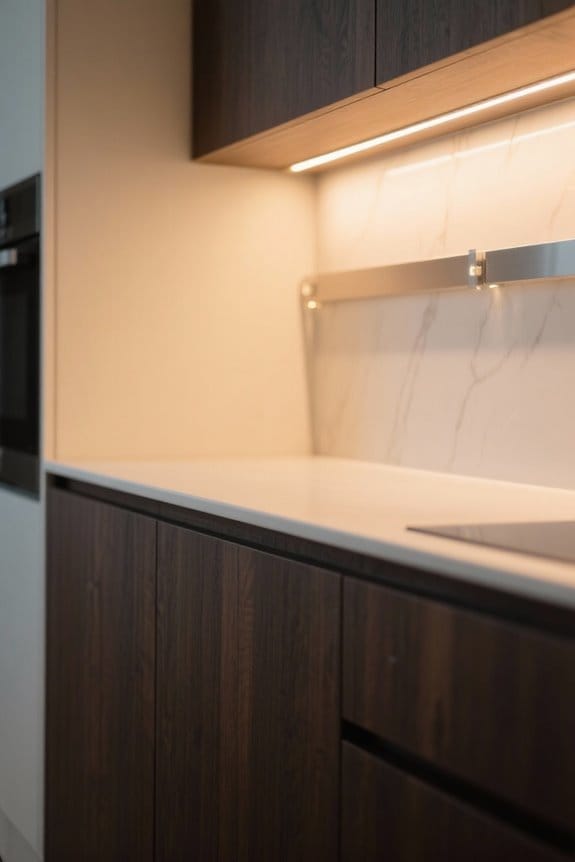
Effective airflow solutions are essential for maintaining the performance and lifespan of LED installations. Incorporate properly sized heat sinks, ideally made of aluminum, to enhance heat dissipation. Guarantee fixtures are equipped with adequate vents to facilitate airflow and prevent heat sources from accumulating. Maintain a spacing of at least six inches around LED bulbs to promote air circulation, which can prevent overheating. Regularly clean heat sinks and vents to remove dust, which obstructs airflow. Additionally, employ infrared thermometers for temperature monitoring; excessive heat can indicate inadequate ventilation. By prioritizing these solutions, one can greatly improve airflow, ultimately enhancing the efficiency and durability of LED installations, ensuring they operate within ideal temperature ranges for longevity. Aluminum LED profiles provide excellent heat dissipation properties while offering a sleek, modern appearance for your lighting setup.
Recommended Products

Outdoor Kitchen Set includes: 1x 2-Door Cabinet, 1x 3-Drawer Cabinet
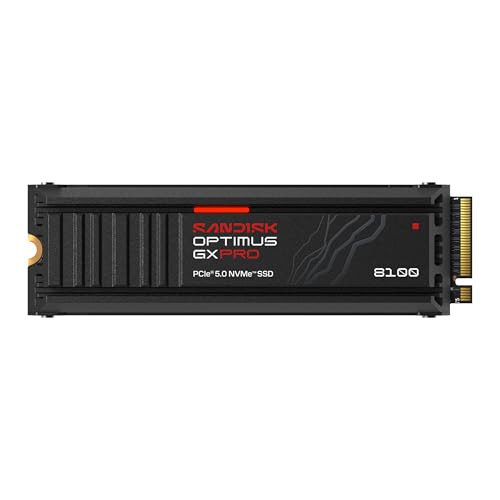
SERIOUS PCIe 5.0 SPEEDS. Sequential Read/Write speeds up to 14,900/14,000 MB/s[2] (2TB[1] and 4TB[1] models) lets you quickly load and store massive projects.

Enhanced Visibility: Bi-LED projectors for superior road visibility.
Impact of Poor Ventilation on LED Performance
While one may overlook ventilation as a minor component of LED installations, its impact on performance is significant and detrimental when neglected. Poor ventilation leads to overheating, resulting in thermal stress that can shorten an LED’s lifespan by up to 50%. Excessive heat decreases light output, causing LEDs to dim and lose color consistency over time. Inadequate airflow may even lead to complete failure within a short operational period. Effective heat dissipation, achievable only through proper ventilation, is vital; LEDs perform efficiently within a temperature range of 50°F to 104°F (10°C to 40°C). By maintaining a stable temperature, well-ventilated installations can enhance efficiency and often exceed a lifespan of 25,000 hours, proving the necessity of careful ventilation planning. Modern LED lighting solutions generate significantly less heat than traditional incandescent bulbs, making them ideal for enclosed spaces like curio cabinets when properly ventilated.
Best Practices for Ventilated LED Installations
Implementing best practices for ventilated LED installations is crucial to optimize performance and extend longevity. Proper ventilation facilitates effective heat dissipation, reducing the risk of overheating issues. Use heat sinks made from aluminum to enhance thermal management, guaranteeing LEDs operate efficiently under various power demands. Maintain adequate air circulation around LED fixtures by providing sufficient spacing; avoid enclosing them in non-ventilated housings. Schedule regular maintenance and cleaning of heat sinks and vents to prevent dust accumulation, which can obstruct airflow. Utilize fixtures with built-in ventilation features for larger installations and guarantee appropriate spacing between multiple bulbs to effectively manage combined heat output. With proper ventilation, LED lifespan exceeds 25,000 hours of reliable operation. Adopting these strategies will notably improve the durability and effectiveness of LED installations.
Recommended Products

Light Up Larger Area: AC 277-480V, Up to 150lm/watt, the 480V 320W LED parking lot lights bring 48000LM with SMD3030 chips at 5000K daylight white. Anti-shock, anti-moisture, no glare, no strobe light, no ghosting, protecting your eyes

Enhanced Visibility: Improved nighttime visibility with a precise beam pattern and wide coverage.

Durable Construction: UV-coated polycarbonate lens, PPS plastic housing, and aluminum heat-sinks for longevity.
Future Trends in LED Ventilation Solutions
As LED technology progresses, the integration of innovative ventilation solutions becomes increasingly essential to guarantee peak performance. Future trends focus on smart sensors that monitor temperature and adjust fan speeds to optimize heat dissipation while enhancing thermal conductivity. Manufacturers are employing advanced materials, like graphene, which can considerably improve LED lifespan and performance. Modular LED systems will promote better airflow management, allowing customizable spacing to mitigate localized heat buildup. Techniques such as passive cooling harness natural convection to minimize energy consumption, offering effective heating solutions without external power. In addition, research into 3D-printed ventilation systems facilitates highly customizable designs, catering to various installation environments, ultimately maximizing thermal efficiency and ensuring sustained operations for LED installations. With proper ventilation systems in place, modern LED energy efficiency ranging from 100-150 lumens per watt helps reduce both heat generation and power consumption.
Recommended Products

[ Superior Sound Isolation ] Equipped with 2 layers of soundproof laminated glass, and Acoustic Insulation Structure walls 6 layers (Aluminum frame structure, Film-laminated Steel Panel, PET Sound-absorbing Board, Eco-friendly Acoustic Panel, Premium Textured Fabric), the booth achieves 35dB(±5dB) reduction, ensuring a peaceful, private workspace.

[ Low Noise Level ] Equipped with 2 layers of soundproof laminated glass, and Acoustic Insulation Structure walls 6 layers (Aluminum frame structure, Film-laminated Steel Panel, PET Sound-absorbing Board, Eco-friendly Acoustic Panel, Premium Textured Fabric, the booth achieves 35dB(±5dB) reduction, ensuring a peaceful, private workspace.

Sturdy Materials: Our soundproof pod features a high-quality 6063-T5 aerospace-grade aluminum alloy as the main frame, paired with 1.2mm thick cold-rolled steel plates. The surface is treated with an electrostatic powder coating process, which ensures strong adhesion, excellent corrosion resistance, and scratch resistance — keeping the pod looking like new even after long-term use.
Frequently Asked Questions
Do LED Lights Need to Be Vented?
Yes, LED lights require venting for effective heat dissipation. Proper thermal management enhances energy efficiency, improves performance, and extends lifespan. Adhering to LED installation guidelines guarantees safety through appropriate fixture design and usage tips for maximum functionality.
What Are the Chances of LED Lights Catching Fire?
LED lights have minimal fire risks when adhering to safety standards, yet overheating issues arise from poor manufacturing quality or improper installation. Maintaining LED installation guidelines and using suitable materials greatly reduces potential hazards associated with LED usage precautions.
Do LED Drivers Need Ventilation?
Yes, LED drivers require ventilation for peak efficiency. Proper thermal management, effective housing design, and appropriate driver placement guarantee heat dissipation. Compliance with airflow requirements enhances component lifespan and addresses essential safety considerations in installations.
Do LED Strips Need Ventilation?
LED strips require ventilation to manage heat effectively. Proper air circulation enhances thermal management, improving energy efficiency and safety. Installation tips suggest considering strip placement and accounting for humidity factors to optimize lighting design and prevent overheating.