As an Amazon Associate, we earn from qualifying purchases. Some links on this site are affiliate links at no extra cost to you. Our recommendations are based on thorough research and editorial judgment.

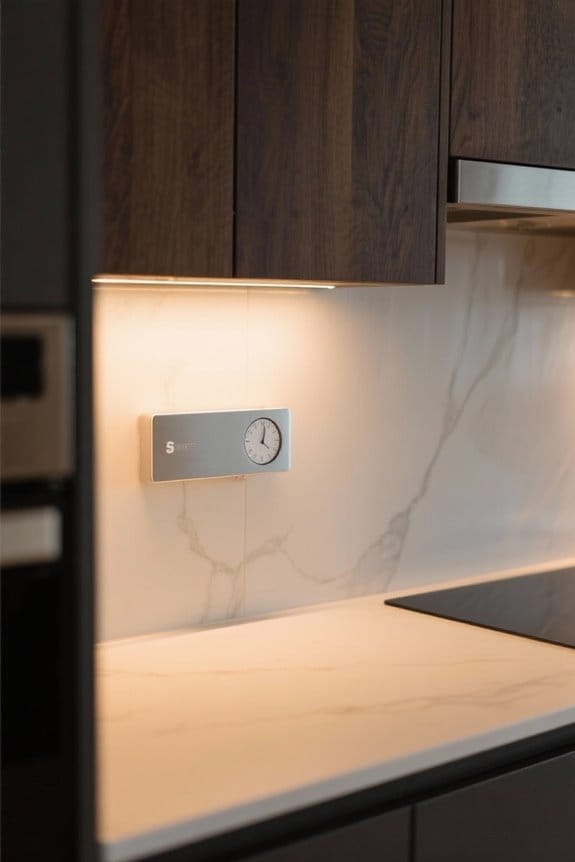
How Smart Timers Maximize LED Efficiency

Smart timers maximize LED efficiency by automating lighting schedules and incorporating advanced sensors. These devices reduce energy consumption by up to 30% through motion detection and daylight harvesting, ensuring lights operate only when needed. Manual adjustments become unnecessary as timers optimize usage based on occupancy patterns and ambient light levels. Additional features include smartphone integration for seamless control. Explore how smart timers not only enhance energy management but also contribute to sustainability in living environments.
Key Takeaways
- Smart timers customize lighting schedules based on occupancy patterns, ensuring LED lights are only used when needed for maximum efficiency.
- Built-in sensors engage LED lights automatically, saving energy by activating only during movement or occupancy detection.
- Photocell sensors adjust outdoor lighting according to ambient light levels, minimizing unnecessary energy consumption during daylight.
- Integrating with daylight harvesting systems, smart timers optimize artificial lighting to match available natural light, reducing the reliance on LEDs.
- Remote control capabilities enable users to monitor and adjust settings, promoting effective energy management and efficiency in LED usage.
Understanding Smart Timers and Their Functionality
You may be interested



In a world increasingly focused on energy efficiency, understanding smart timers and their functionality is essential for maximizing the benefits of LED lighting systems. Smart timers allow users to create customizable lighting schedules based on occupancy patterns, which optimizes LED light usage throughout the day. Advanced models can adjust lighting according to ambient light levels, ensuring illumination only occurs when necessary. Programmable schedules facilitate intricate setups tailored to various scenarios—managing multiple lighting conditions across the week. Many timers integrate with smartphone apps, enabling remote control and monitoring of energy savings. Overall, implementing smart timers in LED systems can lead to energy savings of up to 30%, markedly reducing electricity bills while enhancing overall energy efficiency. When paired with high CRI strips, smart timers can ensure optimal color rendering while maintaining energy-efficient operation throughout their 60,000+ hour lifespan.
Energy-Saving Features of Smart Timers
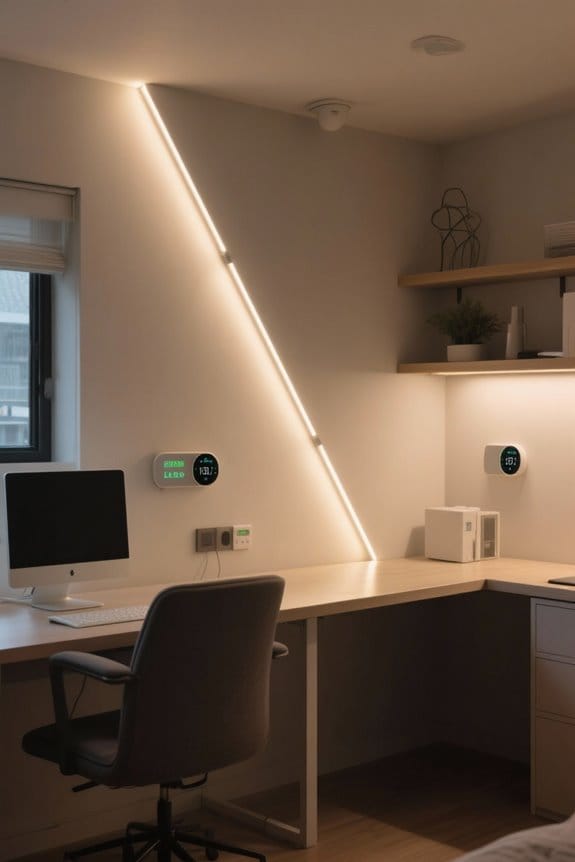
Smart timers are essential tools that markedly enhance the energy efficiency of lighting systems. By implementing automated schedules, smart timers can reduce energy consumption by up to 30%, ensuring lights operate only when necessary, based on occupancy patterns. Additionally, these devices often incorporate built-in sensors that detect motion, automatically turning lights on or off, thereby minimizing energy wastage. With remote control capabilities via smartphone apps, users can monitor and adjust settings from anywhere, promoting effective energy management. Moreover, integrating smart timers with daylight harvesting systems allows for adjustment of artificial lighting in response to natural light availability, optimizing LED efficiency. The result is improved user comfort and significant energy savings—an invaluable asset for any energy-conscious environment. Modern smart timers can be integrated with motion detection capabilities that sense movement within a 10-foot range, making them particularly effective for kitchen and cabinet lighting applications.
Recommended Products

Enhance your comfort and sleep with full head and foot articulation the Head Adjusts up to 80° and the Foot up to 50° giving you the ability to adjust to virtually any position or angle, Innovative Wall-Hugger Design Tubular Steel Frame with Advanced Motion

Enhance your comfort and sleep offering Full Head 70° Articulation and 45° Foot Articulation with Advanced Wall-Hugger Technology keeping you in place as you adjust

👨👩👦ERGONOMIC KING ADJUSTABLE BASE - This king adjustable bed frame owns the head and foot incline option.
The Role of Sensors in Maximizing LED Efficiency
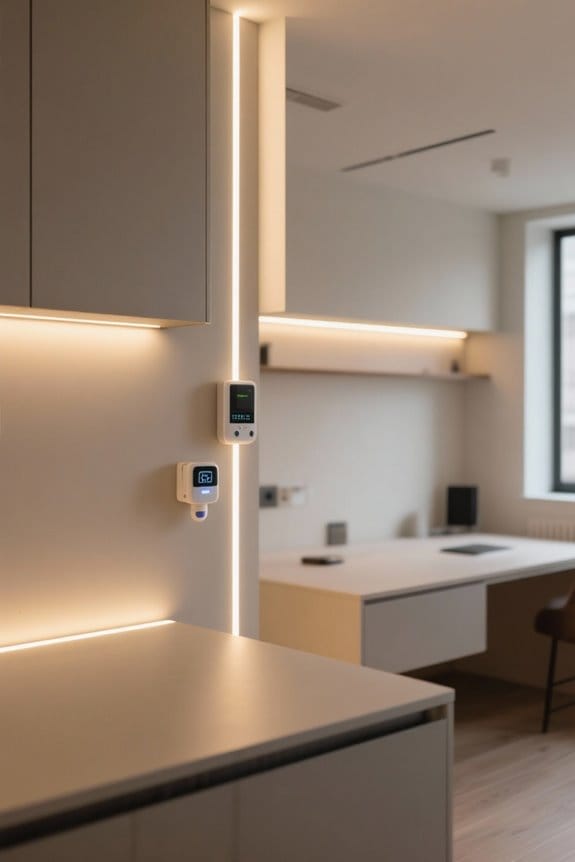
Maximizing LED efficiency heavily relies on the integration of various sensor technologies. Sensors, such as motion detectors and occupancy detectors, engage LED lights only when necessary, thereby greatly reducing energy consumption. For instance, occupancy sensors can save up to 30% of lighting energy in spaces like offices. In addition, photocell sensors adjust outdoor LED lighting according to ambient light levels, activating at dusk and deactivating at dawn, ensuring ideal energy use. Integrating these sensors with smart timers enables programmable schedules that adapt to real-time environmental changes. Additionally, this combination supports daylight harvesting, promoting energy conservation by adjusting artificial lighting based on natural light levels. Implementing these technologies is essential for enhancing LED efficiency in modern lighting systems. Modern motion sensor lights can detect movement within a 120-degree angle and activate within a 10-foot radius for optimal coverage and energy savings.
Recommended Products

A occupancy sensor designed to replace standard light or fan switches; Ideal for high mounted areas such as warehouses and manufacturing and other commercial spaces.

Over 60% energy savings when compared to a fluorescent troffers/L92 at 100, 000 hours with 5 yr.

【Automatic Energy-Saving 】This motion sensor light switch (also motion activated) turns lights on when you enter and off when you leave—no more forgotten lights or wasted electricity. As a reliable occupancy sensor switch, it cuts energy bills and works well in bathrooms, garages, laundry rooms, and closets.
Environmental Impact of Using Smart Timers
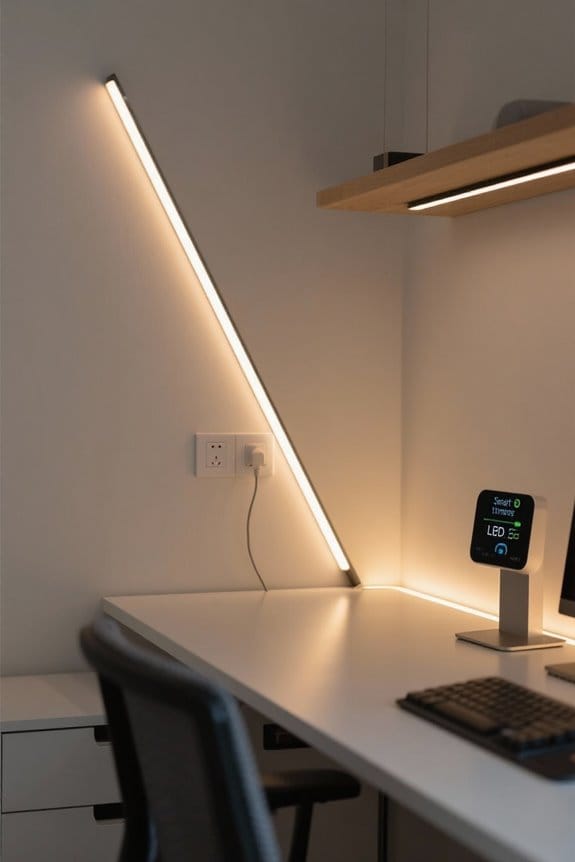
Although many may not realize it, automating lighting schedules with smart timers can greatly reduce a household’s or business’s environmental footprint. By minimizing unnecessary illumination, these devices can reduce energy consumption by up to 30%. This decrease directly contributes to lowering the carbon footprint, as less energy usage translates to fewer greenhouse gas emissions from electricity production. Additionally, integrating smart timers with LED systems enhances efficiency, prolonging bulb lifespans and lessening waste from replacements. Such practices promote sustainable living and align with energy-saving initiatives. By utilizing automated lighting controls, individuals and organizations can engage in efficient energy management, thereby supporting environmental conservation goals. Ultimately, embracing smart timers is a clear choice for eco-friendly behavior and sustainable practices. Modern LED lighting solutions can achieve up to 70% energy savings when compared to traditional fluorescent lighting systems.
Installation and Maintenance of Smart Timer Systems
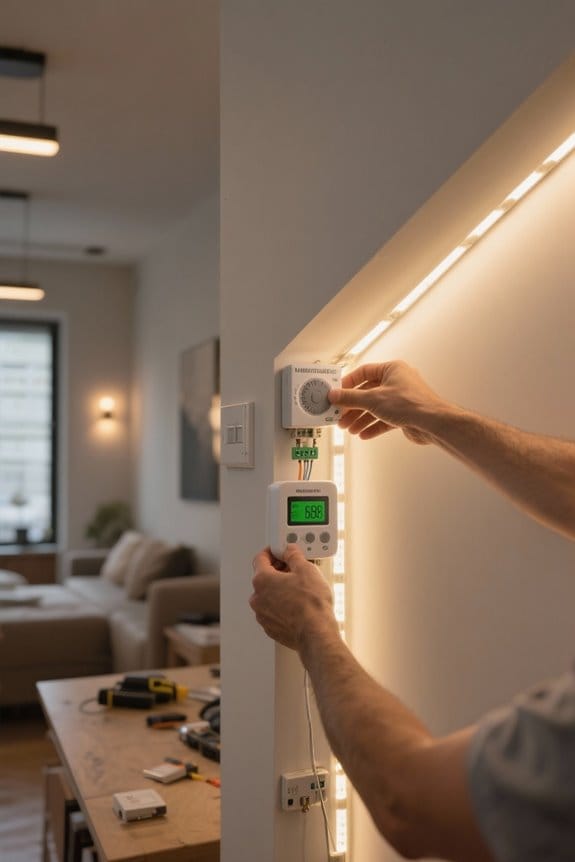
How can one efficiently install and maintain smart timer systems to optimize their functionality? Installation is straightforward; simply replace existing light switches or utilize plug-in setups with minimal tools. Ascertain that these systems integrate seamlessly into smart home networks for effective communication with other devices, enhancing energy efficiency. Regular maintenance includes seasonal checks, aligning timer settings with local sunrise and sunset times. Be vigilant for firmware updates, often accessible via connected apps, to improve performance and features. Device troubleshooting may involve resetting the timer or consulting the manufacturer’s support for problems like failed programming. Smart timers can be particularly effective when paired with high CRI lights to ensure optimal visibility and color accuracy throughout scheduled periods. By attending to both installation and maintenance, users maximize the benefits of smart timer systems while elevating their LED lighting solutions.
Recommended Products

❤️❤️❤️ 2 YEARS of FREE Ink & Powder Starting from 2025, Get 5 bottles of 250ml ink + 500g powder every 2 months — just cover shipping (US only). Save over $1000 on supplies

❤️❤️❤️ 2 YEARS of FREE Ink & Powder Starting from 2025, Get 5 bottles of 250ml ink + 500g powder every 2 months — just cover shipping (US only). Save over $1000 on supplies

❤️❤️❤️ 2 YEARS of FREE Ink & Powder Starting from 2025, Get 5 bottles of 250ml ink + 500g powder every 2 months — just cover shipping (US only). Save over $1000 on supplies
Frequently Asked Questions
What Makes LED Lights More Efficient?
LED lights are more efficient due to reduced energy consumption, superior light output, lifespan extension, minimal heat generation, adjustable color temperature, dimming capability, cost effectiveness, positive environmental impact, tailored usage patterns, and instant on-off functionality.
Do LED Lights Work With Timers?
As a conductor orchestrates a symphony, LED lights harmonize beautifully with timers. Their compatibility offers user preferences in timer settings, ensuring energy savings through efficient scheduling options, automation features, and remote access for seamless lighting control.
How Can Smart Lighting Contribute to Energy Efficiency?
Smart lighting contributes to energy efficiency through smart sensors and automated controls, utilizing dimming features and occupancy detection. Programmable settings and light scheduling, along with remote access, align perfectly with daily routines, promoting eco-friendly solutions and significant energy savings.
What Is a Disadvantage of a Timer Clock for Lighting Control?
“All that glitters is not gold.” Timer clocks face disadvantages like reliability issues, programming challenges, and power outage impacts. These can lead to usability barriers, inaccuracies, and increased maintenance, resulting in cost implications and compatibility concerns for users.