As an Amazon Associate, we earn from qualifying purchases. Some links on this site are affiliate links at no extra cost to you. Our recommendations are based on thorough research and editorial judgment.

How to Eliminate Shadows in Your Kitchen Workspace

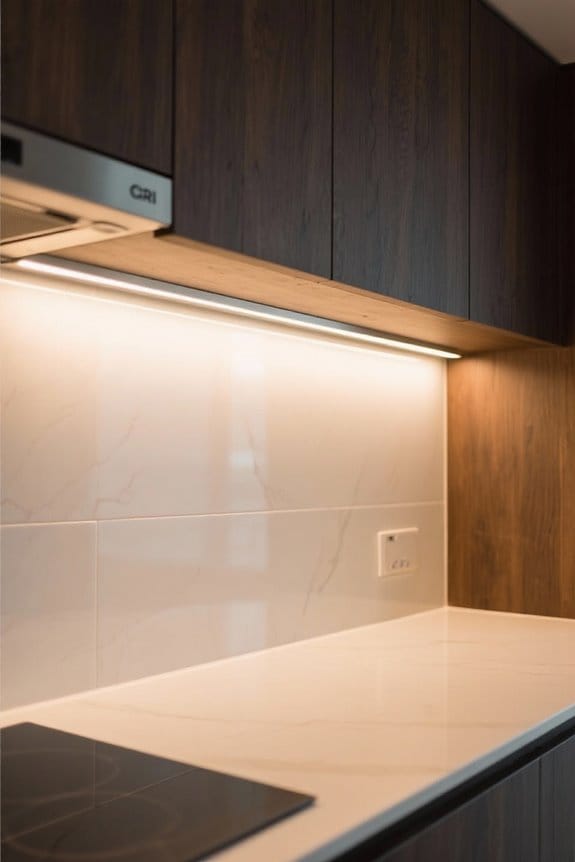
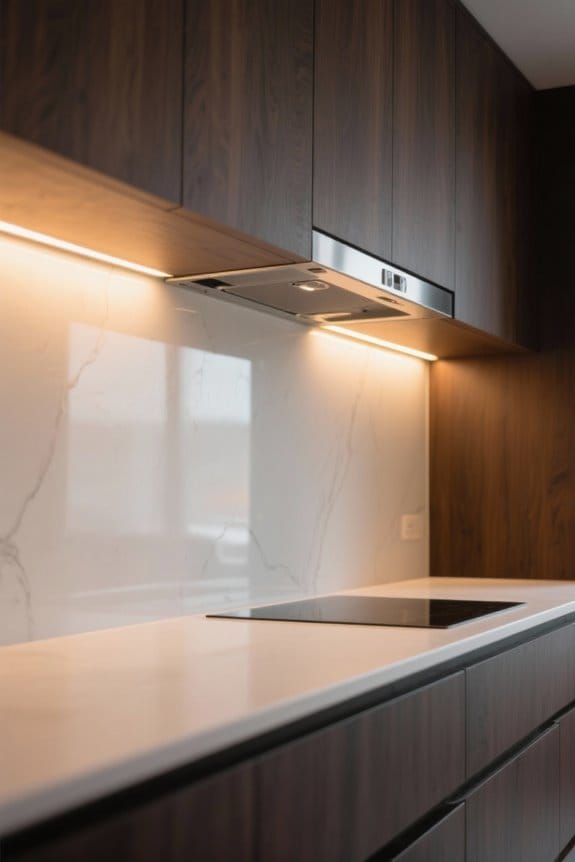
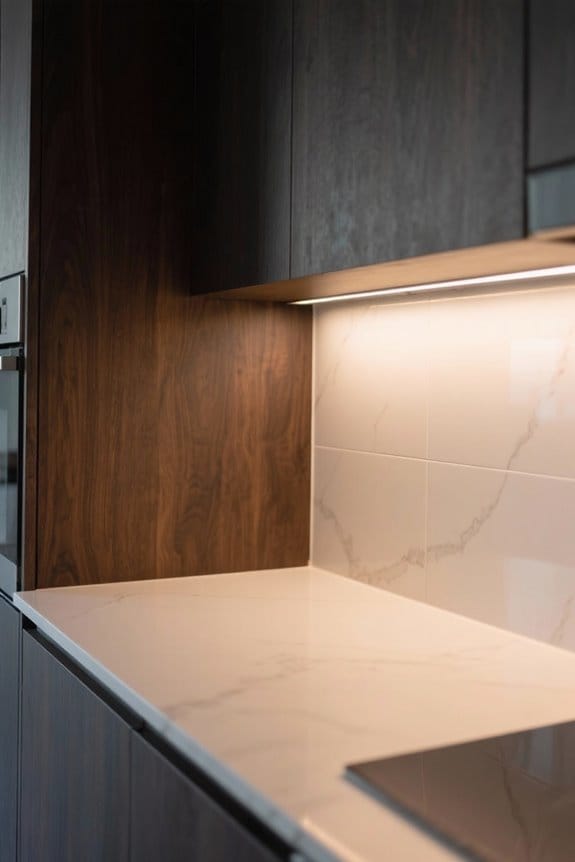
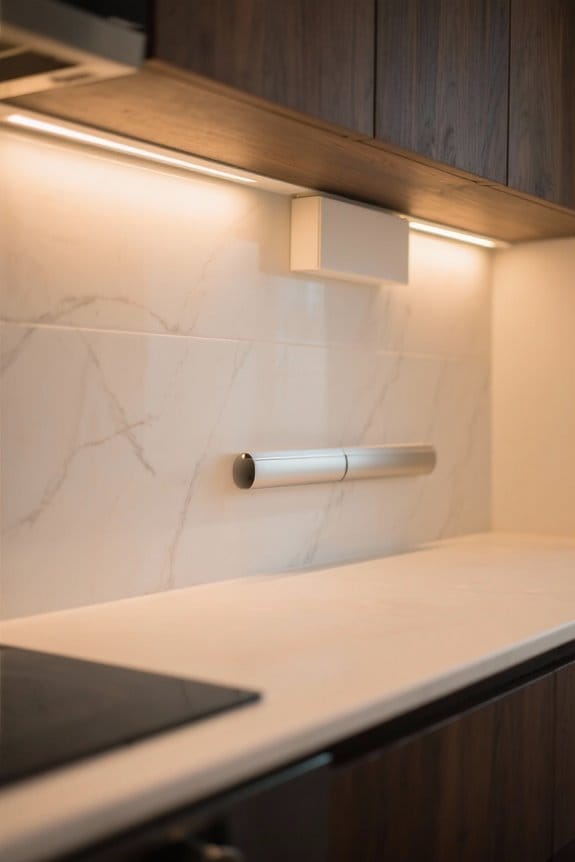
To eliminate shadows in your kitchen workspace, install under-cabinet lighting that targets critical areas like countertops and stovetops. Choose energy-efficient shallow-profile linear LED fixtures, which provide even illumination and reduce harsh reflections. Proper placement is key; fixtures should be positioned to avoid casting shadows. Consider dimming options and motion sensors for enhanced functionality and safety. Confirm fixtures are rated IP44 or higher near sinks. Further insights into effective lighting choices await exploration.
Key Takeaways
- Install under-cabinet lighting to provide direct illumination on countertops, reducing shadows significantly during food preparation.
- Opt for shallow-profile linear LED fixtures as they diffuse light evenly, minimizing harsh reflections and dark spots.
- Use dimmable lights to adjust brightness levels according to the task, enhancing visibility and comfort in the kitchen.
- Incorporate motion-sensing technology to activate lighting automatically, ensuring well-lit areas whenever you enter the workspace.
- Position lights at proper angles to counteract any overhead shadows, creating an evenly lit cooking environment.
Importance of Kitchen Task Lighting
You may be interested
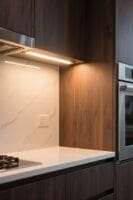
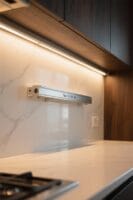
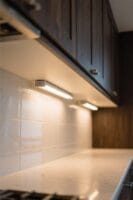
Proper task lighting is a cornerstone of an efficient kitchen workspace. Effective task lighting focuses on directly illuminating critical areas, such as countertops and stovetops, while effectively eliminating shadows that can obscure important details. With adequate lighting, chefs can improve visibility, enhancing safety when using sharp tools. Overhead lights alone may not suffice; strategically placed task lights can make a significant difference. A lighting scheme that integrates task fixtures fosters a cozy atmosphere while maximizing functionality. For example, install under-cabinet lights 18-24 inches above work surfaces for superior brightness without glare. This allows for precise cooking tasks, such as chopping and measuring, promoting confidence in food preparation. Invest in quality task lighting to elevate your kitchen experience. Quality LED fixtures deliver approximately 50,000 hours lifespan while maintaining excellent energy efficiency throughout their duration.
Recommended Products

MULTIPURPOSE DESIGN: This full Murphy bed can be folded away into a cabinet to open up floor space in any room. A wall bed is the ideal space-saving furniture for a multi-use guest room, home office, or home gym. A dual piston system folds the cabinet bed down quickly and smoothly so you can sleep comfortably at night while enjoying your space during the daytime. The flip-up work surface provides a laptop desk or writing desk for handling small projects and daily tasks.

BETTER DEFOGGING: With the medicine cabinet's built-in defogger, there's no need to worry about moisture on the mirror blocking your view. The medicine cabinet's IP54 waterproof rating ensures safety and durability in humid bathroom environments and protects against rust and corrosion

Effortless Assembly in Minutes: Say goodbye to complicated setups. Our patent-pending leg design makes assembly a breeze, requiring minimal tools. You'll have your new workstation ready to use in under 10 minutes
Options for Under Cabinet Lights
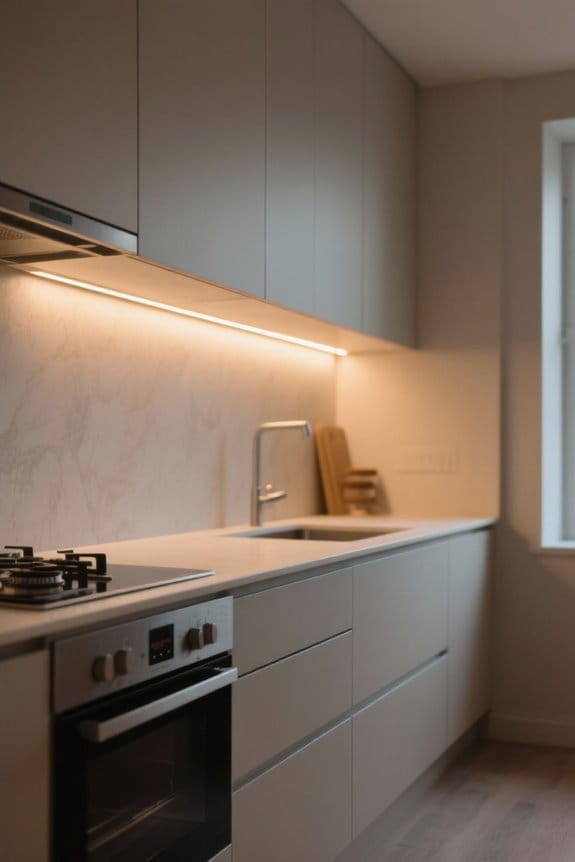
Under-cabinet lights serve as an essential component in enhancing kitchen functionality and reducing shadows over countertops. Options for under-cabinet lighting include LED strips, which are easy to install but may produce dimmer light and face individual LED failures. Puck lights present an affordable alternative, though they require frequent battery replacements and can create hotspot illumination. For enhanced energy efficiency, consider shallow-profile linear LED fixtures; these diffuse light effectively, softening shadow lines on work surfaces. Additionally, integrating motion-sensing lights offers improved safety, automatically activating when entering a dark kitchen and conserving energy by turning off when not needed. Each lighting design choice plays a significant role in illuminating workspaces and eliminates shadows, ensuring maximum kitchen usability. Modern tunable white LEDs provide customizable color temperatures between 2700K and 6500K, allowing users to adapt their lighting for different tasks throughout the day.
Recommended Products
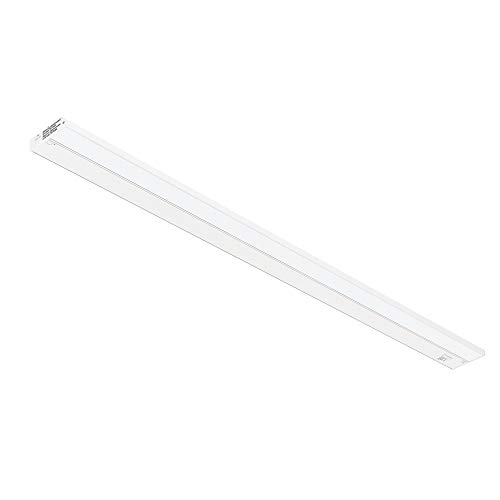
Easy Color Temperature Selection: Choose from 3 ideal settings for your kitchen—Warm White (2700K), Soft White (3000K), or Bright White (4000K) with a simple slide switch for your under cabinet lighting.

PROFESSIONAL - Kitchen Lighting LED Professional package , LED Strip lighting that lasts 100,000 + operating hours , Under driven LED lights that use less energy and last longer , See all of our LED lighting kits , switches , dimmers , other white light options , and even strip lights to light all of your lighting needs

【Material】Aluminum alloy & Plastic lamp body. 24inch, 18watt, 1237lumens, 120 Volts.
Advantages of Shallow-profile Linear LED Fixtures
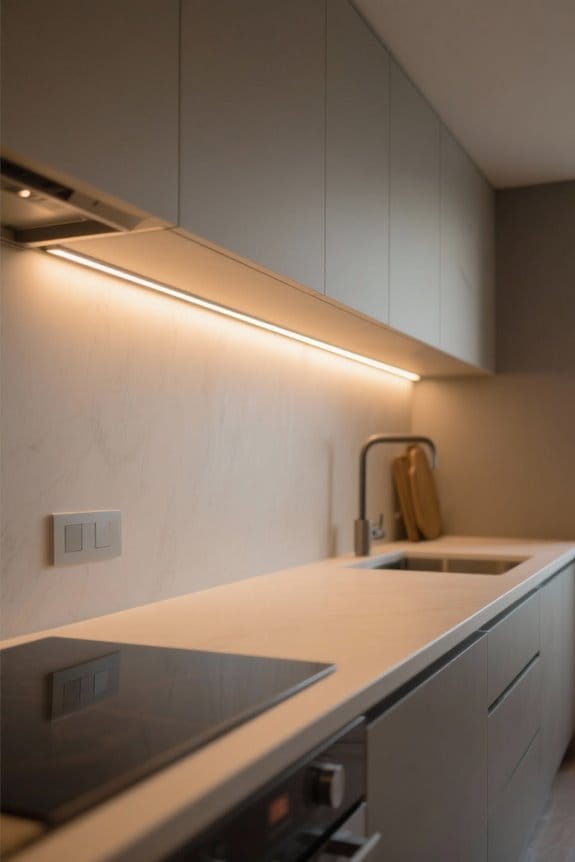
Installing shallow-profile linear LED fixtures in a kitchen workspace offers numerous benefits that enhance both functionality and aesthetics. These fixtures provide even illumination, greatly reducing shadows across countertops while performing tasks. Their diffused lens guarantees soft light distribution, preventing harsh reflections on polished surfaces. Additionally, shallow-profile linear LED fixtures are energy-efficient, consuming significantly less electricity than traditional lighting options. The slim design allows for seamless integration as undercabinet lights, preserving valuable space while contributing to a modern aesthetic. With ideal light output, these fixtures serve as effective sources of light, facilitating focused, targeted lighting for various kitchen activities. For best performance and safety, professional installation of these fixtures is recommended, assuring they function effectively in kitchen environments. The color rendering index of LED fixtures ensures vibrant and accurate color representation of food and cooking ingredients.
Recommended Products

Side-Emitting Design, Glare-Free Lighting: Unlike traditional cabinet lights, the TORCHSTAR under cabinet lighting features a side-emitting structure that delivers smooth, glare-free illumination. Perfect for food prep, reading recipes, or any close-up task, without harsh shadows or bright spots

Flexible Installation Options: Our product supports both hardwired and plug-in installation methods, featuring a 5-foot power cord and a 12-inch linking cord for easy setup and adaptability to different needs. Perfect for kitchen under cabinet lighting and under cabinet lighting plug in.
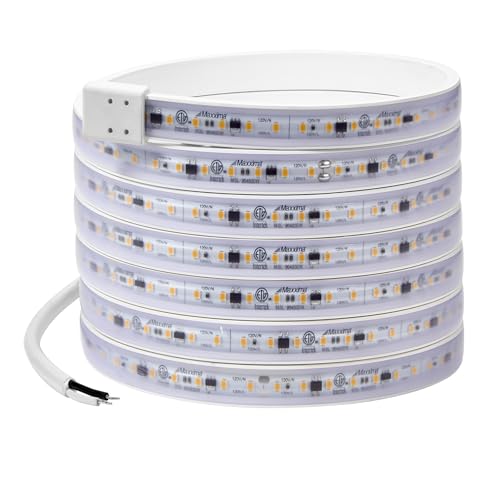
Brilliant Illumination- Illuminate your space with an impressive 3680 lumens of 3000K radiant warm white light, perfect for enhancing visibility and creating a cozy ambiance while only using 48 watts of energy. Non-Dimmable.
Additional Features and Safety
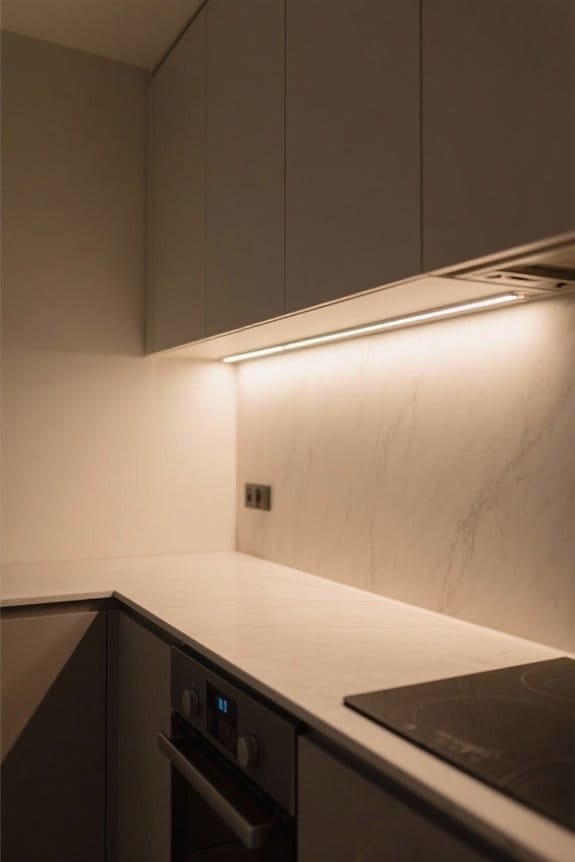
Enhancing kitchen safety and functionality involves integrating additional features into the lighting design. Dimming options allow users to adjust brightness, providing task-oriented light for cooking and softer ambiance for dining. Under-cabinet lighting is essential in poorly lit areas, illuminating workspaces effectively. The proper placement of these lights eliminates shadows and increases visibility during food preparation tasks. Utilizing motion-sensing technology further enhances safety by automatically activating additional light as one enters the kitchen, reducing accidents. It is crucial to use fixtures with adequate protection—ideally, lights rated IP44 or higher—especially near sinks. Engaging a qualified professional guarantees compliance with local codes, safeguarding against electrical hazards while optimizing kitchen lighting configurations. Prioritizing safety enhances overall kitchen efficiency. Modern daylight white LEDs delivering 6000K color temperature ensure optimal visibility and true color representation while preparing meals.
Summary of Under Cabinet Lighting Benefits
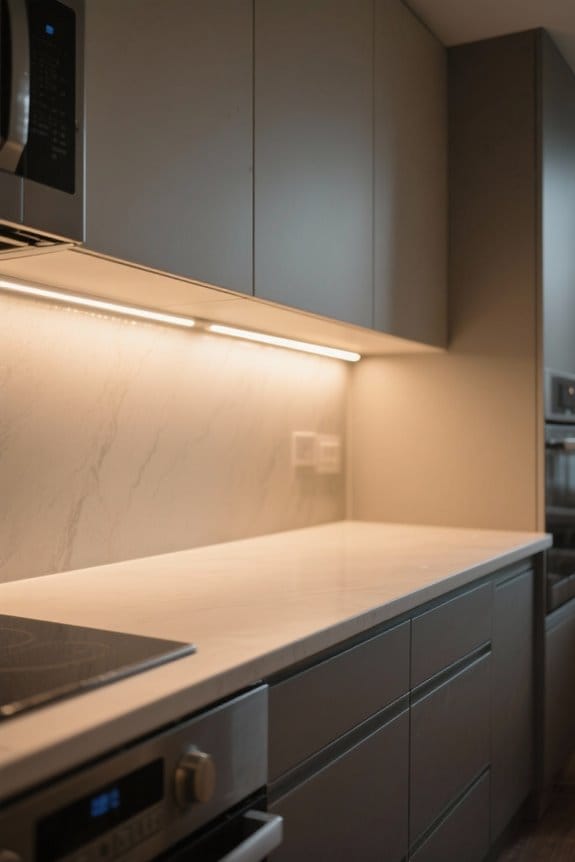
Effective kitchen lighting greatly influences the cooking environment. Under-cabinet lights are essential for eliminating shadows, therefore enhancing visibility on countertops during food preparation. This type of task lighting optimizes the kitchen workspace, making it both efficient and safe. By providing adequate illumination in dark areas, under-cabinet lights help prevent accidents associated with poorly lit conditions. Additionally, they highlight decorative features, elevating the kitchen’s overall aesthetic without sacrificing functionality. Utilizing energy-efficient LED options enhances these benefits, considerably reducing electricity bills while delivering superior lighting. Homeowners should consider under-cabinet lighting as a key element in achieving a bright, safe, and visually appealing kitchen where culinary tasks can be performed with ease and confidence. Modern options like motion sensor lights provide convenient hands-free operation while offering multiple color temperatures for optimal visibility.
Frequently Asked Questions
How to Avoid Shadows in the Kitchen?
To avoid shadows in the kitchen, utilize shadow-free techniques such as multi-source lighting, under-cabinet lighting, and pendant lights. Incorporate reflective surfaces and choose light colors to enhance natural light and improve overall illumination.
What Is the 3×4 Kitchen Rule?
The 3×4 kitchen rule advocates a kitchen layout featuring three lighting fixture types, enhancing workspace efficiency. By utilizing task lighting, color choices, and reflection techniques, shadows and dark surfaces can be effectively managed, optimizing natural light.
How to Reduce Shadows in a Room?
To reduce shadows in a room, incorporate ambient lighting, utilize light colors, and add reflective surfaces. Effective light placement with ceiling fixtures, wall sconces, and task lighting, alongside dimmable switches and natural light, enhances visibility.
How to Set up Lighting to Avoid Shadows?
To set up lighting and avoid shadows, utilize task lighting with under-cabinet and pendant fixtures, guarantee appropriate light placement for ambient and natural light, and incorporate dimmer switches for adjustable color temperature across reflective surfaces.