As an Amazon Associate, we earn from qualifying purchases. Some links on this site are affiliate links at no extra cost to you. Our recommendations are based on thorough research and editorial judgment.

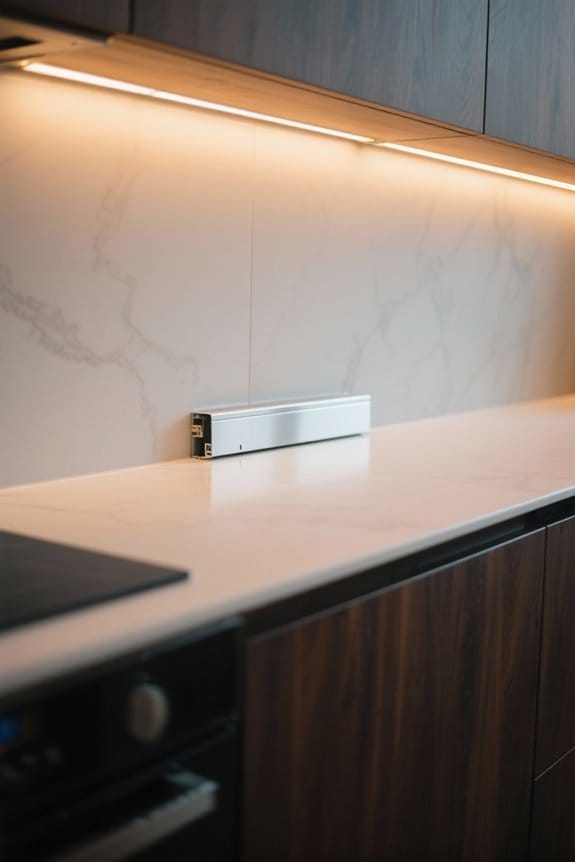
Solving Color Inconsistency in LED Strips

To solve color inconsistency in LED strips, inspect wiring connections for damage or looseness. A multimeter can check power supply voltage, confirming it matches requirements (12V or 24V) within ±10%. Evaluate the amperage rating to meet total current needs. Replace any faulty LED chips and use amplifiers for longer runs to maintain voltage. High-quality wiring and secure connections are essential for even light distribution. Explore additional best practices and troubleshooting tips to guarantee peak performance.
Key Takeaways
- Ensure the power supply voltage matches the LED strip requirements to prevent fluctuations that cause color inconsistency.
- Inspect all wiring connections for issues like looseness or damage that can lead to uneven voltage distribution.
- Reset both the LED strip and controller to fix possible configuration errors impacting color output.
- Use amplifiers for long runs to maintain proper voltage and brightness across the entire LED strip.
- Replace any faulty LED chips in sections of the strip that display incorrect colors to restore uniformity.
Understanding LED Strips
You may be interested



Understanding LED strips is vital for anyone looking to enhance their lighting projects effectively. These strips consist of multiple individual LEDs, primarily in RGB configurations, which allow for diverse color output. RGB strips utilize red, green, and blue diodes, while RGBW strips include an additional white diode for improved color accuracy. Voltage drop may occur over long distances, affecting even light distribution and color consistency. High-quality components and proper wiring mitigate these issues, ensuring consistent performance. Furthermore, installation and maintenance must account for environmental factors like temperature and humidity, as these can influence functionality. Proper knowledge of these elements is essential for achieving the desired lighting effects while maintaining maximum performance in diverse applications. Modern LED strips often feature high CRI ratings above 90 to ensure superior color rendering accuracy in various lighting scenarios.
Identifying Color Inconsistency Issues
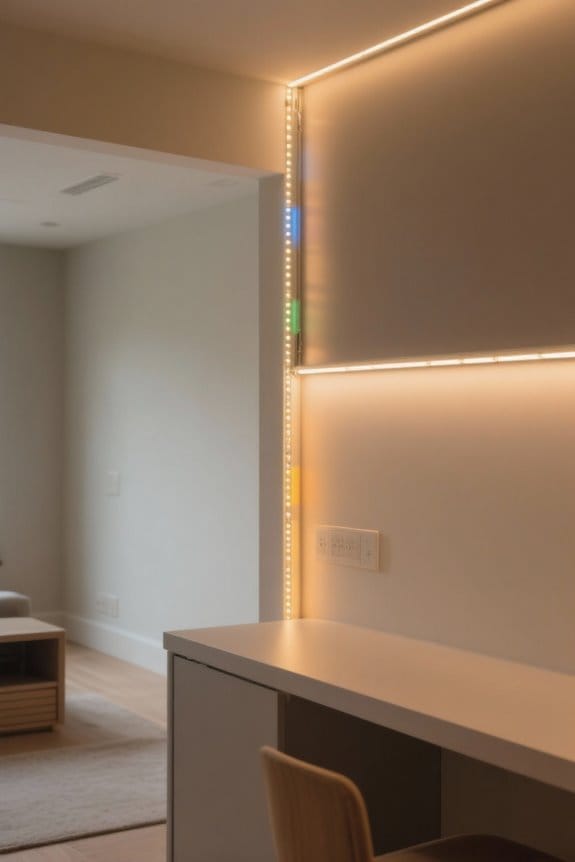
When diagnosing color inconsistency issues in LED strips, it is essential to recognize several potential causes that may disrupt the uniformity of light output. Uneven voltage distribution, often arising from long runs or inadequate power supply, can considerably affect performance. Additionally, faulty connections may arise from damaged wiring or mismatched LED chips, leading to discrepancies in color output. External environmental factors, such as temperature or humidity, can also alter LED appearance. Conducting a thorough wiring inspection is vital; loose or damaged connections typically exacerbate color inconsistency. Finally, resetting the LED strip can sometimes refresh settings and recalibrate the system, potentially mitigating color inconsistencies. Identifying these issues is critical for achieving ideal lighting performance. Selecting LED strips with a CRI above 80 can help maintain accurate color representation and minimize inconsistencies in lighting output.
Recommended Products

Input voltage range: DC 18-35V; Output voltage: DC 12V(non-adjustable); Output current: 200A; Output power 2400W.

4x independent pixel outputs each with 8A supply capability. 1x DMX512 IN/OUT port

2400W LINE CONDITIONER: Corrects voltage output by boosting undervoltages by 9%, reducing overvoltages by 10%, and boosting severe undervoltages by 19%. EMI/RFI filter removes up to 80 dB of line noise for audio equipment and other sensitive electronics.
Troubleshooting Steps to Resolve Color Issues
Addressing color issues in LED strips requires systematic troubleshooting to restore uniform light output. Start by resetting both the LED strip and its controller, as this action can resolve minor configuration errors. Next, inspect all wiring connections for signs of damage or looseness; poor connectivity often disrupts consistent voltage, leading to color inconsistencies. Confirm the power supply meets the voltage requirements of the LED strips, since fluctuations can notably affect color output. If specific sections display incorrect colors, consider replacing faulty LED chips. For longer installations, use amplifiers to maintain consistent voltage and brightness, mitigating color variations throughout the LED strip. ETL certification ensures reliable performance and safety in LED lighting solutions. By diligently following these steps, users can troubleshoot effectively and achieve reliable color consistency.
Recommended Products

5.8kW 208/240V Switched 30A PDU, 2U rackmount, Reversible housing

Features two conductors made of high purity (greater than 99.95 percent pure), oxygen-free bare copper.

[New Upgrade]: 15.5in LED wheel ring lights with five-rows a total of 4320 5050-SMD beads; DC12V voltage;360° wide angle ultra brightness pure white lighting.It is brighter than other wheel lights,provide effective lighting for your car.
Power Supply Verification
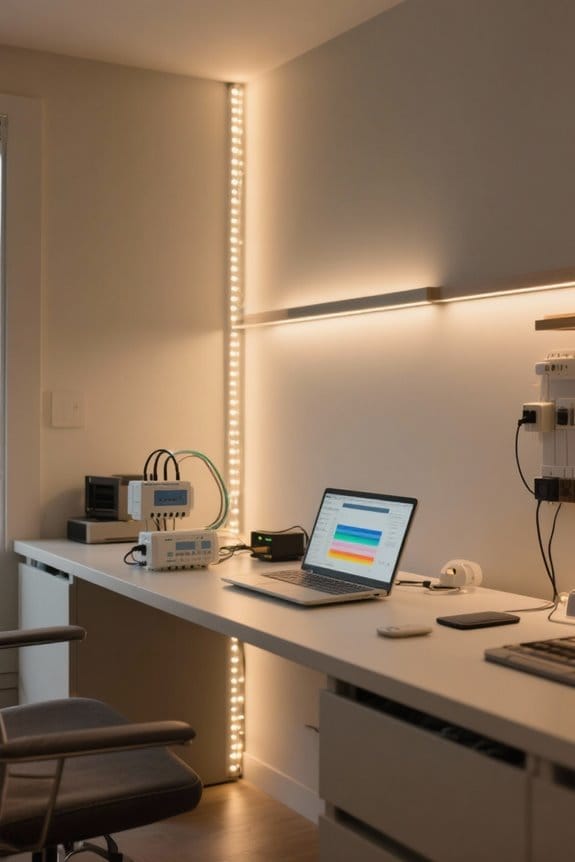
Proper power supply verification is essential for achieving consistent color output in LED strip installations. First, verify that the voltage supply matches the LED strips requirements, typically 12V or 24V. Use a multimeter to check the power supply, confirming that the voltage output remains within ±10% of manufacturer’s specifications. Furthermore, inspect the power supply’s amperage rating; it must meet or exceed the total current needed for all LED strips to prevent flickering issues. Also, examine for any visual damage on the power supply, as failing components can disrupt stable electrical flow. Lastly, secure connections between the power supply, LED strips, and controllers, as this guarantees accurate color representation and optimizes performance, enhancing overall user satisfaction. Similar to energy efficient LEDs, proper power management can result in up to 70% energy savings compared to traditional lighting systems.
Recommended Products
2 in 1 LED Driver and Dimmer Switch: First LED Driver + In-Wall Dimmer Switch in one unit, Simplifies LED installation by eliminating compatibility issues between driver and dimmer; Fits in a standard recessed electrical box

[Ultra-Long 1936FT Bulk Value] One continuous spool of 1936ft (590M) 22 gauge 4-conductor RGB wire. Perfect for large-scale commercial lighting projects, professional architectural installations, and long-distance wiring without the need for frequent splicing or connectors.

125 kHz mullion mount proximity card reader
Importance of Wiring and Connections
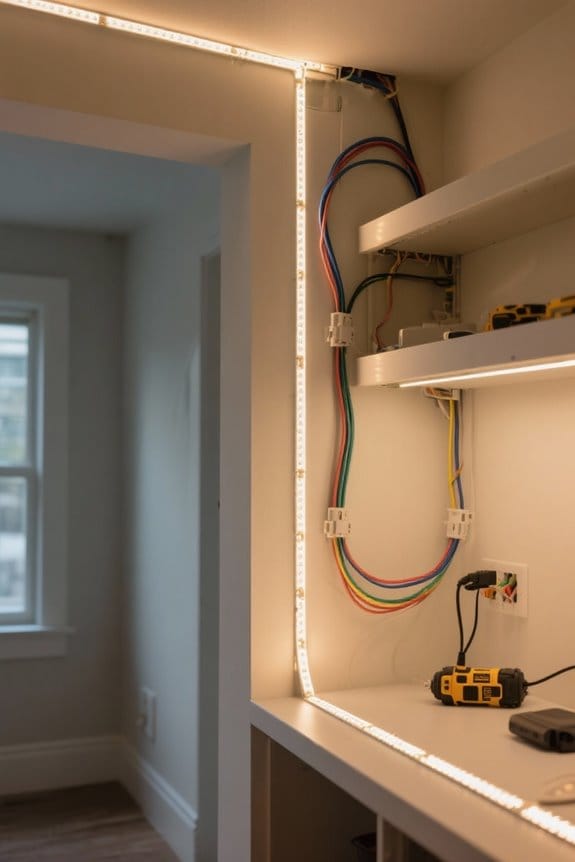
Guaranteeing reliable wiring and connections is critical for achieving consistent color output in LED strip installations. Loose or faulty connections can result in uneven voltage distribution, leading to color instability. Utilize high-quality connectors and guarantee all wiring connections are secure to maintain a stable signal flow. It is crucial to select the appropriate wire gauge based on the LED strip’s length and power requirements, as inadequate wiring can cause voltage drops, adversely impacting performance. Regularly inspect connections for corrosion or wear, as these can lead to inconsistent color display. A multimeter is an essential tool for diagnosing wiring issues; it allows users to test for continuity and voltage levels, confirming that all connections are functional and reliable. Anodized aluminum channels provide superior heat dissipation and protection for LED strips, helping prevent temperature-related color variations.
Recommended Products

Low Amp Draw for Energy Efficiency – Run multiple RV appliances without overload, perfect for off-grid, solar, or generator setups while reducing power consumption

Manufactured from individual copper strands and tinned to perform in the harshest marine environments.

Solid Brass Construction - The Gardenreet landscape spotlight with solid die-cast brass construction is more durable and reliable than aluminum and plastic fixtures; bronze landscape lights will not rust, age, or peel over time and last a lifetime with a single installation.High-end brass finish, Classical glossy colors that shine in the light and make you win the praise and envy of neighbors
When to Seek Professional Help
When does it become necessary to seek professional assistance for LED strip color inconsistencies? If initial troubleshooting—like checking the power supply and inspecting connections—fails to resolve the issue, it’s time to consult a professional. Trained technicians possess specialized equipment to detect voltage drops or faulty LED chips that may elude the average user. Additionally, persistent color inconsistencies can stem from complex installations; consequently, engaging an experienced electrician is essential for proper configuration. Warranty services often include access to these professionals. Avoid detrimental wiring mistakes that could further compromise color performance. Smart app compatibility enables precise color adjustments that may help identify whether issues are technical or user-related. Overall, when dealing with intricate setups or ongoing issues, professional help guarantees ideal functionality and aesthetic quality in LED strips.
Frequently Asked Questions
How Do I Fix My LED Lights When the Colors Are Wrong?
To fix incorrect LED colors, they must address LED controller issues, implement color calibration techniques, check for voltage drop impacts, guarantee light bulb compatibility, and analyze RGB strip wiring to prevent circuit overload and remote interference.
Why Are Some of My LED Strip Lights a Different Color?
Color perception varies due to LED quality, voltage issues, or strip placement. Incompatible controller settings and poor connection points can exacerbate differences, while ambient lighting and light diffusion impact uniformity, leading to inconsistent color selection.
How to Fix LED Strip Ghosting?
To fix LED ghosting, one should implement LED ghosting solutions through troubleshooting flickering, conducting power supply issues checks, performing connection stability tests, adjusting color temperature, and ensuring driver compatibility alongside relevant software configuration settings.
Why Do My LED Lights Keep Changing Colors by Themselves?
When LED lights unpredictably change colors, factors like remote interference, controller settings, wiring issues, power fluctuations, temperature effects, and sometimes, inherent factory defects or poor LED quality can greatly disrupt performance, requiring careful troubleshooting and firmware updates.