As an Amazon Associate, we earn from qualifying purchases. Some links on this site are affiliate links at no extra cost to you. Our recommendations are based on thorough research and editorial judgment.

Accent Lighting Ideas Using LED Strips

To enhance visual appeal using LED strip lights, consider installing them in tray ceilings, under cabinets, along stairways, and behind furniture. Utilize RGB color-changing options for customizable ambiance. Installation requires clean, dry surfaces and compatible drivers. Ascertain a maximum length of 16 feet per run for consistent brightness. Use double-sided tape or mounting clips for secure adherence. Regular maintenance is essential for peak performance. Exploring further will reveal additional innovative ideas and practical tips for maximizing your accent lighting.
Key Takeaways
- Illuminate tray ceilings with LED strips to enhance architectural features and add depth to your living space.
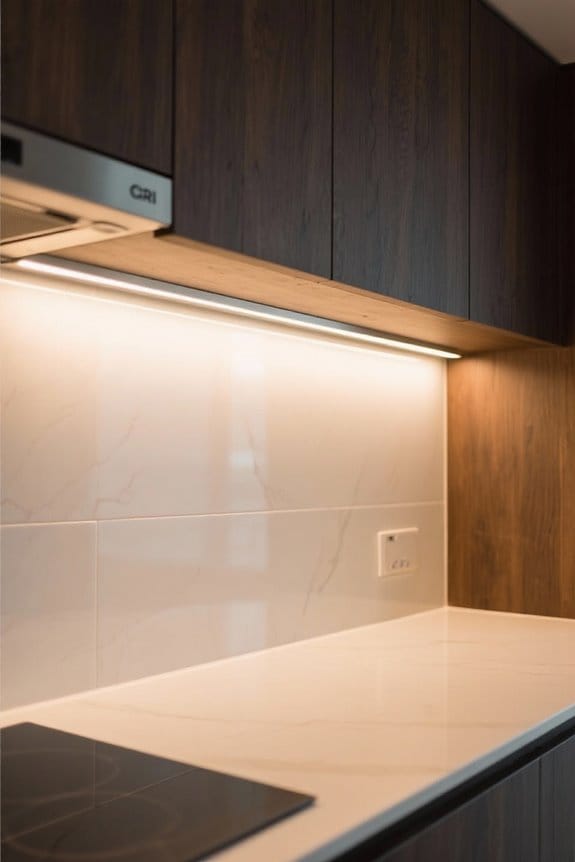
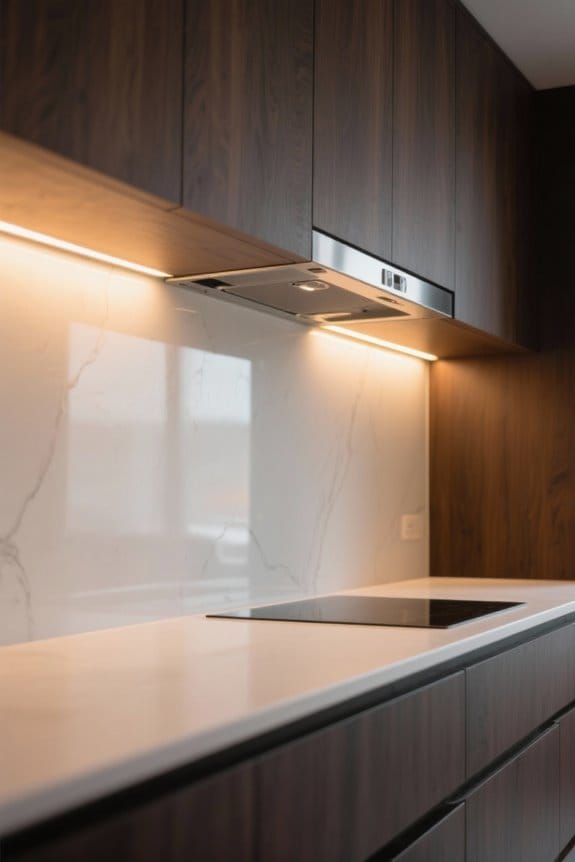
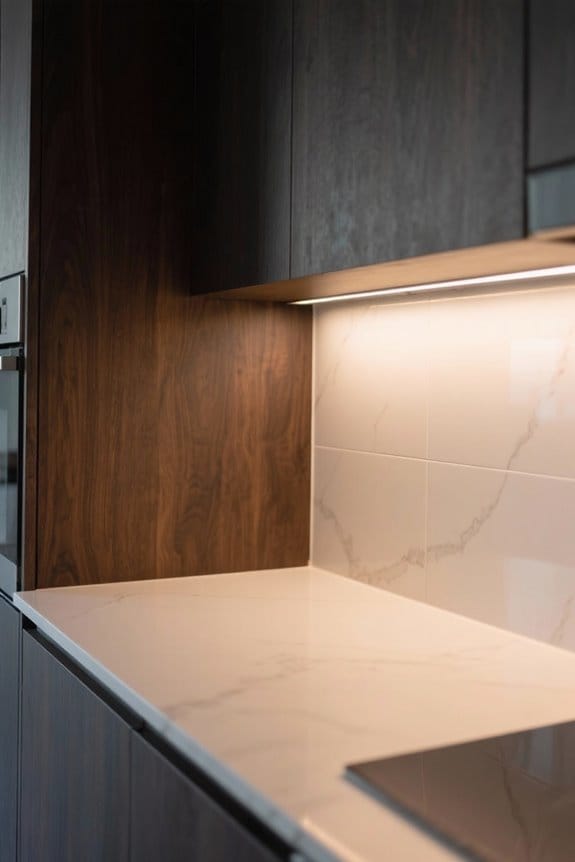
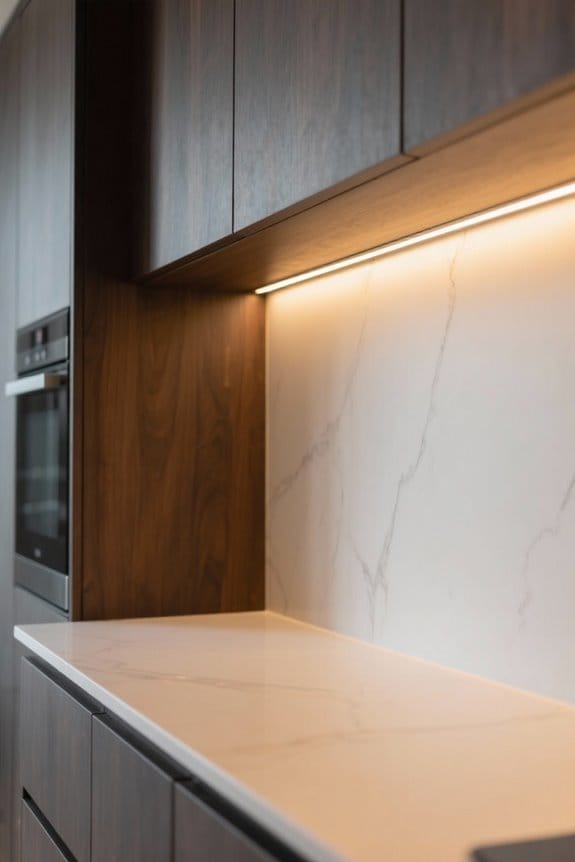
- Use under-cabinet LED strips in kitchens for essential task lighting while adding a modern touch to cabinetry.
- Install LED strips along stairway edges to improve visibility, enhancing both safety and aesthetic appeal.
- Place LED strips behind furniture to highlight artwork or decorative pieces, creating inviting ambiance in rooms.
- Transform your outdoor spaces by installing LED strips around decks or gardens for a dramatic nighttime effect.
Understanding LED Strip Lights
You may be interested


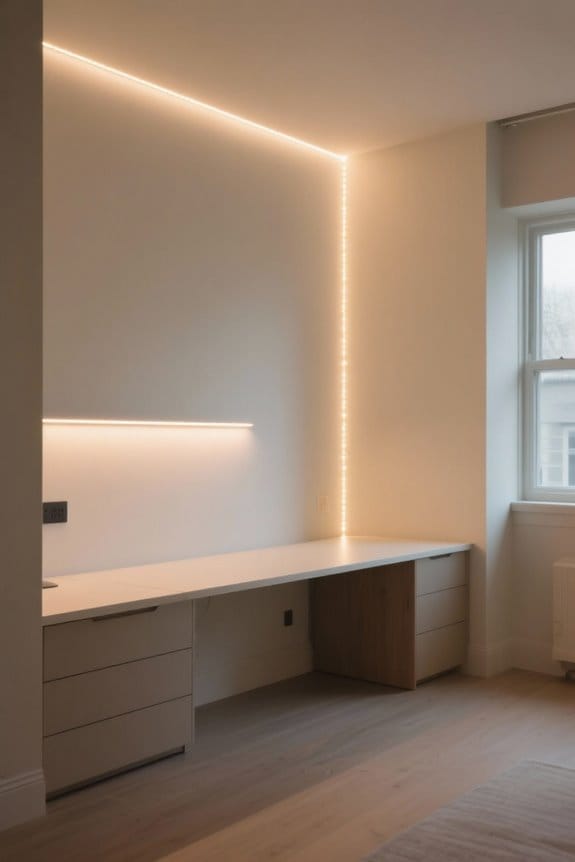
What are LED strip lights, and how can they transform your space? LED strips serve as versatile solutions for accent lighting, efficiently illuminating areas such as tray ceilings and under cabinets. High-quality options, like Philips Hue and Flexfire LEDs, offer features including RGB color-changing capabilities and tunable white settings, allowing users to customize the lighting extensively. Purchase in bulk for better pricing, particularly from suppliers with contractor programs. The quality of LED strips is vital; inferior products may yield unsightly results, while well-constructed strips enhance overall aesthetics. Community feedback, especially among electricians, is essential for understanding installation challenges and optimizing lighting effects, ensuring a professional finish. Invest wisely to achieve the desired transformative impact in your environment. With color rendering indices playing a crucial role in LED strip performance, choosing fixtures with high CRI values ensures vibrant and accurate color representation in your space.
Benefits of Accent Lighting
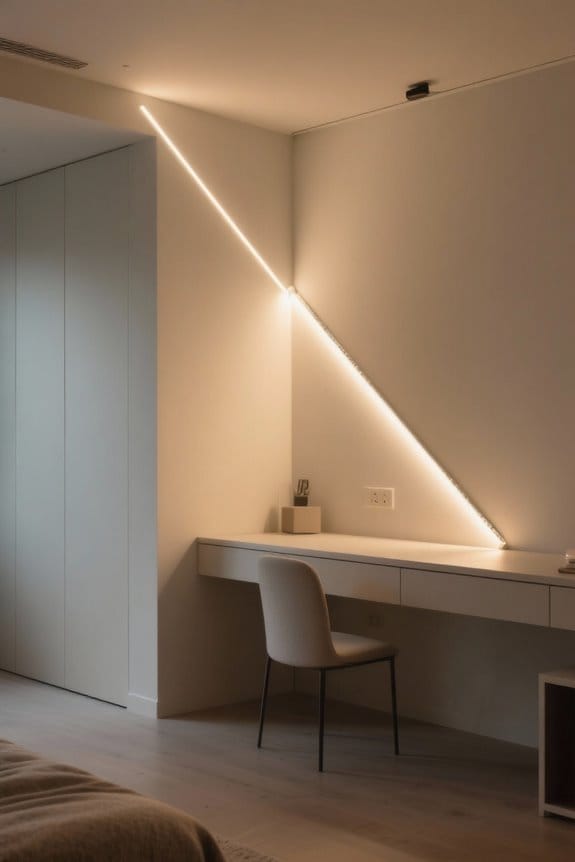
Accent lighting serves as an essential component in interior design, acting as a strategic tool to highlight specific features within a space. It enhances architectural elements, such as tray ceilings or artwork, creating visual interest. The integration of LED strip lights is pivotal; this home lighting solution is energy-efficient, considerably reducing energy consumption compared to traditional options. Consider customizable color-changing features, allowing users to adjust the ambiance for various occasions. Functionality is another benefit; targeted illumination in kitchens or workspaces enhances task performance without overwhelming brightness. LED strips offer versatile installation options, easily positioned under cabinets or along shelves, optimizing aesthetic appeal in both residential and commercial settings. So, consider the transformative power of accent lighting; I’m going to emphasize its importance in your design. Modern LED solutions deliver 1500 lumens output capabilities, ensuring optimal visibility for both decorative and task-oriented lighting needs.
Ideal Locations for Installation
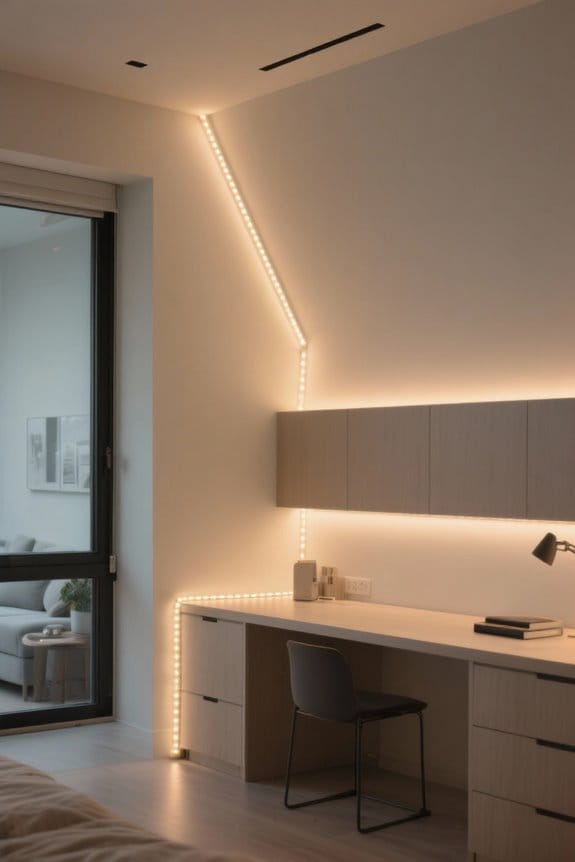
When considering ideal locations for LED strip installation, strategic placement can greatly enhance both aesthetics and functionality within a space. Tray ceilings installation offers an opportunity to highlight architectural features, creating depth and ambiance. For effective cabinet lighting solutions, place LED strips underneath cabinets to provide essential task illumination while establishing a warm atmosphere in kitchens or workspaces. Prioritize stairway safety by installing LED strips along stair edges to improve visibility and prevent accidents, effortlessly combining style with practicality. Additionally, consider integrating LED strips behind furniture or along wall perimeters to accentuate artwork or decorative features. Outdoor installations around decks or gardens can markedly transform the ambiance, making it inviting and visually striking. Each choice should merge beauty with purpose. Modern LED strips with adjustable color temperatures ranging from 2700K to 5000K allow you to customize the lighting mood for different areas and activities.
Choosing the Right LED Strip
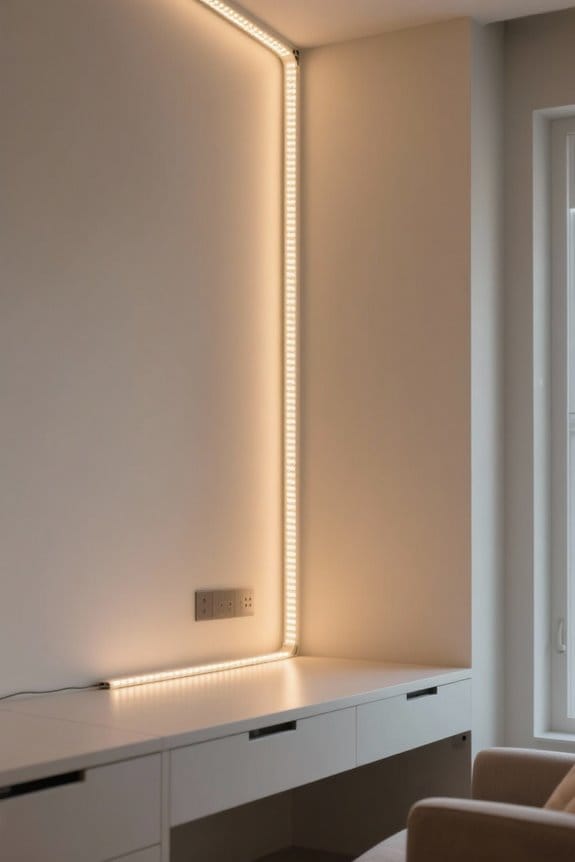
Selecting the right LED strip is fundamental for achieving the desired ambiance and functionality within a space. Consider quality materials, such as those from Flexfire, which excel in architectural accent lighting. Assess color temperature options; a tunable white LED strip allows for versatile brightness and hue adjustments, catering to various moods. Examine power supply options carefully; 24V RGB COB Strip Lights, while pricier, offer enhanced aesthetics and performance, making them worthwhile for significant projects. Projects exceeding certain scales benefit from contractor programs or bulk discounts, presenting opportunities for cost savings. Finally, evaluate color-changing features thoughtfully; these can elevate design but may increase costs and not suit every aesthetic preference. Prioritize project goals to guarantee the best outcome. The high CRI rating of modern LED strips ensures vibrant and true-to-life color reproduction in your accent lighting setup.
RGB vs. White LED Strips
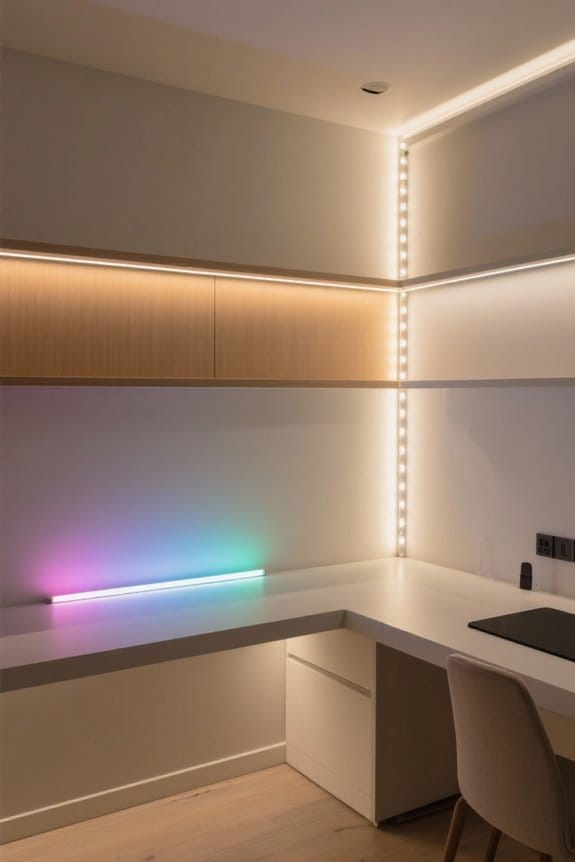
Choosing between RGB and white LED strips is essential for achieving the desired lighting atmosphere in any space. RGB strips offer customizable color options, allowing for vibrant, dynamic moods, which can highlight energy efficiency in creative applications. Conversely, white LED strips provide a consistent light temperature suitable for professional use, enhancing installation aesthetics. Consider the principles of color psychology; different hues can evoke various emotional responses. High-end projects can utilize 24V RGB COB strip lights, balancing superior color quality with tunable white capabilities. While RGB strips may appear more visually dynamic, they often come with higher costs. Modern LED strip lights can extend up to 130 feet in length, making them suitable for large-scale indoor installations. Evaluate your space’s requirements and reflect on how light’s visual impact aligns with your overall project goals for successful results.
Dimming Options and Control
Dimming options for LED strips greatly enhance the versatility and ambiance of any space. Adjustable brightness levels allow users to create the desired mood effectively. For peak performance, verify dimmer compatibility with your LED strips, as using the right dimmer prevents flickering and guarantees smooth brightness control. Modern systems, such as the Flexfire RGB+ tunable white, feature touch panel interfaces for easy adjustments of both color and intensity. Additionally, many LED setups now offer smart integration, enabling users to change brightness and colors remotely through apps or voice commands. Utilizing dimmable LED strips not only improves energy efficiency but also extends the lifespan of your lighting system, making it a smart choice for any application. Products like PAUTIX offer 16 million color choices along with dimmable features to deliver a fully customized lighting experience.
Creative Applications in Interiors
Accent lighting plays a pivotal role in enhancing interior design. Homeowners can creatively deploy LED strips in various ways. For instance, installing LED strips in tray ceilings amplifies architectural features, offering a soft glow that adds depth. Consider under-cabinet placements in kitchens, enhancing visibility for culinary tasks while maintaining a modern aesthetic. Experiment with RGB + tunable white strips to create dynamic color combinations, adjusting lighting moods for various occasions. Highlight decorative items by placing LED strips along shelves, or within cabinetry. Additionally, illuminate cove areas or staircases for improved safety, and a stylish finish. Engage in DIY projects to customize installations, achieving precise lengths and placements—ideally 12 to 24 inches apart for maximum effect. With a CRI rating of 90+, LED strips ensure vibrant and true-to-life color representation in your space.
Enhancing Outdoor Spaces
While transforming outdoor spaces, employing LED strip lighting can dramatically elevate both safety and aesthetics. Strategically placing LED strips along garden pathways enhances both visual appeal and nighttime navigation. Weather-resistant options illuminate features like water fountains or sculptures, creating stunning visual effects that enrich the outdoor ambiance. For vibrant atmosphere, incorporate RGB and tunable white strips under deck railings or stairs, allowing customizable colors to suit occasions. Additionally, installing strips under outdoor furniture produces a subtle glow, enhancing engagement without overwhelming brightness. By integrating LED strips into landscape transformers, synchronization with other lighting components becomes seamless. This enhances overall flexibility in lighting design, offering ample opportunities for creativity in enhancing outdoor spaces. Govee Home App integration allows access to 16 million colors and multiple lighting effects for ultimate outdoor customization.
Installation Tips and Best Practices
Effective installation of LED strip lighting begins with thorough preparation. Start by ensuring that the surface is clean and dry; this enhances adhesive bonding and secures the installation. Employ effective installation techniques, using compatible drivers for ideal performance, particularly with RGB+ tunable white options. Adhere to cutting guidelines, measuring and cutting LED strips accurately at designated points—typically every two inches—to avoid damage. Consider utilizing adhesive methods like double-sided tapes or mounting clips for added security. For a softer glow, integrate diffusers or channels that conceal the strips and reduce harshness. Finally, implement a touch panel wall control for user-friendly lighting adjustments, providing convenience and precision without needing direct access to the LED components. The addition of pure copper wires in your LED strip setup helps minimize voltage loss and heat generation during operation.
Common Challenges and Solutions
Steering through the common challenges associated with LED strip lighting requires careful consideration and strategic planning. Balancing quality with budget is essential; high-quality options like Flexfire may cost more but deliver superior performance and aesthetics. Implement project management tips early on, such as defining clear specifications and timelines to mitigate delays caused by supplier comparison strategies. Additionally, when installing color-changing strips, assess their design compatibility, as mixed feedback often arises in high-end applications. For outdoor installations, address electrical management and transformer compatibility to avoid complications. Consider budget balancing techniques, like utilizing contractor programs for significant discounts on repeat orders. This proactive approach will facilitate a smoother installation process and elevate your accent lighting project. Strong adhesive backing is crucial for reliable installation, requiring thorough surface cleaning for optimal results.
Maintaining Your LED Strip Lighting
Maintaining LED strip lighting is essential for ensuring longevity and ideal performance. Regular cleaning techniques, such as using a soft, damp cloth, will effectively remove dust without harming the circuitry. In addition, diligent power management is critical; routinely inspect power supplies and driver components for signs of overheating or wear to prevent potential malfunctions. Additionally, employing appropriate mounting methods keeps LED strips secure and minimizes strain, discouraging flickering or damage. Watch for signs of color fading or inconsistencies, as these may signal the end of the strip’s lifespan or improper voltage usage. For outdoor installations, confirm that the LED strips are suitable for external use, with proper sealing to guard against moisture and temperature fluctuation.
Frequently Asked Questions
How to Make LED Strip Lights Go Around Corners?
To successfully navigate corners with LED strip lights, one should employ flexible strip usage and corner connectors, ensuring proper LED strip placement and utilizing corner lighting techniques for a seamless, visually appealing installation.
What Not to Do With LED Strip Lights?
In the domain of illumination, one must avoid common installation mistakes with LED strip placement. Neglecting safety, overloading circuits, or using inadequate lighting can hinder performance, undermining both aesthetic appeal and functional purpose in design.
How to Make LED Strip Lights Look Nice?
To make LED strip lights look nice, he suggested using color temperature options for variety, applying diffused lighting techniques to soften brightness, and following expert LED installation tips for a seamless, polished appearance.
How to Throw Out LED Strip Lights?
Like fallen stars, LED strips deserve careful farewell. For LED strip disposal, seek local e-waste drop-offs, recycle LED strips thoughtfully, and explore safe disposal methods to honor their journey while protecting the environment’s delicate balance.