As an Amazon Associate, we earn from qualifying purchases. Some links on this site are affiliate links at no extra cost to you. Our recommendations are based on thorough research and editorial judgment.

Choosing the Right Color Temperature for Your Kitchen Style

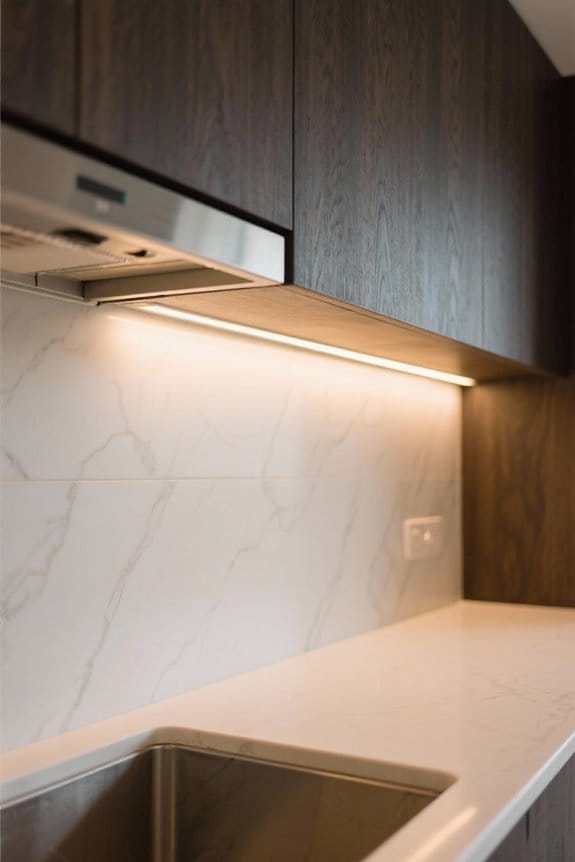
Choosing the right color temperature for your kitchen greatly impacts ambiance and efficiency. Warm white light (2700K-3000K) creates a cozy environment ideal for dining areas. Neutral white (3500K-4000K) suits general tasks, while cool white light (4500K-6500K) enhances visibility during food preparation. Layering these temperatures results in peak functionality. Select energy-efficient LED bulbs for longer life and reduced costs. By understanding these principles, one can create an inviting and functional kitchen space that looks and feels exceptional.
Key Takeaways
- Identify your kitchen style: warm white (2700K-3000K) suits traditional, while neutral white (3500K-4000K) fits modern aesthetics.
- For culinary spaces, choose cool white (4500K-5000K) to enhance detail during food preparation.
- Layer different light sources to avoid shadows and achieve a balanced ambiance throughout the kitchen.
- Utilize adjustable LED fixtures to easily change color temperatures based on mood and tasks.
- Ensure high CRI ratings above 80 for accurate color representation in food and decor.
Understanding Color Temperature: What Is It and Why Does It Matter?
You may be interested
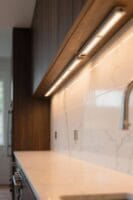

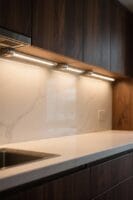
Color temperature plays an essential role in defining the atmosphere and functionality of a kitchen. Measured in Kelvin (K), color temperature greatly influences kitchen ambiance and efficiency. For instance, warm white light (2700K-3000K) creates a cozy feel in traditional kitchens, while cool white light (5000K-6500K) enhances visibility during food preparation tasks. This cooler lighting mimics daylight, improving perception of colors and details vital for cooking. Neutral white light (3500K-4000K) serves as a versatile option, aligning well with modern designs. Choosing the ideal lighting is essential; it not only elevates aesthetic appeal but also optimizes kitchen efficiency. Understanding these parameters aids in selecting the perfect color temperature tailored to specific kitchen styles and functions, ultimately enhancing user experience. Quality lighting solutions with high CRI ratings above 90 ensure the most accurate color representation of food and kitchen surfaces during meal preparation.
Ideal Color Temperatures for Different Kitchen Areas
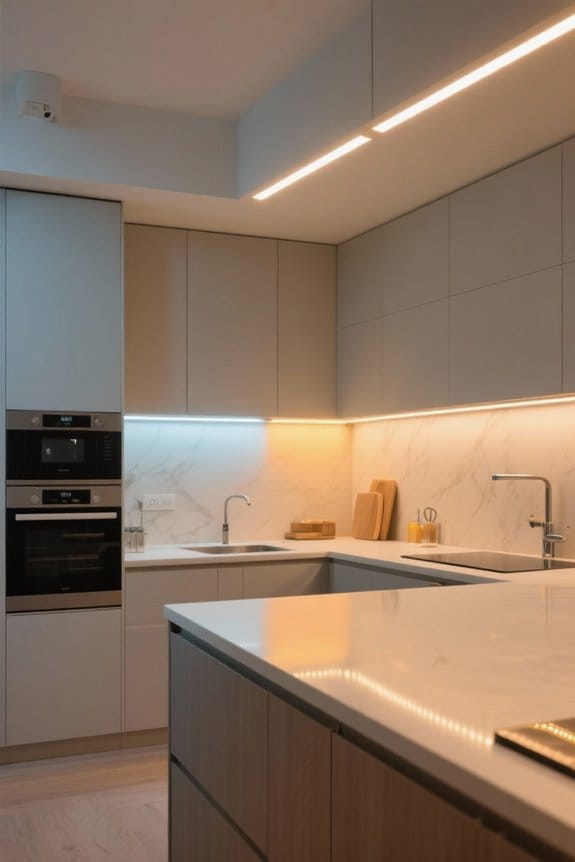
When selecting the ideal color temperature for different areas of a kitchen, it is crucial to take into account the specific functions and ambiance desired in each space. Warm White (2700K-3000K) is perfect for dining areas, fostering a cozy atmosphere that encourages gathering. For general kitchen tasks, Neutral White (3500K-4000K) offers balanced lighting that guarantees accurate color rendition. Cool White (4500K-5000K) enhances visibility in food preparation areas, improving detail for tasks like chopping. Consider layering colors in your lighting design; use Warm White for accent features while implementing Neutral White for workspaces. This strategy maximizes functionality and ambiance. Utilizing LED fixtures enables effective color temperature adjustments, optimizing each kitchen area’s purpose and aesthetic appeal. Modern motion sensor lighting options can automatically adjust brightness levels based on movement, making your kitchen both energy-efficient and convenient to use.
Recommended Products

Adjustable Wattage & High Brightness: Easily choose between 60W and 100W to get the right amount of light for your room. This fixture provides 130 lumens per watt, making it very bright while saving energy. Perfect for kitchens, offices, retail areas, and any commercial space where good lighting is important.
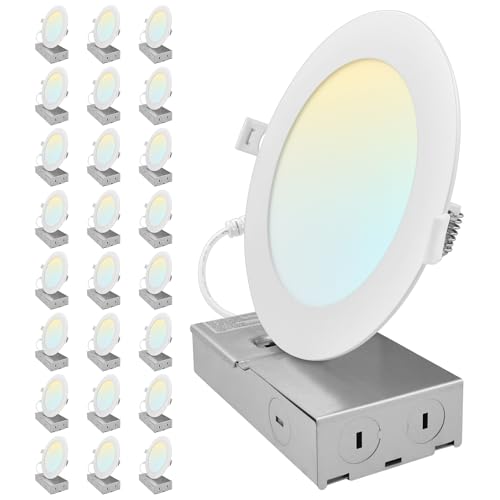
5 Color Temperature Options: Customize your lighting with 5 CCT-selectable colors—2700K (Warm White), 3000K (Soft White), 3500K (Neutral White), 4000K (Cool White), and 5000K (Bright White). Featuring a 105° beam angle and CRI 90+ for true-to-life color rendering, this ceiling-mounted LED fixture delivers energy-efficient lighting with 800/1050/1250 lumen brightness options.

【Modern Design】This linear LED recessed spotlight features a sleek white exterior with black interior, creating a stylish contrast that enhances the ambiance with beautiful lighting.
Choosing the Right Light Bulb: LED vs. Fluorescent vs. Incandescent
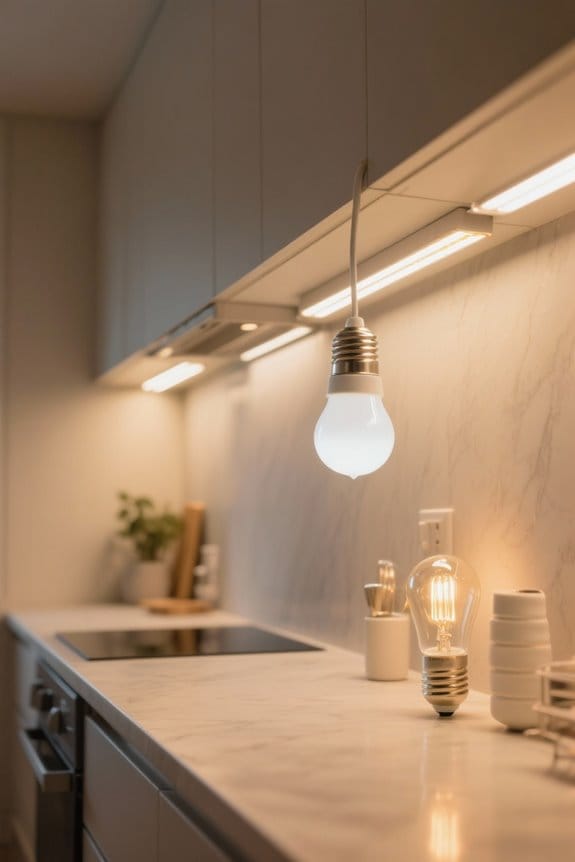
Selecting the right light bulb for a kitchen involves careful consideration of energy efficiency, lifespan, and color temperature options. LED bulbs are the most energy-efficient choice, lasting up to 25,000 hours and available in a wide range of color temperatures, from warm light to cool light. Fluorescent bulbs are a cost-effective alternative but suffer from flickering issues and limited dimming, which can reduce their practical use in the kitchen. Incandescent bulbs, while providing a warm ambiance at around 2700K, last only approximately 1,000 hours and are considerably less energy-efficient. Overall, selecting LED bulbs is often recommended for kitchens due to their durability, reduced electricity costs, and extensive lighting options that enhance functionality and aesthetics. Choose wisely. LED bulbs with high CRI ratings above 80 ensure better color accuracy when preparing and presenting food in your kitchen space.
Recommended Products

1,ENERGY SAVING - This 2' x 4' recessed drop ceiling light use high-quality LED beads with high luminous efficiency 130LM/W, this 70w led light panel can provide ultra bright 9100lm lighting for you, it can replace the traditional 280W fluorescent lamps, which will help you saving 80% of your electricity bill and carbon emissions.

ETESIAN CHANDELIER FAN D'LIER DIMENSIONS: 26.01" High x 35.25" Wide; Rod-Hung Adjustable Height: Up to 40.01"; Ceiling Canopy: 7.25" x 2.13"; Weight: 38.5 lbs.

50W 5500lm Hight Brightness - 1x4 LED Flat Panel Light Surface Mount: AIKVSXER Super Bright 1x4 Surface Mount LED Ceiling Light is designed with high-efficiency LED chips to replace traditional fluorescent light, high-efficiency (efficacy over 110LM/W) light source, reducing carbon emissions and your electric bill by 85%.
Practical Tips for Choosing the Best Light Color for Your Kitchen
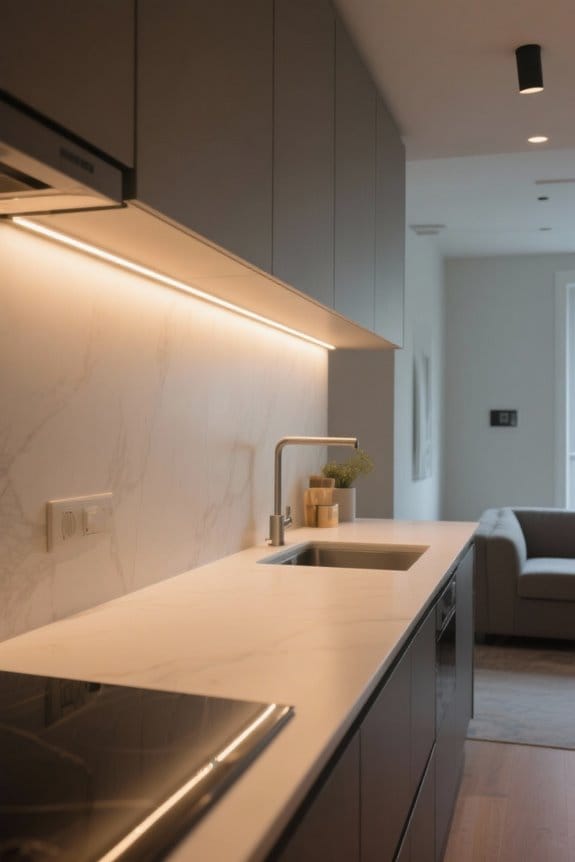
Choosing the appropriate light color can greatly impact both the functionality and atmosphere of a kitchen. For a cozy ambiance in traditional and farmhouse designs, select warm white lighting (2700K-3000K). Modern kitchens benefit from neutral white lighting (3500K-4000K), enhancing sleek aesthetics and visual clarity during tasks. In large or industrial kitchens, opt for cool white lighting (5000K-6500K) for bright, crisp illumination that expands the space. Consider using adjustable LED fixtures; these allow switching between color temperatures for varying cooking tasks or moods. Layer different light sources, such as under-cabinet task lighting for preparation areas and pendant lighting over dining spaces, which can considerably improve the overall kitchen lighting experience, creating the desired ambiances effectively. For concealing any exposed fixture wiring, low profile raceways provide a clean, professional appearance while maintaining safety standards with UL94 V-0 rated materials.
Recommended Products
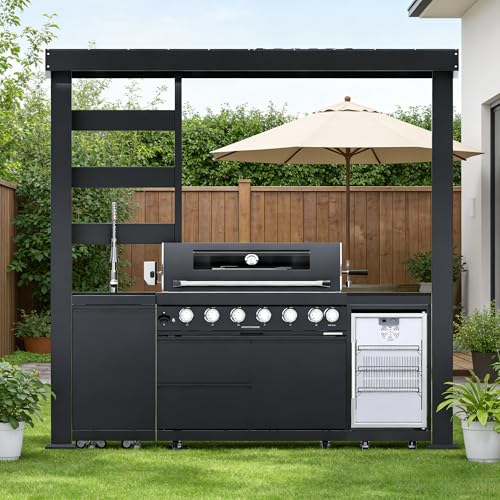
GRILLING PERFORMANCE: This outdoor kitchen features a 43-inch gas grill with 6 tubular stainless steel burners and an infrared rear burner that produce 85000 BTU of heat output. The 8mm stainless steel cooking grids provide a generous cooking area of 38 by 18 inches (684 square inches total). A 120V 4-watt heavy duty electric motor rotisserie kit is included and can hold up to 25 lbs

【Size Guide】: 48"W x 42"H x 27"D island mount. For better performance, island mount range hoods should be 3"- 6" wider than your cooktop. The height range between your cooktop and the copper hood should be 30" to 36" (33" is recommended). We can make any hood size you need, please contact our custom service via Amazon.com for a quote.

【Size Guide】: 48"W x 27"D x 42"H island mount. For better performance, island mount range hoods should be 3"- 6" wider than your cooktop. The height range between your cooktop and the copper hood should be 30" to 36" (33" is recommended). We can make any hood size you need, please contact our custom service via Amazon.com for a quote.
Common Mistakes to Avoid When Choosing Kitchen Lighting
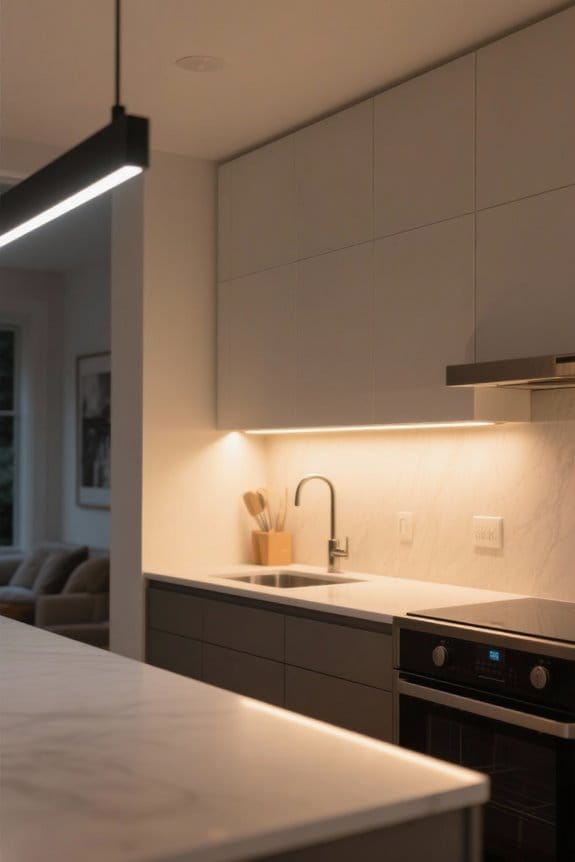
To achieve ideal kitchen lighting, it is crucial to avoid common mistakes that can compromise both functionality and aesthetics. Relying on a single light source can result in shadows and uneven lighting, impeding important kitchen tasks. Additionally, natural light greatly impacts how artificial lighting appears; therefore, adjustments to color temperature may be necessary. Mixing different color temperatures in a single space can create a disjointed ambiance; maintain consistent color temperatures for harmony. Prioritize energy efficiency when selecting fixtures to reduce long-term costs and environmental impact. Finally, before finalizing your choices, test various light colors and intensities to guarantee an excellent cooking and dining experience. Avoiding these common mistakes will enhance both the style and utility of your kitchen. For optimal task lighting in kitchen workspaces, choose fixtures that provide 700 lumens brightness to ensure proper visibility for food preparation and cooking activities.
Frequently Asked Questions
What Is the Best Color Temperature for a Kitchen?
The best color temperature for a kitchen typically ranges from 3000K to 4000K. This enhances kitchen ambiance and mood, supports task lighting, uses energy efficiently, and complements design trends with warm tones and reflective surfaces.
Is 3000K or 4000K Better for a Kitchen?
Choosing 3000K offers a warm ambiance that enhances kitchen atmosphere, creating style harmony. In contrast, 4000K provides task lighting, boosting cooking efficiency and color contrast. Ultimately, personal preference and fixture selection guide the ideal choice.
Is 2700K or 3000K Better for a Kitchen?
Choosing between 2700K and 3000K involves evaluating color differences in lighting ambiance. While 2700K offers warmth perception and mood enhancement, 3000K improves task visibility and color accuracy, ensuring style harmony and fixture compatibility for various kitchen designs.
Should I Use Cool White or Daylight LED for Kitchen?
In a kitchen where cooking becomes art, Cool White offers clarity while Daylight LED brings vibrancy. Balancing brightness levels and energy efficiency, personal preference shapes the mood, reflecting the intricate dance of kitchen aesthetics and color psychology.