As an Amazon Associate, we earn from qualifying purchases. Some links on this site are affiliate links at no extra cost to you. Our recommendations are based on thorough research and editorial judgment.

How to Prevent Electrical Hazards With LED Lights

To prevent electrical hazards with LED lights, implement effective surge protection systems rated at 4kV for residential and 10kV for industrial use. Guarantee proper grounding with connected heat sinks and use reliable connectors to avoid short circuits. Maintain a 20-30% power supply overhead to minimize overload risks. Regularly inspect installations for loose parts and verify voltage compatibility, choosing UL-certified supplies. By applying these guidelines, you not only enhance safety but also boost LED performance and lifespan. Further details await.
Key Takeaways
- Install surge protective devices with at least 4kV rating for residential and 10kV for industrial to protect against voltage spikes.
- Ensure all power supply units are UL-certified and properly grounded to reduce electrical shock risks.
- Use appropriate connectors and avoid twisting wires to ensure reliable connections and prevent short circuits.
- Conduct regular inspections and maintenance of LED systems to identify and address potential faults early.
- Implement fault detection mechanisms and utilize grounded connector systems for enhanced safety in LED installations.
Importance of Surge Protection for LED Lighting
You may be interested



When considering the installation of LED lighting systems, it is vital to recognize the importance of surge protection. Voltage spikes can severely damage LED drivers, reducing their lifespan and function. Proper surge protection safeguards against these spikes, mitigating issues such as flickering and dimming of lights. Effective surge protection devices (SPDs) should react within microseconds, absorbing excess voltage to guarantee stability. For outdoor applications exposed to harsh conditions, a surge capacity of at least 10kV is recommended. Compliance with electrical safety standards is essential in preventing fire hazards associated with electrical surges, thereby enhancing overall safety. Investing in surge protection not only protects valuable equipment but also considerably reduces maintenance costs over time, ensuring ideal performance of LED lighting systems. Modern LED energy savings can reach up to 90% compared to halogen alternatives, making proper surge protection even more crucial for preserving this efficiency.
Recommended Products

Shunts multiple EMP currents of 255,000 Amps to Vehicle Negative Ground in less than 1 nanosecond, thus bypassing sensitive CMOS automotive electronics; an expensive repair if you can find parts. No 3rd Chassis Wire Required.

Ultra-High Brightness: The 500W exterior flood light delivers 70,000 lumens, illuminating up to 13,000 ft²—brighter than a 6000W halogen while cutting energy costs
Understanding Surge Protection and Its Specifications
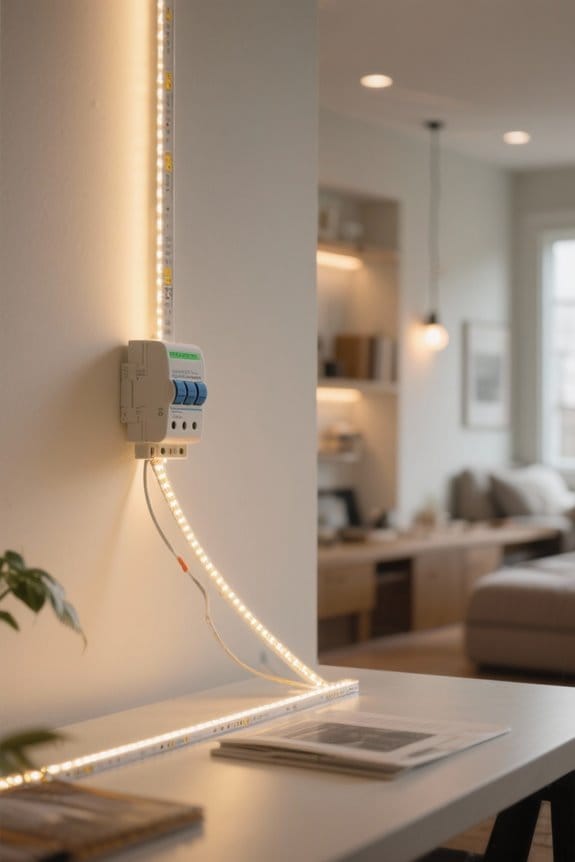
Surge protection is a crucial aspect of any LED lighting installation, particularly due to the unpredictable nature of electrical surges. Surge protection devices (SPDs) safeguard LED drivers against damaging voltage spikes. When selecting an SPD, consider its surge capacity rating; a 4kV rating is suitable for residential use, while industrial settings require a minimum of 10kV. Confirm compatibility with the 120/240V operating range of LED systems. A rapid response time under 1 nanosecond is important, providing immediate reaction against surges. Regular inspection and maintenance of SPDs are essential to prevent degradation of internal components and performance issues. Investing in quality surge protection enhances the reliability and longevity of LED lighting installations, guaranteeing peak performance in various environments. With proper surge protection, LED cabinet lights can maintain their impressive 50,000-hour average lifespan while operating safely in residential and commercial settings.
Effects of Surges on LED Performance
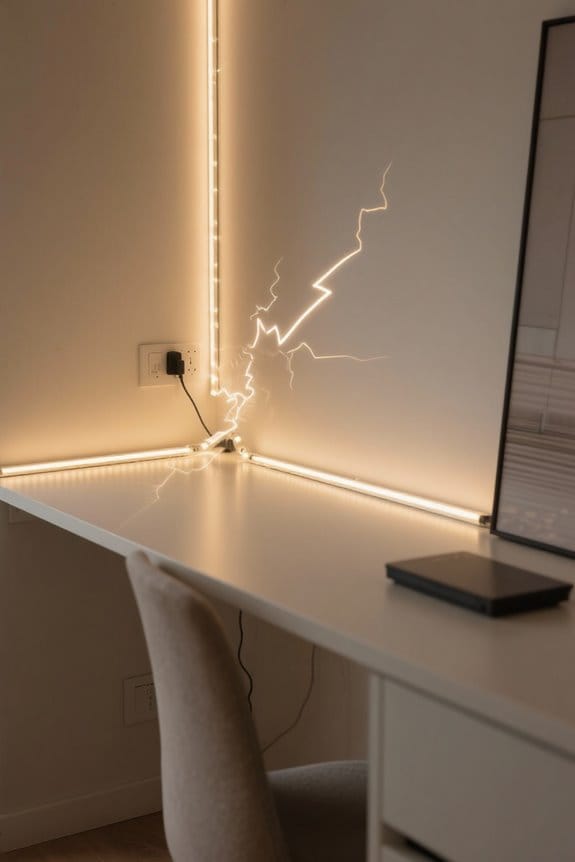
While power interruptions may seem minor, their implications for LED performance can be considerable. Even small voltage spikes can greatly shorten the lifespan of LED lights, damaging internal components. Specifically, these surges can degrade LED drivers, leading to flickering, dimming, and other performance issues. Inadequate surge protection increases maintenance frequency, raising costs over time. To safeguard LED systems effectively, it is essential to install surge protection devices (SPDs) with appropriate ratings; a 10kV rating is recommended for outdoor applications in high-risk environments. Such devices activate within a fraction of a second, countering electrical hazards before serious damage occurs. By incorporating surge protection, users can enhance overall efficiency, prolong lifespan, and minimize unexpected expenses related to frequent replacements. Modern energy efficient LEDs can reduce electricity consumption by up to 90% compared to traditional lighting, making proper surge protection even more critical for maintaining these savings.
LED Circuit Protection With Fault Isolation Mechanisms
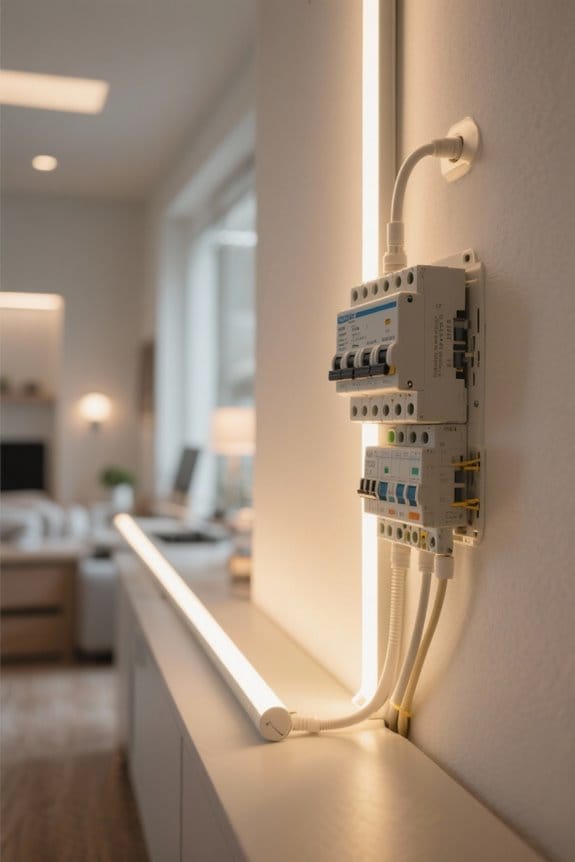
To guarantee the longevity and reliability of LED lighting systems, implementing proper circuit protection with fault isolation mechanisms is critical. LED circuit protection employs bidirectional conduction arrangements that successfully isolate faulty LED strings, thereby preventing cascading failures that could lead to extensive damage. When the voltage difference exceeds a predetermined threshold due to an open circuit, a fault signal activates rapid detection and isolation of the issue. Control circuits reduce power to affected strings, effectively mitigating overcurrent scenarios. Additionally, advanced features limit voltage spikes during power supply activation, enhancing safety and reliability of LED installations. Utilizing low-cost components like resistors, optocouplers, and comparators guarantees effective fault isolation without incurring significant expenses, safeguarding against potential electrical hazards. Modern energy efficient LEDs can achieve up to 70% power savings while maintaining robust circuit protection features.
Recommended Products
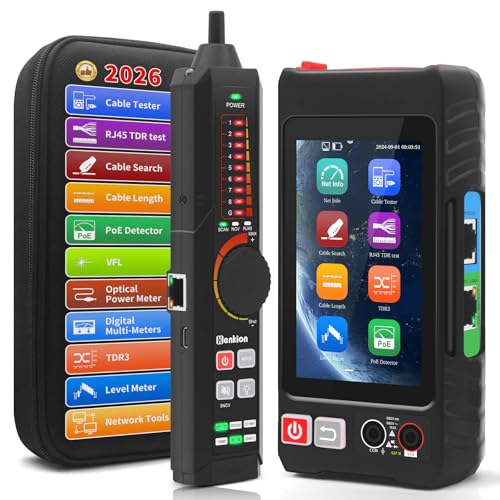
【Upgrade Network Cable Tester&Cable Tracer】Advanced UTP cable test,test UTP cable's sequence,type and remote kit,quickly detect the near-end,mid-end and far-end fault point of RJ45 cable connector.Digital signal ethernet cable tracer can quickly find out the target cable(BNC cable,network cable and telephone cable and other various metal) from the mess cables.Decisively rejects noise and false signals,RJ45 tracer and UTP at the same interface,accurately locate the cables to avoid misjudgment.

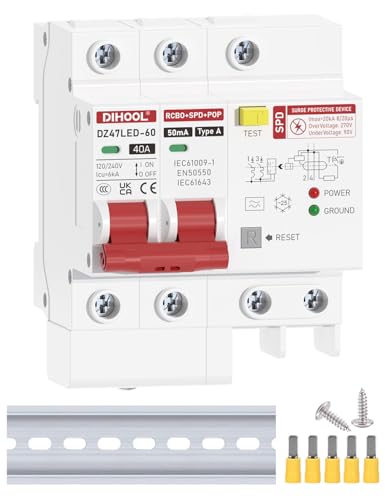
6 protection functions: Type 2 20kA Surge Protection,30mA Class A ground fault Protection,Overvoltage protection,Overcurrent protection,Short Circuit Protection,Circuit isolation
Enhanced Electrostatic Discharge Protection Strategies
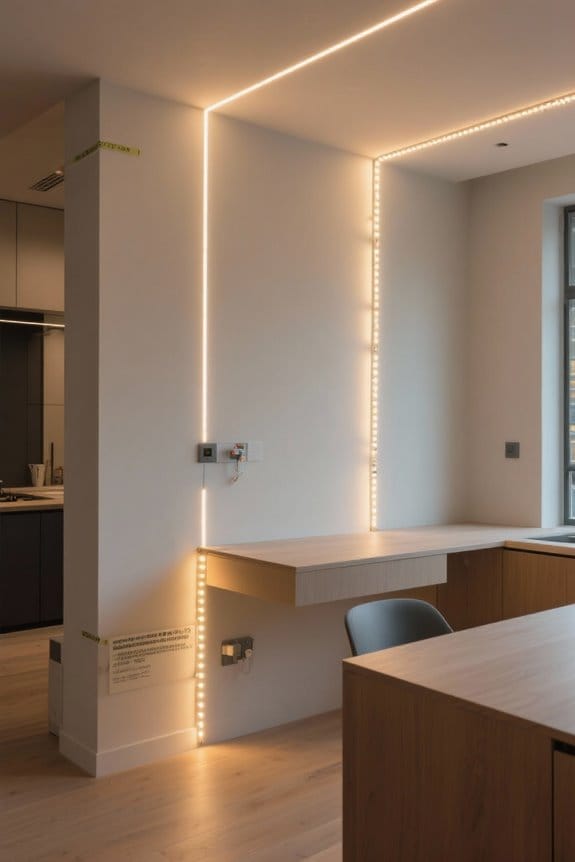
How can LED lighting systems effectively guard against electrostatic discharge (ESD) events? Enhanced ESD protection strategies include flexible circuit board designs that segment LED arrays into series-connected groups, bolstering resilience against electrical current disruptions. Voltage isolation mechanisms are integral, as they protect the circuit body during failures and prevent ESD from affecting functionality. Properly positioning head and tail LEDs within an array minimizes ESD impacts, safeguarding vulnerable points from failure. Additionally, automatic recovery systems incorporated into LED short circuit protection controllers can swiftly respond to ESD incidents, preserving system integrity and ensuring user safety. Regular ESD testing for LED applications is vital in maintaining compliance with safety standards, ultimately enhancing the reliability and durability of lighting systems in varied environments. Implementing flame-retardant materials in LED retrofit kits provides an additional layer of protection against electrical hazards while meeting rigorous safety standards for both commercial and residential applications.
Grounding Connector Systems for Safety
In the domain of LED lighting, the implementation of grounding connector systems is essential for ensuring safety and reliability. These systems maintain a continuous ground path, preventing electrical shock hazards during installation and use. The grounding connectors feature a protective sleeve that engages the lamp pins only when correctly installed, considerably enhancing user safety. By connecting to the lamp heat sink, these systems are critical for reducing fire risks associated with electrical faults. Various connector designs facilitate easy installation while ensuring robust grounding, fundamental for safeguarding exposed metal components from electrical currents. Ultimately, grounded electrical connector systems in LED lamps improve reliability and safety, effectively minimizing shock and fire risks from potential electrical failures. UL/ETL certifications are crucial indicators that LED lighting transformers meet rigorous safety standards for electrical protection.
Best Practices for Installation of LED Lighting
Proper installation of LED lighting is essential for guaranteeing ideal performance and safety. Begin by confirming the voltage compatibility of the LED system—typically 12V or 24V DC—to prevent electrical shock. Cut LED strips solely at the manufacturer’s marked points, using appropriate connectors to maintain reliable connections. For longer strips, implement voltage injection measures to mitigate performance issues and reduce the risk of overheating. Avoid twisting wires; instead, always use certified connectors to guarantee dependable connections and prevent short circuits. Finally, maintain a 20–30% overhead on wattage capacity for the power supply units. This enhances efficiency and minimizes the risk of overload-related failures. Following these best practices will greatly improve lighting safety and longevity. Consider installing UL-certified power supplies to ensure maximum reliability and protection against potential electrical hazards.
Common Mistakes to Avoid During LED Installations
While undertaking LED installations, awareness of common pitfalls is essential for ensuring both safety and efficacy. One key error is neglecting to verify voltage compatibility; always check that your LEDs match the specified voltage, typically 12V or 24V DC. Overlooking proper grounding can expose individuals to electrical shock; therefore, ground all power supply units effectively. Additionally, conduct final inspections for loose screws and exposed wires to mitigate hazards. Never cut LED strips while powered; only cut at marked points with the power off for safety. Finally, avoid twisting wires together—always use certified connectors for reliable connections. Following these guidelines will enhance both the safety and functionality of your LED installations, preventing potentially serious electrical hazards. For optimal performance and safety, select LED systems with lumens per watt ratings that prioritize energy efficiency while maintaining proper illumination levels.
Innovative Safety Features in LED Lighting Systems
How can innovative safety features in LED lighting systems enhance electrical reliability? Advanced systems employ grounded connector systems that guarantee a secure ground path, markedly reducing shock hazards. Fault detection mechanisms decrease power to parallel strings upon detecting open circuits, thereby preventing overcurrent and preserving remaining functioning strings. Additionally, potent surge protection devices protect against voltage spikes, extending LED component lifespan and minimizing maintenance costs. Leakage detection units actively monitor current flow, alerting users to potential shorts, particularly in outdoor settings. Enhanced electrostatic discharge (ESD) protection strengthens resilience in critical environments by utilizing series connections. These innovative safety features fundamentally elevate user safety and operational reliability, making modern LED systems a smarter choice for both residential and commercial applications. Modern LED counter lights deliver up to 1200 lumens while maintaining superior safety features through innovative dimming capabilities and heat reduction technology.
Frequently Asked Questions
What Are the Safety Precautions for LED Lights?
Safety precautions for LED lights include following LED installation tips, ensuring proper ventilation and heat dissipation methods, performing circuit compatibility checks, noting quality certification importance, considering electrical ratings, and adhering to regular inspection guidelines for reliability.
Do LED Lights Need a Surge Protector?
Surge protectors are the unsung heroes of LED lights, ensuring longevity amidst electrical turbulence. They humorously protect against voltage fluctuations, ultimately benefiting energy efficiency comparisons by maximizing lifespan and aligning with electrical system compatibility and power consumption needs.
Is It Safe to Have LED Lights on All Night?
It is generally safe to leave LED lights on all night due to their energy efficiency, low heat emission, and long longevity. Utilizing dimming options and appropriate color temperature can also enhance environmental impact and light brightness during nighttime.
Is It Okay to Put Tape Over LED Lights?
While covering LED lights with tape may seem tempting, it poses risks to LED light installation and durability. Choosing suitable tape types is essential; otherwise, it can lead to overheating and hinder light effectiveness during LED light maintenance.