As an Amazon Associate, we earn from qualifying purchases. Some links on this site are affiliate links at no extra cost to you. Our recommendations are based on thorough research and editorial judgment.

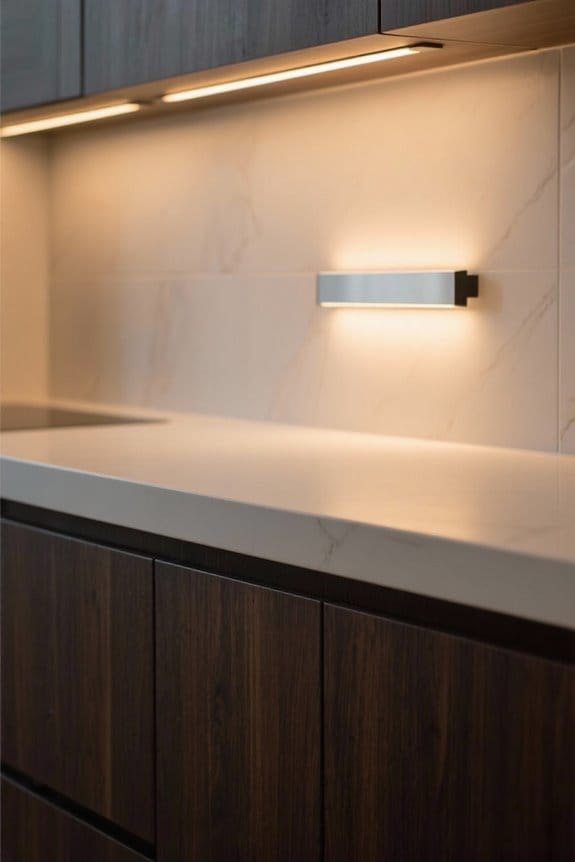
Matching LED Lighting to Your Cabinet Finish

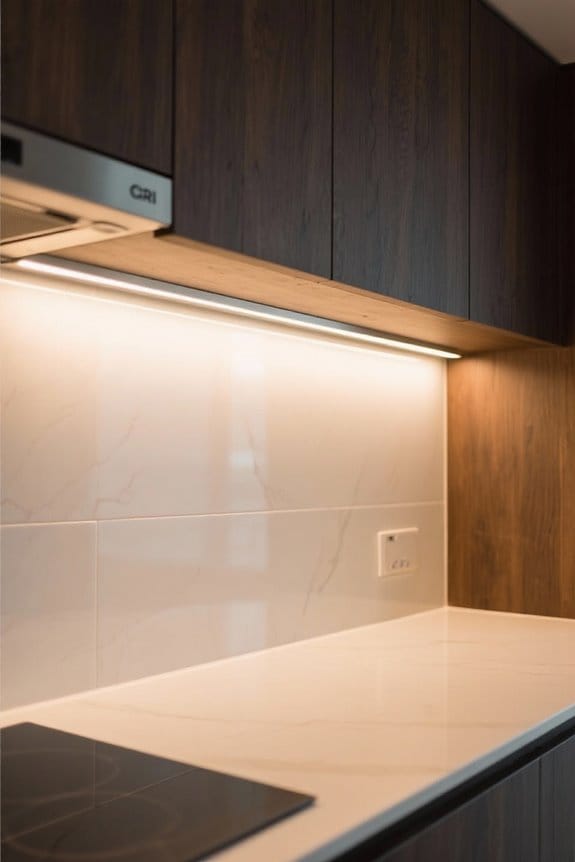
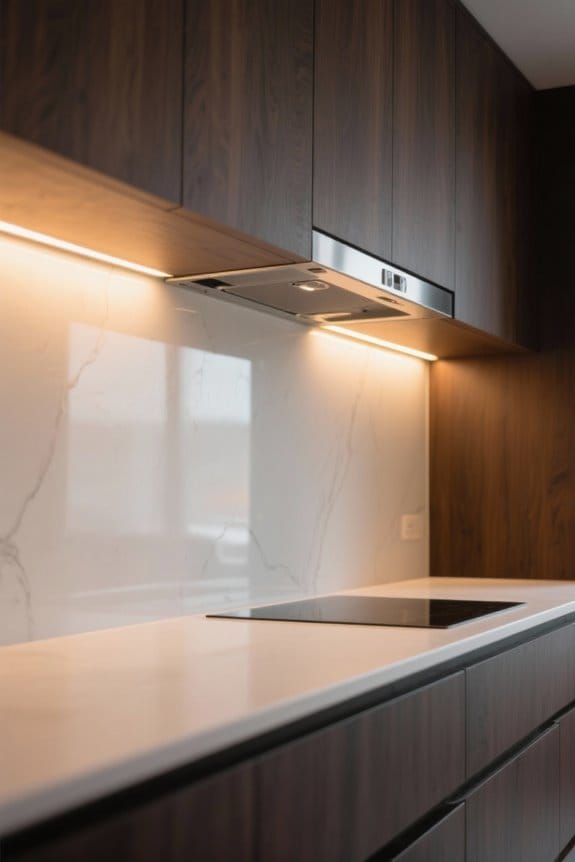
Matching LED lighting to cabinet finishes is essential for aesthetic harmony. Use warmer tones (2700K-3000K) for rich woods like mahogany, and neutral whites (3100K) for medium finishes like oak. Cooler temperatures (4000K) suit lighter surfaces. Ensure under-cabinet lighting is placed strategically to minimize shadows, with recommended brightness around 700 lumens. Pay attention to wood undertones to avoid clashes between light and cabinetry. Follow these guidelines to create a stunning kitchen atmosphere, with further insights available on cohesive lighting schemes.
Key Takeaways
- Choose warmer color temperatures (2700K-3000K) for darker woods to enhance rich tones and depth.
- Select neutral white light (3100K) for medium woods like oak to balance hues effectively.
- Opt for cooler temperatures (around 4000K) with lighter finishes to promote a modern and sleek appearance.
- Consider the wood’s undertones to avoid clashes and ensure a harmonious match with LED lighting.
- Utilize dimmable LED lights for versatility, allowing adjustment of ambiance based on time of day or mood.
Understanding Color Temperature for Cabinets
You may be interested


When selecting LED lighting for kitchen cabinets, understanding color temperature is essential, as it greatly influences the overall ambiance and functionality of the space. Color temperature is measured in Kelvin (K), ranging from warm whites (2700K-3000K) to cooler tones (3500K-5000K). Warmer temperatures enhance traditional wood grains and rich finishes, creating a cozy atmosphere. In contrast, cooler temperatures, particularly between 4000K-5000K, are ideal for modern designs. When choosing under-cabinet lighting, match the color temperature to complement your cabinetry’s finish, ensuring visual harmony. This approach enhances how adjacent materials, like countertops, appear under various lighting conditions. Ultimately, selecting the right color temperature allows for both aesthetics and functionality to thrive in kitchen spaces. The high CRI rating of modern LED cabinet lights ensures accurate color representation, making it easier to match lighting with your cabinet finishes.
How LED Lighting Enhances Cabinet Features
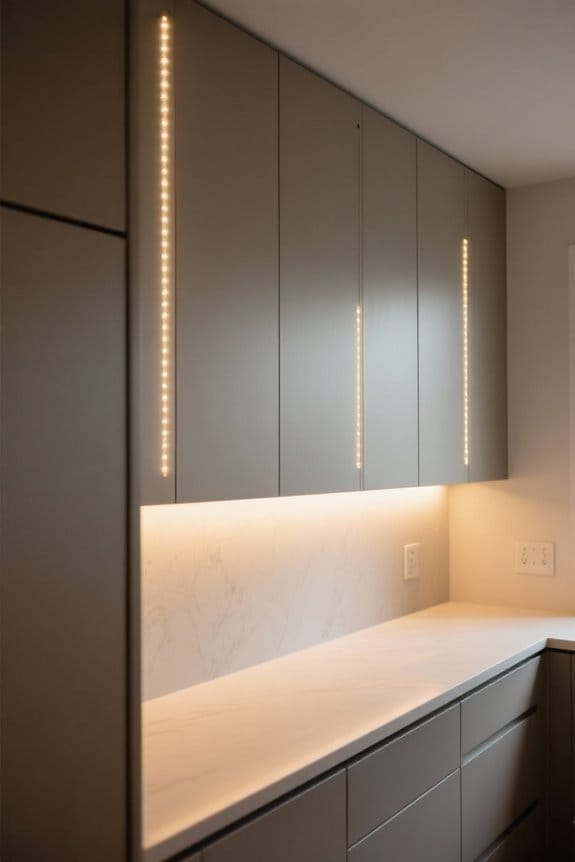
Properly illuminating cabinets with LED lighting significantly enhances their distinct features and overall aesthetic appeal. Using undercabinet lighting, homeowners can achieve focused illumination, which highlights the grain and texture of wood finishes. This careful selection creates a visually striking kitchen environment. The adjustable color temperatures range from warmer 2700K to cooler 4000K, allowing a seamless integration that complements cabinet hues. Additionally, incorporating LED strip lights at the back of cabinets provides a soft glow, accentuating profiles and design elements. Efficiently eliminating shadows enhances visibility for intricate details, making the workspace more functional. Ultimately, the combination of these lighting strategies not only elevates visual charm but also reduces energy costs, proving practical without compromising elegance. Motion sensor lights with rechargeable batteries offer a versatile solution for spaces lacking traditional power outlets while maintaining consistent illumination.
Matching LED With Different Wood Finishes
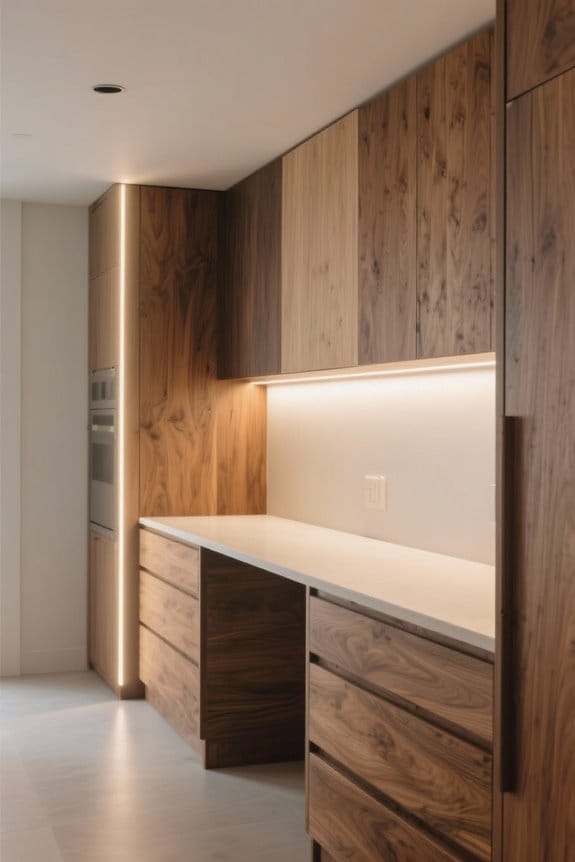
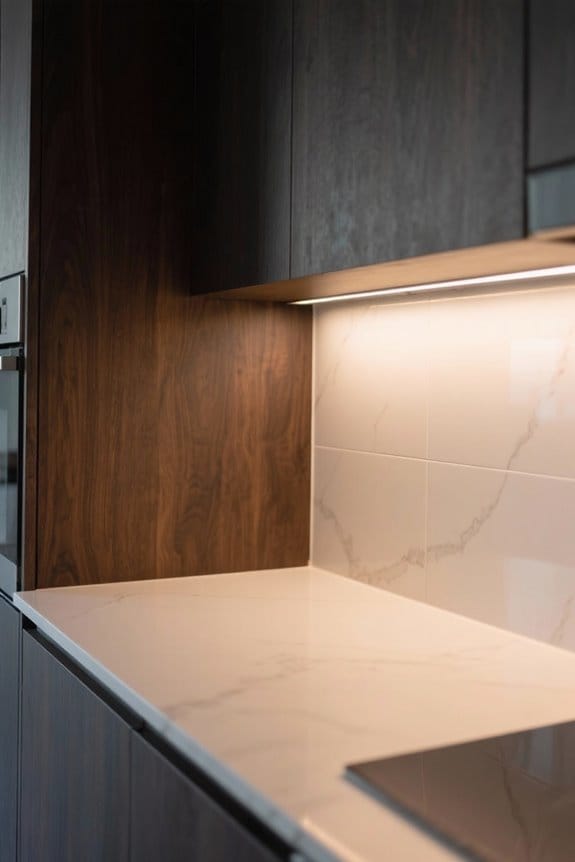
Matching LED lighting effectively with different wood finishes requires strategic reflection of color temperature and the inherent characteristics of the wood. For darker woods, such as mahogany or walnut, opt for warmer color temperatures between 2700K to 3000K. This range enhances their natural richness and grain depth. Medium woods like oak benefit from neutral white light around 3100K, creating balance without overwhelming the wood’s hues. For lighter finishes, such as maple or beech, choose cooler temperatures around 4000K to achieve a modern look while highlighting clean lines. Remember to reflect on the wood’s undertones; warmer colors can clash with cooler lighting. Finally, use dimmable LED lights for versatile task lighting, adapting to varying moods and times of day. With a typical 50,000 hour lifespan, these LED installations provide long-lasting illumination that maintains consistent color rendering throughout their operational life.
Recommended Products

🪞Dual LED Lighting: Built-in lighting strips offer front and back dual illumination, enhancing lighting for detailed tasks like makeup application and shaving.

Premium Materials: Made from anodized aluminum, the WELLFOR 60"x36" LED medicine cabinet features a waterproof, copper-free silver mirror and a tempered glass back for safety and style.

[Colors Changeable & Brightness Dimmable] You can easily switch between color temperatures like 3000K for warm light, 4000K for neutral light, and 6000K for white light, adapting to various conditions. You can also adjust the brightness to your comfort level.
Factors to Consider When Selecting Color Temperatures
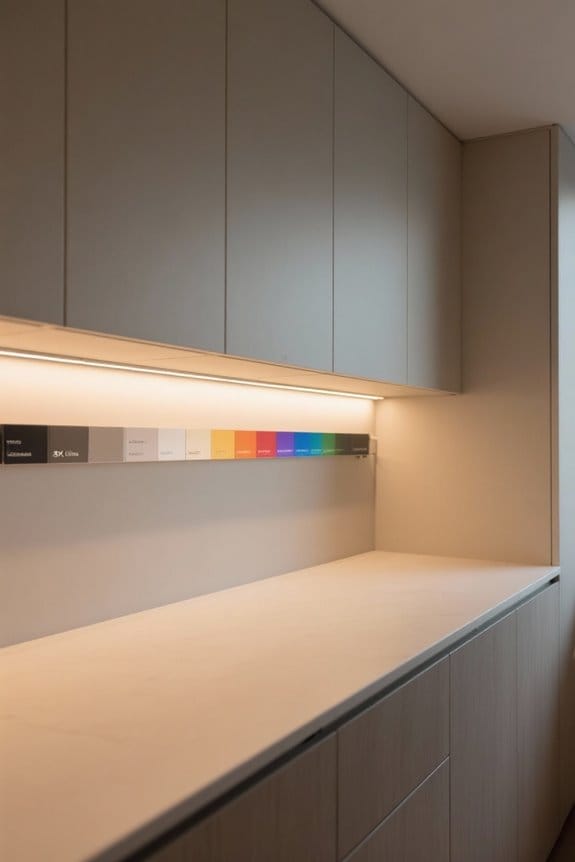
Understanding the impact of color temperature on LED lighting selection is vital to achieving a cohesive design in kitchen spaces. When choosing LED lighting, consider color temperatures between 2700K-3000K for warmer wood finishes, enhancing their natural beauty. Conversely, cooler tones, such as 3500K-4000K, suit modern surfaces. Avoid stark contrasts; mismatched temperatures can create visual imbalance. For instance, pairing a warm wood finish with a cool 6000K light may introduce undesirable hues. Additionally, confirm that in-cabinet and under-cabinet LEDs either match or complement each other to maintain harmony. Testing various options in situ is imperative, as color temperatures can alter the appearance of countertops and backsplashes, greatly influencing the overall kitchen aesthetic. The BTF-LIGHTING strips with warm white 2700K color temperature provide over 65,000 hours of consistent, cozy illumination ideal for traditional wood cabinets.
Tips for Creating a Cohesive Lighting Scheme
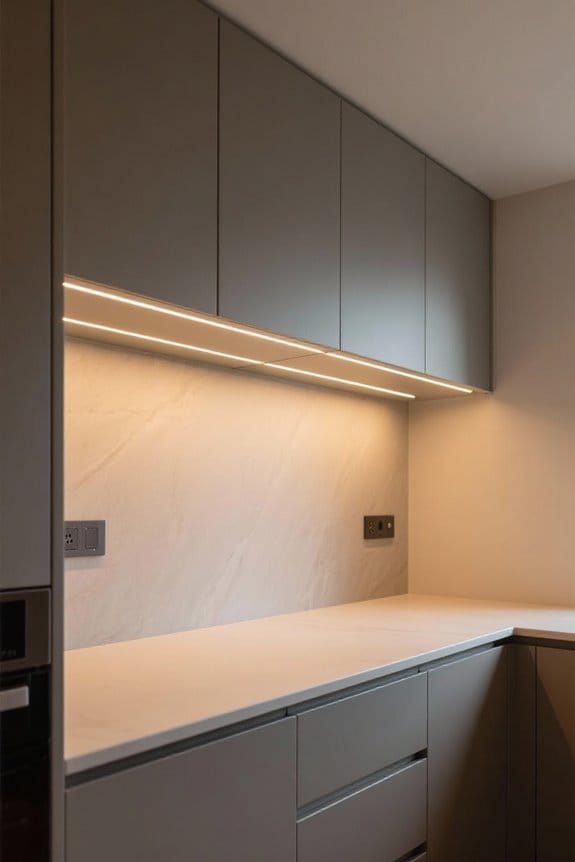
While selecting LED lighting can seem challenging, it is essential to guarantee a cohesive lighting scheme that complements cabinet finishes. Begin by confirming that the color temperature of your accent lighting aligns with your strip lighting; warmer tones around 2700K-3000K pair beautifully with wood finishes, while cooler tones from 3500K-4000K enhance modern cabinetry. Install strip lighting that seamlessly integrates into your cabinets without overpowering their aesthetic. Position the lights carefully to highlight specific features, avoiding glare on glossy surfaces. Remember, maintaining visual consistency is paramount; a mismatch can disrupt the entire design. For versatility, consider color-changing options that adapt to personal taste or seasonal themes, yet always verify they complement the cabinet finish for a unified look. Quality fixtures with high color rendering capabilities ensure your cabinetry’s true colors and textures are accurately displayed under the lighting.
Recommended Products

🪞Dual LED Lighting: Built-in lighting strips offer front and back dual illumination, enhancing lighting for detailed tasks like makeup application and shaving.

Stainless Steel Material: The range hood handcrafted with SUS 304 stainless steel and exquisite craftsmanship, guaranteeing the stability and durability. It is handmade by the professional craftsman, and it is durable enough to provide you with a reliable long-term usage experience
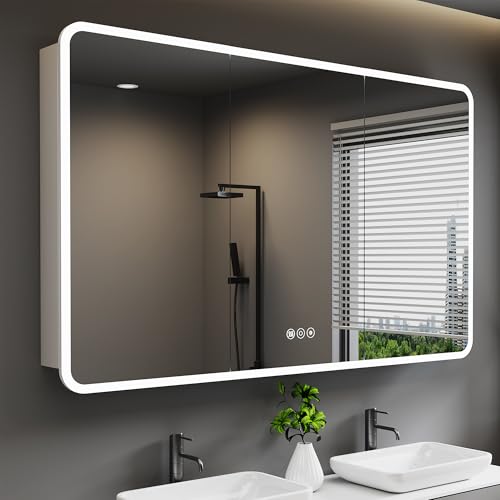
【3 Color Lighting Modes & Adjustable Brightness】 The LED cabinet mirror is equipped with a high-brightness 6500K LED light strip, offering three color modes: warm, natural, and cold white. The brightness is fully adjustable from 10% to 100%, allowing you to customize the lighting for perfect makeup application. With ETL certification, we ensure that the medicine cabinet meets rigorous safety and performance standards
Benefits of Adjustable Color Temperature Options
Adjustable color temperature options for LED lighting present significant advantages for homeowners seeking to enhance their kitchen’s ambiance. Homeowners can select warm tones around 2700K for cozy settings or cooler shades up to 6000K for bright, task-oriented environments. This versatility allows cabinet lights to complement various cabinet finishes and décor elements, fostering aesthetic coherence. Studies suggest that cooler temperatures (4000K-6000K) enhance focus, ideal for meal prep, while warmer tones (around 3000K) foster inviting dining spaces. Additionally, the ability to adjust color temperature enhances mood and productivity. Properly integrated, these lights can dynamically showcase cabinet textures and finishes under the right power supply, making your kitchen more visually appealing and functional. Models like the Nicor 24 LED offer exceptional color accuracy with a 90 CRI rating, ensuring your cabinet finishes appear true to their natural hues.
Practical Installation Tips for LED Cabinet Lighting
Installing LED cabinet lighting requires careful planning and execution to achieve best results. First, choose a color temperature that complements cabinetry, such as cool white (4000K) for a modern aesthetic. Securely apply light strips along the back header of upper cabinets, making certain cords are discreetly routed through drilled holes for a clean appearance. Always use dedicated outlets for each LED run and consider existing outlets with cord hiders for a neater setup. Position lower cabinet lights along the back of DIY light rails to enhance task lighting, avoiding direct visibility to minimize glare. Finally, test all lights prior to installation to validate functionality and color temperature coordination, promoting a cohesive design across cabinetry and countertops. For optimal task lighting performance, ensure your installation provides 700 lumens brightness which is the recommended level for under-cabinet applications.
Frequently Asked Questions
What Color LED for Under Cabinet Lighting?
For under cabinet lighting, warm light (2700K-3000K) creates a cozy atmosphere, while cool light (4000K-5000K) enhances modern finishes. The choice depends on desired ambiance and the existing kitchen lighting for cohesive design.
Should Under Cabinet Lighting Be 3000K or 4000K?
Choosing under cabinet lighting is like picking a mood ring; understanding color temperature—at 3000K for warmth or 4000K for clarity—ultimately depends on personal preference choices for the desired kitchen atmosphere and functionality.
Are LED Strip Lights Still Trendy?
LED strip lights remain a trendy option in modern design, thanks to their versatility, energy efficiency, and customizable features. Homeowners appreciate their ability to enhance aesthetics while providing practical illumination tailored to various settings.
What Color Should I Paint My Room With LED Lights?
In a room where colors dance like sunlight on water, calming blues and soft greens foster tranquility. Considering room color psychology, harmonize with LED accent colors; warmer hues create coziness, while cooler tones evoke modern elegance.