As an Amazon Associate, we earn from qualifying purchases. Some links on this site are affiliate links at no extra cost to you. Our recommendations are based on thorough research and editorial judgment.

Understanding LED Efficiency Ratings

Understanding LED efficiency ratings is essential for selecting suitable lighting options. Look for lumens, the measure of brightness; higher numbers indicate more light. Recent changes in energy labels reflect a new A to G scale, where A is the most efficient, requiring 210 lumens per watt. Check packaging for wattage, color temperature in Kelvin, and the Color Rendering Index (CRI). High efficacy bulbs reduce energy usage considerably. Further insights on maximizing LED benefits can deepen your knowledge.
Key Takeaways
- LED efficiency is measured in lumens per watt (lm/W), indicating light output relative to energy consumed.
- A rating on the new energy scale (A to G) reflects overall energy efficiency, with A being the most efficient.
- Many bulbs have shifted from A+++ ratings to D or lower due to changes in efficiency standards.
- LEDs can use up to 75% less energy than incandescent bulbs, showcasing their energy-saving benefits.
- Consider the wattage, Kelvin rating, and CRI when evaluating LED packaging for efficiency and suitability.
What Are Lumens?
You may be interested


Lumens serve as an essential measurement in evaluating light output from various lighting sources. This quantification reflects the total amount of visible light emitted, with higher lumen numbers indicating greater brightness. For perspective, a traditional 60-watt incandescent bulb produces approximately 800 lumens, while a mere 10-watt LED bulb can deliver the same luminous output, showcasing its energy-efficient nature. When selecting lighting products, prioritizing lumens over watts guarantees adequate illumination while minimizing energy consumption. Additionally, calculating luminous efficacy—lumens divided by watts—provides a valuable comparison tool, allowing consumers to evaluate the efficiency of different LED bulbs effectively. To summarize, understanding lumens is critical for making informed decisions about brightness and energy savings in lighting choices. Modern under cabinet LEDs can produce impressive brightness levels ranging from 666 to 1720 lumens while maintaining excellent energy efficiency.
Why Have the Energy Efficiency Ratings on Labels Changed?
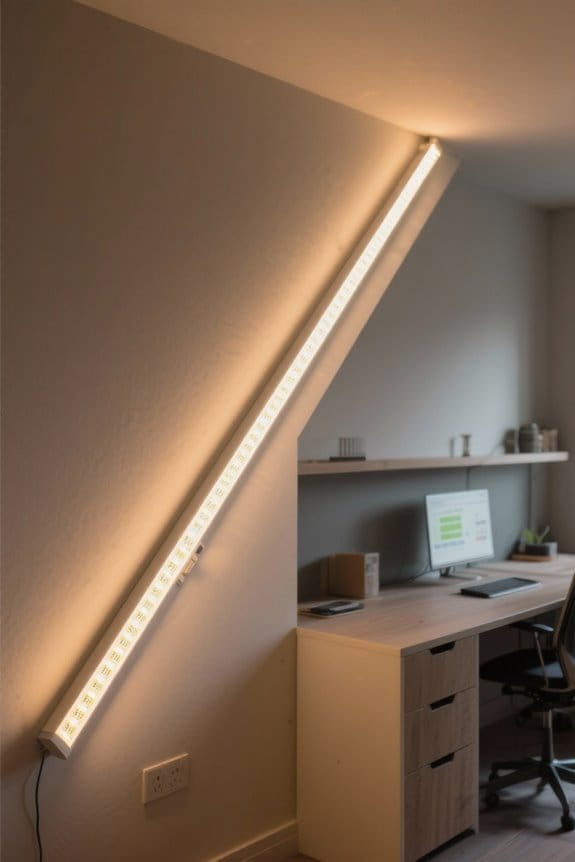
The recent changes to energy efficiency ratings on lighting product labels were designed to make it easier for consumers to understand and compare options. The new energy efficiency labeling system replaces the complicated A+++ to D ratings with a simpler A to G system. This shift is based on luminous efficacy, requiring a minimum of 210 lumens per watt for an A rating. Many bulbs previously rated A++ or A+++ have now dropped to D rated or lower, creating confusion for consumers. Additionally, the new labels standardize energy consumption reporting to kWh/1000h, improving comparability. Currently, very few bulbs exceed a D rating, establishing benchmarks for manufacturers and sparking innovations in LED lighting technology to meet future standards. Modern LED lighting solutions can achieve up to 70% energy savings compared to traditional fluorescent options, making them increasingly attractive despite their current efficiency ratings.
What Can Customers Expect to Find on the New Energy Labels?
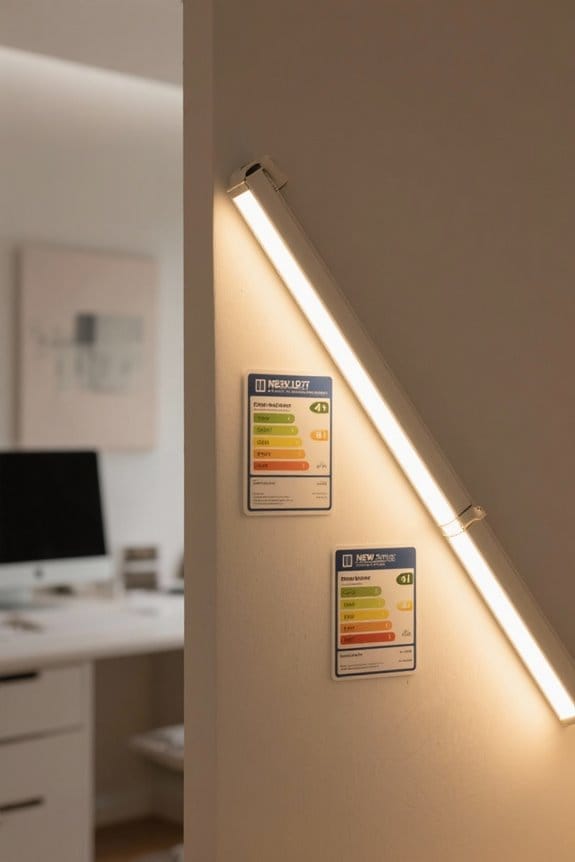
What key information can consumers anticipate when reviewing the new energy labels on LED bulbs? The labels now display energy consumption standardized at kWh per 1,000 hours, making comparison easier. Customers will find an energy rating scale ranging from A to G, with A signifying the most efficient bulbs. To achieve this highest rating, bulbs must boast a luminous efficacy of at least 210 lumens per watt. Customers should note that many previously rated A+++ bulbs may now fall to C or D, potentially causing confusion. Currently, very few bulbs exceed a D rating, indicating opportunities for advancements in LED technology. Understanding these energy ratings helps consumers make informed choices, enabling them to save money compared to traditional incandescent bulbs. These energy-efficient LED options can provide 75% less energy consumption than traditional lighting while offering lifespans of up to 50,000 hours.
Recommended Products

ENERGY-EFFICIENT E26 LED BULB: Lumen output of 30w e26 light bulbs exceed 3400Lm, it is equivalent to 250-300 Watt halogen bulbs to save over 85% of your electricity bills. Free E39 Base converter will be attached for each e26 base bulbs !
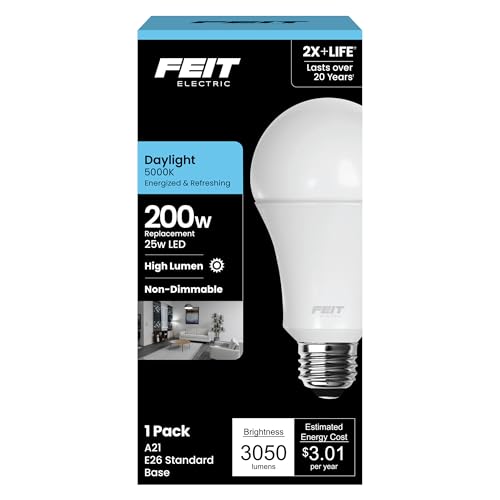
CLASSIC A21 DESIGN - This A21 LED light bulb features a traditional A bulb shape with durable shatter resistant plastic housing. Standard E26 base. Ideal for decorative fixtures and everyday indoor lighting in living rooms or offices.
How to Decipher the Packaging for LED Bulbs
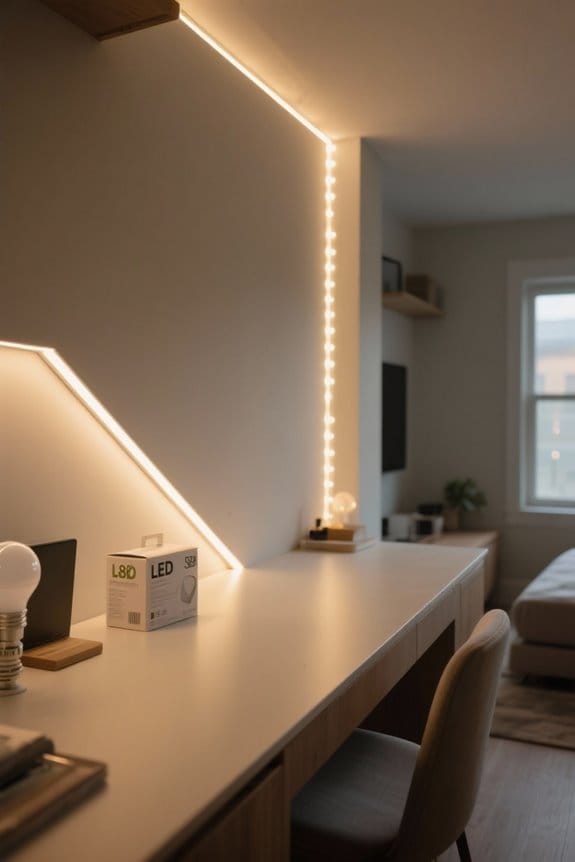
When considering how to decipher the packaging for LED bulbs, consumers should first look for specific key details that indicate performance and efficiency. Significantly, wattage informs energy consumption, typically ranging from 5W to 15W. This measure does not equate to brightness, making it essential to examine other metrics.
The packaging also includes the Kelvin rating, signaling color temperature; for warm light, choose bulbs around 2700K, while cool light typically exceeds 5000K. Additionally, evaluate the Ra Value or Color Rendering Index (CRI); values closer to 100 guarantee better color accuracy. Finally, pay attention to the lifespan of an LED, which usually lasts between 50,000 and 100,000 hours, emphasizing the bulb’s long-term value and durability. For general household use, look for bulbs that provide 1,000 to 2,000 lumens to ensure adequate illumination for everyday tasks.
Recommended Products

Modern LED Ceiling Chandeliers - The over lamp size:W 39.3"(100cm) x H11.8"(30cm). Weight is 77 lbs (about 35kg).

5 Color Temperature Options: Easily adjust the color temperature of each 4" recessed LED gimbal light with a simple switch during installation. Choose from 2700K (warm white), 3000K (soft white), 3500K (natural white), 4000K (cool white), or 5000K (bright white) to create the perfect lighting for any space.

5 Color Options - Not sure what recessed light fixtures color temperature you are looking for in your home? Each 4" recessed light has a simple to use switch connected that can change your lights to 2700K warm white, 3000K soft white, 3500K natural white, 4000K cool white, or 5000K bright white. Your home LED retrofit kit will be adjustable through 5 cct color temperatures until you find the perfect light to select for your space.
Efficacy in Lighting
Efficacy in lighting plays an essential role in determining how efficiently a light source converts electrical energy into visible light. This measurement is typically expressed in lumens per watt (lm/W). Higher lumens per watt indicate greater efficiency; for instance, an LED bulb rated at 100 lm/W is markedly more efficient than older incandescent technologies. The EU energy labeling standards set a high efficacy threshold at 210 lumens per watt for premium lighting products. Consumers should evaluate the efficacy of various options to make informed decisions, effectively balancing brightness with energy consumption. A practical example is a 5W LED that emits 520 lumens, showcasing an efficacy of 104 lm/W—demonstrating how modern LED solutions outperform traditional lighting in both performance and energy rating. Modern under-cabinet LED strips like the Maylit series deliver impressive efficiency with 1200 lumens output while maintaining an ultra-thin 0.25-inch profile.
The Most Efficacious Lights
In the landscape of modern lighting solutions, the focus remains on identifying the most efficacious lights available. The Philips 2.1W GU10 LED bulb exemplifies this, producing an impressive 375 lumens with an efficacy of 178 lumens per watt. Understanding different efficacy calculations is essential, particularly for directional light, which often requires unique assessments due to its design. As technology evolves, the next generation of downlights is anticipated to surpass current LED products considerably by 2026. This ongoing advancement indicates that integrated downlights and GU10 options have the potential to push efficacy even further. High efficacy, combined with a long lifespan, means energy savings and reduced environmental impact. Prioritize products that demonstrate ideal light output while maximizing efficiency. For optimal performance and safety, selecting power supplies that exceed your LED strip’s wattage by 20% will prevent overload issues and ensure consistent illumination.
Recommended Lumens for Different Spaces
Selecting the appropriate lumens for various spaces is essential for achieving both functionality and atmosphere. In a living room, aim for 1,500 to 3,000 lumens to foster a cozy environment. Kitchens require a higher brightness level, suggested at 4,000 to 8,000 lumens for peak visibility during food preparation. Bedrooms benefit from a softer approach, with 1,000 to 2,000 lumens promoting relaxation. For bathrooms, consider 4,000 to 8,000 lumens to guarantee bright, clear lighting for grooming tasks. These lumens, rather than traditional incandescent bulbs, allow for informed decisions in lighting choices, especially when utilizing an LED lamp. Understanding these recommendations empowers individuals to create spaces that meet their specific needs effectively and efficiently. Modern edge-lit under cabinet fixtures can deliver up to 5000 lumens while maintaining energy efficiency and a sleek profile.
Recommended Products

COLOR TUNABLE - Built with a 5 CCT color tunable switch on each LED light panel that will allow you to see in real time which kelvin temperature fits your space. Make a simple adjustment to go from 3000K soft white, 3500K natural white, 4000K cool white, 5000K bright white, or 6500K daylight. Don't hassle trying a single color 2x2 LED flat panel light to find the ideal ceiling light when you can have multiple options in a single fixture.

5 Color Selectable: The 2x4 LED flat panel light feature a toggle switch to select in 5 color temperatures: 3000K/4000K/5000/5700K/6500K. Customize your lighting preference before installation with 5 colors in one light.

Top Rated LED 2x4 Selectable CCT Ceiling Panel
Color Temperature and Beam Angle
Lighting design is greatly influenced by color temperature and beam angle, two vital elements that affect both atmosphere and functionality. Color temperature, measured in Kelvin (K), guides warmth in lighting; for instance, warm light at 2,700K-3,000K creates cozy spaces, while cool light at 5,000K-6,500K enhances clarity and productivity. Choose warm white light for living areas and neutral white between 3,500K-4,100K for kitchens, striking a balance between brightness and warmth. The beam angle determines how visible light spreads; narrow angles (15-30°) create focused spotlighting, while wide angles (60-120°) guarantee general lighting over larger areas. Selecting the right beam angle is essential for effective light distribution, impacting usability and mood in different environments. Modern LED task lighting typically delivers around 700 lumens for optimal visibility in workspaces and under-cabinet applications.
Advanced Features and Dimmability of LED Lighting
Advanced features in LED lighting, including dimmability options, enhance both functionality and versatility in various settings. Dimmable LEDs are available, but make certain they are labeled accordingly to avoid flickering or damage. Utilizing compatible dimmer switches is essential for peak performance. Incorporating smart technology, advanced LED systems allow for remote control, color changing, and scheduling, greatly increasing convenience. These features not only improve the user experience but also contribute to energy efficiency, potentially lowering energy bills. In addition, LEDs boast a lifespan of 25,000 to 50,000 hours, reducing the need for frequent replacements. Consider integrating these advanced features into your lighting strategy to result in both enhanced ambiance and practical savings. Modern LED fixtures with RGB color options can produce millions of distinct colors, allowing for customized atmospheres in any space.
Recommended Products

CASUAL COASTAL / MODERN FARMHOUSE: Boasting a sleek, pewter finish - the Prominence Home Reston ceiling fan elevates your adds a flair that is both inspired and current. Having a blade span of 42 inches, this modern ceiling fan is perfect for medium sized rooms such as bedrooms, dining rooms, dens, and much, much more!

【Modern Large Villa Crystal Chandelier】Specification:Ceiling plate diamater is 59".Total length of wire is 120".The height cannot be adjusted.

【Luxury Gold Chandeliers Size 】Ceiling plate size:Dia 12inch X H 2inch.5 ring size:Dia 16+24+32+40+48inch.Adjustable max height:118inch,Approximate weight: 88 lb
Lifespan and Outdoor Usage of LED Lights
While consumers often prioritize brightness and energy efficiency in LED lights, understanding their lifespan and suitability for outdoor use is equally essential. LED bulbs can last between 25,000 and 50,000 hours, translating to over 20 years with average daily use. Pay attention to LED life ratings, particularly the L70 rating, which indicates when light output drops to 70% of its original brightness, suggesting timely replacement for ideal performance. For outdoor use, select “weatherproof” or “waterproof” labels to guarantee durability against elements. Additionally, high temperatures can greatly reduce an LED’s lifespan; choose high-temperature rated bulbs to maintain performance. Utilizing quality LED lights not only saves costs through infrequent replacements but also contributes to sustainability efforts. Modern LED options with color temperature control between 2700K to 3000K provide optimal illumination while consuming up to 80% less power than traditional lighting solutions.
Recommended Products

Illuminate Your Outdoor Space: Built to withstand the elements with durable, weatherproof LED lights, these shimmering strands create magical nights under the stars.

Size: 14' X 28' gazebo with 36 bulbs outdoor hanging lights. You can improve the atmosphere of outdoor activities through 8 lighting remote control at night.

Light Up Your Outdoors: This 11' x 28' louvered pergola features 48ft solar-powered lights with 24 bulbs. Enhance your outdoor ambiance at night with 8 lighting modes controlled remotely.
Frequently Asked Questions
Which Is Better, 4300K or 6000K LED?
The choice between 4300K and 6000K LEDs depends on color temperature and application suitability. 4300K offers comfort and mood lighting, while 6000K enhances brightness levels, meeting personal preference for alertness in specific environments.
Which LED Is Better, 5050 or 3528?
The 5050 LED outshines the 3528 in brightness comparison and color rendering due to its RGB capabilities, though it has higher power consumption and heat emission. Ultimately, application suitability dictates the best choice for specific needs.
Is 3000K or 4000K Better for Home?
The choice between 3000K warm light and 4000K cool light for home ambiance depends on color preference and lighting purposes. Warm light creates a cozy environment, while cool light enhances focus, making each suitable for different spaces.
Is LED Energy Rating F Good?
Is an energy rating of F good? Hardly. With high energy consumption, subpar brightness levels, and limited lifespan comparison, it fails to offer cost efficiency, overshadowing the benefits of ideal color temperature and better-rated alternatives.