As an Amazon Associate, we earn from qualifying purchases. Some links on this site are affiliate links at no extra cost to you. Our recommendations are based on thorough research and editorial judgment.

How Much Energy Do Under-Cabinet LEDs Actually Use

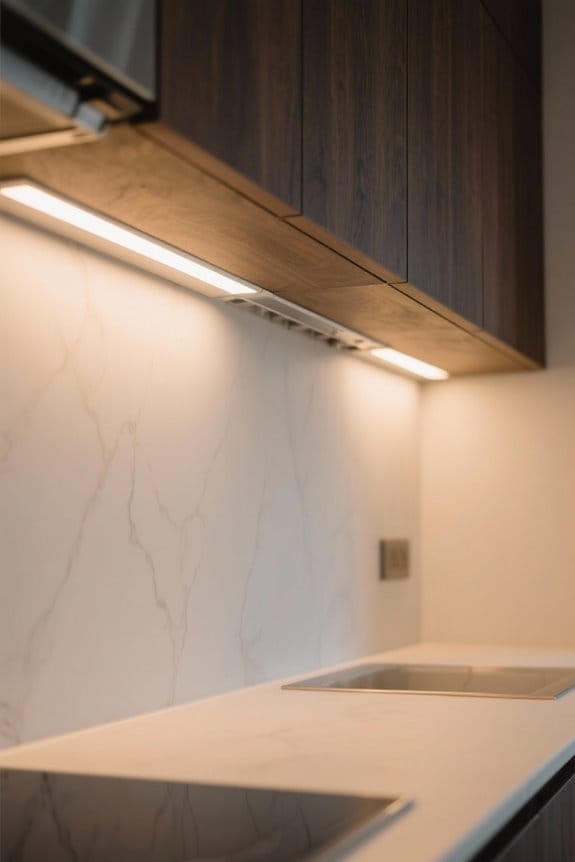
Under-cabinet LED lights typically consume between 12 to 15 watts per fixture, considerably more efficient than halogen bulbs, which can exceed 50 watts for similar brightness. This efficiency translates to substantial energy savings, often up to 75%. For instance, operating a 12-watt LED strip for 5 hours daily costs approximately $15.60 annually. Consider the longevity of LEDs, averaging 50,000 hours, which reduces maintenance costs. For more detailed insights on maximizing energy efficiency, explore further.
Key Takeaways
- Under-cabinet LED lights typically consume around 12 watts per meter, depending on the specific strip used.
- Daily operating cost for a 12-watt LED strip used for 5 hours can be approximately $15.60 annually.
- LEDs provide energy efficiency improvements, consuming up to 75% less energy than traditional halogen lighting.
- Switching from halogen to LED can result in energy savings of up to $75 per light over its lifespan.
- Proper wiring and higher-voltage LED strips enhance efficiency and reduce energy consumption further.
Factors Affecting Energy Consumption of Under-Cabinet LEDs
You may be interested
When considering the energy consumption of under-cabinet LEDs, several key factors play an essential role in their overall efficiency. The length of LED strips directly affects energy consumption; longer strips increase wattage requirements. It is vital to calculate total power usage based on wattage per meter. High-voltage strips, like 24V or 48V, reduce voltage drop, sustaining brightness and minimizing energy waste. Additionally, using appropriate wiring gauges prevents voltage drop, enhancing efficiency. Cool white LEDs generally outperform warm white options in energy efficiency, consuming less electricity while providing ample light. Ascertain the power supply exceeds total wattage needs by at least 20% to optimize performance and prevent overheating. Focus on these elements for improved energy management in your under-cabinet LED installation. Modern CRI 90+ LEDs can produce 666.7 lumens while consuming only 10 watts of power, making them extremely energy-efficient for kitchen lighting.
Recommended Products

Flexible silicone cased tape light for enhanced Damp location listing. Peel and stick3 construction adhesive on back

Invisiled Pro 1Ft indicator marks every 2 inch for field cutting at the end of a run

Gemini LED tape light output is 3W per foot with easy-to-setup seamless and scalable run lengths up to 24 feet.
Calculating Power Usage for LED Fixtures
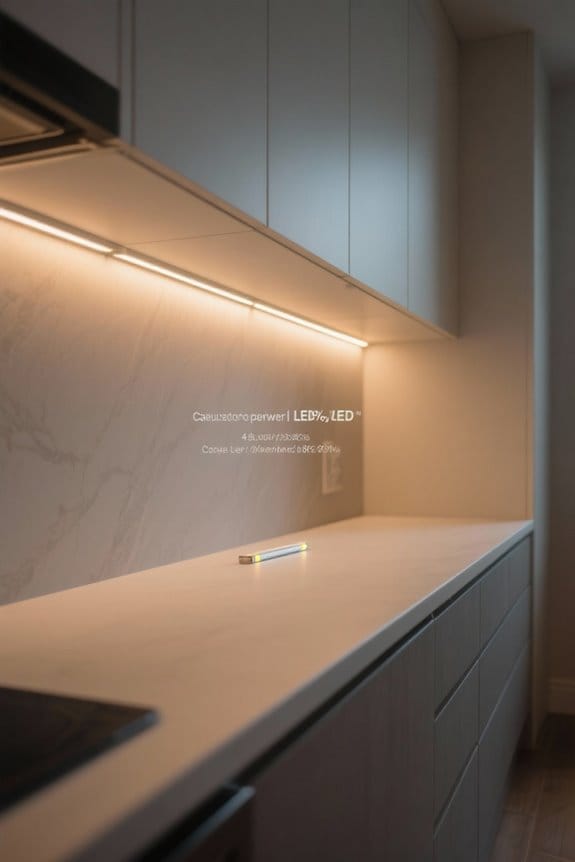
Calculating the power usage of LED under-cabinet fixtures requires a straightforward approach. Begin by determining the wattage per meter of the LED strip. Multiply this wattage by the total length of the strip; for example, a 12-watt per meter strip at 6 meters consumes 72 watts. To estimate daily operating cost, assess the total wattage and multiply it by the hours of operation and local electricity rates. For instance, a 72-watt strip running 5 hours daily at $0.12 per kWh costs approximately $0.043 per day. Consider using higher-voltage LED strips to minimize voltage drop, and verify good wiring quality to enhance energy efficiency. Ideal installation and maintenance can lead to significant long-term energy savings. With an average 50,000 hour lifespan, these LED fixtures provide exceptional longevity while maintaining their energy-efficient performance.
Comparing LED Lighting Efficiency With Traditional Sources
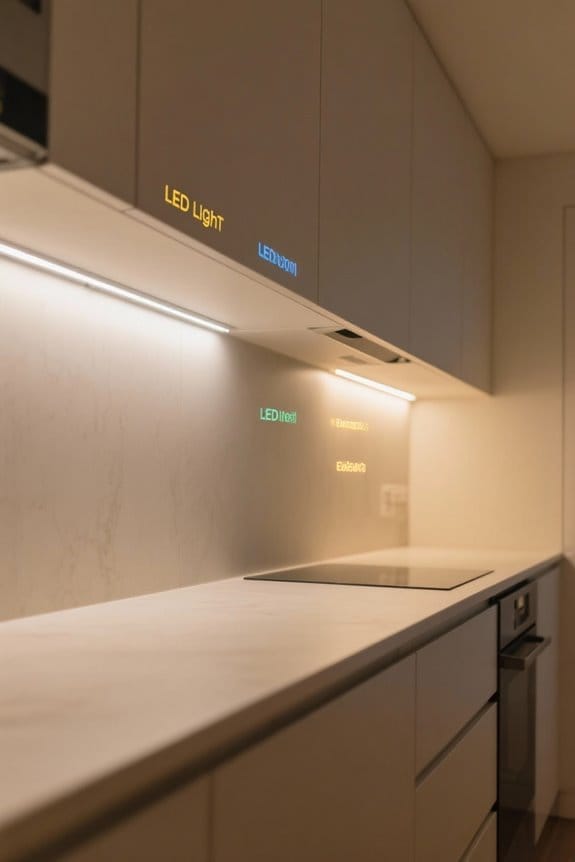
LEDs represent a transformative advancement in lighting efficiency compared to traditional sources such as incandescent and halogen bulbs. LED lights consume up to 75% less energy than halogen options, which already use 20-30% less energy than traditional incandescent bulbs. For equivalent brightness, typical LEDs use merely 12 to 15 watts, whereas halogen bulbs require over 50 watts. The lifespan of LEDs can extend to 50,000 hours, drastically outpacing halogen bulbs, which last only 2,000 to 4,000 hours. This extended lifespan contributes to significant energy savings, as switching from a 50-watt halogen to a 10-watt LED can save up to $75 over the LED’s lifetime. With LEDs providing 80 to 100 lumens per watt, choosing LED for under cabinet lighting assures superior energy efficiency. Most Energy Star LED products offer high CRI ratings that enhance the visual appeal and color accuracy of kitchen workspaces.
Tips for Maximizing Energy Efficiency in LED Lighting
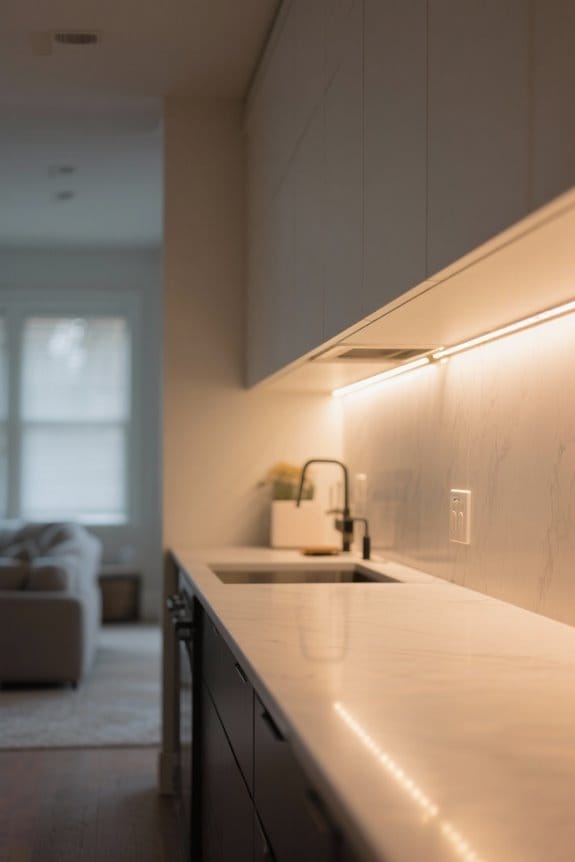
To maximize energy efficiency in LED lighting, it is essential to implement several strategic practices. Opt for higher-voltage LED strips, such as 24V or 48V, to minimize voltage drops and maintain consistent brightness. Integrate smart controllers and timers to automate lighting schedules, effectively reducing energy consumption during off-hours. Utilize aluminum channels to dissipate heat, safeguarding LEDs and enhancing their lifespan. Selecting cool white LED strips considerably benefits energy efficiency, as they consume less energy than warm white options while ensuring ideal task lighting. Additionally, invest in quality wiring of appropriate gauge to minimize voltage drops, thereby ensuring that your LED lights operate at their fullest potential. These practices collectively enhance performance and sustainability in lighting installations.
Real-World Applications and Energy Savings Insights
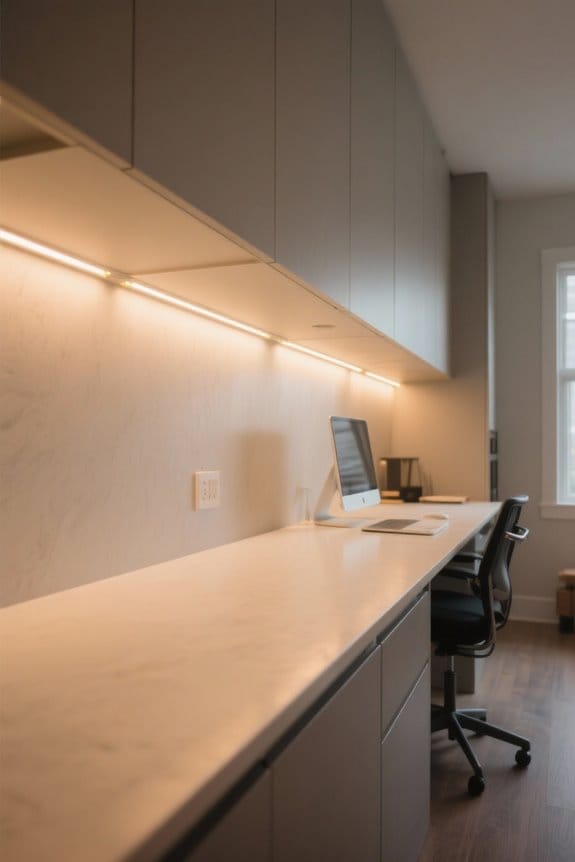
When considering energy-efficient lighting solutions for kitchens and workspaces, under-cabinet LED lights emerge as a leading choice due to their remarkable performance and cost savings. These lights provide up to 75% energy savings compared to traditional halogen bulbs while matching or exceeding brightness levels. A 12-watt LED strip can cost just $15.60 annually when used for 5 hours a day. By replacing ten halogen lights with LEDs, overall energy consumption can drop by 80%. The longevity of LEDs, lasting up to 50,000 hours, also reduces maintenance costs. Ensuring proper installation with high-quality wiring mitigates voltage drops, enhancing performance. These factors underscore the significant advantages of under-cabinet LED lights in real-world applications. Products like the Binet LED Light demonstrate exceptional efficiency by consuming only 50mA of power while delivering 300 lumens of warm illumination.
Frequently Asked Questions
Do Under Cabinet Lights Use a Lot of Electricity?
Under-cabinet lights do not use a lot of electricity, offering advantages like energy efficiency, various design styles, dimming options, and ideal light brightness, leading to utility savings while being environmentally friendly with low maintenance requirements.
Can LED Lights Run up an Electric Bill?
LED lights exhibit low energy consumption, demonstrating significant cost comparison advantages over traditional fixtures. Installation impacts energy efficiency positively, while adjustable brightness levels and dimming options enhance light quality, further promoting environmental benefits through reduced usage duration.
Do LED Lights Use a Lot of Energy?
Like a gentle stream, LED lights embody efficiency, bringing profound energy savings. Their varying brightness levels and color temperatures enhance ambiance, while their lifespan comparison far exceeds traditional bulbs, minimizing environmental impact without complex wiring or decorative style constraints.
How Much Does It Cost to Run an LED Light for 24 Hours?
Running a 12-watt LED light for 24 hours costs approximately $0.0344, showcasing energy efficiency. Considering wattage comparison, light brightness levels, and smart technology integration, users benefit from cost-saving tips and reduced environmental impact.