As an Amazon Associate, we earn from qualifying purchases. Some links on this site are affiliate links at no extra cost to you. Our recommendations are based on thorough research and editorial judgment.

The Impact of Light Direction on Countertop Visibility

Light direction greatly impacts countertop visibility, influencing how colors and textures are perceived. North-facing light provides cool, consistent illumination, while south-facing light adds warmth. Overhead lighting can create harsh shadows, obscuring details. In contrast, angled and side lighting enhances surface textures and intricate patterns. Under-cabinet lighting can minimize shadows for improved workspace visibility. Consider fixtures that match desired color temperatures; warmer tones (2700K-3000K) create inviting spaces, while cooler tones emphasize detail. Understanding these factors is essential for effective lighting setups. There’s more insight to explore on this topic.
Key Takeaways
- Light direction significantly impacts visibility; side lighting enhances surface textures, while direct overhead lighting can create harsh shadows that obscure details.
- Angled lighting softens shadows and improves the overall appearance of countertops, making intricate patterns more visible.
- Natural daylight showcases colors and reveals subtle variations in materials, making it essential to assess countertops in various lighting conditions.
- Under-cabinet lighting minimizes shadows and enhances work areas, improving functionality during cooking and preparation tasks.
- Mixing different color temperatures can lead to an uneven appearance, highlighting the importance of consistent light sources for optimal visibility.
The Importance of Natural Daylight in Countertop Selection
You may be interested
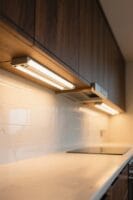
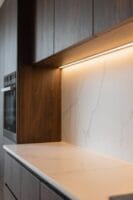
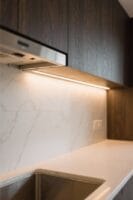
Natural daylight plays an essential role in the selection of countertops, markedly influencing their aesthetic appeal and functionality. Countertop colors often appear differently under various lighting conditions, making natural light critical for accurate representation. When evaluating granite, it is important to examine countertop samples in daylight; this exposure reveals the mineral composition and intricate patterns that might remain hidden in artificial light. Consider how north-facing light offers consistent, cool illumination, while south-facing light delivers warm tones that shift throughout the day. East and west-facing kitchens experience dramatic lighting effects, altering visual perceptions markedly. Additionally, remember that seasonal variations can impact daylight quality, so evaluate your countertop choices under various conditions to guarantee a perfect fit for your space. For optimal viewing conditions, consider supplementing natural light with a desk lamp featuring high CRI ratings to ensure the most accurate color representation of your countertop materials.
Understanding the Influence of Light Direction
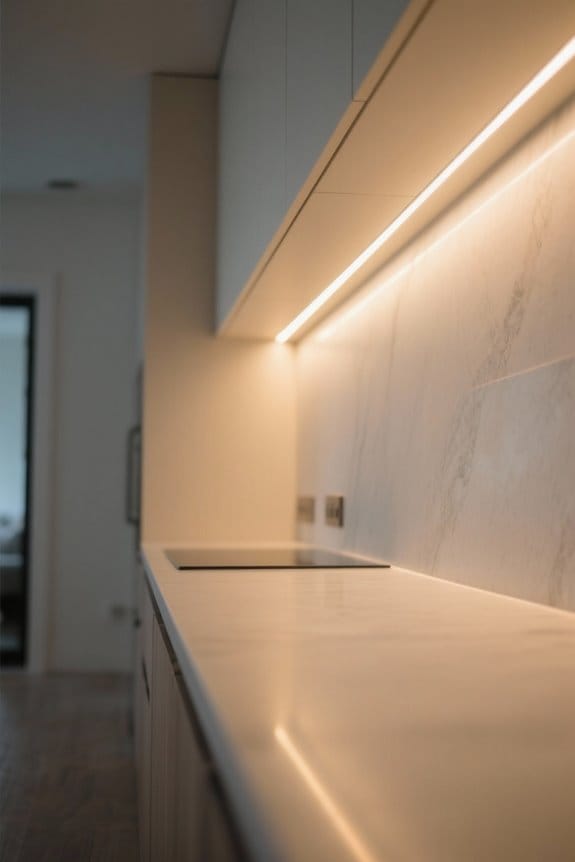
While selecting countertops, understanding how light direction impacts visibility can greatly enhance the decision-making process. Light direction markedly affects countertop visibility, emphasizing surface textures and unique patterns. For example, direct overhead lighting can create sharp shadows, obscuring details. Conversely, angled lighting softens shadows, enhancing the overall appearance of materials. Side lighting accentuates surface textures, making veining in granite more pronounced when positioned correctly. Indirect lighting, such as reflections from nearby walls or ceilings, provides a uniform illumination, reducing glare and improving visibility. Additionally, the interplay between light direction and surface finish strongly influences color perception; glossy surfaces reflect more light, resulting in brightness when illuminated properly. Consider these aspects to make an informed countertop selection. Installing motion sensor lights under cabinets can automatically illuminate countertops when needed, providing hands-free operation and optimal task lighting.
Evaluating Countertops Under Different Light Sources
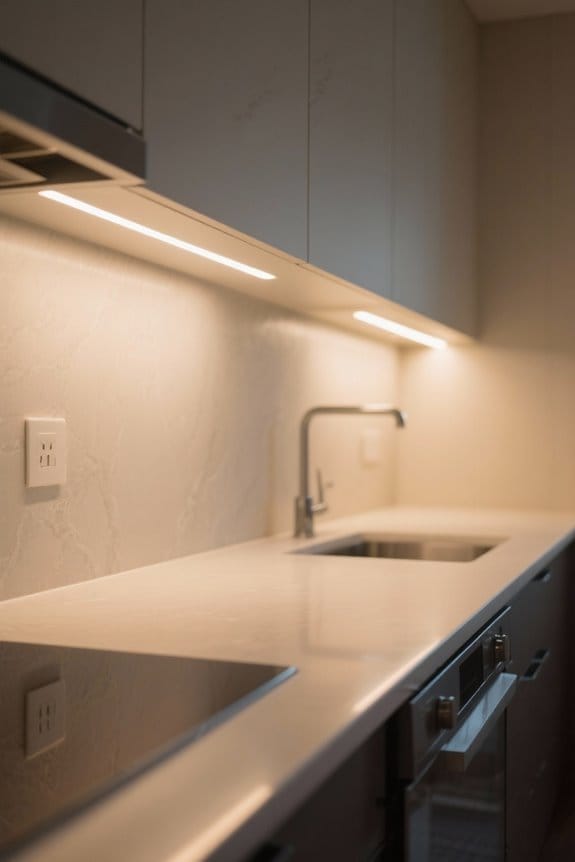
Evaluating how countertops appear under various light sources is essential for making an informed selection. Different light sources markedly influence countertop visibility. Natural light best showcases colors, revealing subtle variations often hidden by artificial lighting. For example, consider observing a granite countertop; it may appear darker under direct overhead lighting, creating harsh shadows and diminishing its overall appearance. In contrast, angled lighting can highlight intricate patterns, enhancing aesthetic appeal. Additionally, employing under-cabinet lighting creates a layered effect that not only improves visibility but also minimizes shadows in work areas. A 700 lumens brightness level is recommended for optimal task lighting in kitchen workspaces. Consequently, assess how each light source interacts with your chosen countertop. Recognize that the proper lighting can greatly enhance the beauty and functionality of your space.
The Role of Under-Cabinet Lighting
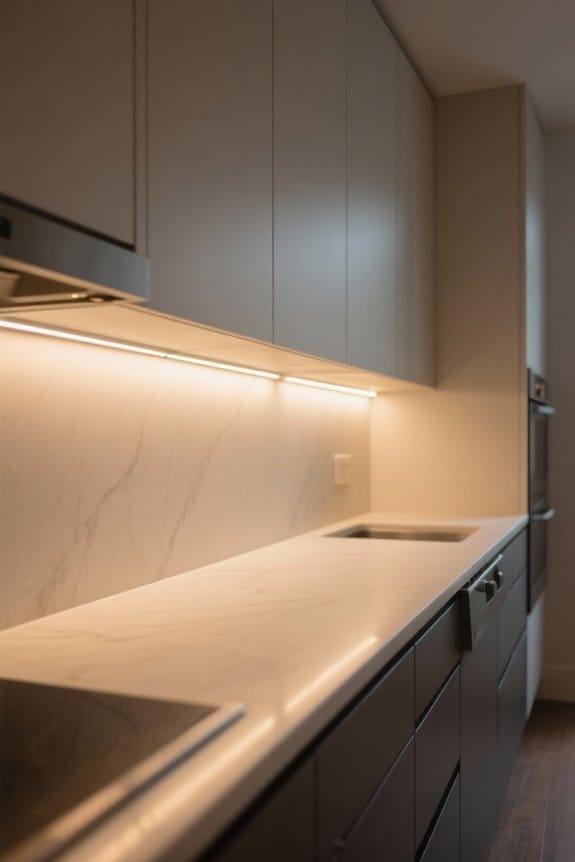
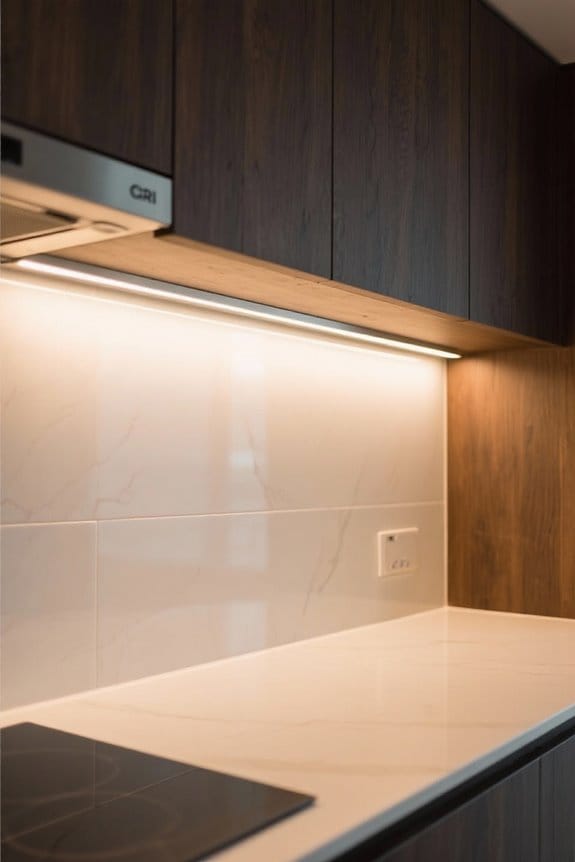
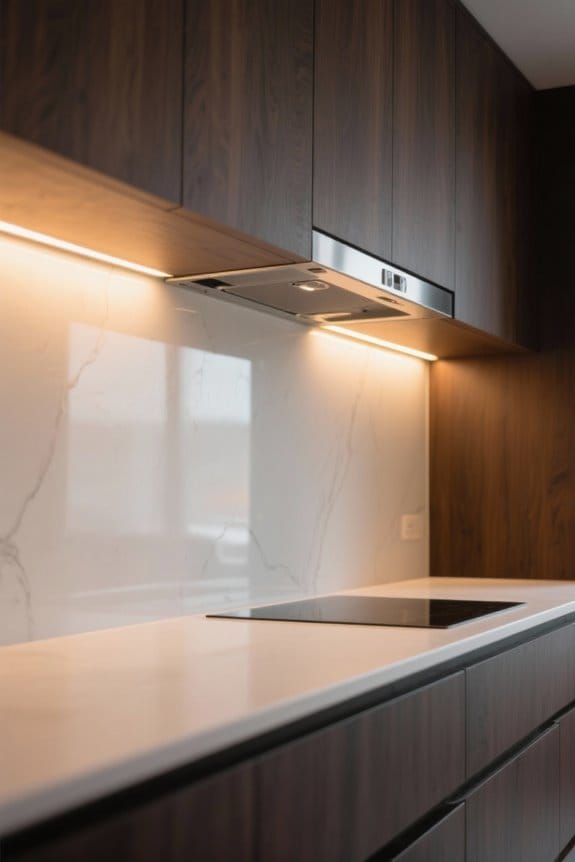
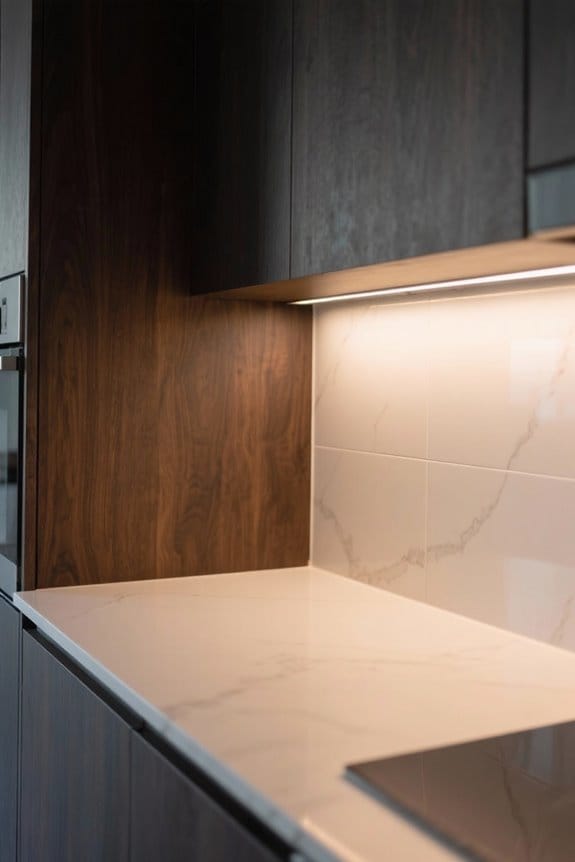
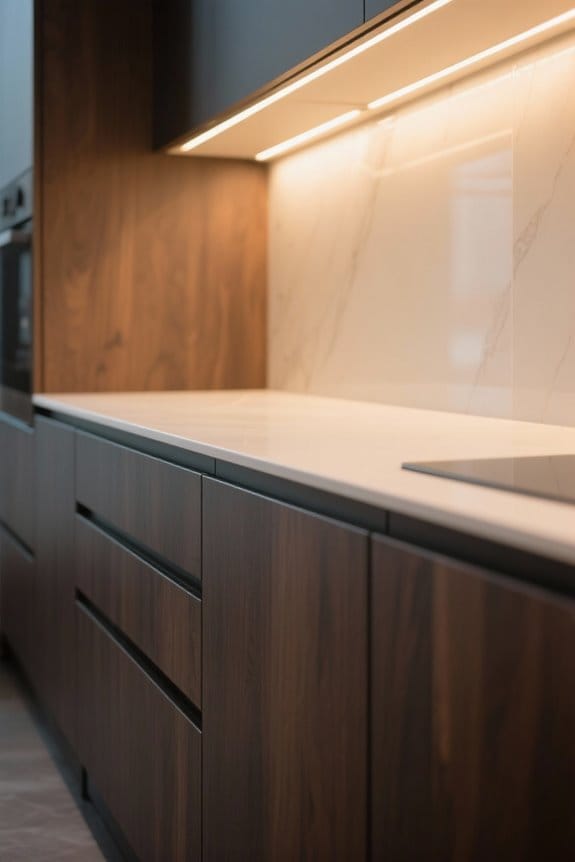
Effective under-cabinet lighting plays an essential role in enhancing the functionality and aesthetic appeal of kitchen spaces. This type of task lighting casts direct illumination onto countertops, greatly improving visibility during cooking and preparation tasks. Using LED strip lights allows for flexible and energy-efficient options, with brightness levels that can be customized. Proper placement of these fixtures reduces shadows, creating a well-lit workspace that is both functional and visually appealing. Furthermore, the color temperature of the lighting impacts the appearance of various countertop materials; warm tones can enrich the look of granite, while cooler tones highlight the colors of quartz and marble. A layered approach, combining LED strips and puck lights, creates an ambiance that is cozy and inviting while maximizing brightness. For optimal task lighting performance in kitchen workspaces, experts recommend installing LED strips that provide at least 300 lumens per foot for adequate illumination of countertop surfaces.
Impact of Color Temperature on Countertop Aesthetics
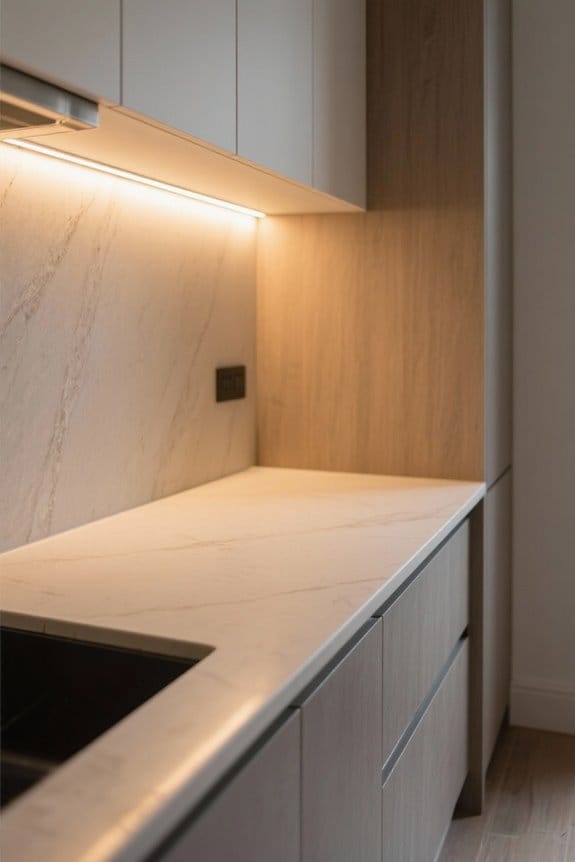
Understanding the impact of color temperature on countertop aesthetics requires careful consideration of light quality measured in Kelvin (K). Color temperature influences visual perception considerably. Warmer tones, typically between 2700K and 3000K, create a warm and inviting atmosphere, enhancing the natural beauty of countertops. This light makes surfaces appear richer and cozier. In contrast, higher temperatures exceeding 5000K emit cooler, bluish light that highlights details in materials like quartz and marble, but may dull warmer colors. Employ various lighting options, including incandescent or LED sources, for effective layered lighting. This strategy enhances countertop aesthetics while ensuring functional visibility for culinary tasks, creating an appealing yet practical kitchen environment. Ultimately, the right balance elevates both design and utility. Installing aluminum channel diffusers can help minimize glare and create softer, more uniform lighting across countertop surfaces.
How Natural and Artificial Light Interact With Materials
Natural and artificial light play an essential role in showcasing the unique features of countertop materials. Natural light direction greatly influences visibility; for example, kitchens facing east benefit from cool morning light, enhancing textures in granite. In contrast, west-facing kitchens feature warmer evening tones that can accentuate quartz. Artificial light, particularly at different angles, can create shadows that alter the appearance of surfaces and textures. Under-cabinet or pendant lights are effective for illuminating countertops, making marble patterns more pronounced. Task lighting is vital for detailed tasks, as it amplifies color and texture while ensuring clarity. Employ multiple light sources to overcome the challenges posed by dark countertops, allowing every element to shine in its best possible light. Modern motion sensor lights with adjustable brightness levels from 25% to 100% provide ideal customization for different countertop materials and lighting needs.
Tips for Proper Lighting Setup in Kitchens and Bathrooms
A well-planned lighting setup in kitchens and bathrooms greatly enhances both functionality and aesthetics. Position under-cabinet lighting close to work surfaces to minimize shadows and improve visibility during essential tasks. Consider using indirect recessed lighting, installed at a 30-degree angle, to softly illuminate countertops. Employ a blend of warm and cool colors—warm lights enrich granite tones, while cool lights reveal quartz colors accurately. Layer task lighting with ambient lighting for a balanced distribution throughout the space. Regularly evaluate your lighting arrangement; adjusting angles and brightness can maximize countertop visibility and enhance overall aesthetics. Aim to use different fixtures to highlight various countertop materials, ensuring your kitchen or bathroom is both practical and visually pleasing. Installing motion sensor features in your kitchen or bathroom lighting can activate illumination within a 10-foot range, enhancing both convenience and energy efficiency.
Common Mistakes in Lighting and Countertop Evaluation
Many homeowners overlook critical mistakes when evaluating lighting for countertops, often resulting in disappointing final outcomes. A common mistake includes over-reliance on showroom lighting, which can misrepresent actual countertop visibility. This lighting often lacks the variation present in natural light, leading to misinformed decisions. Additionally, insufficiently sized samples do not accurately display how light direction impacts color and pattern visibility. Mixing different color temperatures in artificial lighting also leads to an uneven appearance, as warm and cool lights interact variably with materials. Effective evaluation requires observing samples under varied lighting conditions throughout the day, considering seasonal changes in natural light. This approach can help avoid dissatisfaction with aesthetics once the countertops are installed, ensuring a successful final result. Installing LED under cabinet lighting can provide consistent illumination of up to 2010 lumens to properly evaluate countertop surfaces.
Coordinating Lighting With Countertop Materials
While evaluating countertop materials, coordinating lighting can considerably enhance their visual appeal and functionality. Effective light direction is essential for ideal countertop visibility. Utilize natural light from north-facing windows to reveal the intricate textures of granite and quartz surfaces. Conversely, south-facing light can warm up cooler-toned materials. Implement under-cabinet task lighting to accentuate the depth of darker countertops, while strategically placed lighting can minimize shadows on lighter surfaces. For quartz, prefer direct lighting to showcase its depth, while rely on diffused light for marble countertops to avoid harsh shadows that obscure details. Develop a well-thought-out lighting scheme that blends task and accent lighting to guarantee every countertop’s unique characteristics shine through beautifully. Modern edge-lit LED fixtures offer customizable color temperatures between 2700K and 5000K to perfectly complement your countertop’s natural hues.
Future Trends in Kitchen Lighting Design
As the kitchen evolves into a multifunctional space, future trends in lighting design prioritize both innovation and efficiency. Homeowners increasingly favor smart technology, enabling control of brightness and light color from their devices. This adaptability enhances visibility for various tasks. The integration of layered lighting—ambient, task, and accent lights—adds versatility within kitchen designs. Additionally, the strategic incorporation of natural light through well-placed windows reduces dependence on artificial sources, promoting sustainability. Adjustable LEDs will become standard, allowing shifts between warm and cool tones to suit activities at different times of day, with color temperature variations ranging from 2700K to 5000K. Embrace these trends to create a dynamic and efficient kitchen environment that meets both aesthetic and functional demands. Modern LED lighting solutions can reduce energy consumption by up to 85% compared to traditional lighting options while maintaining optimal visibility.
Frequently Asked Questions
Why Is the Direction of Light Important?
The direction of light markedly influences color perception, contrast balance, and shadow effects. It affects light reflection on surface textures, contributing to visual clarity and aesthetic appeal, while enhancing practical functionality in spaces like kitchens.
Should the Countertop Be Lighter or Darker?
Choosing lighter countertops creates a breathtaking illusion of space perception and aesthetic appeal, enhancing texture reflection and visual contrast. Dark shades can add dramatic flair but require diligent maintenance tips to maintain design harmony in kitchens.
How Does Lighting Conditions Affect Different Surfaces?
Lighting conditions profoundly influence surfaces through surface reflection and shadow play. Natural lighting enhances texture visibility and color contrast, while artificial illumination alters gloss level and material absorbance, ultimately affecting spatial perception and light diffusion.
What Is the Hottest Trend for Countertops?
What makes a countertop truly stunning? In 2023, the trend leans towards quartz countertops, eco-friendly surfaces, and textured finishes, showcasing bold color combinations and veined patterns in custom designs, including matte finishes and polished granite alternatives.