As an Amazon Associate, we earn from qualifying purchases. Some links on this site are affiliate links at no extra cost to you. Our recommendations are based on thorough research and editorial judgment.

How LED Lights Reduce Kitchen Heat Buildup

LED lights greatly reduce kitchen heat buildup by converting electrical energy into light with up to 90% efficiency. Unlike traditional incandescent and fluorescent bulbs that waste approximately 90% of energy as heat, LEDs consume up to 75% less energy and produce minimal heat. Advanced thermal management systems, like heat sinks, prevent heat accumulation. By providing 100-150 lumens per watt, LEDs enhance both illumination and cooling. Explore further to understand more about optimizing kitchen lighting for comfort and efficiency.
Key Takeaways
- LEDs convert up to 90% of electrical energy into light, producing significantly less heat compared to incandescent and fluorescent bulbs.
- Traditional bulbs emit 90% of their energy as heat, while LEDs generate minimal heat due to efficient design and heat management.
- Effective thermal management, such as heat sinks, keeps LED temperatures below 100°C, extending their lifespan and enhancing performance.
- LEDs provide high luminosity (up to 1200 lumens) with lower energy use, contributing to a cooler kitchen environment.
- Choosing LED fixtures with effective heat management features reduces heat buildup and improves overall kitchen comfort.
The Efficiency of LED Technology
You may be interested
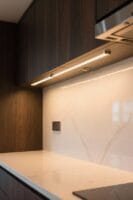


LED technology stands out for its impressive efficiency, offering users significant advantages in energy consumption and heat production. LEDs convert electrical energy into light with up to 90% efficiency, meaning they waste far less energy as heat compared to traditional lighting sources, which can generate up to 90% of their energy as heat. Advanced thermal management systems, including heat sinks, further minimize heat generation. Operated at junction temperatures below 100°C, LEDs guarantee longer lifespans and stable performance without contributing excessive heat. Furthermore, by consuming up to 75% less energy than incandescent and fluorescent bulbs, LED lighting lowers ambient heat levels in kitchens. This not only enhances comfort but also reduces the burden on HVAC systems, leading to notable savings on energy bills. Many modern LED under-cabinet fixtures feature adjustable color temperatures that maintain efficiency while providing customizable lighting for different tasks and moods.
Comparing Heat Generation: LED vs. Traditional Bulbs
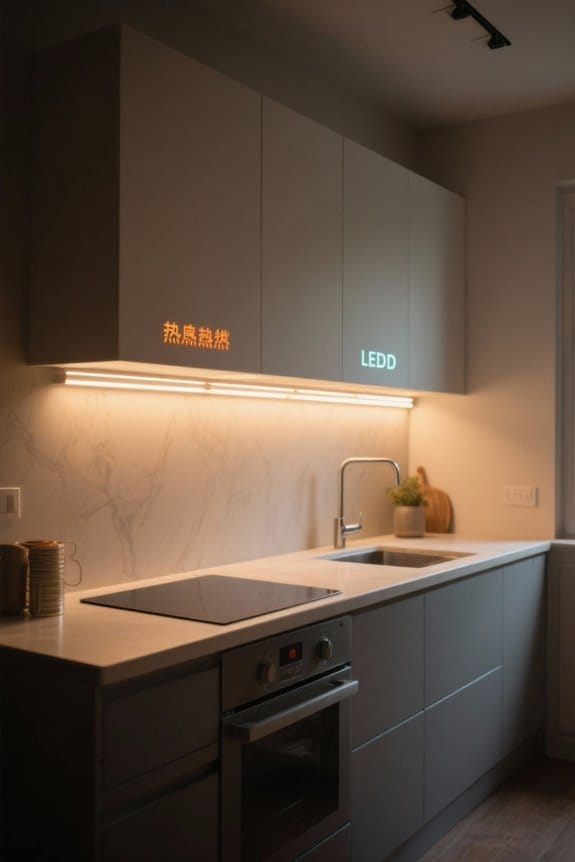
When evaluating heat generation in lighting systems, it is essential to compare the stark differences between LED technology and traditional light sources. Traditional incandescent bulbs, for instance, convert about 90% of their electrical energy into heat emission, thereby raising ambient temperatures greatly in kitchens. Similarly, fluorescent and HID fixtures also contribute up to 90% of their energy usage to heat. Conversely, LEDs stand out by consuming up to 75% less energy, which results in markedly lower heat output. Additionally, LED designs often incorporate heat sinks and thermal management to maintain junction temperatures below 100°C, further minimizing excess heat. Understanding these differences highlights how switching to LEDs enhances overall kitchen comfort while reducing unnecessary heat generation from traditional lighting. Modern LED fixtures like the Binet LED Light operate at just 50mA while delivering bright illumination, demonstrating remarkable efficiency in minimizing heat production.
Recommended Products

5-Level Wattage Selectable: This energy-efficient 2x4 led flat panel light five adjustable power settings (30W/40W/50W/60W/70W), letting you match brightness to different spaces. At 70W, it delivers up to 7700 lumens of bright, uniform illumination while helping reduce energy consumption

Direct Surface Mount: 2x4 surface mount LED light's low-profile integrated design comes with direct mounting brackets so you can experience the ease of installation, saving you time and money

Customizable Lighting Options: Choose from 3000K, 4000K, and 5000K color temperatures and 30W, 40W, or 50W power settings to perfectly match your space and needs
Directional Light Emission and Its Benefits
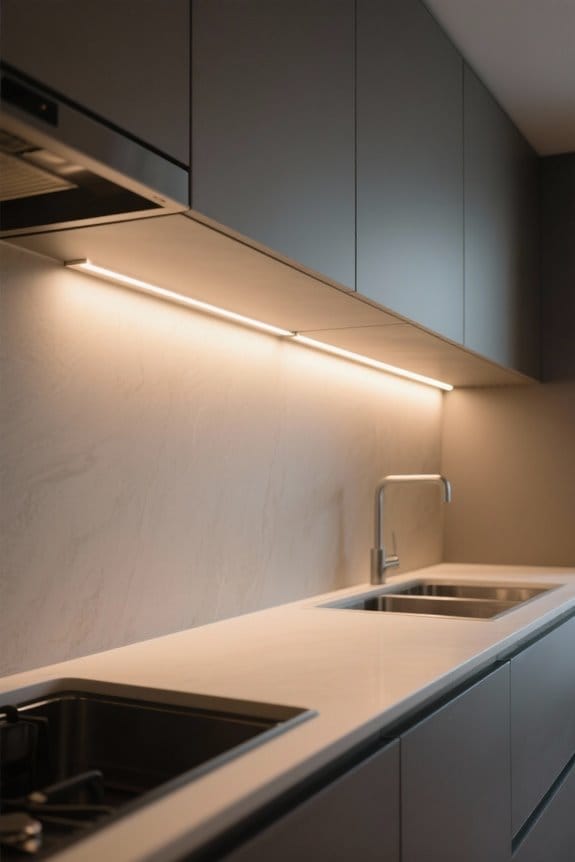
How can the directional light emission of modern lighting systems markedly enhance kitchen environments? LED lights are designed to emit light in a specific direction, allowing for focused illumination in key areas. This capability considerably reduces light spill, which in turn minimizes heat buildup within the kitchen. Unlike traditional incandescent bulbs that generate excessive heat, LEDs produce up to 90% less thermal output. Their energy efficient nature means less energy is wasted as heat, fostering a cooler cooking space. Additionally, this targeted lighting enhances visibility for cooking tasks, making preparation safer and more efficient. By alleviating unnecessary heat, LED lighting reduces the strain on HVAC systems, contributing to lower energy costs and better overall temperature management. Products like CNSUNWAY LED lights deliver 3000 lumens while maintaining a remarkable 50,000-hour lifespan, ensuring long-term efficiency in heat reduction.
Lower Energy Consumption Leads to Reduced Heat
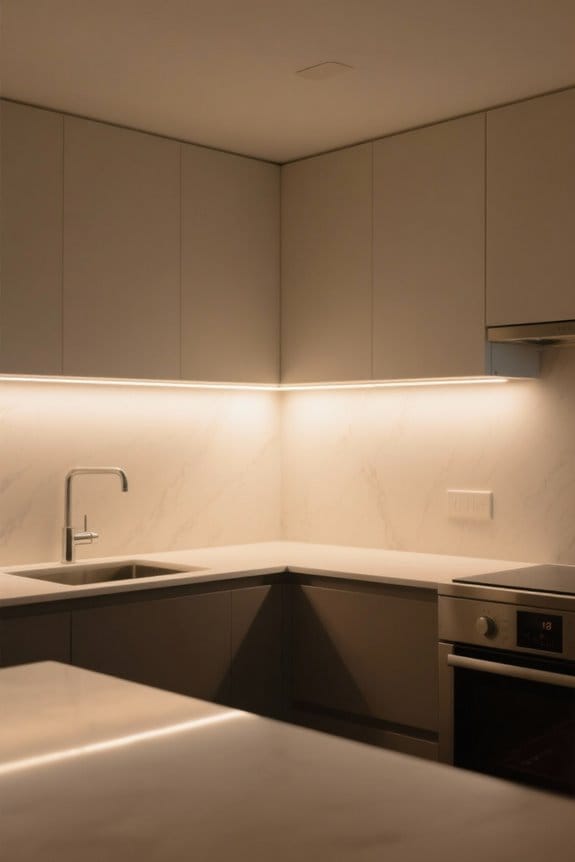
Energy efficiency stands as a critical factor in modern kitchen environments, especially concerning lighting choices. LED lights utilize up to 75% less energy than traditional incandescent bulbs, resulting in markedly reduced heat generation. This efficient energy conversion prioritizes light over thermal emissions, lowering ambient temperatures within the kitchen. Consequently, the strain on HVAC systems diminishes, promoting lower energy consumption and reduced cooling costs. Beyond immediate savings, LED lights boast an impressive lifespan exceeding 25,000 hours, reducing the frequency of replacements and the energy linked to manufacturing and disposal. The combination of lower wattage and high lumen output guarantees bright illumination while maintaining a cooler environment. Implementing LED technology transforms kitchen conditions and enhances overall energy efficiency. Modern LED options deliver 100-150 lumens per watt, making them exceptionally efficient for kitchen applications.
Recommended Products

Sonneman Stix Contemporary Chandelier: Elevate your decor with the Sonneman Modern Lighting Stix 6-Arm LED Hanging Chandelier, featuring a contemporary design that adds a touch of sophistication to your kitchen island, dining room, or living room.

Premium Clear Glass: Features hand-polished crystal-clear glass panels/bubbles (no smoke tint), offering 95%+ light transparency for brighter, distortion-free illumination with the room decoration to create an elegant and luxurious atmosphere.The drum chandelier for living room,dining room.

Flocked features: This 12ft x 94in artificial flocked Christmas tree features heavy flocking for a fresh snowfall look. Add this unique focal point to your bedroom, living room, or office space.
Importance of Thermal Management in LED Lights
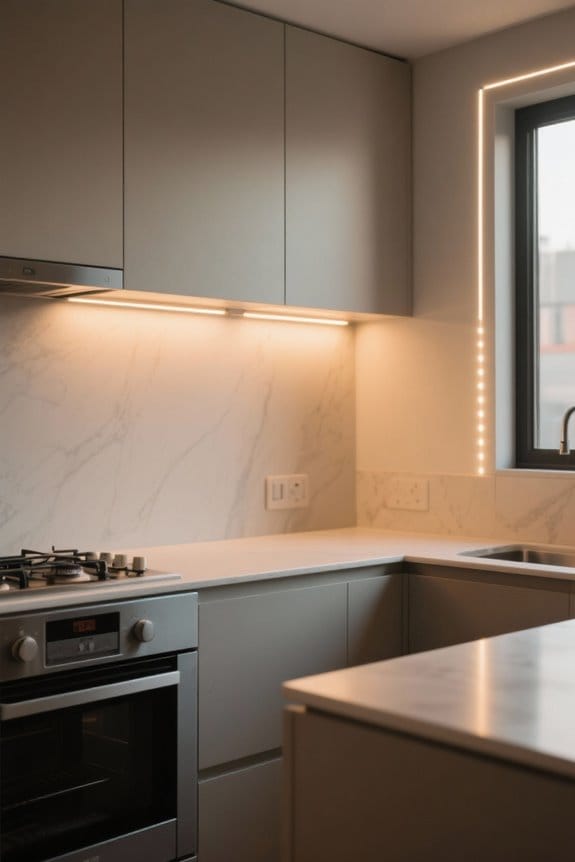
Thermal management is essential for guaranteeing the ideal performance and longevity of LED lights. Effective systems maintain lower operating temperatures, allowing LED lighting products to last over 25,000 hours compared to traditional sources. Key components, such as heat sinks and thermal interface materials (TIM), play a critical role by reducing thermal resistance, enabling efficient heat dissipation and optimal junction temperatures below 100°C. Metal core printed circuit boards (MCPCBs) enhance thermal conductivity, preventing excessive heat buildup. Additionally, maintaining effective thermal management directly affects lumen output, as increased temperatures lead to significant lumen depreciation. Advanced cooling techniques, including strategic LED spacing and high-quality materials, are fundamental in high-heat environments like kitchens to guarantee safety and performance. Prioritize thermal management for reliable LED operation. Quality LED cabinet lights consuming around 15 watts of power generate minimal heat while providing exceptional brightness for kitchen tasks.
Optimal Placement Strategies for LED Lights
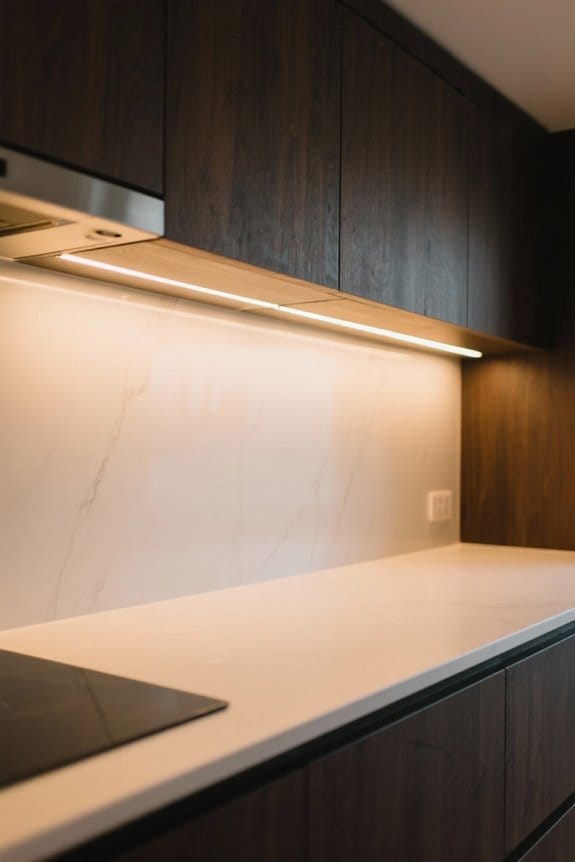
When strategically placed, LED lights can greatly enhance kitchen illumination while mitigating heat accumulation. Position fixtures under cabinets for ideal performance, as this placement boosts task lighting while decreasing heat transfer. Ascertain adequate spacing between lights to maintain airflow, which helps regulate ambient temperature and dissipates any residual heat. Consider using adjustable or dimmable LED units to tailor the brightness based on specific tasks, effectively reducing energy use and minimizing heat generation. Additionally, LED strips can be installed along edges or in coves to provide even lighting while keeping heat-sensitive areas protected. Finally, ascertain LEDs are placed away from heat-generating appliances, maximizing their cooling effects and maintaining a comfortable kitchen environment. The tunable white options between 2700K and 6500K allow users to adjust lighting based on time of day and activity while maintaining minimal heat output.
Recommended Products

Invisiled Pro 1Ft indicator marks every 2 inch for field cutting at the end of a run

Gemini LED tape light output is 3W per foot with easy-to-setup seamless and scalable run lengths up to 24 feet.

▶ Hardwired or Plug-in Installation – Install as permanent LED under cabinet lighting with direct wire, or use a plug-in for quick setup without an electrician. Flexible solution for kitchens, closets, and workspaces
Enhancing Airflow and Ventilation Around LEDs
Proper airflow and ventilation around LED lights are critical components for maintaining an efficient and comfortable kitchen environment. To reduce heat buildup, adequate spacing is essential; ideally, guarantee at least 2 to 3 inches of clearance around LED fixtures. Utilizing LED fixtures with built-in ventilation features, such as cooling slots or fans, enhances air circulation and reduces localized heat accumulation. Position LEDs strategically, away from heat-sensitive areas and other heat sources, to maintain ideal cooking conditions. Select open or recessed designs that promote greater airflow; these can markedly lower operating temperatures. Regularly clean surrounding areas to improve ventilation, as this further aids heat dissipation. Implementing these strategies effectively contributes to a cooler, more efficient kitchen space. Modern LED cabinet lights can produce up to 1200 lumens while maintaining minimal heat output compared to traditional bulbs.
The Role of Heat Sinks in LED Fixtures
LED fixtures depend heavily on effective heat sinks to maintain peak performance and efficiency. Heat sinks play an essential role in absorbing and dissipating heat generated by LED components. Most fixtures utilize aluminum or metal-core circuit boards (MCPCBs) for their exceptional thermal conductivity. The size, shape, and material of a heat sink influence its effectiveness, enhancing heat transfer through convection and radiation. Proper thermal management is vital; effective heat sinks can keep junction temperatures below 100°C, greatly prolonging LED lifespan. Additionally, well-designed heat sinks increase surface area for dissipation, resulting in improved energy efficiency. This reduction in heat accumulation is particularly beneficial in kitchen environments, promoting a more comfortable atmosphere. Consider the importance of heat sinks in your lighting choices. Quality LED fixtures like the GE LED HD+ demonstrate impressive longevity with ratings up to 50,000 hours when properly cooled.
Recommended Products

✅ Adjustable Wattage & CCT:This 480v LED parking lot light features 3 power modes (360W/320W/240W) and 3 color temps (5000K/4000K/3000K). Select the desired color temperature and brightness to meet your various lighting needs before installation, please!

Outdoor Kitchen Set includes: 1x 2-Door Cabinet, 1x 3-Drawer Cabinet
SERIOUS PCIe 5.0 SPEEDS. Sequential Read/Write speeds up to 14,900/14,000 MB/s[2] (2TB[1] and 4TB[1] models) lets you quickly load and store massive projects.
Choosing the Right LED Products for Kitchens
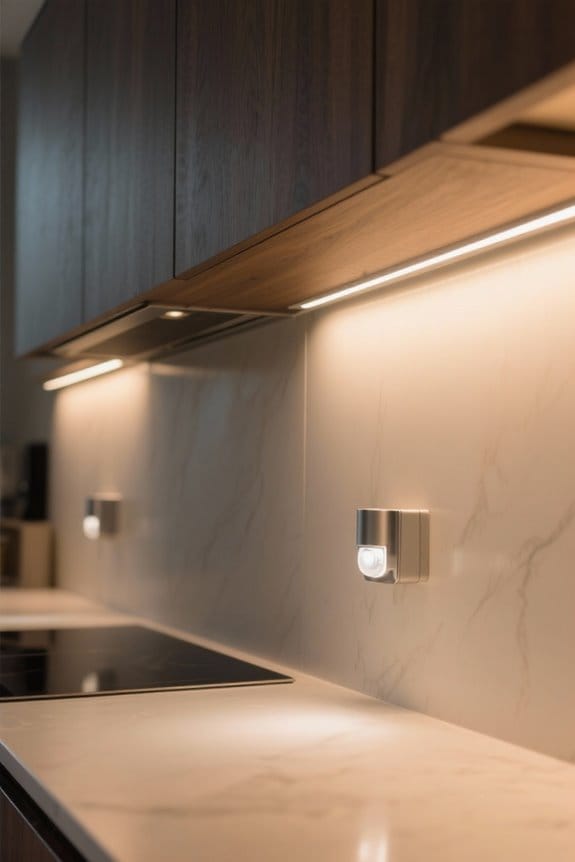
Choosing the right LED products for kitchens requires careful consideration of several key factors. First, select high-lumen LED lights to guarantee bright illumination while minimizing energy consumption and heat output. Aim for color temperatures between 3000K and 4000K to foster a natural daylight ambiance, enhancing visibility and cooling kitchen temperatures. Incorporate LED lights with effective heat sink designs to dissipate heat effectively, promoting longevity and reducing buildup. Additionally, consider dimmable options for adjustable brightness, allowing for energy savings and further lowering heat generation during less intensive tasks. Proper installation enhances performance; position lights at recommended heights and angles to maximize light coverage while reducing glare, and so creating a comfortable, efficient cooking environment. Models featuring motion sensor options offer hands-free operation while conserving energy through automated activation only when needed.
Recommended Products

1,ENERGY SAVING - This 2' x 4' recessed drop ceiling light use high-quality LED beads with high luminous efficiency 130LM/W, this 70w led light panel can provide ultra bright 9100lm lighting for you, it can replace the traditional 280W fluorescent lamps, which will help you saving 80% of your electricity bill and carbon emissions.

50W 5500lm Hight Brightness - 1x4 LED Flat Panel Light Surface Mount: AIKVSXER Super Bright 1x4 Surface Mount LED Ceiling Light is designed with high-efficiency LED chips to replace traditional fluorescent light, high-efficiency (efficacy over 110LM/W) light source, reducing carbon emissions and your electric bill by 85%.

High Brightness & Energy Efficiency: This 50W 1x4 led flat panel light offers 5500LM of brightness, ensuring excellent visibility while consuming significantly less energy than traditional fluorescent lights. It reduces carbon emissions and electricity costs by 85%.
Frequently Asked Questions
Do LED Lights Create Less Heat?
LED lights create considerably less heat compared to traditional lighting, enhancing energy efficiency with minimal heat emission. Their installation benefits include reduced ambient temperatures, contributing to a more comfortable environment and lowering cooling costs for spaces like kitchens.
Are LED Lights Good for the Kitchen?
LED lights are excellent for the kitchen, offering energy efficiency and enhancing kitchen aesthetics. With up to 90% of energy converted into light, they outperform traditional lighting options while markedly reducing heat and cooling costs.
What Is the Negative Side of the LED Light?
The negative side of LED lights includes concerns over lifespan performance, potential color temperature effects on ambiance, and initial cost issues that may deter some consumers despite the long-term savings and efficiency advantages they offer.
Should I Use Cool White or Daylight LED for Kitchen?
Choosing between cool white and daylight LED lights depends on preferences; cool white benefits provide bright task lighting, while daylight effects enhance visibility and energize the space, markedly improving the overall kitchen ambiance and aesthetic feel.