As an Amazon Associate, we earn from qualifying purchases. Some links on this site are affiliate links at no extra cost to you. Our recommendations are based on thorough research and editorial judgment.


The Carbon Footprint of LED Manufacturing Vs Use

The carbon footprint of LED technology is significant, comprising both manufacturing emissions and operational use. LED manufacturing emits 466,300 tons CO2 per quadrillion lumen-hours, more than traditional options like incandescent bulbs at 197,500 tons. However, LEDs use only 9.86 kWh annually, compared to 65.7 kWh for incandescent bulbs, resulting in 70% energy savings. Over their lifespan of 20,000 hours, LEDs can reduce carbon emissions by up to 10 tonnes. Explore further to discover effective strategies for sustainability.
Key Takeaways
- LED manufacturing has a higher carbon footprint at 466,300 tons CO2 per quadrillion lumen-hours compared to traditional lighting’s 197,500 tons CO2.
- The operational energy savings of LEDs, consuming 9.86 kWh annually, lead to a significant reduction in emissions compared to incandescent bulbs at 65.7 kWh.
- Over their lifespan, LEDs can cut around 10 tonnes of lighting-related carbon emissions per average UK home with 40 bulbs.
- LEDs last significantly longer, approximately 20,000 to 50,000 hours, reducing the frequency of replacements and associated manufacturing emissions.
- Innovations in LED manufacturing focus on reducing embodied carbon and promoting recycled materials, enhancing their overall sustainability and lowering long-term carbon footprints.
Understanding Carbon Footprint in Lighting
You may be interested
What factors contribute to the carbon footprint in lighting? The carbon footprint involves three critical stages: manufacturing, operational energy, and disposal. Significantly, LED manufacturing produces a higher initial carbon footprint due to complex materials and processes, emitting 466,300 tons of CO2 per quadrillion lumen-hours compared to 197,500 tons for traditional lighting. However, LEDs excel in energy efficiency during operation, potentially reducing over 250 kg of CO2 compared to incandescent bulbs in their lifetime. To mitigate emissions, it is crucial to utilize recycled materials and adopt efficient manufacturing practices. Track the carbon footprint across the entire lifecycle to guarantee a net positive impact on the environment. Understanding these dynamics is essential for making informed lighting choices that prioritize sustainability. Despite the higher initial carbon output, Energy Star certified LED lights use 75% less energy than traditional bulbs, making them an environmentally responsible choice over their extended lifespan.
The Embodied Energy of LED Manufacturing
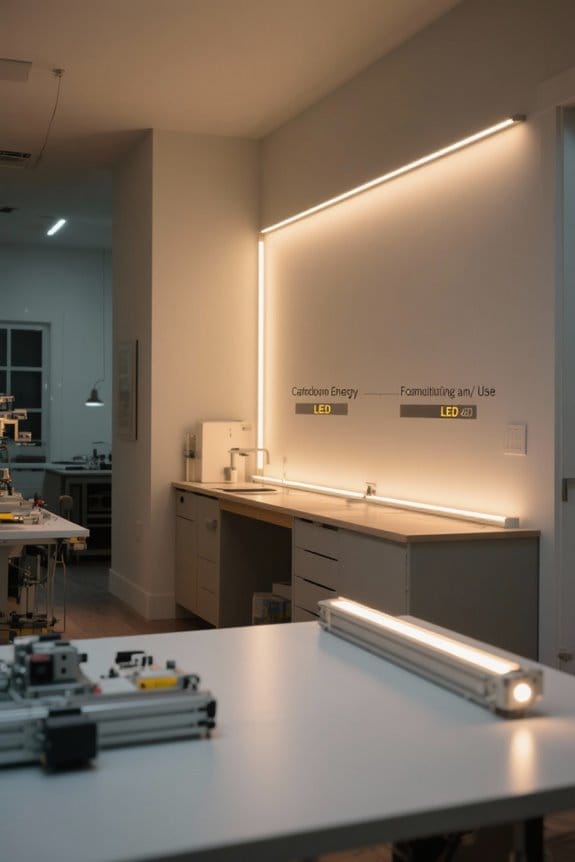
The manufacturing of LEDs involves a significant amount of energy, referred to as embodied energy, which includes energy consumed during production, transportation, and installation. This embodied energy substantially influences the carbon emissions associated with LED production. Remarkably, manufacturing LEDs generates over double the carbon dioxide emissions compared to traditional lighting, with 466,300 tons of CO2 emitted per quadrillion lumen-hours for LEDs versus 197,500 tons for conventional alternatives. The complex materials used, such as heavy metals and silicone, complicate the manufacturing processes, additionally raising embodied carbon levels. In addition, high upfront carbon costs arise from energy-intensive processes, including raw material mining, while a lack of accurate emissions data from manufacturing sites poses additional challenges in reducing carbon footprints. Despite their higher manufacturing emissions, modern ETL certified strips offer energy-efficient solutions that help offset initial carbon costs through reduced long-term power consumption.
Recommended Products

Supports Increased Customer Purchases: Triple-layer low-E glass with anti-fog coating keeps products fully visible in any humidity. Customers see ice cream, frozen meals, and packaged goods clearly without opening the door, which reduces cold air loss and improving energy efficiency. Suitable for convenience stores, cafés, and ice cream shops.

Precise Temperature Control: This commercial display freezer uses a digital controller and dynamic fan cooling to maintain a steady -8F to 0F for ice cream shops, cafes, and supermarkets, the auto defrost feature eliminates manual maintenance and prevents temperature fluctuations that could compromise product quality

Extra-Large Capacity: This refrigerator offers an extra-large 60 cubic feet capacity. With 15 adjustable and removable shelves, you can freely customize your storage space to accommodate items of various sizes, meeting all your storage needs.
Operational Energy Use: Comparing Traditional Lighting and LEDs

When evaluating the operational energy use of lighting options, it becomes evident that LED technology stands out for its efficiency. LED lighting, consuming approximately 9.86 kWh annually, markedly surpasses incandescent bulbs, which use about 65.7 kWh. Compact fluorescent lamps (CFLs) offer some energy efficiency at 14.24 kWh; however, they still lag behind LEDs. This efficiency translates to a remarkable reduction in CO₂ emissions, with LEDs emitting only 2.27 kg annually, while incandescent bulbs produce around 15.11 kg. In addition, LEDs convert 80-90% of their energy into light, thereby achieving substantial operational energy savings. Choosing LED lighting not only enhances illumination but also contributes to lower carbon footprints, reinforcing its status as a superior choice for energy-conscious consumers. Modern LED cabinet lights like the CNSUNWAY light fixtures can achieve up to 70% energy savings compared to traditional fluorescent options while providing an impressive 50,000-hour lifespan.
Recommended Products

TECHNOLOGY: The diffuse polycarbonate lens provides smooth, linear illumination which is designed to resemble the classic look of a 1-lamp fluorescent fixture

TECHNOLOGY: The diffuse polycarbonate lens provides smooth, linear illumination which is designed to resemble the classic look of a 2-lamp fluorescent fixture

TECHNOLOGY: The diffuse polycarbonate lens provides smooth, linear illumination which is designed to resemble the classic look of a 2-lamp fluorescent fixture
Lifetime Carbon Reduction With LED Technology
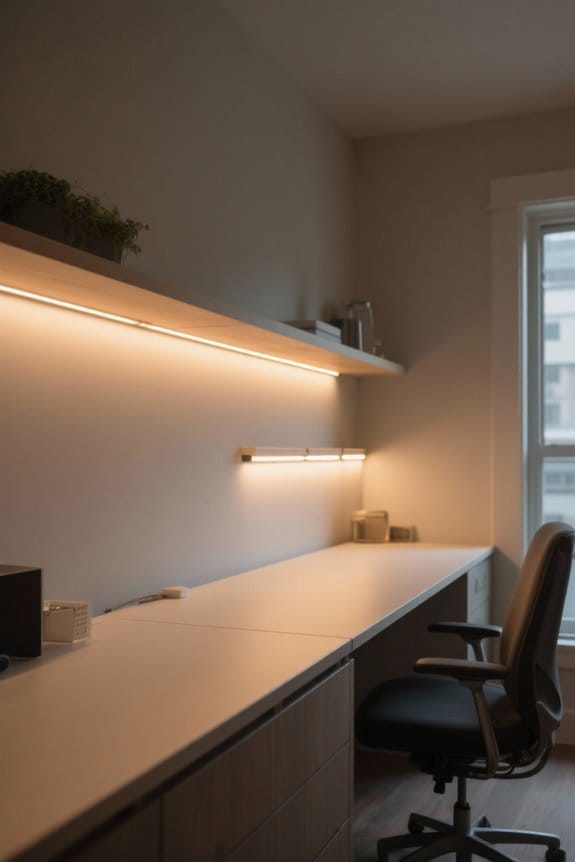
In examining the lifetime carbon reduction potential offered by LED technology, significant environmental benefits emerge. A single LED bulb can reduce over 250 kg of CO₂ emissions compared to an incandescent bulb. In an average UK home with 40 bulbs, this change can cut lighting-related carbon emissions by up to 10 tonnes throughout their lifetime. Although LEDs have a higher initial carbon cost during manufacturing, their operational energy savings, which amount to approximately 70% efficiency compared to traditional bulbs, effectively offset this. With incandescent bulbs consuming 65.7 kWh annually versus about 9.86 kWh for LEDs, the cumulative energy efficiency leads to considerable reductions in greenhouse gas emissions over time. Such reductions illustrate the profound impact of adopting LED lighting technology. Modern edge-lit LED fixtures typically last up to 50,000 hours, further enhancing their environmental benefits through reduced replacement needs.
Analyzing the Environmental Impact of Production Processes
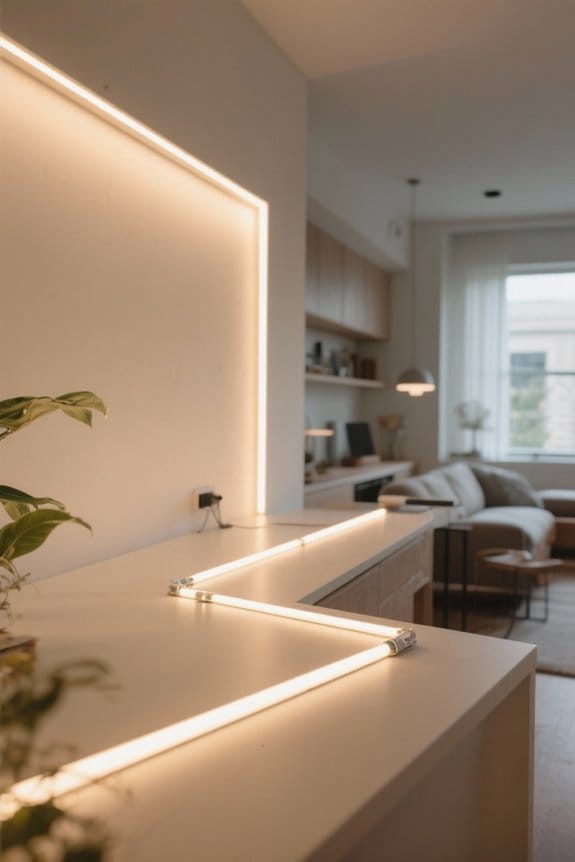
While evaluating the environmental impact of LED manufacturing, it becomes clear that significant carbon emissions arise during the production processes. LED production currently generates approximately 466,300 tons of CO2 per quadrillion lumen-hours, over double the emissions of traditional lighting. This discrepancy is largely due to the use of heavy metals and silicone, which increase greenhouse gas output. Further complicating matters, tracking these emissions is challenging, especially in regions such as southern China, where accurate data is scarce. As the industry matures, awareness surrounding embodied carbon rises, prompting manufacturers to disclose Environmental Product Declarations (EPDs). These documents help address the environmental impact of materials used and guide efforts to reduce power consumption and lighting carbon emissions effectively. Despite manufacturing challenges, modern LED solutions offer 90% energy savings compared to incandescent bulbs, significantly offsetting initial production emissions over their lifetime.
Innovations in Sustainable LED Manufacturing
Innovations in sustainable LED manufacturing represent a pivotal shift toward reducing carbon emissions associated with lighting products. Current advancements focus on lowering embodied carbon, which is approximately 466,300 tons of carbon dioxide for LEDs. By employing recycled materials, such as aluminum, manufacturers can considerably cut the carbon footprint of their lighting systems. These eco-friendly designs support a circular economy, promoting a green transformation in production techniques. Furthermore, energy-efficient processes are increasingly emphasized, yielding tremendous savings in energy consumption. Collaborative efforts with local manufacturers enrich the development of sustainable components. Utilizing Environmental Product Declarations (EPDs) enhances transparency about the lifecycle impacts of LED products, consequently enabling informed choices and guiding efforts towards a more sustainable future in the lighting industry. The incorporation of anodized aluminum channels helps extend LED lifespan through enhanced heat dissipation and protection against environmental factors.
Recommended Products

First available mid 2023, Lenovo’s 11th generation of the flagship ThinkPad X1 Carbon is a powerhouse of performance boosting features in an ultrathin and ultralight form factor. Gen 11 X1 Carbon updates include Intel’s latest 13th Generation processors and increased battery life over the previous generation.

[ Upgraded HIGH BAY LIGHT ] - 2025 new technology + constant current driver + high efficacy chip + increased heat sink, from every detail to give you the best lighting effect, professional R & D team designed for industrial-grade commercial-grade places
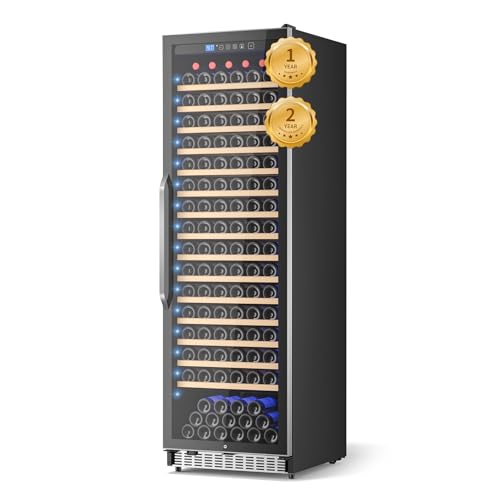
【Best Wine Preservation & Precise Temp Control】1°F precise adjustment (41-64°F) + built-in circulation fan ensures uniform temp, preserving wine flavor and aroma long-term. Unique one-piece glass door with aluminum alloy edging (no glass obstruction) delivers premium mirror reflection, elevating decor
Strategies for Reducing Carbon Footprint in Lighting
A thorough strategy for reducing the carbon footprint in lighting systems is essential for promoting sustainability in the industry. Shifting to energy-efficient LED lighting yields operational energy cost savings of up to 70%, considerably lowering greenhouse gas emissions. Implement smart lighting technology to optimize energy use, adjusting brightness based on occupancy and daylight availability. Furthermore, improving recycling processes for LED components facilitates material recovery, minimizing e-waste. Encourage the use of Environmental Product Declarations (EPDs) to track lifecycle impacts, guiding consumers toward lower-embodied-carbon lighting options. Additionally, incorporating natural daylight into designs can reduce reliance on artificial light, enhancing overall electricity savings. These strategies collectively foster a sustainable approach to lighting, addressing environmental concerns effectively. Modern LED fixtures with 20,000-hour lifespans significantly reduce replacement frequency and associated manufacturing emissions compared to traditional lighting options.
Recommended Products

J Series Outdoor Water Fountains: The Kasco J Series floating pond fountain kit is the perfect focal point for any pond or lake. These recently redesigned fountain kits feature increased performance and improved pattern definition for a stunning display. This decorative lake aerator comes in 120 volts, 1 HP with a 150 ft power cord and RGB LED Lighting.
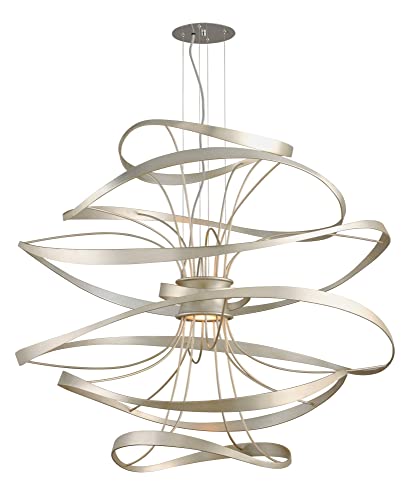
Finish: Silver Leaf/Polished Stainless
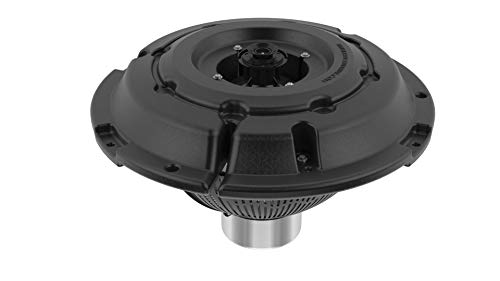
J Series Outdoor Water Fountains: The Kasco J Series floating pond fountain kit is the perfect focal point for any pond or lake. These recently redesigned fountain kits feature increased performance and improved pattern definition for a stunning display. This decorative lake aerator comes in 120 volts, 1 HP with a 100 ft power cord and RGB LED Lighting.
The Future of Eco-Friendly Lighting Solutions
The future of eco-friendly lighting solutions increasingly focuses on reducing environmental impacts through advanced technologies and sustainable practices. LED production currently emits 466,300 tons of indirect CO2 per quadrillion lumen-hours, markedly higher than traditional lighting’s 197,500 tons. However, the unmatched energy efficiency of LEDs offers substantial operational savings and a long-term reduction in carbon emissions. Innovative designs utilizing recycled materials and natural light integration are positioned to lower the carbon footprint further. Shifting to smart lighting systems equipped with sensors optimizes energy use, maximizing sustainability within homes and businesses. Modern COB LED strips deliver exceptional brightness of up to 5000 lumens while maintaining superior energy efficiency compared to traditional lighting options. Individuals must prioritize responsible lighting choices, as community engagement fosters a collective commitment to sustainable living and mitigates artificial light pollution, yielding considerable ecological benefits.
Recommended Products

ENHANCED STORAGE and PRESENTATION - With 57.5 cu. ft. of space and 12 adjustable shelves, this display fridge holds up to 1900 cans. The glass doors and LED lighting showcase products beautifully, and the Cold Beverages lens attracts customer attention and encourages sales. This cooler measures 78.25" W x 30" D x 80.75" H and comes with 6 casters that add 5” of height when used.

BEAUTIFUL DISPLAY FOR FLOWERS - With 53 cu. ft. of space, this floral cooler has 3 sliding glass doors and white LED lighting to beautifully showcase bouquets and arrangements. The 12 adjustable shelves allow for flexible configurations to accommodate any product needs, while the illuminated Fresh Flowers lens attracts customer attention and encourages sales. This flower fridge measures 68" W x 28.5" D x 82" H.

ENHANCED STORAGE and PRESENTATION - With 66.3 cu. ft. of space and 15 adjustable shelves, this display fridge holds up to 2200 cans. The glass doors and LED lighting showcase products beautifully, attracting customer attention and encouraging purchases in any retail space. This cooler measures 79" W x 32" D x 80" H.
Frequently Asked Questions
Do LED Lights Reduce Carbon Footprint?
LED lights dramatically reduce carbon footprints through exceptional energy efficiency, ultimately overshadowing their significant manufacturing emissions. A lifecycle assessment reveals profound environmental benefits, establishing LEDs as superior lighting technologies in combating climate change and promoting sustainability.
What Are the Top 3 Contributors to CO2 Emissions?
The top three contributors to CO2 emissions include supply chain emissions from raw material extraction, manufacturing processes that utilize fossil fuels, and transportation impacts, along with waste management practices that neglect recycling and proper disposal methods.
What Is the Difference Between a Production Carbon Footprint vs. a Consumption One?
Production processes generate initial greenhouse gas emissions through manufacturing practices, while consumption focuses on ongoing energy sources and efficiency. Emissions tracking in lifecycle analysis highlights the contrasting impacts of each phase on environmental sustainability.
Which Industry Has the Highest Carbon Footprint?
The energy production industry typically has the highest carbon footprint, with agriculture emissions, transportation impact, industrial processes, and waste management considerably contributing to overall greenhouse gas emissions, surpassing other sectors in environmental impact and resource consumption.