As an Amazon Associate, we earn from qualifying purchases. Some links on this site are affiliate links at no extra cost to you. Our recommendations are based on thorough research and editorial judgment.

The True Cost of Operating Under-Cabinet LEDs

The true cost of operating under-cabinet LED lights includes installation, energy consumption, and maintenance expenses. Installation typically ranges from $300 to $1,000, depending on complexity and professional labor charges. Energy-efficient LEDs can cut electricity costs by up to 85%, impacting monthly bills positively. Factor in replacement costs, averaging $20 to $50 per fixture. Understanding these financial implications is vital for homeowners. Explore further to uncover additional strategies for optimizing under-cabinet lighting systems effectively.
Key Takeaways
- Operating under-cabinet LEDs can reduce electricity costs by up to 85% compared to traditional lighting options.
- Monthly energy costs depend on fixture wattage and usage hours, typically calculated via kWh consumption.
- LED fixtures usually have longer lifespans, minimizing replacement costs and reducing waste over time.
- If professionally installed, ongoing labor charges may apply for maintenance or additional features.
- Smart controls and sensors enhance efficiency, potentially lowering long-term operating costs through optimized energy use.
Understanding Under-Cabinet Lighting
You may be interested
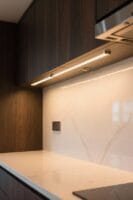


Under-cabinet lighting plays an essential role in kitchen functionality and design, as it effectively illuminates counters and workspaces. These lighting fixtures enhance visibility while reducing shadows. Common options include LED lights, which boast energy-efficient lighting, and are known for their longevity. Installation costs can vary based on professional installation or convenient DIY options. Proper positioning is critical, ideally placing fixtures 2 to 4 inches from the cabinet’s front edge. This placement guarantees even illumination across surfaces. Consider energy consumption when selecting fixtures; LED options greatly decrease electricity costs, making them a superior choice. Evaluate your needs and preferences to choose the best lighting options for your kitchen, ensuring both aesthetic appeal and practical functionality are met. Modern LED fixtures can reduce energy consumption by up to 85 percent savings, making them an environmentally conscious choice for homeowners.
Types of Under-Cabinet Lighting
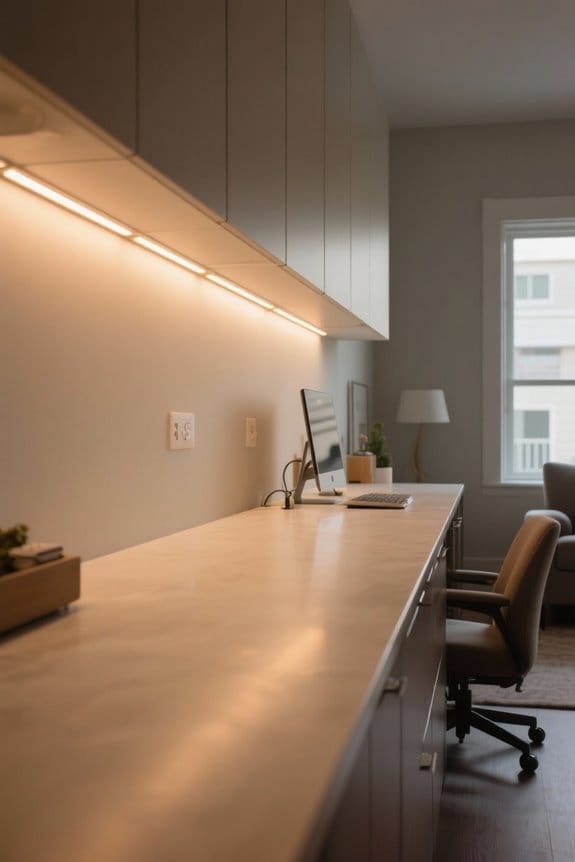
Choosing the right lighting type can considerably enhance both the functionality and aesthetic appeal of a kitchen. Under-cabinet lighting offers various options, including LED puck lights and LED strip lights. Puck lights, priced between $20 and $50 each, provide focused task lighting. Alternatively, LED strip lights, typically costing $25 to $40 for a 20-foot roll, offer a seamless appearance. Light bars range from $25 to $150, while fluorescent fixtures can be acquired for $12 to $50, but often lack energy efficiency. When comparing lighting types, consider initial costs, energy efficiency, and operating costs over time. LEDs are recognized for long lifespans and lower overall expenses, making them a wise investment for efficient under-cabinet lighting solutions. Modern LED fixtures feature adjustable color temperatures from warm 2700K to cool 5000K, allowing customization for different tasks and moods.
Recommended Products

Flexible silicone cased tape light for enhanced Damp location listing. Peel and stick3 construction adhesive on back

Invisiled Pro 1Ft indicator marks every 2 inch for field cutting at the end of a run

【 Aluminum LED Channel 】: LED channel skirting is made of durable and high quality aluminum material, unlike yellowed and cracked traditional plaster line. The baseboard lighting trim is no rust, no paint peeling with long service life
Installation Costs of Hardwired Under-Cabinet Lights
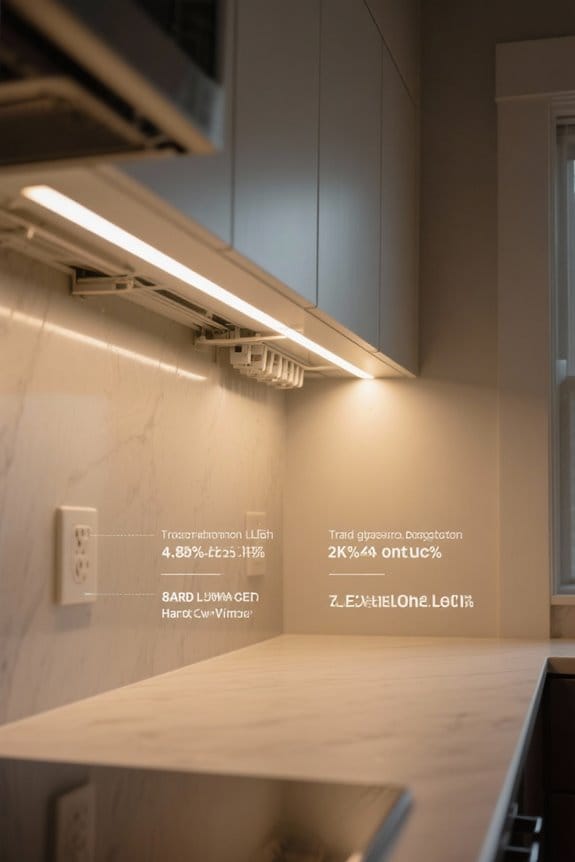
When considering the installation costs for hardwired lighting systems, homeowners must prepare for a significant financial investment. The average cost for installation can range from $300 to $1,000, depending on various factors. Professional labor tends to cost around $200 per fixture, with some electricians charging estimates up to $350 for full installation. LED fixtures, such as puck lights priced at approximately $25 each and LED strip lights averaging $20 for an 8-foot strip, contribute to the total expenses. Additionally, materials like connectors and fittings will typically add another $20-$25 per light. If replacing old lighting, removal fees may vary from $5 to $45 per fixture, impacting overall budgeting for the project. With a typical 50,000 hour lifespan, these lighting systems offer excellent long-term value despite the initial installation costs.
Recommended Products

[Colors Changeable & Brightness Dimmable] You can easily switch between color temperatures like 3000K for warm light, 4000K for neutral light, and 6000K for white light, adapting to various conditions. You can also adjust the brightness to your comfort level.

DUAL FUNCTIONALITY: Combines LED dimmer and driver capabilities in one compact unit, offering both ON/OFF control and smooth dimming operations

▶ Hardwired or Plug-in Installation – Install as permanent LED under cabinet lighting with direct wire, or use a plug-in for quick setup without an electrician. Flexible solution for kitchens, closets, and workspaces
Additional Costs to Consider
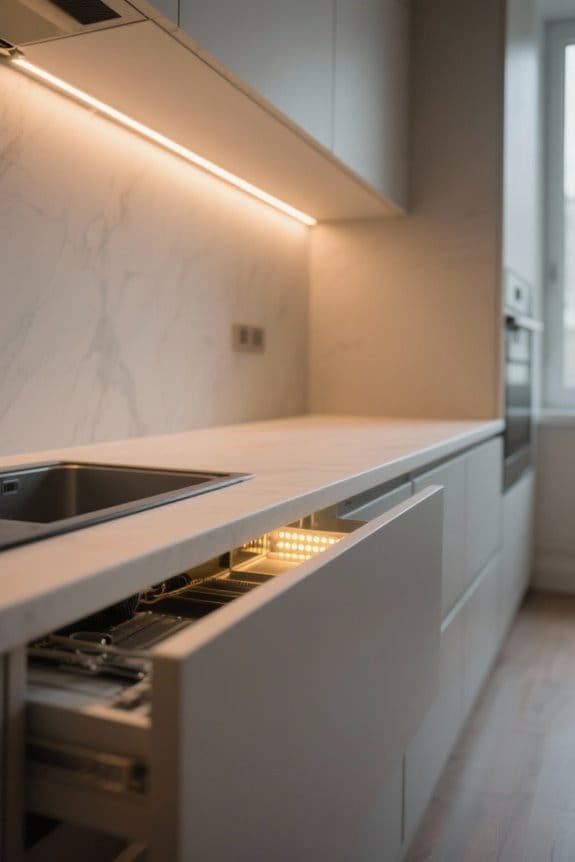
Homeowners undertaking lighting projects must consider additional costs beyond the initial installation expenses. The cost of removing old lighting fixtures may range from $5 to $45 per unit, thereby impacting overall project expenses. While LED lights are energy-efficient, budgeting for ongoing energy costs is vital, as they can lead to a slight increase in monthly utility bills. Future replacement costs should also be addressed, typically between $20 to $50 per unit. Installation of additional lighting fixtures can incur charges of $100 to $300, depending on complexity. Additionally, some electricians may charge extra for debris removal after professional installation, further elevating the total project cost. Evaluating these factors guarantees thorough budgeting for a successful lighting upgrade. Quality LED fixtures like CNSUNWAY light bars can last up to 50,000 hours, helping offset long-term replacement expenses.
DIY Installation vs. Professional Services
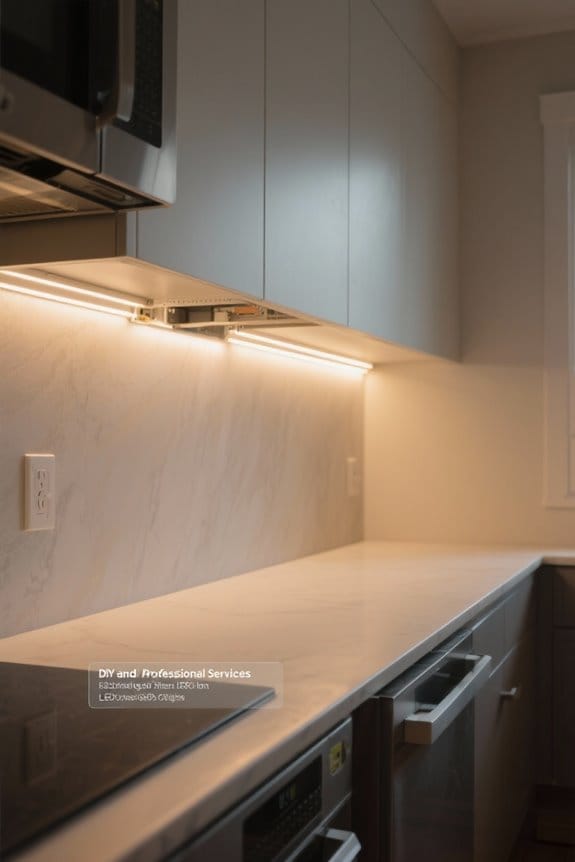
Deciding between DIY installation and hiring professional services for under-cabinet LED lighting can considerably affect both cost and quality. DIY installation can save about $200 per fixture, as basic LED strips range from $7 to $70. However, while budget-friendly fixtures are appealing, they may lack durability compared to professional installation, which typically costs between $200 and $400 for labor alone, with local electricians often charging around $350. Professional services not only guarantee peak performance, but also help navigate installation complexities, such as wiring updates. Additionally, professional installations frequently come with warranties and guarantees, offering peace of mind regarding compliance with local codes and electrical standards. Modern motion sensor lights provide convenient hands-free operation with detection ranges up to 10 feet, making them increasingly popular for both DIY and professional installations. Weigh these factors carefully to make an informed decision.
Recommended Products

✅ BULLNOSE DESIGN - ASD 120V LED under cabinet lighting hardwired features a sleek bullnose profile, smooth dimming from 10% to 100% with compatible LED dimmers, and three selectable color temperatures: 3000K (Soft White), 4000K (Cool White), and 5000K (Daylight)

Contains strip LED lights
WHAT’S IN THE BOX - Includes two 6-foot, gradient ambiance multicolor light strip base kits with two plugs; Perfect for mood lighting anywhere in your home—from bedrooms to living rooms
Strategies for Saving on Under-Cabinet Lighting
Implementing effective strategies for saving on under-cabinet lighting can lead to significant financial benefits and improved home functionality. Start by selecting energy-efficient lighting options, such as quality LED models, which reduce electricity costs considerably. Consider DIY installation, opting for peel-and-stick LED strip lights, saving approximately $200 per fixture compared to professional installation. Additionally, explore local marketplaces for discounts on lighting, potentially finding second-hand fixtures that fit your needs. If professional installation is necessary, gather multiple quotes to secure competitive pricing. While high-quality LED models may carry a steeper initial cost, they guarantee lower long-term energy consumption, contributing to greater overall savings. By using these strategies, homeowners can effectively enhance their lighting while managing expenses carefully. Modern LED lighting solutions can reduce power consumption by 80 percent less power compared to traditional incandescent fixtures, making them an excellent investment for long-term savings.
Recommended Products

Quick and Easy: Our Cloud panels take all the work out of creating the beautiful cloud effect for any room, wall, or ceiling. What would normally be a 6 - 8 hour project, is now quick and easy!

Color changing COB LED flexible strip lights with continuous light display and high CRI (Color Rendering Index)

Wide & Even Light Output:UPONELED flexible LED backlight sheet features integrated optical lenses that create wide-angle, evenly diffused illumination. This ultra thin panel delivers uniform brightness with energy efficient performance.
Long-Term Financial Implications of Under-Cabinet LEDs
While the upfront cost of installing LED under-cabinet lights may appear intimidating, understanding the long-term financial implications reveals a compelling case for their adoption. The cost to install under-cabinet LEDs is higher than traditional options, but the returns are significant. With energy-efficient lighting consuming about 75% less energy, homeowners can expect an average reduction in energy bills of nearly $100 annually. Additionally, the lifespan of LED fixtures reaches approximately 50,000 hours, minimizing long-term expenses associated with replacements. Moreover, lower heat output contributes to reduced air conditioning costs in warmer months. Although the initial investment is notable, the return on investment can be realized within 1 to 3 years, solidifying the financial wisdom of this upgrade. Many Govee products offer smart control features that allow users to optimize energy consumption through automated scheduling and brightness adjustments via smartphone apps.
Recommended Products

ELEGANT AESTHETIC - The Kenmore wine cooler sleek black cabinet, combined with a seamless stainless steel door frame & handle, contributes to the sophisticated design of The Kenmore 112 Bottle Slim 18-Inch Wine Cooler. these premium materials enhance durability & complement any decor, making it a stylish addition to any space. the elegant design ensures that the cooler blends seamlessly with various interior styles.

LED freezer tubes makes you eligible for various utility rebates and reward schemes. Contact your utility company for details on existing rebate policies. Contractors and Distributors can take advantage of our special pricing on bulk orders.

【155 Bottle Capacity – Space for Your Collection】This 24-inch Dual Zone Wine Cooler fits standard kitchen cabinetry—so it can be built in for a seamless look or used freestanding wherever you need it. Inside, it holds at least 155 Bordeaux-style wine bottles (750ml), giving your collection a dedicated home. No more squeezing bottles into the kitchen fridge—your wines have the space they deserve.
Frequently Asked Questions
Do Under Cabinet Lights Use a Lot of Electricity?
“Where there’s light, there’s no darkness.” Under-cabinet lights boast energy efficiency, using minimal electricity. Fixture types, light brightness, and dimming options enhance design aesthetics, while maintenance tips and motion sensors improve convenience and reduce environmental impact.
How Much Does It Cost to Do Under-Cabinet Lighting?
Under-cabinet lighting costs range from $522 to $662 per fixture, factoring in installation and materials. Options vary in energy efficiency, brightness levels, color temperature, and maintenance, impacting aesthetic appeal and environmental impact considerations.
Do LED Lights Make Your Electric Bill Go Up?
LED lights generally reduce electric bills through energy efficiency, offering LED savings compared to traditional lighting types. With lower installation costs, brighter brightness levels, better color temperature, and extended lifespan expectations, they remain eco-friendly options with minimal maintenance needs.
How Much Does It Cost to Run a 1000 Watt LED Light per Month?
Operating a 1000 watt LED light monthly costs approximately $31.20. This reflects LED efficiency and energy savings compared to traditional bulbs, considering wattage comparison, installation expenses, maintenance needs, and long-term costs including brightness levels and color temperature.