As an Amazon Associate, we earn from qualifying purchases. Some links on this site are affiliate links at no extra cost to you. Our recommendations are based on thorough research and editorial judgment.

Understanding LED Energy Star Ratings

LED Energy Star ratings are critical for evaluating lighting efficiency. These ratings, based on performance measures, help you select energy-saving bulbs. For example, a standard 60-watt incandescent bulb emits about 800 lumens, while an LED achieves this with just 8 to 12 watts. New energy labels now feature an A to G rating scale, simplifying comparisons. Additionally, consider the Color Rendering Index for color accuracy. Understanding these ratings will enhance your lighting choices and contribute to sustainability efforts. Explore further for additional insights.
Key Takeaways
- Energy Star ratings indicate the energy efficiency of LED products, helping consumers make informed purchasing decisions.
- Higher Energy Star ratings signify superior energy performance and potential cost savings on electricity bills.
- Energy Star certified LEDs undergo rigorous testing to meet specific performance criteria, ensuring quality and efficiency.
- These ratings contribute to environmental sustainability by reducing overall energy consumption and greenhouse gas emissions.
- Consumers are encouraged to choose Energy Star rated products to maximize their energy savings and reduce their carbon footprints.
What Are Lumens?
You may be interested
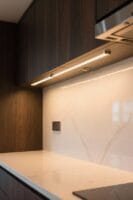


When selecting lighting options, understanding lumens is essential for making informed choices. Lumens measure the total amount of visible light emitted by a light source, offering a clearer understanding of brightness than traditional wattage. For LED bulbs, higher lumen numbers correspond to greater light output. For example, a typical 60-watt incandescent bulb emits around 800 lumens, whereas an LED bulb can achieve this brightness while consuming only 8 to 12 watts. This shift emphasizes the energy-efficient lighting capabilities of LED lighting products. By focusing on lumens instead of wattage, consumers can maximize energy savings while ensuring adequate illumination for their spaces. Make informed decisions by prioritizing lumens to enhance both efficiency and brightness. Modern Color Rendering Index capabilities in LED lights ensure optimal visibility while maintaining impressive brightness levels.
Why Have the Energy Efficiency Ratings on Labels Changed?

Why have such significant changes occurred in the energy efficiency ratings on labels? The shift from the A+++ to E scale to a simpler A to G system aims to enhance consumer understanding of product efficiency. This new rating framework allows for a more accurate comparison of LED options, as many previously high-rated bulbs now feature lower scores due to stricter guidelines. Such ratings reflect advancements in lighting technology, promoting higher standards for energy efficiency. A remarkable aspect is that ‘A’ is now reserved for exceptionally efficient innovations. Consumers must realize that these lower ratings do not equate to inefficiency; instead, they highlight progress in energy consumption. The inclusion of QR codes on energy labels further aids in conveying detailed product information. Modern Energy Star LED lights use at least 75% less energy than traditional bulbs while maintaining consistent brightness throughout their extended lifespan.
What Can Customers Expect to Find on the New Energy Labels?

The new energy labels present key information that consumers need to make informed decisions about LED lighting options. These labels feature a simplified Energy Efficiency Ratings scale from A to G, displaying energy consumption expressed in kilowatt-hours (kWh) over a 1,000-hour period. Significantly, many LED light bulbs may show lower ratings due to stricter efficiency standards, despite their previous high ratings. The labels also emphasize luminous efficacy, guiding consumers to select bulbs that maximize light output while minimizing power consumption. To enhance transparency, QR codes are included, linking to detailed product data from the European Product Registry for Energy Labelling (EPREL). This level of information helps consumers proactively manage their energy bills while making educated choices in lighting. Modern LED lighting solutions can achieve up to 70% energy savings compared to traditional fluorescent lights, making them an increasingly popular choice for sustainable home lighting.
Recommended Products

5 Color Temperature Options: Customize your lighting ambiance by selecting from five adjustable color temperatures—2700K (Warm White), 3000K (Soft White), 3500K (Natural White), 4000K (Cool White), and 5000K (Bright White)—to suit various settings and preferences.

ENERGY EFFICIENT Use a 150W LED Canopy Light Fixture to replace 400W HPS/HID and save on your electric bill. Avoid frequent bulb replacement when switching to this 150W LED Canopy Light which has a lifetime of 50,000+ rated hours.

Light Up Any Space: A white finish to seamlessly blend in, and a warm-white light to brighten any living space, from living rooms and kitchens to closets, bedrooms and more [Note: This is a 12 pack of 2-unit boxes, for a total of 24 units]
How to Decipher the Packaging for LED Bulbs

How can consumers effectively interpret the packaging on LED bulbs to make enlightened purchasing decisions? Start by examining the wattage ratings, which typically range from 5W to 15W, indicating energy consumption. Look for energy usage specified in kilowatt-hours (kWh) per 1000 hours, offering clarity on operating costs. The Kelvin scale indicates the light’s color temperature, ranging from 2700K (warm white) to 6000K (cool white). Pay attention to the Color Rendering Index (CRI), which measures color accuracy, ideally maximized at 100. Additionally, consider the lifetime expectancy—usually between 50,000 and 100,000 hours—indicating how long your investment will last. All these factors contribute to the overall energy efficiency of modern LED technology, guiding informed choices for light bulbs. Modern LED lights achieve impressive efficiency ratings of 100-150 lumens per watt, significantly reducing energy consumption compared to traditional lighting options.
Recommended Products

【Modern Large Villa Crystal Chandelier】Specification:Ceiling plate diamater is 40".Total length of wire is 120",weight: 100LB.The height cannot be adjusted.Suitable for Sloped Ceiling
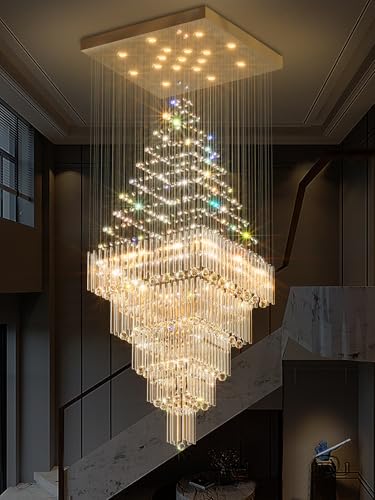
【Modern Large Villa Crystal Chandelier】Specification:Ceiling plate diamater is 40".Total length of wire is 120",weight: 104LB.The height cannot be adjusted.Suitable for Sloped Ceiling
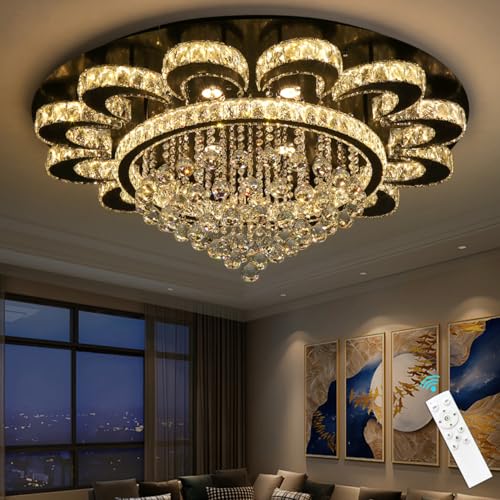
Modern LED Ceiling Chandeliers - The over lamp size:W 39.3"(100cm) x H11.8"(30cm). Weight is 77 lbs (about 35kg).
Differences Between the Old and New Ratings

Significant changes in energy rating systems reflect the advancements in LED technology, marking a shift that consumers must understand. The old ratings system assigned categories from A++ to E, often misleading for LED lamps. Under the new ratings system, ranging from A to G, previously high-rated bulbs have been downgraded; A++ rated bulbs might now be B, C, or lower. This adjustment addresses the common inefficiency found in traditional incandescent bulbs, which release more energy as heat than light. The new scale encourages the development of higher-efficiency products by reserving A for exceptional performance. New labels now feature QR codes, offering detailed lighting facts about energy consumption and performance, enabling consumers to make informed choices based on actual efficiency. Modern high-brightness LED bulbs now offer between 1,000 to 2,000 lumens for general use while maintaining excellent energy efficiency ratings.
How to Choose Energy-Efficient Bulbs Now
When selecting energy-efficient bulbs, which factors should be prioritized for best performance? Focus primarily on lumen output rather than wattage, as lumens measure brightness. For energy-efficient LED options, aim for bulbs with high luminous efficacy; those providing 210 lumens per watt or higher maximize energy efficiency. Review the energy consumption stated as kilowatt-hours (kWh/1000h) on packaging to gauge expected energy usage. Utilize QR codes on energy labels to access detailed performance information, aiding informed choices. Do not be discouraged by lower letter ratings; these reflect stricter efficiency standards. Look for Energy Star ratings, ensuring ideal illumination without sacrificing performance. Prioritize these aspects to effectively enhance your lighting experience while promoting energy conservation. Modern LED lighting solutions can last between 20,000 to 50,000 hours while maintaining consistent brightness and efficiency.
Recommended Products

Contractor-grade Ultra-high Brightness & True Full Power: Hyanglux construction light strings provide up to 2100LM of luminous flux with only 15W per LED light. With luminous efficiency of 140LM/W. A complete set of 10 lights, up to 21000LM. 5000K white sunlight, with a color rendering index of over 80, you can see any item clearly without color difference. Its excellent light efficiency will save 95% electricity, making it an excellent green lighting choice

Exceptional Brightness: Provides more light to illuminate large spaces and provide security outdoors

BRIGHT AND EFFICIENT: Compared with other LED bulbs, SANSI's highly efficient light bulbs can provide 5500 lumens using only 36 watt of power, equivalent to 350W incandescent bulbs. Based on 3 hours per day usage, save up to 95 percent electricity, annual estimated.
Final Thoughts
Making informed lighting choices is essential for both efficiency and performance. ENERGY STAR certified LED products offer superior energy efficiency, consuming 75% less energy than traditional incandescent bulbs. This significant reduction leads to lower electricity bills and promotes sustainability. These lights have an impressive lifespan, lasting between 50,000 to 100,000 hours, which diminishes replacement frequency and waste. In addition, selecting ENERGY STAR LEDs not only enhances lighting quality but also contributes to reducing greenhouse gas emissions. Through rigorous testing, the ENERGY STAR label guarantees reliability and performance for consumers. Modern LED fixtures provide up to 90% energy savings compared to halogen equivalents while maintaining excellent brightness levels. Ultimately, by choosing ENERGY STAR certified LEDs, individuals can enjoy long-lasting, efficient lighting while making a positive impact on the environment. It is a choice that unites cost savings with environmental responsibility.
Frequently Asked Questions
Which Is Better, 4300K or 6000K LED?
Choosing between 4300K and 6000K LED depends on application scenarios and personal preference. The 4300K offers warmer light appearance and greater eye comfort, while 6000K provides brightness level and enhanced visibility, affecting energy consumption and fixture compatibility.
Is 100W LED Brighter Than 60W LED?
In brightness comparison, a 100W LED surpasses a 60W LED due to higher lumen output, suited for large areas. Despite a wattage difference, both offer cost efficiency, longevity, and varying color temperature options for diverse applications.
Is the F Energy Rating Good for LED Lights?
An F energy rating for LED lights indicates poor energy efficiency, potentially resulting in higher costs, reduced light output, and shorter bulb longevity. Consumers should prioritize higher-rated products for better brightness comparison, color temperature, and overall cost savings.
Which LED Is Better, 5050 or 3528?
In the LED brightness comparison of 5050 vs. 3528, 5050 excels in brightness and color vibrancy, while 3528 offers cost efficiency and lower power consumption. Application suitability dictates choice, considering flexibility in design and heat generation issues.